Opportunity or ‘cash grab’? SC college’s 44-man basketball roster sparks debate
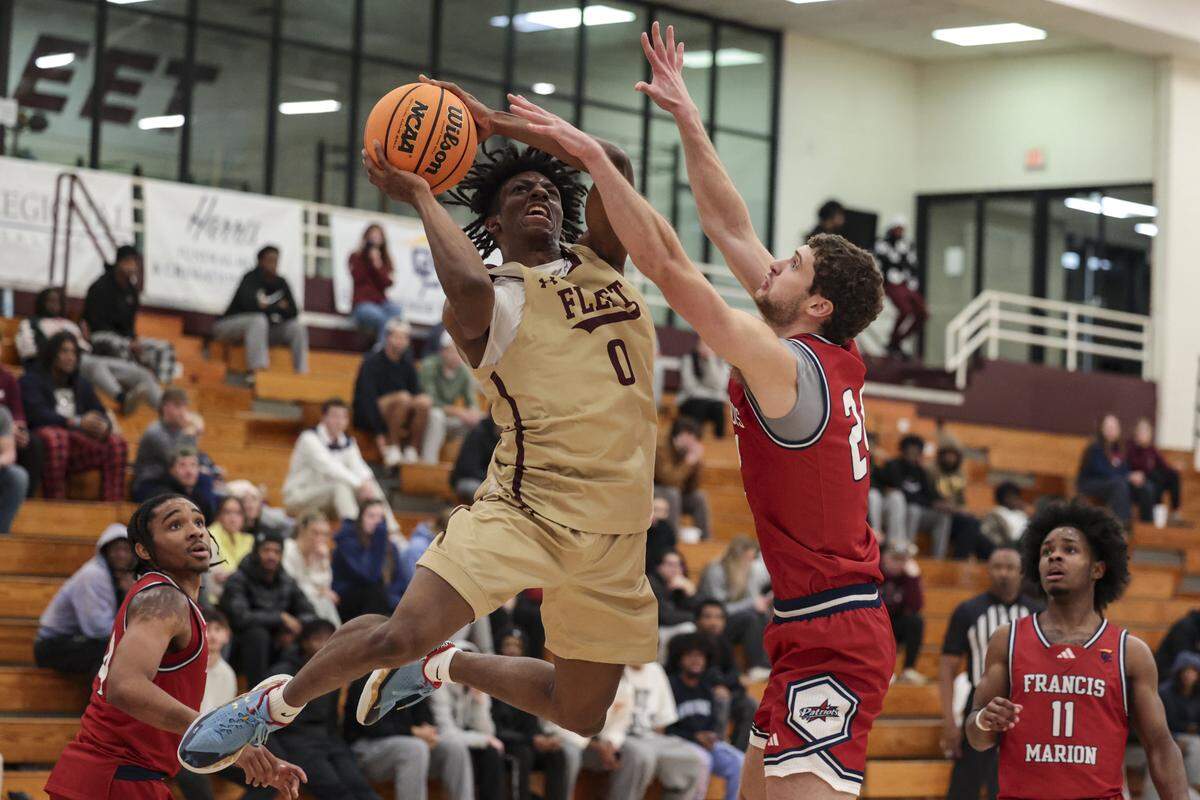
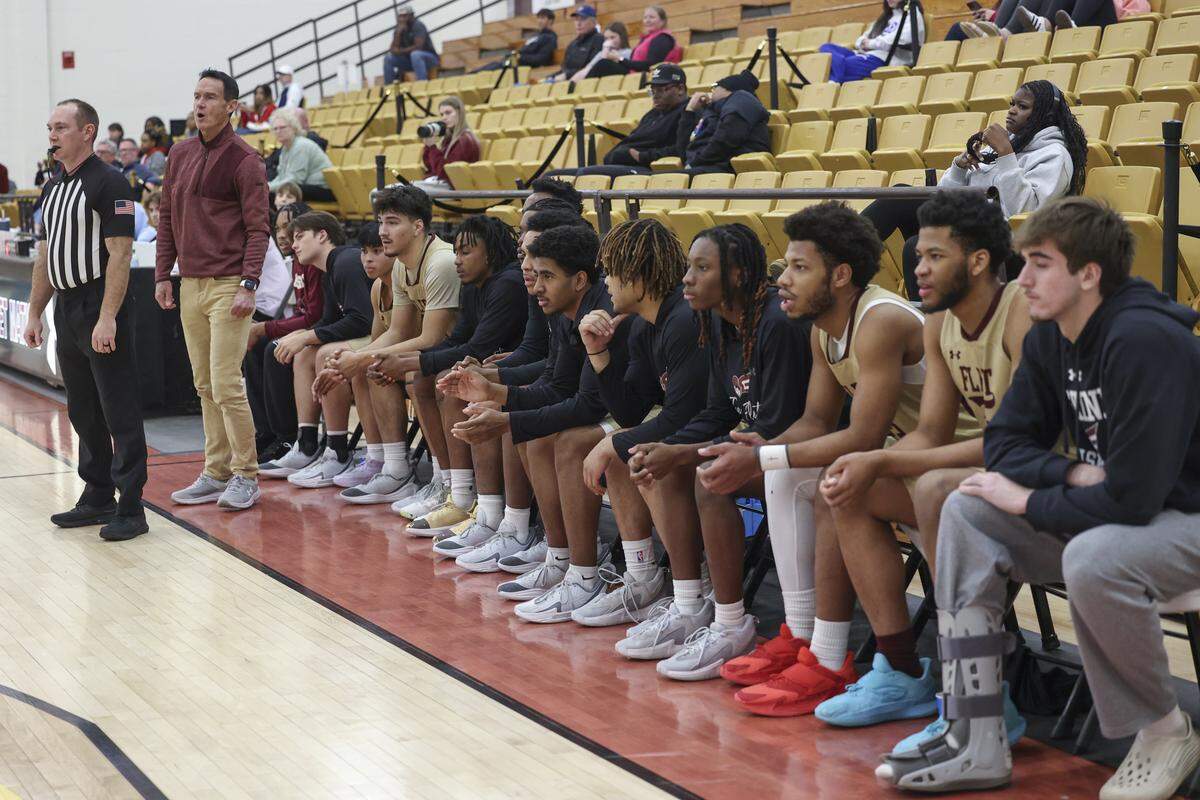
On a recent Wednesday at Erskine College, five players were on the court. Head coach Mark Peeler paced the sidelines. Fourteen players sat to his left on a bench extended by white folding chairs. Another 10 to 12 players sat in the bleachers.
And that wasn’t even the full basketball roster.
Erskine, a small Christian college in rural Due West, South Carolina, is used to operating under the radar. But its Division II program became a hot topic — and generated some online scrutiny — in December after a reporter highlighted Erskine’s abnormally large men’s basketball roster in a social media post.
Erskine, at that time, listed 54 players on its online roster. It’s now down to 44 players (more on that later). Either way, it was a massive number for college basketball, a sport where most programs only roster 13 to 15 players.
People fired off jokes: “One of ‘em gotta be good.” A national blog site deemed Erskine basketball a “confusing cash grab for (a) five-person sport.” An Instagram account posted a screen recording, showing how many scrolls it took to reach the bottom of the school’s online roster page on an iPhone.
Meanwhile, the players on Erskine’s roster rolled their eyes and laughed.
“This specifically blowing up this year, I was kind of shocked,” said KD Gordon, a junior guard from Aiken. “Because they said 54 (players) and I’m like, ‘That’s not new. That’s common here.’”
But it does start an interesting conversation.
No matter your team, ‘you’re valued’
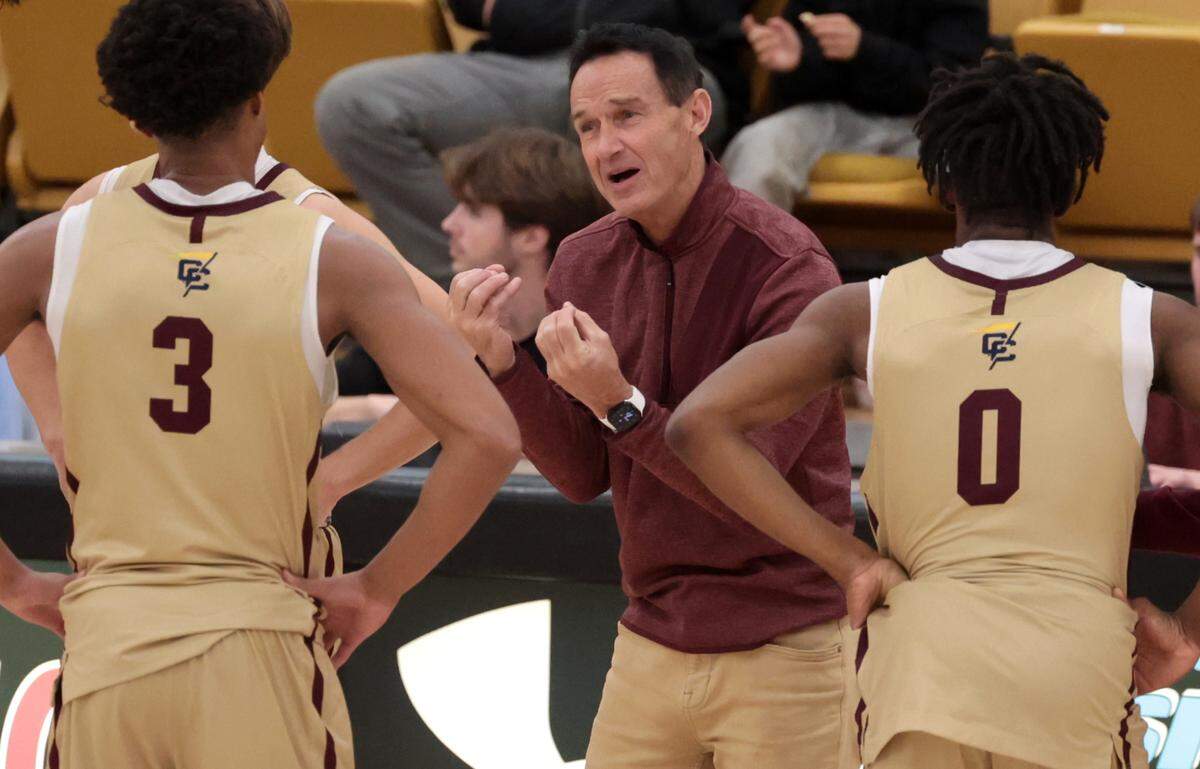
Peeler, Erskine’s athletic director and men’s basketball coach, has worked at the school in some capacity since 1999. He agrees his program is “unique” ... but not in the way you might think.
Yes, Erskine lists 44 players on its varsity men’s basketball team and considers every player a varsity player. But those 44 players are actually split among three teams: A varsity team and two developmental teams, known as DEVO teams.
In that regard, the school located an hour south of Greenville isn’t reinventing the wheel. There are hundreds of college basketball teams across the country — men’s and women’s, at every level below NCAA Division I — that do the same thing. But phrases like “junior varsity” or “B team” aren’t in Peeler’s vocabulary.
“We’re all on the same team,” he said.
All three Erskine teams get the same amount of practice time with Peeler, who often holds one practice at 6 a.m., another in the early afternoon and a third around 8 p.m. on busy fall days when the men’s basketball team is sharing Erskine’s lone indoor court at Belk Arena with women’s basketball and volleyball.
There’s flexibility, too. A player starring on a developmental team could be elevated to Erskine’s varsity roster at any moment. Failing to crack the varsity rotation? Drop down to the DEVO level and build your confidence back up.
In NCAA Division II, players can appear in up to eight varsity games and still take a redshirt year. Peeler closely tracks appearances for anyone who’s not a clear varsity contributor to ensure they don’t burn a year of eligibility. The process allows most Erskine players to play five years of college basketball instead of four.
The majority of schools in Erskine’s conference, Division II Conference Carolinas, field at least one developmental team. Two other schools, Belmont Abbey and Mount Olive, field two teams. The conference holds an annual bracket-style developmental league championship (Erskine’s two DEVO teams compete separately).
“It’s like our own G-League,” said Gordon, a starting guard on varsity.
“I’ve been going both ways this year and truly enjoying it,” added Quintel Johnson, a forward from Myrtle Beach. “On the second team, I’m more of a leader. On the varsity team, I’m more of a glue guy. … No matter where you are, second team or main team, you’re valued and treated equally.”
Erskine’s model: Opportunities, or a ‘tuition trap’?
Click around on Erskine’s website, and you’ll notice men’s basketball isn’t the only big team on campus. Football had 203 players on its roster last fall. Baseball had 120 players on its 2025 opening day roster. Men’s golf had 30, women’s basketball 23.
Erskine has also gone from competing in 10 sports in 2004 to 24 sports in 2026, including bass fishing, rodeo, beach volleyball and women’s flag football. The school had 690 athletes last year, per its latest federal Equity in Athletics Disclosure Act survey. That’s roughly 85% of Erskine’s total student population of 854.
And since NCAA Division II schools don’t offer full-ride scholarships and can only distribute limited “equivalency” scholarships (where full scholarships are split among multiple athletes), most of Erskine’s athletes — even the star players — receive little to no athletic financial aid.
The school does offer “competitive scholarship packages based on academic achievement,” per its website. Federal student aid is also a possibility.
But the end result is a lot of college hopefuls paying at or near Erskine’s full tuition rate — listed at $49,960 for the 2025-26 academic year — for the right to get an education and play sports.
That setup, again, isn’t unique to Erskine. It happens at the NCAA Division II level, the NCAA Division III level and in smaller, non-NCAA classifications like NAIA.
But when the school’s roster size made the rounds on social media, Erskine quickly became a flashpoint for a larger online debate on the legitimacy and ethics of such colleges. Coaches and parents weighed in nationally on what they viewed as, at best, an iffy system where athletes pay a pretty penny to play at the next level.
A sampling of their reactions:
“Strictly an enrollment strategy.”
“Gotta fill them dorms.”
“Tuition trap doing numbers.”
One veteran coach, Brian McCormick, replied to the viral Erskine social media post, offering his own experience with a college that fielded a similarly large roster.
McCormick recalled interviewing for a coaching job at an unnamed NAIA school. He said in order to be considered a “full-time” employee and receive scholarship funding for five basketball players, he had to essentially fund his job and salary by recruiting 30 players who’d pay full tuition.
McCormick said he was advised to recruit five scholarship-level players and find 25 local basketball players who qualified for maximum federal aid and could live at home. The NAIA school (which he didn’t name) didn’t have dorms at the time.
“I turned down the offer,” McCormick wrote on X.
Coach: Erskine is a family, not a ‘cash grab’
Peeler, the school’s AD since 2004, is proud of the experience Erskine offers student-athletes. But in a time when small, private colleges across the country are struggling financially or closing altogether, he acknowledges the reality of the situation:
Large rosters help keep the lights on.
When he spoke to The State, Peeler was also keenly aware of the discourse surrounding his basketball team and athletic department and brought up social media posts he’d seen accusing him of being a “con man” and “screwing kids.” He said Erskine’s critics are missing the greater point.
“That’s a little offensive, because that’s not the intent of it,” Peeler said.
Erskine made the decision to expand its rosters and add more sports about a decade ago when it was in what Peeler called a “struggling period.”
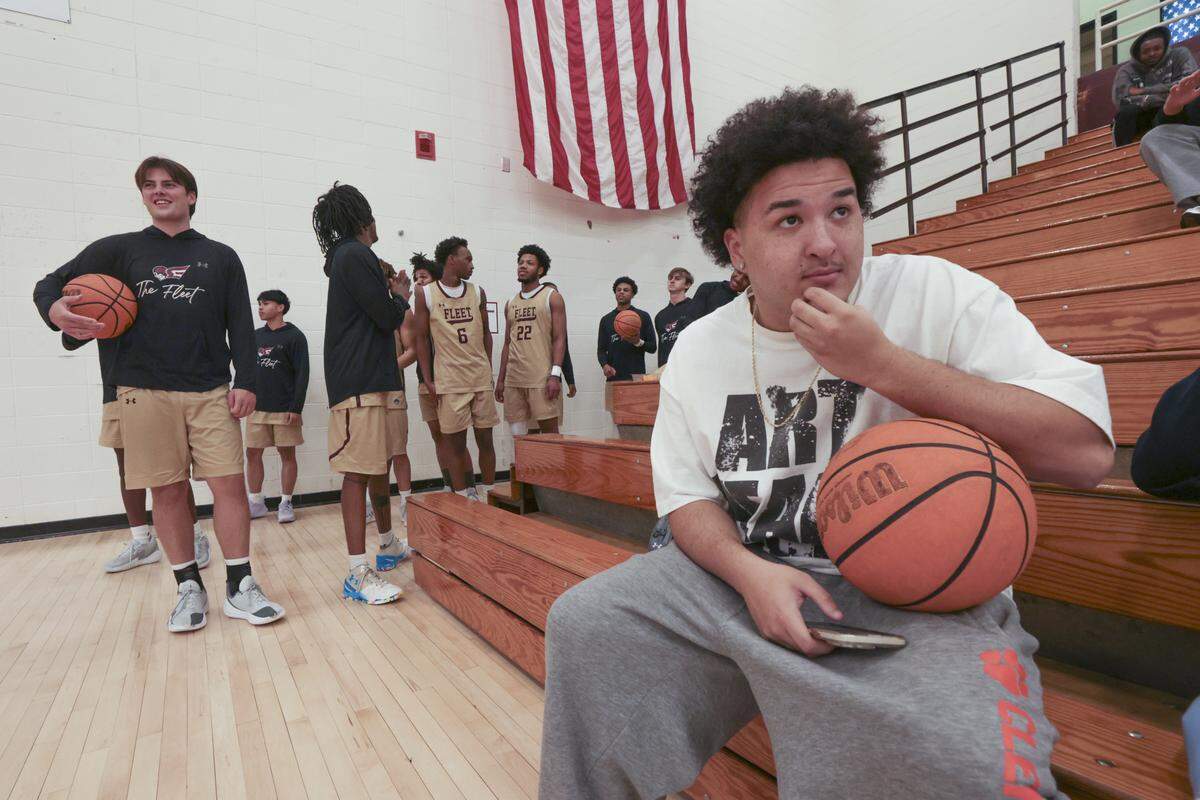
And he’s proud of the results. Erskine baseball — which fields a competitive varsity and developmental team — used new funding from its larger roster to replace its scoreboard and redo its field. The men’s basketball team won back-to-back Conference Carolinas developmental league championships in 2024-25 and displays those trophies proudly in its home locker room.
“Does it bring in more tuition dollars? Absolutely,” Peeler said. “... It’s obviously helped the school.”
But that’s not the mission or goal of Erskine, Peeler said.
It’s a dozen developmental league players showing up to cheer on a varsity team that’s currently 0-22 and 0-16 in conference play — and sticking around to get shots up after the game ends. It’s success stories like Gordon, who went from the DEVO team to a starting role on varsity this season and earns academic scholarship money, since he’s a talented engineering student. (He plans to attend Clemson next year.)
Peeler, who teaches two classes at Erskine, also emphasized that every athlete at the school has a chance to earn a degree at an “incredible Christian college.”
“It’s not a cash grab,” Peeler said. “It’s an attempt to develop guys and give kids opportunities.”
Erskine’s unique approach can lead to roster turnover. Ten basketball players left the team after the fall 2025 semester for various reasons (four graduations, three transfers, three academic suspensions). Shedding ten players would be a mass exodus at most schools, but at Erskine it only represented 19% of the team.
That’s why the school’s online roster (which displayed 54 players when it went viral in December) now only lists 44 players. Even with those departures, Erskine has about three times more players than Clemson (13) and South Carolina (15).
Peeler’s players don’t mind.
As odd as Erskine’s large roster may look online, and whatever questions it might raise, to them a 44-man basketball team is still a family — just an extra large family.
As Johnson put it: “You’ve got a lot of big and little brothers.”
This story was originally published February 18, 2026 at 8:00 AM.