How Spartanburg QB Raheim Jeter has responded to adversity from road rage shooting
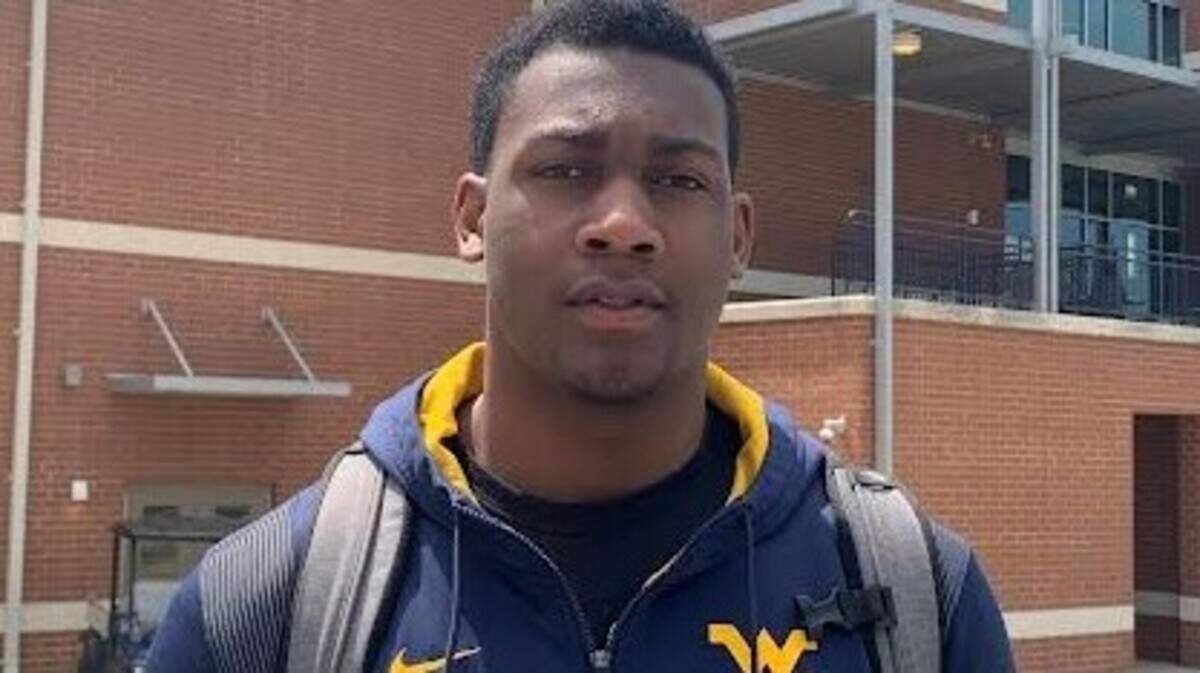
Raheim Jeter’s eyes lit up and a wide smile covered his face.
Spartanburg High School head football coach Mark Hodge had just informed his rising senior quarterback that there would be 83 kids attending the Vikings’ youth football camp Saturday.
“That’s like more than we had summer combined,” Jeter said before assuring he’d be ready for the crowd. “I love it. I love stuff like that.”
It’s only the second year the high school has held a camp for younger children, an event Hodge implemented after his first football season as Spartanburg’s head coach in 2021. Jeter coached and taught third-, fourth-, fifth- and sixth-graders at the camp over the weekend.
If there’s anyone the next generation can learn from, it’s the West Virginia University commitment.
Hodge has always held Jeter in high esteem, but the way he’s responded to the adversity he’s faced over the past two months only amplified that respect.
“I’ve coached some very, very gifted young men, both on the field and off the field from doctors, lawyers, teachers, coaches, NFL players,” said Hodge, whose list of former players include wide receiver Deebo Samuel as well as defensive tackles D.J. Jones and Devaroe Lawrence. “Raheim is one of the most put-together young men I’ve ever coached, and I think through this, it’s only made him greater.”
Around 9:30 p.m. Feb. 18 in Boiling Springs while driving and waiting to make a turn, Jeter was shot in his left leg in what’s been described as a road rage shooting. Armad Rashad Ali Irby, who deputies said had no prior relationship with Jeter, was arrested on March 1 and charged a week later with attempted murder and possession of a weapon during the commission of a violent crime. According to the Spartanburg County Sheriff’s Office website, the 41-year-old was still confined as of Friday.
The preliminary hearing for the trial is set for June 2. Due to the nature of the case, Jeter is unable to comment about what specifically happened that night. The life-changing event was unexpected, but Jeter has opted to find the silver lining in it all.
“It definitely made me value life more,” he told The State. “I see life is short. Your life can be gone at any moment, so it made me value my life a lot more.”
Talking to God
In the nights following the shooting, Jeter was in his bed tossing and turning with no luck falling asleep. There was still so much to process with even more ahead to face. Not only that, but football had been temporarily taken away from him.
An X-ray after he was shot revealed he’d need surgery on his foot — that procedure was completed Feb. 24 and was followed by physical therapy. He’d at least completed his junior season of football in the fall and was comforted by the support shown by West Virginia head coach Neal Brown and the Mountaineers’ coaching staff.
Jeter’s foot has since healed and he’ll be able to complete his final season of high school football this fall. Actually, he recovered quicker than expected. In less than two months, the junior was cleared by his doctors to practice again, but with no contact.
The five-day-a-week, 50-minute sessions with trainers that included calf and strengthening exercises had paid off. Jeter no longer has to watch through the window inside the training room as his teammates practice. When the Vikings got going last week, he was be able to join them.
While the physical recovery was quicker than anticipated, the Vikings signal-caller’s absence during that time was still felt and missed.
“Our weight room is big,” Hodge said. “It’s kind of divided by coaches, where you stand and whatnot. When (Jeter) came back in, his area of the weight room automatically improved just by his presence. So, he helped with that just by being there.”
The physical hurdle had been cleared, but the mental aspect was still a tall task for the 17-year-old to maneuver. On the nights when he lay awake involuntarily, Jeter fell to his knees and began to pray. Sure, his parents have been and continue to be his rocks, but in those moments alone at night, Jeter needed a divine strength.
Strength to process being without football. Strength to get through physical therapy. Strength to process what had happened and why that night in February.
Strength to be able to endure it all.
“I feel like I’m at a point now where I’m not fully over it, but I’m getting there,” Jeter said.
Special delivery
Que Moore knows his teammate.
With Jeter being the Vikings’ quarterback and Moore being a wide receiver, it’s necessary for the two to have some basic level of information about one another. That includes each other’s favorite food.
The day after Jeter was shot, the Vikings’ football team went to comfort their leader. Moore didn’t go to his QB’s house empty-handed, though. He presented Jeter with red crab, knowing how much the latter loves seafood.
The family aspect of football was in full effect.
While the Vikings football players were there for comfort, laughs and good food, Hodge was working behind the scenes with Jeter’s parents. Spartanburg’s second-year coach was in Myrtle Beach at a coaches’ clinic the night of the shooting. Jeter’s father called Hodge and filled him in.
His first thought was wondering whether or not Jeter was OK. The next step was helping to contact everyone necessary from the high school resource officer and Spartanburg County law enforcement, and the staff at West Virginia. At that time, little was known about what transpired, but Hodge, whose son is a senior at Spartanburg High, jumped in to help where needed.
“On one hand, they’re like your children — Raheim’s like a son — but they’re also moving … from children to young men,” Hodge said. “So they’re kind of transitioning from that child phase to that friend phase. … So not only are you looking at it as one of your children, you’re looking at it as one of your friends, you understand all that he’s invested and sacrificed for his future goals.
“All of these things, you know, your brain kicks in with so many different emotions on the full spectrum of fear, anger, frustration, empathy, love, all those things are going on at one time.”
Hodge admits he’s been in this situation like this before with a player, but he’s been impressed with how Jeter has handled it.
“There’s no handbook on this, but I feel like if you had to write one, it would be how he has handled it,” Hodge said of Jeter. “So very thankful for his parents, very thankful for his coaches, teammates, the school. We know who he is, and then through this, he has just been even greater than we gave him credit for.”
A new perspective
Raheim Jeter is different.
The unfortunate night where he was shot in the leg changed him. The 6-foot-3, 220-pound three-star quarterback has always been a leader on and off the field, but his new appreciation for life has matured him. Even his science teacher has taken notice, bragging on how engaged Jeter was during lab, and his ability to lead in the classroom having been taken to another level.
There are some things that are simply out of one’s control, but the response is that person’s responsibility. Whether coaching future quarterbacks at youth camp, eating crab with his receivers or preparing for college at West Virginia, Jeter has shown his ability to respond to adversity and now has a deeper appreciation for life.
He still has a way to go with the legal matters. Irby’s preliminary hearing for the trial is about a month away. Once that side of things is over, Jeter expects to come out of the ordeal even stronger than before — physically and mentally.
“You always wonder who they’re going to become,” Hodges said of his players. “You know that inside all of it’s greatness, so I’m just looking forward to watching the next chapters of (Jeter’s) life because I have no doubt that they’re gonna be pretty remarkable.”
This story was originally published May 2, 2022 at 9:15 AM.