
How Ray Tanner’s time as AD compares with his predecessors at South Carolina
It’s always hard to compare eras, especially in the college sports world and across a whole athletic department.
But the Ray Tanner era is coming to an end, and some accounting for its success can be done.
South Carolina’s run from 2012 to 2024 features some unrivaled success and struggles along the way. Every AD in the school’s history has battled different headwinds. Many leave on less-than-happy terms, and there’s no doubt Tanner’s time has its share of detractors.
If nothing else, each era has been eventful in its own way.
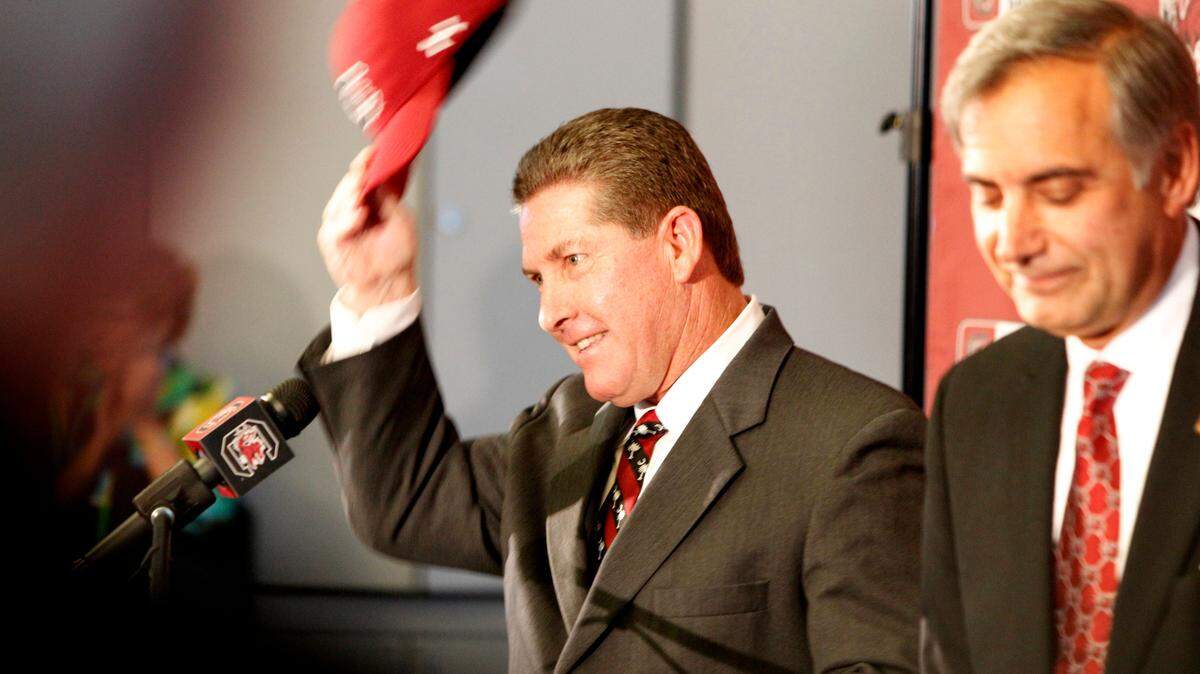
Ray Tanner, 2012-2024
Tanner ran the department during a golden age for the SEC. Simply put, the resources at his disposal were considerably larger than at any point before and allowed for a department that was basically never in trouble financially outside the COVID pandemic.
His tenure included the building of a dedicated football operations building and different kinds of renovations to the basketball facilities and Williams-Brice Stadium.
On the field, the football program hit its zenith early in his tenure, but meandered through a slide at the end of the Spurrier era before ups and downs under Will Muschamp and Shane Beamer.
The women’s basketball program grew into the most dominant program in the country, while the men had their high point with a first Final Four (surrounded by a lot of inconsistency).
Perhaps his most scrutinized coaching hires were with the baseball program. USC in 2024 hired Paul Mainieri, the third coach at the helm since Tanner himself led the Gamecocks to national championship success.
Eric Hyman, 2005-2012
Hyman was known for modernizing the department from a business standpoint. That included large-scale construction projects like the Dodie academic center and Founders Park. There were also other, less-visible things such as a $200 million master facilities plan and the arrival of the football seat donation system.
During Hyman’s tenure, Spurrier built up the football program from a mid-level team to one that was setting wins records by his last year. Tanner as the baseball coach delivered two NCAA national titles, winning the College World Series in 2010 and 2011.
Hyman hired a notable coach in Dawn Staley, who eventually led the women’s basketball program to greatness. His first men’s basketball hire was a dud with Darrin Horn. On his way out, Hyman brought on Frank Marin.
There was always a little bit of something at odds with Hyman and some parts of the Gamecocks programs and fanbase. He ultimately left for a role running Texas A&M’s well-funded but often unpredictable department.
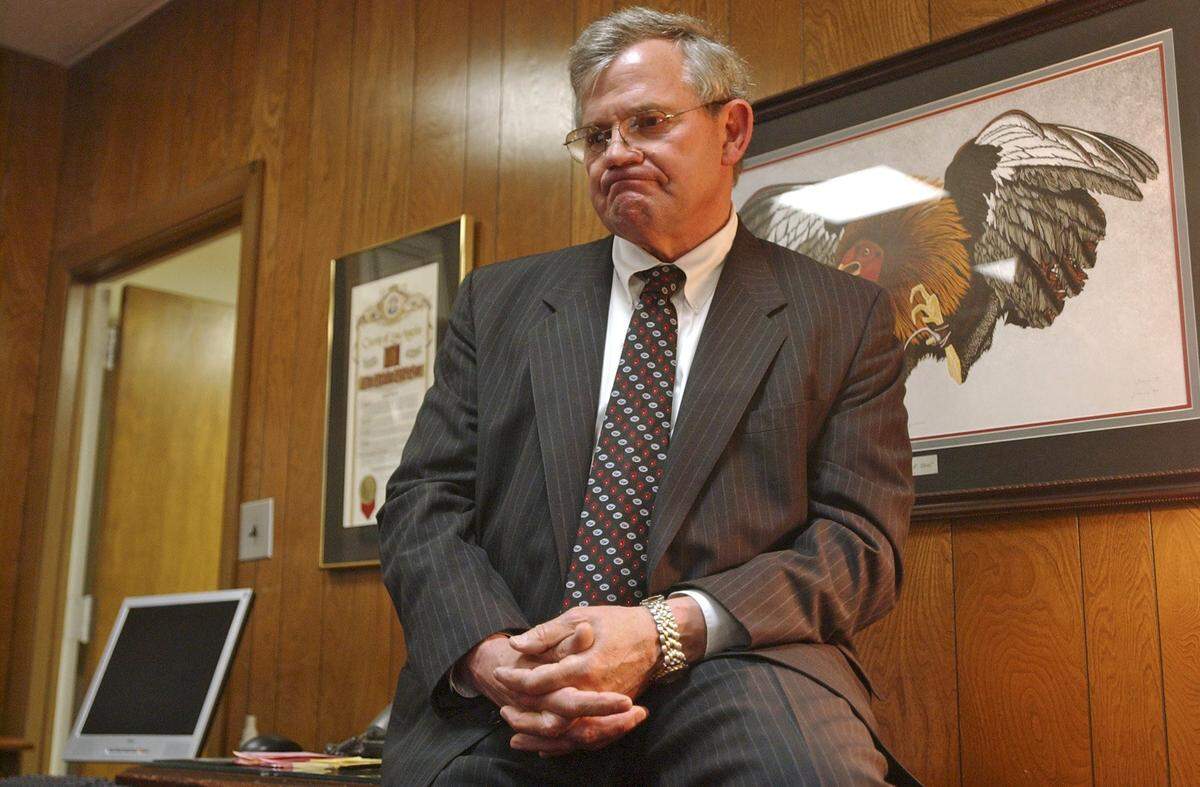
Mike McGee, 1993-2005
A former college football player and coach, McGee’s biggest contribution to the story of Gamecocks athletics was the set of coaches he hired.
That roster included landing both Lou Holtz and Steve Spurrier to bring the football program direction and cache for the first time in over a decade. McGee hired Tanner, who went on to win national titles and make Gamecocks baseball one of the nation’s preeminent programs. Curtis Frye turned the Gamecocks into a power in track. McGee hired Eddie Fogler, who delivered some of the best years of the program’s modern era. And he poached Dave Odom from a good Wake Forest program.
On the field, the Gamecocks football program won its first bowl under Brad Scott and earned back-to-back Outback Bowl victories under Holtz. The men’s basketball team won its only SEC title in 1997.
Off the field, McGee did the work of shepherding the school through its early days in the SEC. After decades as a football independent or member of the Metro Conference, South Carolina had to do a lot in terms of catching up with more established program in the region.
King Dixon, 1988-1993
Dixon was considered one of the finest persons to hold the position, as a former war hero and football star for the Gamecocks. He stepped in at a moment when his alma mater needed him, but ultimately it was a difficult time for the school.
His time in the big seat started in the midst of a steroid scandal that rocked the football program, which was soon followed by the sudden death of coach Joe Morrison. The hire of Sparky Woods brought uneven results, and the choice was twice made to turn down bowl games because they conflicted with exams.
The basketball program also ran into issues after Dixon abruptly fired coach George Felton. An agonizingly long coaching search ended with the hiring of Steve Newton, whose tenure lasted two unsuccessful seasons.
One of Dixon’s final acts was overseeing the program’s acceptance into the SEC, a move that ended decades of the school being a football independent and member of the mid-level Metro Conference.
Dick Bestwick, 1988
Bestwick, a North Carolina alum and former Virginia football coach, lasted only six months in the role. He resigned suddenly, citing health issues, which reportedly stemmed from overworking in the role.
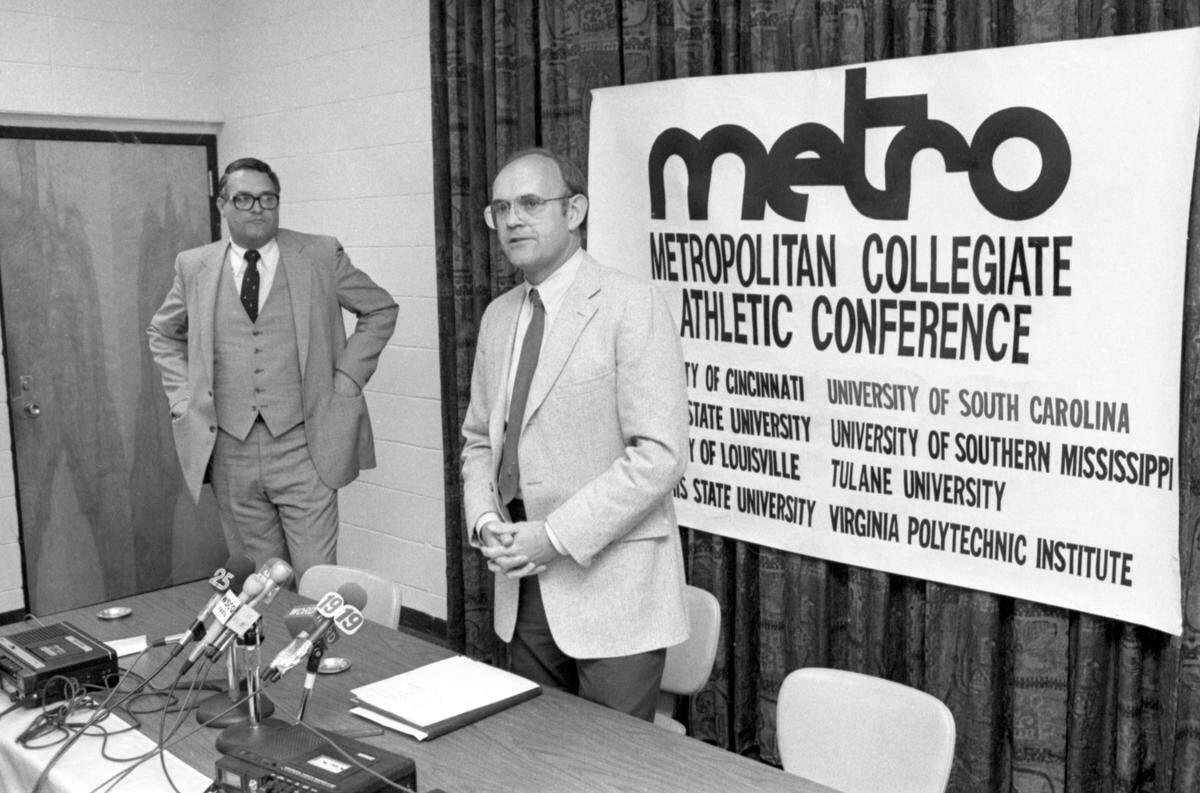
Bob Marcum, 1982-1988
Marcum’s shorter tenure was an eventful one, to say the least.
He arrived from Kansas in the wake of the sudden firing of Jim Carlen and quickly hired Richard Bell. A year later, Marcum dismissed Bell when he refused to fire several assistants, and Bell eventually sued Marcum for libel and slander, as well as the school, over his departure. Marcum ultimately hired Joe Morrison, who delivered the magical 1984 season, and several other memorable campaigns.
On the hardwood, Marcum hired Nancy Wilson, who went 231-149, leading the Gamecocks to five women’s basketball Metro Conference titles and five NCAA tournament trips. He also hired George Felton, who won 19 games three times in five seasons.
Arguably the biggest accomplishment of Marcum’s tenure was returning the school to a conference. A college sports nomad since leaving the ACC in 1971, the school joined the Metro Conference, a league with the likes of Memphis, Louisville and Florida State.
Marcum was ultimately fired amid scandal as the NCAA found the school had stopped its drug testing altogether. He eventually sued the school, won and went on to successful tenures at UMass and Marshall.
Jim Carlen, 1976-1981
Carlen was the last football coach-AD in the school’s history. His era was short, but not without some highlights.
The football team he led delivered some of the program’s better years to that point, going 8-4 twice behind the powerful play of Heisman winner Georgie Rogers. Elsewhere a young women’s basketball program delivered a top-5 national finish in 1980 and the men’s program changed hands from the late Frank McGuire era to Bill E. Foster.
The Carlen era ended acrimoniously as the notoriously caustic Carlen was already at odds with the administration and had an ugly finish to the 1981 football season. He was fired after the team lost its final three games to Pacific, Clemson and Hawaii.
This story was originally published September 17, 2024 at 9:43 AM.