
This Gamecock already among most active volunteers. His new program raised the game
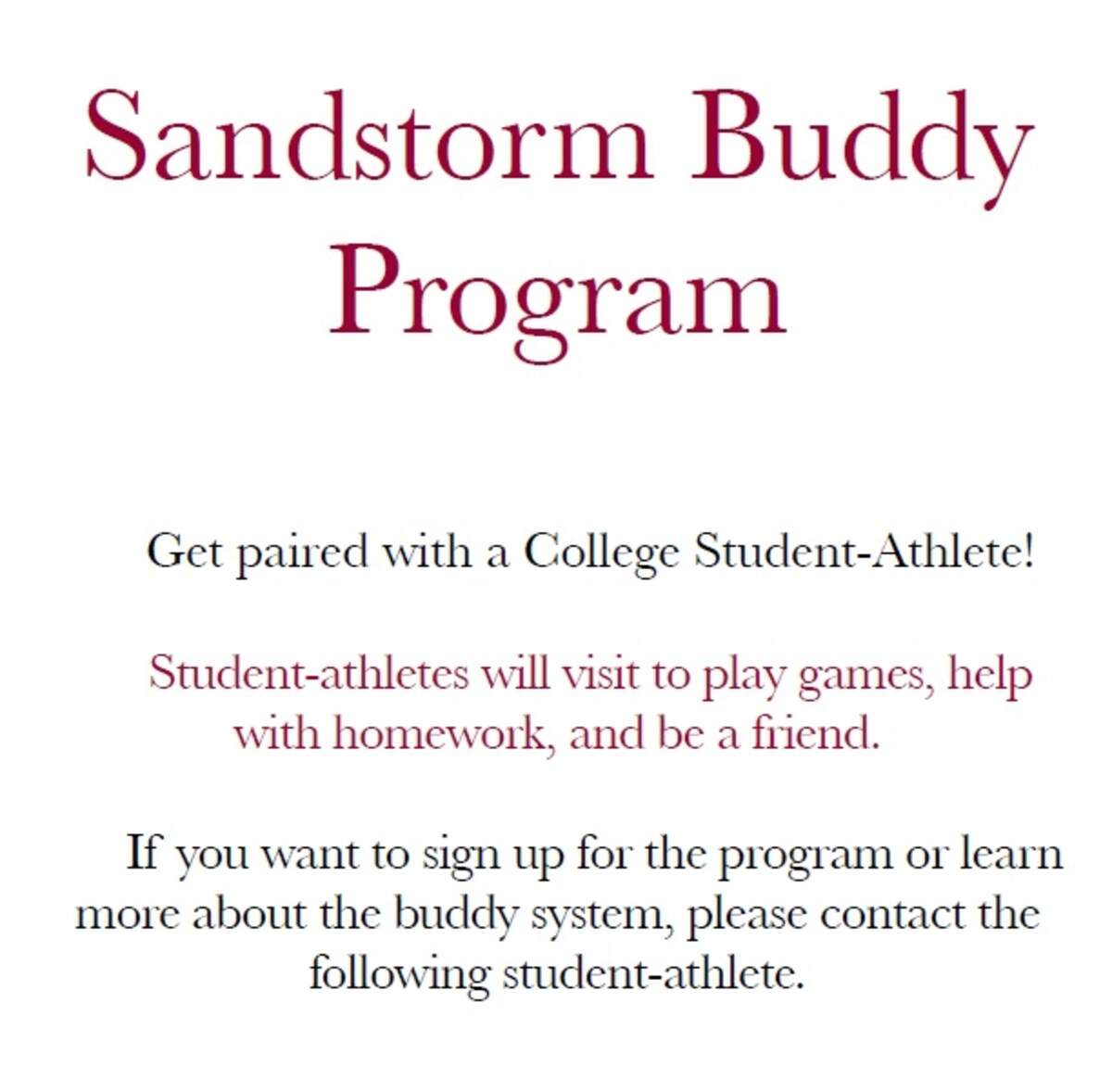
The flier doesn’t make a massive promise, just an offer.
At the top in big type, “Sandstorm Buddy Program,” in a hue close to South Carolina’s garnet.
Below is the pitch: “Get paired with a College Student-Athlete!”
And what does that pairing mean? An athlete who comes to visit, play games, help with homework or just be a friend.
The offer comes from Gamecocks student athletes and is extended to the families of sick children at Prisma Health Children’s Hospital. It was the brainchild of one Gamecock, football player Spencer Eason-Riddle, an athlete whose off-field work in Columbia far outpaces what he’s done in games.
When he speaks about volunteering at various hospitals, he refers to “my people” and “my patients,” and his goal at its core seems to be fellow athletes, often steeped in the finer points of their sports and educations having people and patients of their own.
“These kids, this is no way to live a childhood,” Eason-Riddle said. “It’s really important for us to be role models and just be people with them. It’s an opportunity for us to not only talk about sports, but to talk about, like, ‘How are you doing? How are things in your life?’ This isn’t about the athlete, it’s about the kids. That’s really the main inspiration behind it, making it about them. And for athletes to be vulnerable really and to step out of their shell a little bit.”
Starting something
Eason-Riddle didn’t play in a game his first two seasons, finally getting some playing time last fall. But the public health major from Raleigh, North Carolina, has picked up his share of awards.
SEC Community Service Team. Community Service Award. Dr. Harris Pastides Outstanding Student-Athlete.
He became a mainstay for the department’s volunteer efforts, doing things like heading to a community symposium days after spring practice finished to talk with kids earlier this year. But his primary passion runs along the same lines as his major.
“It all really started at the VA Medical Hospital,” Eason-Riddle said. “I was kind of doing physical therapy work with them. I was in the quality management department. And I moved into emergency room.”
Then a connection brought him to the cancer center. The mother of Gamecocks punter Joseph Charlton works there, and she helped get him in contact with folks in the unit.
“I went over there one time and I absolutely loved it,” Eason-Riddle said. “I go there regularly. I go there probably every week. Once a week, got talk to my people, talk to my patients I love so much.”
That experience, perhaps blended with a little entrepreneurial spirit, led to Sandstorm Buddies.
He got an assist from Gamecocks soccer player Jackie Schaefer, who has set up a student-athlete visiting hour at the hospital and helped spread word about the program. By April, they had more than 80 athletes interested.
Megan Stoltzfus, South Carolina’s director of student-athlete development, said Eason-Riddle had always been incredibly involved in the school’s community service efforts, putting in hundreds of hours each year.
But this was a little something different.
“He wanted a way to engage more student-athletes, just to be able to, not even necessarily give back, but just help these families find a little bit of joy in what obviously is, depending on the situation, not a great situation for them,” Stoltzfus said. “And so he just asked if it was something he could do and just take the lead on. We said, ‘Absolutely.’ ”
This isn’t 100 percent unique, as Stoltzfus said in her year and a half in Columbia, she’s seen two or three such initiatives a year. Overall, Gamecock student-athletes perform between 7,000 and 11,000 hours of community service a year.
Jordan Parker, a certified child life specialist with Prisma, was one of Eason-Riddle’s contacts at the hospital and helped him get the program running. A previous relationship with Gamecocks staffer Marcus Lattimore and his foundation provided the bridge, and things went from there.
“He really has just kind of took the initiative on his own,” Parker said, “which is really just kind of impressive for someone his age. And really you can just see the passion he has behind it and how much he wants to make of this program.”
The work it takes to volunteer
As Eason-Riddle rattles off the things he had to do, one thing becomes clear: To volunteer in some parts of the hospital, it takes a lot of work just to get involved.
He mentioned a HIPAA process, training as a volunteer, just to clean tables and maybe toss a ball with physical therapy patients. After that he moved to quality management, getting a certification in project management and then getting a bit of training with electrocardiograms (EKGs).
Parts of the process took months. At times he was discouraged, telling his parents it might not work out and being told to stick with it.
After all that, then the VA and working with cancer patients, he kept going and ran into a different sort of challenge in building Sandstorm Buddies.
The ins and outs of NCAA compliance.
He said many random weekdays will take him to Stoltzfus or South Carolina’s compliance department, “asking what is this rule?” or “What can I not do?”
Participating athletes have forms to sign for a simple reason.
“So no one is threatened or in jeopardy because of my program,” Eason-Riddle said, “which is really important to me. So I’m really diligent, very particular about all the rules and stuff. From really a compliance perspective, about parents and the kids giving gifts to us, anything of monetary value, none of that can happen.”
That also means not running afoul of licensing or leveraging the status of being Gamecocks. They are South Carolina athletes, but they can’t use that fact to directly promote it (thus the name Sandstorm Buddies).
Parker called the program a bit more in-depth than the hospital usually has. Teams often come in, but it’s not for that long and lacks the long-term elements of this particular endeavor.
The hospital gives families the option but lets them reach out to Eason-Riddle to initiate things.
“We love when they have the teams to come and visit. The kids love that,” Parker said. “We pass out the fliers and the families can take it from there to then contact Spencer and get paired with an athlete, so then they have someone to support them through their chronic illness and their hospital experience, but then also to kind of be the additional buddy outside the hospital. So that’s kind of more of their focus.”
A man with a plan
The path that brought Eason-Riddle to being a Gamecock isn’t wholly unique, but it’s not the one most traveled.
He’s a walk-on, not getting an athletic scholarship help to pay for school. And he joined the team at an unusual time, which left his status a little in limbo.
“I was a preferred walk-on through coach [Everette] Sands on [Steve] Spurrier’s staff,” Eason-Riddle said. “And when I came here, obviously [Will] Muschamp and his staff, no one knew who I was.”
He’d stayed home his first fall after school, going to community college and aiming to enroll in spring. A fullback and linebacker in high school, he expected to come to USC and play offense. After trying out and making the team, he started on defense.
His career has followed an upward trajectory: redshirt in to 2016, not see the field in 2017, join the travel roster primarily as a special teamer last season. He got in with some offensive packages, switching back to fullback for a few plays, and filled in at linebacker when the team’s injury woes were at their worst.
This spring he picked up his bachelor’s degree, but he plans to spend at least two more years in Columbia.
He came to USC not sure what he wanted to do. Early on he tried the cardiovascular tech program, but worries about an internship and football clashing led him to public health. He plans to get a master’s degree across the next two years.
He clearly brought a bit of an entrepreneurial streak to the subject matter, and he said he liked how broad it was, how many areas it could reach into.
He might end up returning to Raleigh when it’s all said and done, but said the department has provided enough networking opportunities that he could find himself in a range of places.
At the moment, it has him running his program, trying to apply a little of what he’s learned.
“Public health, all the classes I’ve taken has helped me figure out, some of these kids might be dealing with some anxiety or some depression,” Eason-Riddle said. “Thinking on a big scale and solving problems with holistic solutions.”
Unique enthusiasm
On a weeknight earlier this spring, just after spring practice had wrapped up, Eason-Riddle was sitting before a room full of kids, talking about bullying. He’d gone with freshman quarterback Ryan Hilinski, whose own relationship with mental health questions is well-documented, and found himself addressing members of the Columbia community at large, alongside police officers and advocates.
It was a small piece of volunteering, the sort that led him from one thing to another, to pulling more athletes in and trying to start something.
“Spencer’s enthusiasm is unique,” Stoltzfus said.
Next season, fans might see him working on the field at Williams-Brice, the No. 45 stretched across his 6-foot, 226-pound frame. He might be making a tackle on special teams or throwing a block on the goal line.
Off the field, he might be chatting up a patient or helping set up a Gamecock and a family for something that can start in the hospital and go well beyond that. Parker said an athlete might help a patient with schoolwork or even attend a big life event down the line.
“Build that therapeutic relationship,” Parker said.
To a degree, the program is his, but it’s also not. It belongs to the other athletes who join, the families that become part of that fabric, the hospital and something greater still.
“It’s cool to be part of a school and a student-athlete body that wants to help and make Columbia a better place,” Eason-Riddle said.
This story was originally published July 2, 2019 at 7:00 AM.