Sizzling steaks or homemade burgers: How the Gamecocks are learning to cook
The first things that hits you while walking to this particular corner of South Carolina’s football operations building: the noise and the smells.
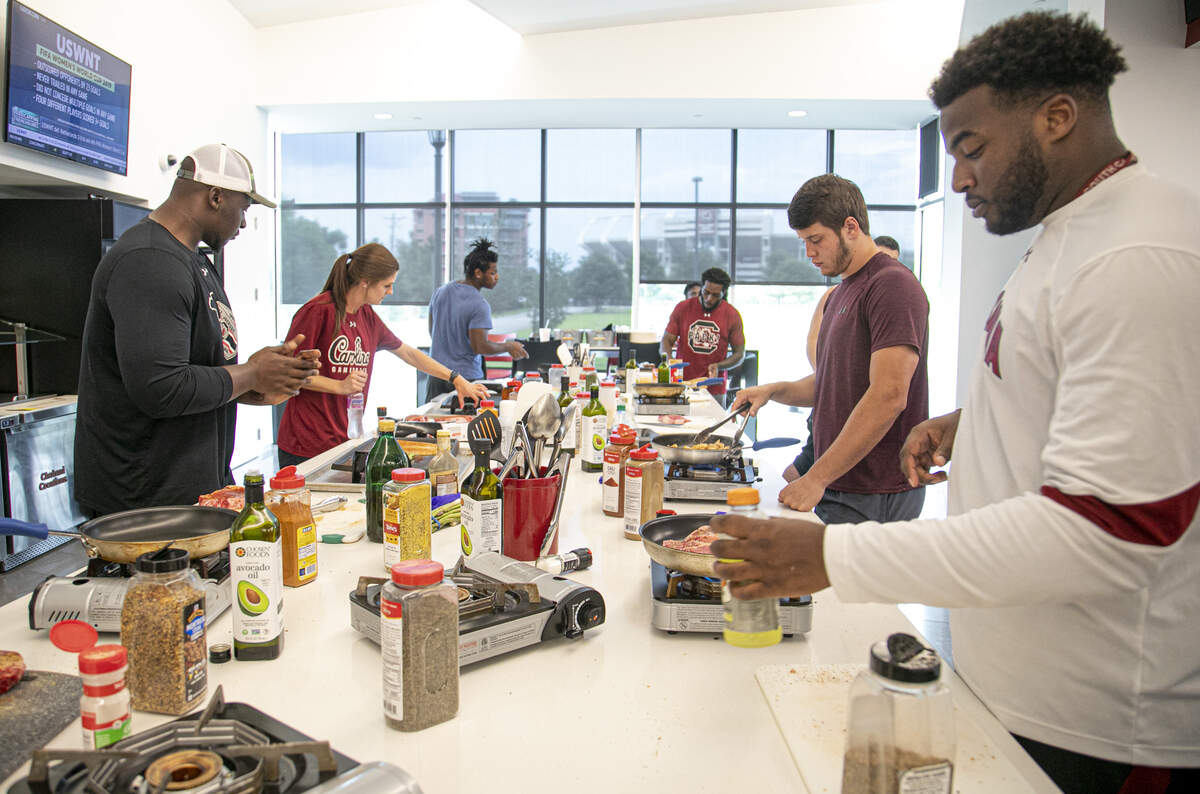
The music is loud, but this isn’t a workout. The scent of seasoning permeates. Meat sizzles on grills and in pans. There are vegetables, too, and one Gamecock is trying his hand at preparing rice.
Players stand around a kitchen island next to the team’s nutrition station. Most are working with a burner or a grill; some are cutting a steak, preparing a burger, pounding in some spice or working in oil or butter.
This is a brainchild of Kristin Coggin, South Carolina’s director of performance nutrition. She’s in charge of feeding a hungry football team, organizing the preparation of hundreds of meals a week for more than 100 players.
But today, her staff isn’t preparing the meals. The players are.
“Sometimes we get in a routine of having food catered to us all the time,” offensive lineman Donell Stanley said. “Being able to cook your own meal and see what you’re all about, what everybody is all about, is good.”
The cooking demos usually happen at least twice a week. They give players a hand in their own nutrition regimen. And they give the players something else.
With the music blaring, tight end Kiel Pollard and safety Jaylin Dickerson dance. Gamecocks compete to see who can make the best steaks. Some are more adventurous, some are still getting there. As big men come in and out, it’s nothing if not a scene.
“It’s a good thing,” linebacker Sherrod Greene said. “Just come in, cook. Like one night we had like 30 people come in and cook. It was flooded. Everybody was cooking meals and having fun. So it was great for team bonding.”
The challenge and the answer
Coggin remembers it starting with a competition to make a better sauce.
That was back in Williams-Brice Stadium, in the nutrition station beside the old weight room. It was the spring of 2018, and at the beginning it was small.
“It was just a few guys over in the weight room over in the stadium,” Coggin said, sitting in her office maybe 10 feet from the impromptu kitchen. “We’d kind of go back and forth cooking a few different things — who could make the better sauce.
“And then whenever we started coming over here in the spring, we started cooking. We started with one. Then it became twice a week. Some weeks it would be three to four times.”
Early participants included Greene, one of her star pupils, running backs A.J. Turner, Mon Denson and Rico Dowdle, plus wide receiver Randrecous Davis.
Coggin’s challenge is a big one. She has to stay on top of fueling more than 100 student-athletes on a daily basis. Some are eating up to 5,000 calories. Some are losing weight.
These are also males in the 18 to 22 range, a group not often known for tip-top eating habits.
What helps is the rigorous schedule that has players in the building often. During summer workouts, they’ll eat breakfast before a lift, maybe something during, and often lunch afterward. They also can get a few to-go boxes, plus snacks such as yogurt, beef jerky and PB&J sandwiches. (Players are supposed to eat every two hours.)
The cooking classes offer something else. The staff gets a closer eye on what they’re taking in. And they’re gaining a little extra skill.
“I want them to learn by trying and doing,” Coggin said. “So tasting new things they can choose from. I kind of ask them, ‘What protein do you want to make? Do you want to make chicken? Do you want to make steak? Do you want to make fish, shrimp, scallops? What is your kind of base, and how do we make it a balanced meal?’ ”
There are more than a few rules and mantras, how to build a balanced plate (protein, veggies, variable carbs depending on their goals). A plate should be colorful, as Coggin reminds players to “taste the rainbow.” That borrows from the Skittles slogan, but with the caveat to not actually eat Skittles.
And she’s going to push some palates.
Coggins pointed out that garlic might not have been in the mix for some players growing up. Many went from not knowing what rosemary was to putting it on all sorts of things.
There’s an element of proof of concept when it comes to all this. Players eat better the night before a workout, feel better during the workout, move faster — it starts to come into focus.
“It’s like a job,” Greene said. “You’ve got to treat everything like you’re a pro. You come in here every day, working out. People are too tired to eat after some times, after practices.”
Beyond the building
One of the advantages of the cooking class: Players eat fewer meals on their own, with Coggin estimating they might only have a few weeknight dinners cooking for themselves, plus all weekend during much of the offseason.
This might present a possible pitfall, but the players seemed proud to take their cooking habits home.
“The days we have it here, come here, cook here,” defensive end Kingsley Enagbare said. “At home, we just use the stuff we learn here and bring it to the crib.”
Many players live at the 650 Lincoln dorm, where they have access to kitchens and grills.
Coggin makes sure to give her players a few tools when it comes to eating outside the building. She’s trained them on the finer points of grocery shopping: Stick to the outside perimeter, where fresh fruits, veggies and meats are, rather than the processed food in the center aisles. Sometimes she’ll even take players shopping.
And there’s another modern way to keep an eye on that.
“They have an app on their phone we put money on each week,” Coggin said. “They then go to the grocery store. So they actually do enjoy cooking on the nights we don’t feed them here. So then they go and they pick out things. They shop together. Roommates shop together. So it’s nice that they’re taking the skills they learned here. They know what ingredients they need.”
Players can also use those funds at some restaurants in town, even using it to buy something such as Chipotle. This also gives the nutrition staff a way to track things and stay on top of players’ eating habits.
Coggin is a former college rower who went through school planning to become a dentist. Between being the daughter of a dietitian and working with one after discovering a food allergy, she found her way into the field when Tennessee allowed her to stay on scholarship by working in nutrition.
After time in Southern California, working across a wide swath of the desert area around Bakersfield, she found her way back to the SEC —first at Alabama and then to Columbia through strength coach Jeff Dillman.
In some ways, she plays a role of den mother to more than 100 players. She’s at the building by around 5 a.m. most days, stays there until nearly 9 p.m., often checking in.
“They know they can always reach me,” Coggin said, “and if I need to keep tabs on you, I’m going to send things like a GIF of someone eating. I’m going to make it fun.
“It’s about them and not me. I’m here for them.”
She might need to get an occasional message across about needing to hydrate well enough, but overall Coggin downplayed the need to heavily track too many players.
Players are self-motivated and generally stay in line because they see the outcome, she said. Incoming players see it as more of a priority, maybe more than those whose habits started before the system was in place.
But that seriousness doesn’t stop a player from asking her to serve as taste-test tiebreaker or advisor for high-leverage meals.
Take, for example, the player with a vegetarian girlfriend who in February asked about cooking tofu for a Valentine’s Day meal.
“There were a few players that were like, ‘I want to cook for my girlfriend,’ ” Coggin said. “ ‘Can you teach me how to make these things?’ ”
Adding skills
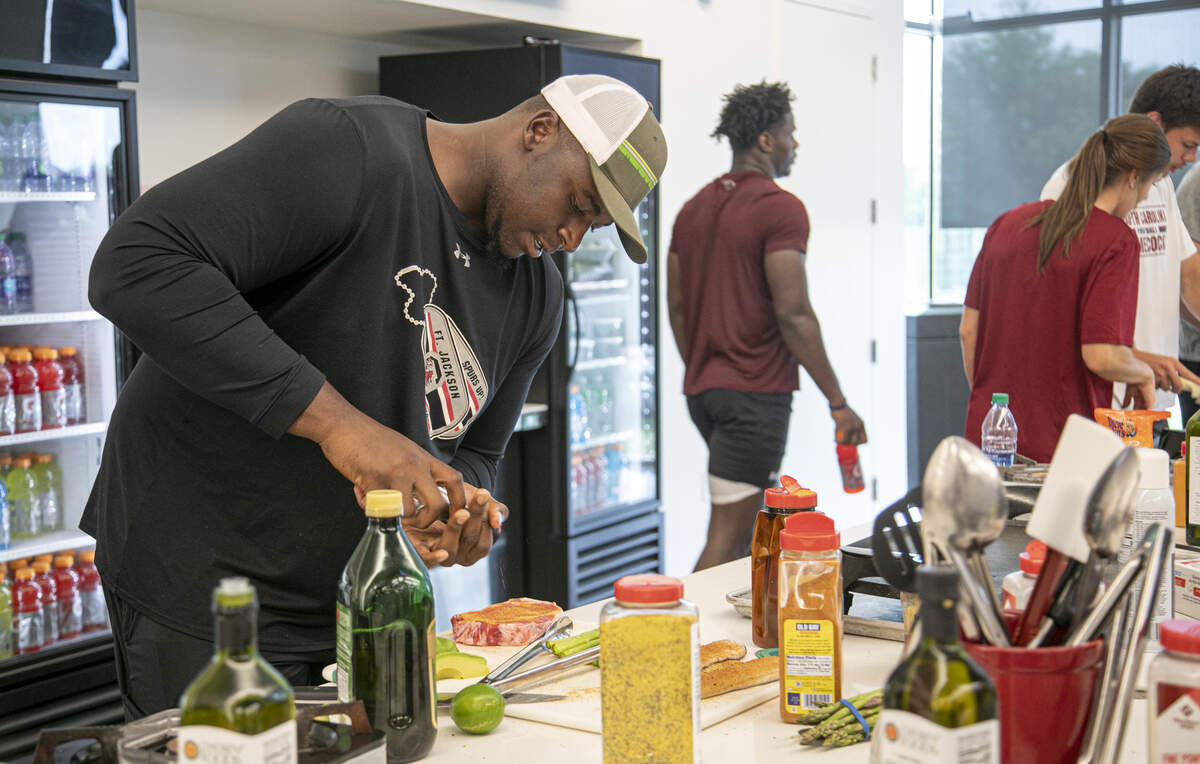
Stanley is standing over his cutting board with a certain kind of focus. He’s got the standard steak, but there’s also some fish and even an avocado he’s slicing up.
When someone comes to pull him aside, he says it’s OK. He’s still waiting for the steak to get to room temperature.
Stanley came to college with more culinary skills than most players do. From the small S.C. town of Floydale, he knew how to cook and picked fresh veggies from a garden his family maintained. Now the Gamecock veteran, he’s not going to step in and simply correct players.
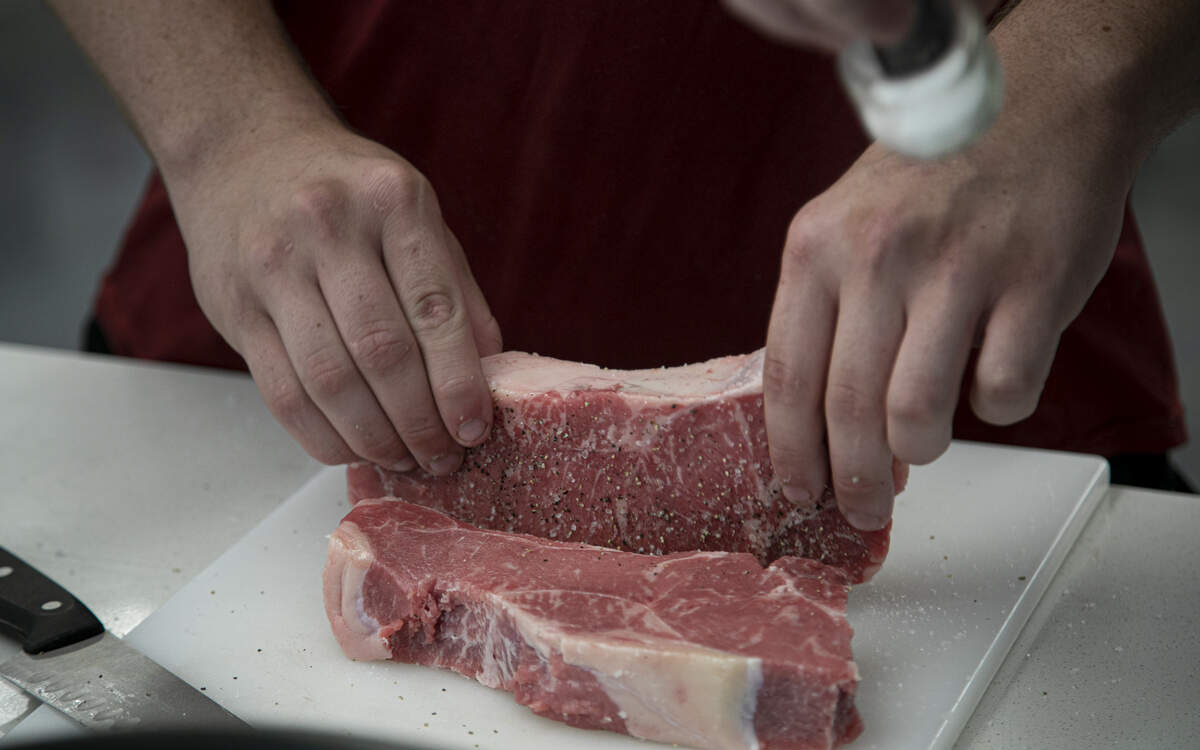
“As a guy who pretty much knows what he’s doing, you want to tell them,” Stanley said. “ ‘Hey, you need to let that steak get to room temperature. You don’t need to cut your steak before you take it off the grill.’ I just like to let them do what they want to. As long as they enjoy it, that’s all that matters.”
It matches Coggin’s ethos. It isn’t as much staying on players as it is setting up situations for positive outcomes. She points them to better foods, shows them how things are done, shows them how much better they feel and perform when they actually are properly fueled before big workouts.
Greene bought into it early, despite not having much in the way of kitchen chops beforehand.
His mom taught him to make spaghetti, a staple in his house growing up. He said he’d dabbled in cooking before the demo classes started up, and now he calls it a “go-to” event in his week.
“My whole family can cook,” Greene said. “My brother, my mom, everybody in the household can cook, except me. I felt like the oddball. But now I can cook a little bit.”
He’s in Coggin’s group of gainers. He said the class helped him get from 220 pounds during the season to 235 or 240 at this point.
Enagbare says he’s up 20 pounds since arriving on campus. He admitted he came in with “little to none” when it came to cooking skills.
Now he’s breaking out the Montreal seasoning, some rosemary, a little butter and oil to put on his steaks. He’s had to give up some sweets, but the classes have given him some confidence, especially when it comes to the quality of his steaks.
“As we know, I’m the best,” Enagbare said.
Going strong
Players had already been at their pans before the official 4 p.m. start time of this day of cooking demos, but nearly an hour and a half in, things haven’t slowed too much.
Players there at the start are finished. They’ve either boxed up their handiwork to take home or sat down at nearby tables to dig in.
More waves of players come in, some from the weight room, others the locker room and more from outside. They sidle up to an open station, procure ingredients from staffers and get to work.
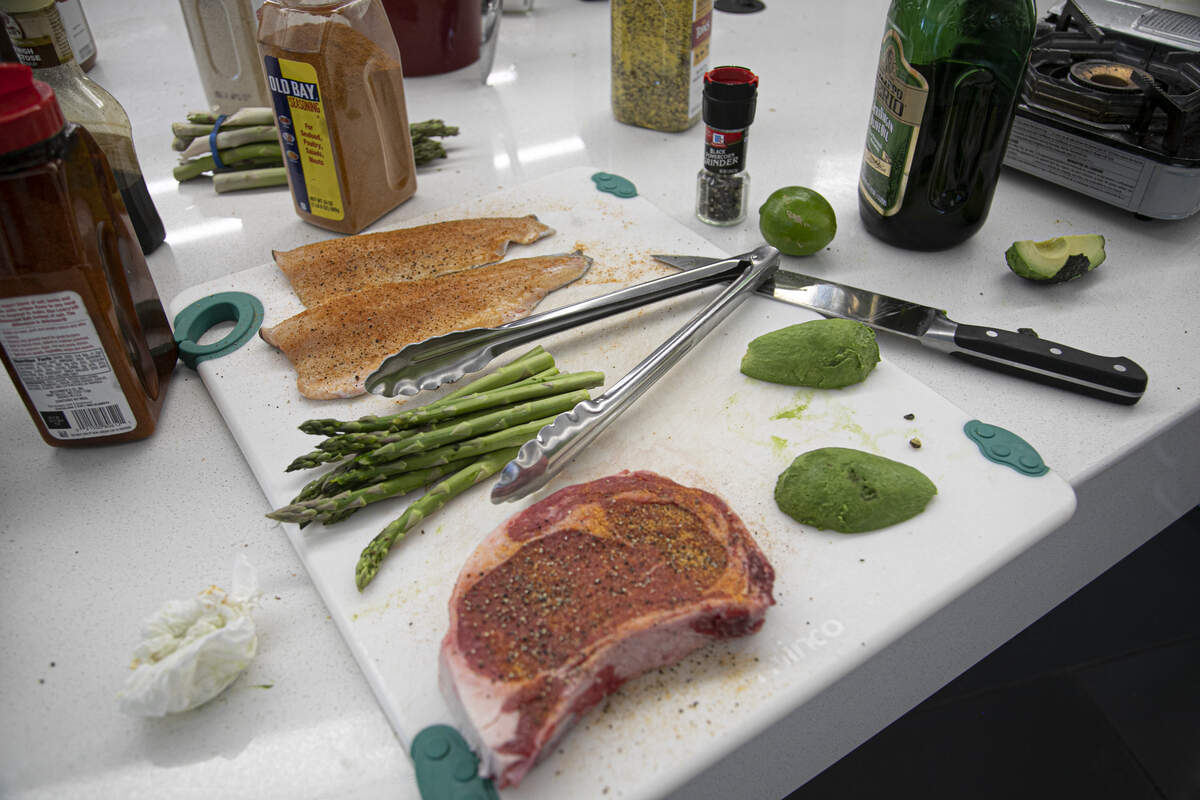
Coggin has seen growth all around. Shi Smith came in cooking his steaks until they were just short of hockey pucks. That’s changed. Defensive end D.J. Wonnum is making his own guacamole. Stanley can feed teammates with the fish he’ll catch, while receiver OrTre Smith concocted a “quesadilla burger” with sauteed vegetables and thousand island dressing.
There’s a vibrancy to all of it, an energy. Teammates are hanging out, focusing on this skill they likely didn’t bring to school but will almost assuredly use down the road.
Hear the music and the sizzle, smell what’s wafting through the room. Those pans are hot and ready for someone to start cooking.
“It’s a great experience,” Enagbare said. “It’s another time to bond with your teammates. It low-key gets competitive. A lot of us compete, who makes the best steak or whatnot.
“It’s a great time.”