The biggest what-ifs in the recent history of South Carolina football
College football is fickle. Small plays turn games. A game here or there turns a season, maybe the fortunes, of a program.
South Carolina’s football program has seen its share of wild swings and moments that led to massive changes in fortune. Some Gamecocks coaches left at inopportune times. Others stayed a little longer.
Here’s looking back at some of the biggest what-ifs in the past 40 years of USC’s history on the gridiron.
What if the 1981 squad doesn’t slip at the end?
On Nov. 1, 1981, the Gamecocks were in a good spot. They were more than a week removed from upending No. 3 UNC and followed it up with a win against N.C. State to get to 6-3. Not bad for a team that lost a Heisman winner from the previous season. Up next was a game against Pacific, a small-conference team in the midst of 16 consecutive losing seasons.
But the Gamecocks suffered a 23-21 upset. They dropped the next game to eventual national champion Clemson and finished out with a lackluster loss to a 9-2 Hawaii team coached by Dick Tomey.
That 6-6 finish with no bowl left then-coach Jim Carlen vulnerable. Already at odds with his administration for several reasons, the finish opened the door to his departure. After one ill-fated season with replacement Richard Bell, Joe Morrison came on and jump-started things. Perhaps beating Pacific could’ve given Carlen another chance. Maybe it would’ve taken beating Hawaii too.
What if the Gamecocks don’t lose to Navy in 1984?
This is the biggest one. South Carolina was ranked No. 2 in the county coming off a win against Florida State. Top the struggling Midshipmen and then Clemson, and they’d head into bowl season in the mix for a national title.
But things went sideways. Navy, which finished the season with a losing record, pulled away at the start of the third quarter and won 38-21. An Orange Bowl bid was all but in South Carolina’s grasp, but it slipped away. After a tight win against Clemson, the Gamecocks landed in the Gator Bowl and gave up a go-ahead touchdown with less than a minute to go against No. 9 Oklahoma State (led by Pro Football Hall of Famer Thurman Thomas).
Had the Gamecocks finished out the regular season unblemished, they would’ve likely taken the place of Washington against 9-1-1 Oklahoma. Beating the Sooners would’ve been a tall task, but ultimately BYU won the national title with a lighter schedule, leaving a still-lingering question about what South Carolina might’ve been able to pull off.
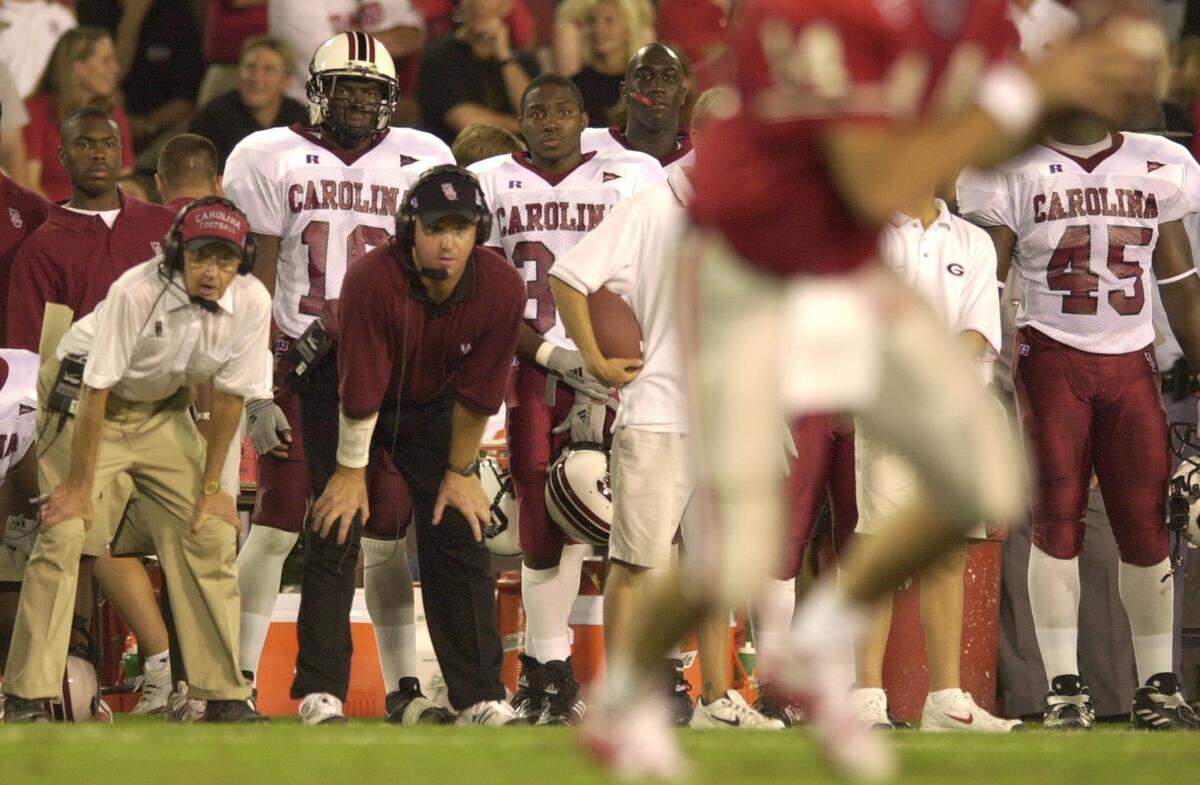
What if South Carolina holds onto Skip Holtz?
At one point in the Lou Holtz era at USC, the succession was set to be a family affair. The father had turned around the program. Now the son, Skip, was going to take the reins. But it didn’t come to pass.
The program peaked with nine wins in 2001, in part because of Skip Holtz’ more pass-heavy offense. Lou Holtz tried to shift things more toward the option run game in the later years, even stripping his son of play-calling duties. The staff’s final three offenses failed to crack the top-75 nationally in scoring. Skip Holtz had his deal paid out and Steve Spurrier ultimately got the job.
Things worked out well for Spurrier, as he tallied the most career wins in program history. Skip Holtz had a successful tenure at East Carolina, winning 18 games his last two years. He struggled at South Florida and has won 56 games in seven years at Louisiana Tech. Had he been given the chance to take over at USC for his father, things would’ve looked different but could’ve been plenty interesting in Columbia.
What if Spurrier’s best teams broke through?
From 2011-2013, the Gamecocks won 11 games each season — but they never played for an SEC title in that stretch. Each chance seemed to get just squeezed out.
It’s hard to make a case for the 2012 team, though their loss at No. 9 LSU was a tight one. (The loss to Florida was not, and that would’ve just meant a tiebreaker Florida likely wins.) But the 2011 and 2013 seasons each had curious losses that just kept the Gamecocks out of Atlanta.
2011, Auburn: The loss to 11-win Arkansas made sense. The loss to the 8-5 Auburn Tigers, less so. Explosive passes and Stephen Garcia running were about the only things that went right for USC in this game. The Gamecocks still led in the final five minutes, but Barrett Trotter and an anemic Tigers attack went 57 yards for the go-ahead score and the Gamecocks offense ran out of time at the end.
2013, Georgia and Tennessee: The Bulldogs broke a three-year skid to the Gamecocks, but then took three conference losses on the way to a five-loss season. The Vols were worse, not making a bowl and winning only two SEC games. One of those was against the Gamecocks, limiting a good South Carolina passing game, forcing a pair of turnovers and mounting a 63-yard drive in the final three minutes for the game-winning field goal.
Flip any of those three games, and Connor Shaw would’ve faced either LSU or Auburn at the Georgia Dome. Beating either would’ve been a tall order, but another division title would’ve added to the lore of that bunch.
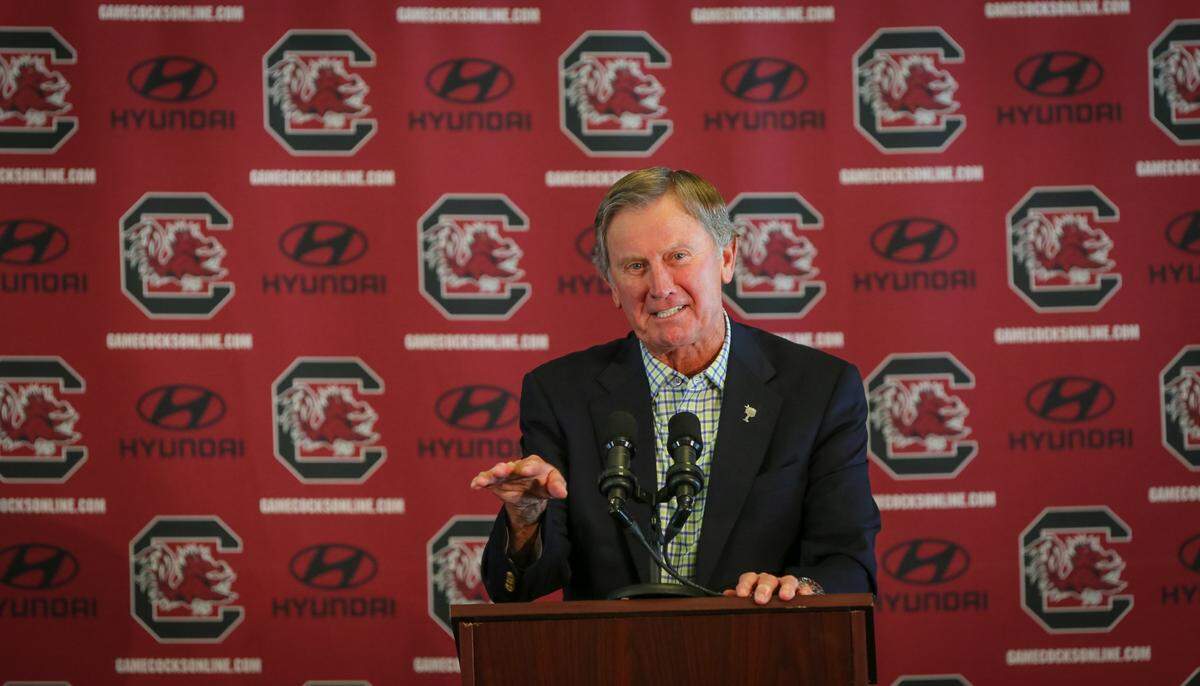
What if Spurrier hangs it up early? (with a bonus)
Steve Spurrier actually tried to call it quits earlier.
After a trying 2014 season that started in the top 10 and ended in the Independence Bowl, he’d strongly considered ending his Hall of Fame career. But his wife and Ray Tanner talked him into hanging around, setting the stage for his mid-season exit in 2015. Without that, things get interesting.
The chance Will Muschamp lands the USC job right off his Florida tenure seems low (though he was a target in Spurrier’s last defensive coordinator search). That 2014-15 cycle didn’t seemingly feature any coaches in the Gamecocks’ range. Guys like Gary Anderson and Jim Harbaugh weren’t ending up in Columbia. Tom Herman was too green, same with Neil Brown. Jim McElwain would’ve been hard to pull from Florida, while Chad Morris coming straight from Clemson would have been strange.
Perhaps Tanner would’ve made a run at Mike Bobo, who landed at Colorado State, or pursued Kirby Smart a year earlier (though maybe that triggers Mark Richt’s Georgia departure sooner). Maybe South Carolina plucks Justin Fuente a year earlier, or Mark Hudspeth enters the conversation.
In any case, it would’ve taken things in a different direction. The Muschamp era at USC has been fraught with ups and downs, and it’s hard to imagine things would look all that similar with a different face leading the way — not worse or better, just different.
Bonus: What if that 2014 team comes closer to its promise? Spurrier’s last full season included a good offense that three times was unable to deliver a crucial score in tight games with a defense that has a strong case as the worst in the recent history of the program. It was a team that went 3-5 in games where it allowed 6.8 yards per play, which meant it allowed that ghastly number more than 60% of the time it took the field. If that team won two or three more games, at the very least the program heads into 2015 feeling on more secure footing.
What if the Gamecocks don’t mount a miracle comeback vs. Louisiana Tech?
On Sept. 23, 2017, it took a defensive miscue by USC for the Bulldogs to go up two points with less than a minute to play, and it took more for South Carolina to pull out a win. Quarterback Jake Bentley slipped two tackles to scramble for 24 yards on third and 10, and then Bryan Edwards hauled in a bobbling ball for 42 yards to set up a game-winning kick by Parker White with seven seconds left.
That game came between a surprising loss to Kentucky that put Deebo Samuel out for the season and a more expected loss at Texas A&M. Lose to Skip Holtz’ squad, and the Gamecocks would’ve been 2-3 in a season that started with some promise. Even if they’d rallied against a schedule that softened up, Will Mushamp’s best USC season to date would’ve been dragged down by a loss to a mid-major team that turned around and went .500 in conference USA.
What if the Gamecocks don’t beat Georgia in 2019?
It took the most intricate series of events for South Carolina to stun No. 3 Georgia in Athens on a day filled with missed field goals and unlikely plays. The outcome proved to be, by far, the brightest spot in a 4-8 USC campaign and cost the Bulldogs an undefeated regular season.
And the fallout from South Carolina and Will Muschamp not having that win on the resume might have been severe.
Tanner referenced the Georgia game numerous times in his reviews of the season, citing that type of potential when questioned about Muschamp’s job security. Perhaps things go as they did, a massive staff shakeup rather than a head coaching change, coming off a 3-9 season. But only beating Vanderbilt, Kentucky with terrible quarterback play and an FCS team with a squad that Muschamp called possibly his best in Columbia might have been enough for the change to happen (especially in light of the school president’s public comments on the matter).
Had there been a change, who ended up in Columbia would have been interesting, to say the least. Mike Norvell would’ve been a tough get, and other similarly-situated SEC schools ended up with Lane Kiffin (possibly a tough fit), Eli Drinkwitz (only one year as a head coach) and an assistant with no coordinator experience (Sam Pittman). Options might’ve included Dave Aranda, swinging hard for Mike Leach, as Mississippi State ended up doing, maybe Drinkwitz or someone who didn’t move this cycle.
Any what-ifs we missed? Let Ben know at @breinerthestate on Twitter.