
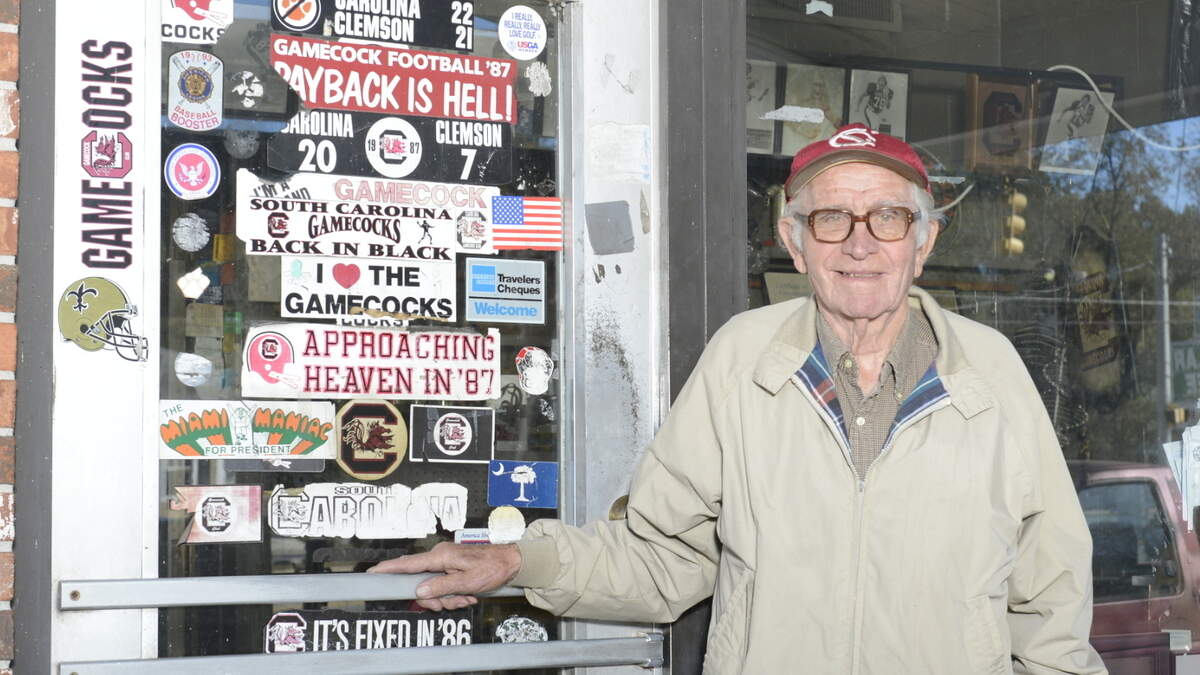
The late RJ Moore a friend to many Gamecocks. And his gas station was a USC tradition
Tommy Bell needed a car. Actually, he had a car. What he needed was an engine.
In the fall of 1969, Bell, a freshman kicker for South Carolina’s football team, was riding a bicycle around campus and to practice. His father had sent a 1950 yellow-and-black Willys Jeep, minus a motor, from Walhalla to R.J. Moore’s Exxon on Rosewood Drive.
It was known among USC athletes that the owner treated a menagerie of players’ rides with tender loving care.
“R.J. came to practice and told me, ‘Tommy, come on by the station and we’ll get started on it. You’re going to help me put a motor in it.,” Bell laughed. “Now, I didn’t know jack about all that, but for two weeks I watched R.J. get it running.
“Dad sent him $400 for the motor, and then I spent two weeks pumping gas (to pay for Moore’s labor). That was R.J. He wanted to help you, no matter if it was inconvenient to him.”
For parts of six decades, if you were a USC athlete, you knew R.J. Moore as a resuscitator of players’ “beater” cars and as an avid fan of Gamecock sports, but mostly as a genuine friend. Moore, who died Nov. 7 at age 97 at a care facility in Boiling Springs, was as much a part of Gamecocks athletics as any coach or player.
Ask former athletes from the 1960s forward, and they tell about the car(s) that Moore kept running.
For Casey Manning, a Fifth Judicial Circuit judge and USC’s first African American basketball player in 1970, it was a 1963 Chevrolet Bel Air and later a 1966 Rambler Classic. For Jackie Brown, the Gamecocks’ first Black football player in 1969, it was a 1964 Ford in Gamecocks garnet.
“I took (the Bel Air) to R.J. for an oil leak because everyone told me, ‘Go see R.J. Moore,’” said Manning, one of more than 100 mourners at Moore’s Nov. 11 funeral service. “I bought gas from him, shot the breeze with him. He bled garnet and black, but he’d talk to everyone, was good to everyone.
“If had to sum up what made him special, I guess it was his unbridled sincerity.” In fact,” Manning said with a laugh, warming up to a quotable line, “when you talk about R.J. Moore’s honesty and integrity, by comparison even George Washington looks devious.”
So much more than a service station
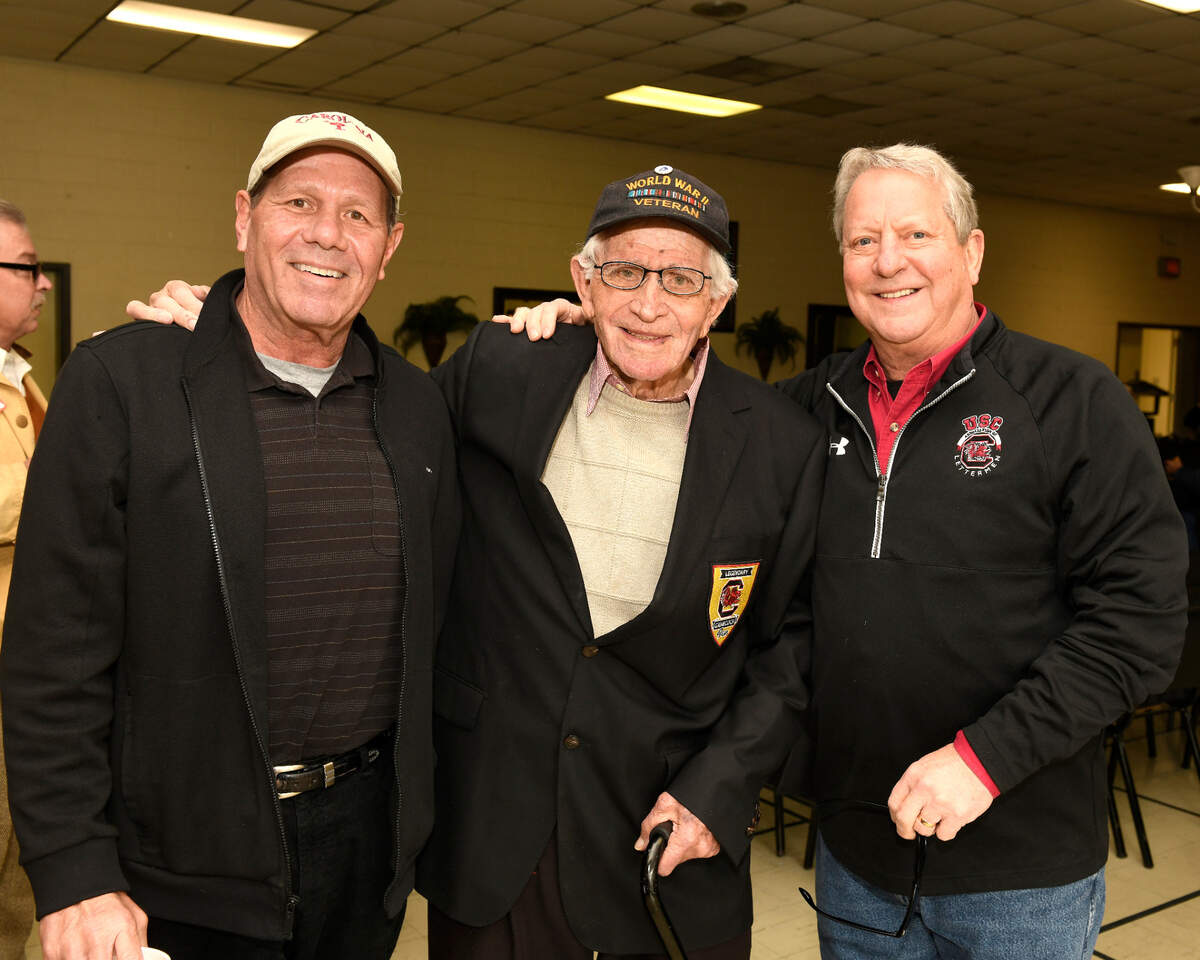
Born in 1923 in tiny Finger, Tennessee, Moore served in the Army in World War II and afterward, rising to the rank of master sergeant. After leaving service, he worked at a Columbia gas station until he learned another station, on Rosewood Drive, was for sale. He bought it, and a USC tradition was born.
One of the first athletes Moore met was Tommy Suggs, quarterback for the Gamecocks’ 1969 Atlantic Coast Conference champions.
“He was the one we all had to go by and meet, because he was interested in all of us,” Suggs said.
Not long after, Moore began posting the first of eventually dozens of photos of USC athletes in his service station’s cozy office, a who’s who — Roche, Owens, Riker, Suggs, Muir, Zeigler — of Gamecocks greats, and near-greats.
Moore — R.J. to everyone; even his obituary lists him as “R.J.” — loved all USC sports, but football was his passion. Coaches and players learned that the Exxon (and later Phillips 66) station was the place to be after home games, where Moore would host his famed “grease pit parties,” loading the station’s lift with food for hundreds of guests. If you knew R.J., and nearly everyone did, you were invited.
“My parents came to every game,” said Mike Hold, quarterback on USC’s 1984 “Black Magic” team that finished 10-2. “He and my dad became great friends. I thought about it when R.J. died: He died Nov. 7, and my dad died Nov. 7, 12 years ago.”
Rick Sanford, an All-American at USC (1975-78) who later played in the NFL and co-hosted several local radio talk shows, recalled airing a “Clemson-Carolina Marathon” show from Moore’s service bays one year.
“We should’ve done it there every year. It was great seeing R.J. with all the fans,” Sanford said.
For years, Moore and his late wife, Ann, attended USC home games and traveled to all the road games. One story about his devotion, recounted by friend Jerry Davis at Moore’s funeral, was how Moore had to miss a game to attend a family funeral in Arkansas.
En route, he pulled into a service station, called collect to his Rosewood station (this was long before cell phones) and instructed longtime employee “Shorty” to put the receiver next to a radio airing the USC game. Moore listened until the final gun, the Gamecocks won, and he contentedly drove on.
Many of those road trips included Chuck and Ruth Grantz, parents of quarterback Jeff Grantz (1973-75).
“(Moore) and my parents got to be close,” Grantz said. “They loved him to death and vice versa.”
Moore, he said, was known to rise at 6:30 a.m. and bang on the others’ hotel room doors, shouting, “Anyone dead in there? We got to go to breakfast!”
Grantz’s favorite story comes from 1975, when he saw Moore at the annual “Tiger Burn” prior to the USC-Clemson game.
“He’s moping around and I said, ‘R.J., what in the world is wrong with you?’” Grantz said. “He tells me, ‘Jeff, I’m worried because we’ve got to win this game to go to a bowl.’
“I told him we were going to score every time we had the ball, so don’t worry about it.” Indeed, USC won the game 56-20, scoring on each of its eight possessions, and went to the Tangerine Bowl.
“R.J. told that story for 40 years,” Grantz said, laughing. “I had to remind him I didn’t say we’d score a touchdown every time.”
For George Rogers, USC’s 1980 Heisman Trophy winner, Moore was especially close.
“My dad bought me a (Buick) LeMans 300; it wasn’t running, but R.J. got it running,” said Rogers, who spoke at Moore’s funeral. “I had no money to get it fixed, and he fixed it for me. He said, ‘George, you’re getting ready to graduate, you need a car.’
“He helped me out when I didn’t have money to do things. R.J. always stepped up and helped us — and by ‘us,’ I mean a lot of us. Not just stars; if you needed help and he got to know you ... he didn’t have a lot of money but what he had, he’d help you.”
Which doesn’t mean Moore was a glad-handing (and cash-distributing) fan. He would put players to work at the station, if rarely in “skilled” positions. Chuck Allen, an defensive lineman from 1977-80, was cut by the then-Washington Redskins and returned to Columbia without a degree or job and with a young family.
“First, I begged (coach Jim) Carlen to pay for another year of school, and then I went down Rosewood to beg R.J. to give me a job. I told him, ‘R.J., I gotta confess, I don’t know the first thing about cars,’ and he said, ‘Well, you can be like Gomer Pyle on (the Andy Griffith Show): Just check their oil.’”
Allen, who served 12 years on the USC board of trustees (he stepped down last September), said Moore took gleeful pride that his former oil-checking employee was “now in the board room.”
Moore like a big brother to some, father to others
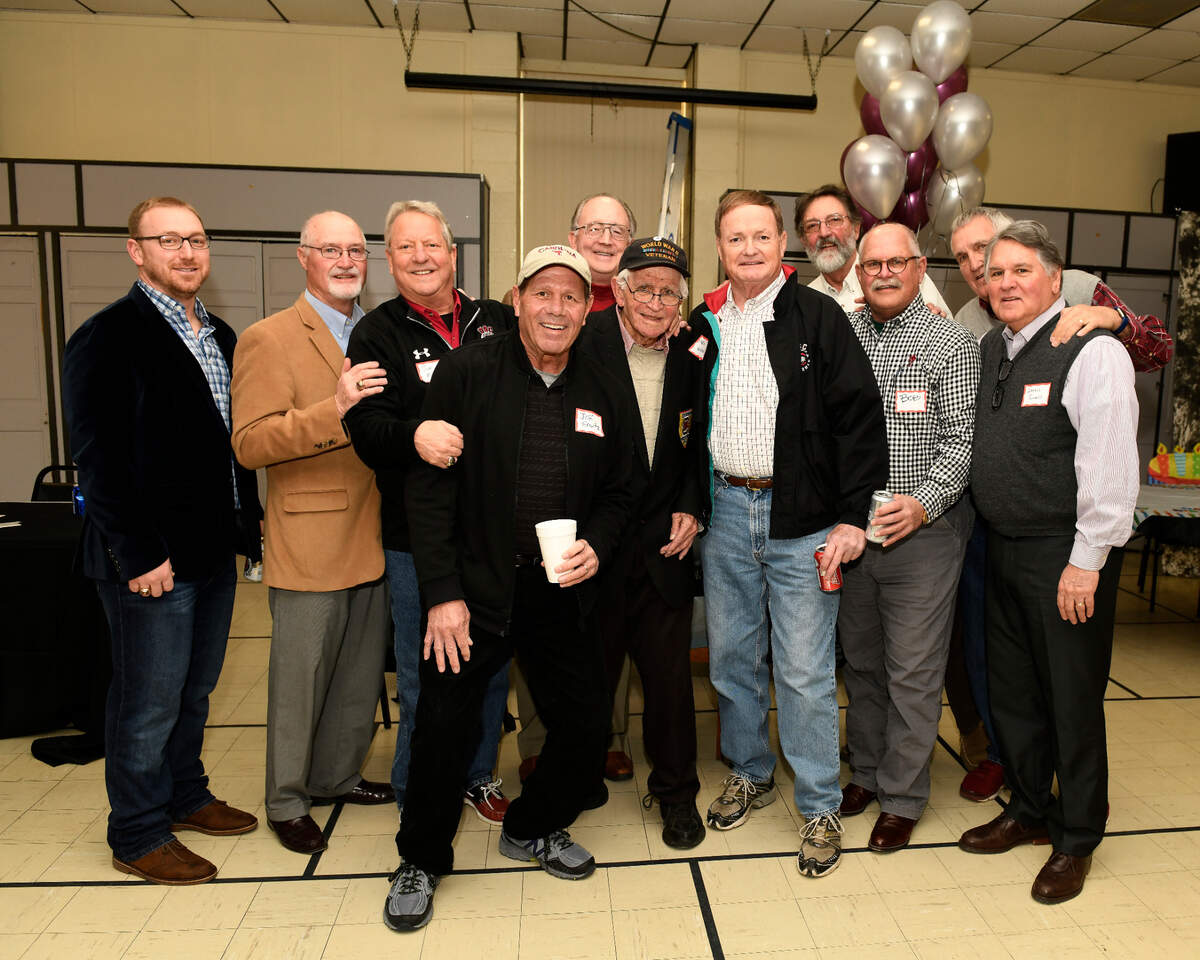
Few players have more poignant Moore stories than Del Wilkes, an All-American lineman in 1984 and later a professional wrestler, The Patriot. Wilkes battled an addiction to pain-killing drugs in the 1990s and spent time in jail; once, he was arrested in Sumter for forging prescriptions and his car was impounded.
“I called R.J., and he sent someone to pick me up and bring me home,” the Irmo native said. “Then he arranged to get my car out. At the lowest point in my life, he was there to lend a hand — 15 years after I’d played football.
“R.J. had a good heart and compassion about him. For some guys, he was like a father or big brother figure, there to help when you needed him.”
Recently, Wilkes watched a video about Carlen, one of his former coaches, accepting an award.
“Coach Carlen was saying when you’re a coach, (players) are always a part of your life and you want to do whatever you can for them,” he said. “And hearing that, the first person I thought of was R.J.
“If you were a part of the Carolina family, you were part of his family.”
Moore’s funeral, on Veterans Day, was overcast with drizzling rain. But when the service began, Manning noted, the rain stopped. Moments after the service’s conclusion, the skies opened up in a downpour.
Manning chuckled. “See?” he said. “Even God looked down and smiled on R.J.”
This story was originally published November 20, 2020 at 8:11 AM.