
Remembering when the Carolina-Clemson rivalry game produced 5 nail-biters in a row
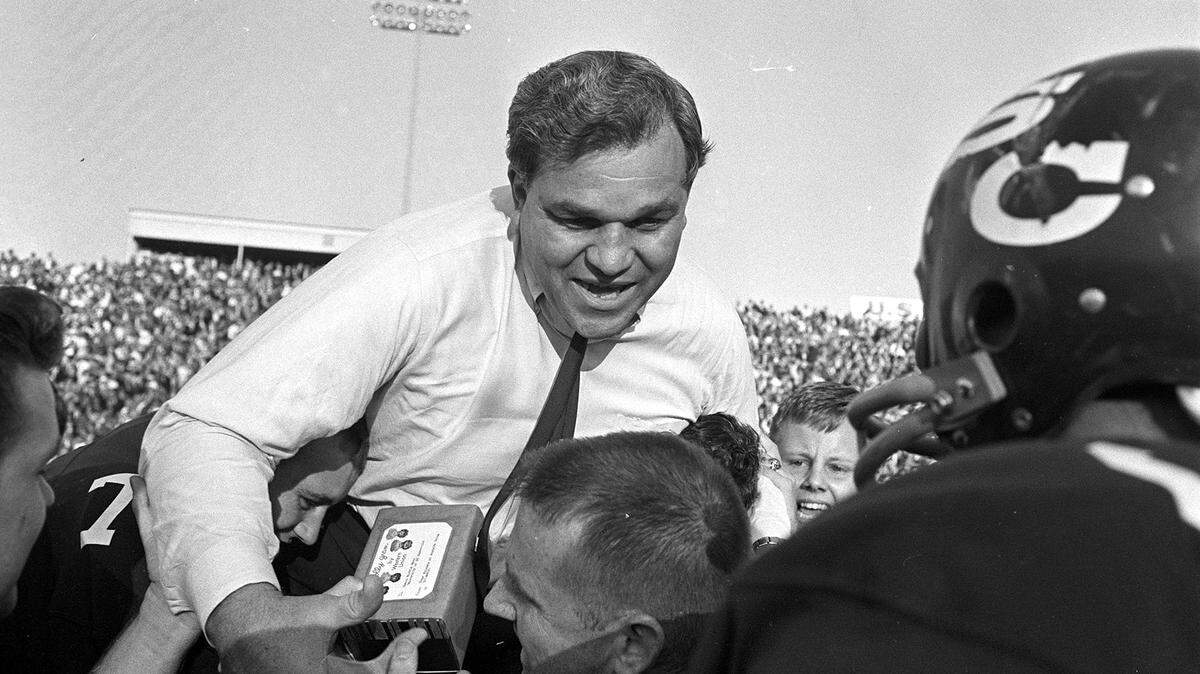
The annual Carolina-Clemson football showdown dates to 1892, and, like almost anything with that much history, it provides memories to treasure.
There have been good games and lousy ones, great performances and some to forget, and the odd history of playing for years on “Big Thursday” — the Thursday of State Fair week in October and always in Columbia. There have been pranks and controversies over the years and even real hostilities — a riot back in the day and the 2004 fight between the players. There have been counterfeit tickets that led fans to break down the gates and surround the field.
In the days leading to the 118th clash this Saturday (7:30 p.m., SEC Network), fans will reminisce about their favorite moments. The better team almost always wins these days, a fact on display the last 11 years — a five-game Carolina winning streak and Clemson’s current six-game mastery.
Let’s step back to a five-year stretch of games. Every one decided by one possession. Every one in the final minute or two. Five games decided by a total of 19 points. The games featured everything, from a “walking” punt return to goal-line stands to a foiled 2-point conversion at the end. Clemson realistically could have won all five, Carolina four.
Even if obsolete by today’s standards, to find more sustained, compelling theater, more heart-in-your-throat drama, let’s delve into The State newspaper archives and the late Don Barton’s history book of the rivalry and check out Carolina-Clemson 1961-65.
1961: Carolina 21, Clemson 14
The backstory: With teams still adjusting schedules after ending “Big Thursday” in 1959, the game fell on the season’s eighth week. Both teams played “money games” in those years and records did not always sparkle. The Tigers arrived in Columbia with a 3-4 record to face the 2-5 Gamecocks.
The game: Well, without the stirring competition, the game would have been overshadowed by the gold standard of pranks. Members of USC’s Sigma Nu fraternity impersonated the Clemson team prior to the game, racing on the field in borrowed high-school uniforms to the strains of “Tiger Rag.” An unflattering set of “exercises” — including a cow-milking drill — naturally enraged Clemson fans and a riot almost ensued.
To the game. Clemson owned a 14-13 lead after Calvin West blocked USC’s extra point attempt with about 10 minutes remaining. But Billy Gambrell’s interception and return put the Gamecocks in business. On third-and-two from the Tigers’ 26, Dick Day went off left tackle — and fumbled.
Instead of falling into the mass of bodies, the ball ricocheted toward the sideline and ... let Carolina quarterback Jim Costen take up the narrative.
“Like slow motion,” he recalled in a 2003 interview with The State, “the ball squirted 15 yards laterally to the sidelines. I had started that way after the handoff and the ball was just there by itself. No one showed up, so I picked it up” and ran untouched for what would be the winning touchdown.
After the 2-point conversion put USC in front 21-14, the Tigers orchestrated a 75-yard march with Jim Parker’s pass to Elmo Lam carrying to the Carolina 1-yard line with the clock racing toward 0:00. Wendell Black slammed into the line, but the Gamecocks held, and the clock ran out before the Tigers could get off another play.
The epilogue: In their first season under Marvin Bass, the Gamecocks split their final two games for a 4-6 record. Clemson, in its 22nd campaign under Frank Howard, won its last two starts for a 5-5 mark.
1962: Clemson 20, Carolina 17
The backstory: This would be the second Carolina-Clemson game held in Tigertown and anything would be better than the first. The Tigers won that 1960 game 12-2 in a battle featuring one touchdown, one field goal, one extra point and two safeties. A 1960 highlight: Both halfbacks in USC’s T-formation went in motion at the same time and collided in the backfield. On to ’62: after a slow start, USC won four of six for a 4-4-1 record. Clemson arrived with a 5-4 mark.
The game: The Gamecocks featured speed, the Tigers power, and some Carolina fans believed the home team watered the field way too long. Tongue-in-cheek, columnist Bob Talbert wrote in The State: “Even if the groundskeepers wore suits that said ‘Water Works,’ maybe they got the wrong bundle from the laundry.”
Clemson led 10-7 at the quarter and the Gamecocks went in front 17-10 at halftime. The teams went to the fourth even at 17-17.
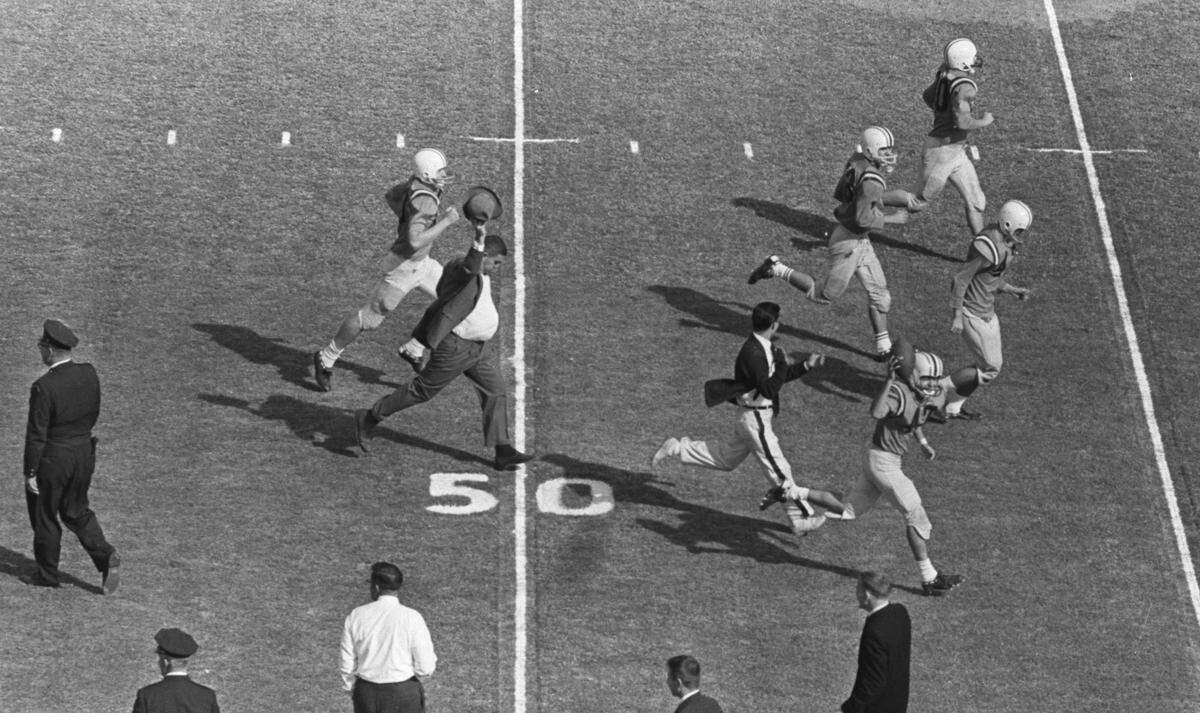
To get there, Clemson capitalized on quite the bizarre play. Early on, the Gamecocks punted from deep in their territory and the ball landed around the 40. The ball bounced off a Carolina player, an official threw his cap to mark the spot and most thought the play dead. Clemson center-linebacker Ted Bunton (they played both offense and defense in those days) knew otherwise, sauntered over, picked up the pigskin and wandered toward the Carolina goal before picking up speed.
“The ball was still rolling, and I knew because they had touched the ball, we would have the ball even if I fumbled,” Bunton told The State in 2003. “I picked it up and ‘ambled’ away. I got clear and started to run,” setting up Clemson’s first touchdown.
Even at 17 with time growing short, the Tigers marched to the Carolina 4-yard line, then got a 24-yard field goal from Rodney Rogers with 1:42 remaining.
Over? Not quite. Billy Gambrell and Dan Reeves got the Gamecocks to the Tigers’ 20 before turning the ball over on downs.
The epilogue: Talk about one-dimensional: Clemson completed only one of its five passes for 10 yards and rushed for 306 yards. The more balanced, but less effective, Gamecocks rushed for 100 and passes for 121.
1963: Clemson 24, Carolina 20
The backstory: Back in Columbia on Thursday, but not “Big Thursday.” The game had been postponed and moved to Thanksgiving Day from the scheduled Saturday following the assassination of President John F. Kennedy. Clemson had a 4-4-1 record and the Gamecocks had struggled to a 1-7-1 mark. For the first time since World War II, the teams played to less than a sell-out crowd.
The game: Thirsting for an upset, the Gamecocks seized a 14-7 halftime lead before the Tigers pulled even midway the third quarter.
The first moment of decision: The Gamecocks went for the yardage on four-and-a-foot at their 43. Clemson held and used rosy field position to score the go-ahead field goal.
The second moment of decision: Carolina needed a yard on fourth down near midfield, failed again and the Tigers quickly moved in front 24-14 early in the final period.
Carolina cut the gap to 24-20 with a final-minute touchdown, then Clemson recovered the onside kick to run out the clock.
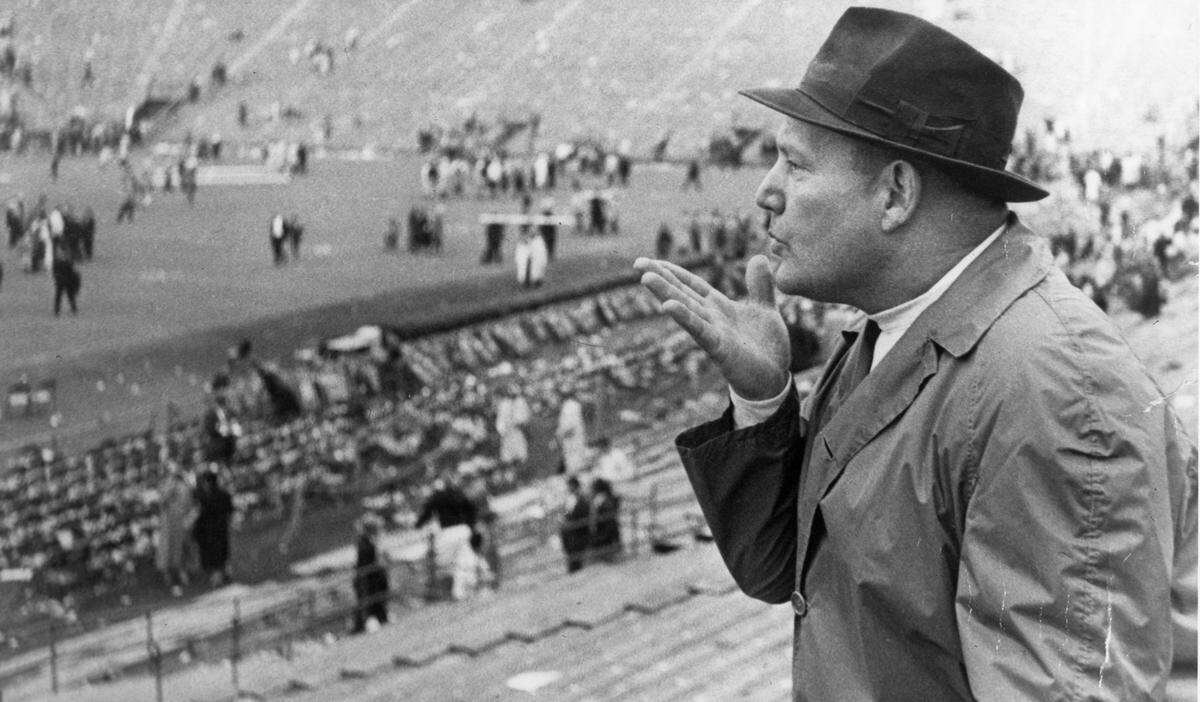
The epilogue: Frank Howard showed another side after his son Jimmy scored a touchdown in the first quarter, greeting the youngster with pats on the back and helmet and a bear hug on the Clemson sideline. “I tried to get away from him, but he got me,” Jimmy Howard told The State in 2003. Frank Howard told The State after the game: “I don’t think any father could be prouder of his son. He has no great ability, but he gives 150 percent all the time. If every football player was like him, there would be nothing to (coaching).”
1964: Carolina 7, Clemson 3
The backstory: The Gamecocks’ season had been like this: They completed a pass against Florida for a safety — really. But 15 games of futility (0-12-3) over two years, Carolina broke through with two wins prior to facing the 2-7 Tigers. Clemson would have a losing record for the first time since 1953. The fans, unimpressed, did not fill Clemson’s Memorial Stadium.
The game: With quarterback Dan Reeves, who would later play in two Super Bowls and be head coach in four, injured, the Carolina faithful did not have great expectations. But the Tigers had not set the world on fire.
The Tigers capitalized on a short field and received a 24-yard field goal from Frank Pearce in the first quarter for a 3-0 lead. Facing an identical situation in the second period, Clemson this time went for the yardage and the Gamecocks held.
USC lost a fourth-down fumble at the Clemson 12 in the third quarter and the Tigers turned the ball over on downs at the Gamecocks’ 15 in what had turned into a battle of squandered opportunities.
Finally, in the fourth quarter, Clemson marched to a third-and-goal at the one-foot line and went for the TD that would secure the win. But quarterback Jimmy Bell failed on a sneak and fullback Pat Crain fumbled on fourth down.
Still down 3-0 and 93 yards from a touchdown, what chance did Carolina have with eight minutes left? After all, the Gamecocks had mustered only 90 yards on offense until that point.
Enter reserve quarterback Jim Rogers. A couple of penalties and a 45-yard bomb to J.R. Wilburn flipped the field and put Carolina at the Tigers’ 15. Two plays gained three yards, then ...
“I went back to pass and everybody was covered,” Rogers remembered in a 2003 interview. “I cut back the other way” and found an open lane to the end zone with just over three minutes remaining to secure Carolina’s first win at Death Valley.
The epilogue: Afterward, USC coach Marvin Bass called the triumph his “greatest victory” — a phrase he would repeat a year later — and lauded his defense for turning the Tigers away three times inside the red zone. Said Clemson’s Frank Howard: “We never wanted a game more and never played any harder.”
1965: Carolina 17, Clemson 16
The backstory: Although losses in “money games” — the Gamecocks had fallen at Tennessee, LSU and Alabama, and the Tigers had been victimized at Georgia and Georgia Tech — hampered the records, the teams came to the season finale with the Atlantic Coast Conference title in sight. Carolina, 4-5 overall, needed a win and a Duke victory over North Carolina to tie for the crown. Clemson, also 4-5, just needed a victory over the Gamecocks to win outright.
The game: The Tigers took a 10-0 lead midway the second quarter and looked in control. Then, on third-and-12 at the 25-yard line, Carolina quarterback Mike Fair lofted a 50-yard strike to J.R. Wilburn, and the Gamecocks quickly cut the deficit to 10-7.
Game on!
A face-mask penalty kept a USC drive alive and Jimmy Poole’s field goal tied the score at 10 in the third period, and Bob Harris’ 7-yard run and Poole’s PAT put the Gamecocks in front 17-10.
The Tigers, who dominated the statistics, charged back and pulled within a point one Thomas Ray’s short pass to Phil Rogers with only 40 seconds left. Clemson lined up to kick the tying point, but Carolina awaited a fake. Jimmy Addison, the holder, rolled and threw toward Bo Ruffner in the end zone.
Carolina linebacker Bob Gunnels, whose brother Dan played for Clemson, knocked the ball away and the Gamecocks triumphed. “I sometimes wonder if I could have stopped (Addison) if he had run instead of passing,” Gunnels told The State in a 2003 interview.
The epilogue: The Gamecocks shared the ACC title only briefly, losing the honor after an investigation uncovered recruiting violations. And Bass resigned in the spring of 1966 to take a head coaching job in the Continental Football League in Canada.
Then, a couple of months later at a banquet in Easley, Gunnels received an all-state award. “I came across the stage,” Gunnels said, “and Coach Howard said in a voice loud enough for everyone to hear, ‘Boy, ain’t you ashamed of yourself?’ I turned red and kept walking.”