Why South Carolina has been structuring some NIL deals differently
For years, there have been two main ways for athletic departments to cure underperforming programs.
Either fire coaches — head coach, assistant coach, etc. — or allocate more resources toward that program, which used to mean renovate the stadium or build a new locker room. That’s shifted in the modern era toward giving that program more NIL money.
And now there is a major change on the horizon.
When Judge Claudia Wilken approved the transformative $2.8 billion House case settlement on June 6, it opened a legal pathway for schools to begin sharing up to $20.5 million in revenue annually with student-athletes. The new rules go into effect July 1.
In other words: Every athletic department will likely have a hard salary cap by next month.
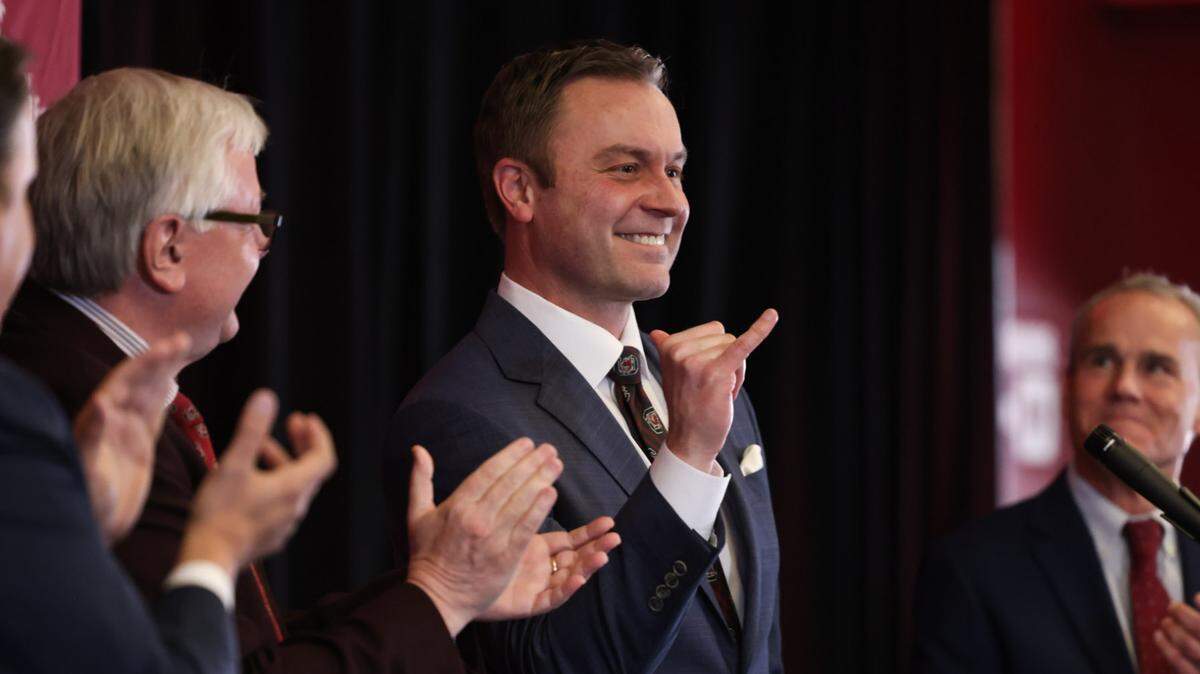
“A new era in college athletics is finally and officially here,” South Carolina athletic director Jeremiah Donati posted to X on June 6.
How athletic departments will divvy that salary cap among its sport programs is still murky. Back in February, Georgia athletic director Josh Brooks said UGA would use the House settlement’s student-athlete back pay allocation for its own programs: 75% of the money to football players, 15% to men’s basketball, 5% to women’s basketball and 5% to every other program combined.
Brooks has since walked back those comments, saying at the SEC spring meetings in late May that the allotments were evolving and he wouldn’t give an updated breakdown.
Donati followed suit, declining to share with The State how USC’s $20.5 million will be split up.
“Well, one, (the settlement) needs to be approved, but we know what those budgets will be and we’ve already communicated that with coaches,” Donati said in late May at the SEC Meetings. “All those budgets are set (but) that’s not something we’ll reveal publicly, just for competitive purposes. It’s proprietary, but all that stuff has been baked.”
What has also been baked is a temporary way to capitalize an ecosystem in flux.
Because the salary cap doesn’t go into effect until July 1, any payments made before that date don’t count against that cap — leading many colleges, including South Carolina, to front-load players’ contracts as a way to spend more money across the board this school year.
An example of what that could look like: Let’s say South Carolina agreed to a contract that would pay a player $120,000 for 2025. Instead of paying that player $10,000 monthly, the Gamecocks could pay around 75% of that contract ($90k) before July 1, meaning that only 25% ($30k) would count against the cap.
Said Donati: “We’re all, in this conference and around the country, trying to find ways before this settlement’s been approved to take advantage of these last days of pay for play.”
While it’s a temporary way to circumnavigate the cap, going all in would require risk. If a team wanted to pay the entirety of 2025 contracts before July 1 in an attempt to free up tons of money, things would get messy if that player decided to hit the transfer portal or leave the team before the season.
But, per three industry sources with knowledge of South Carolina’s NIL situation, the Gamecocks will not be paying out the entirety of contracts before July.
USC, though, did front-load a number of contracts — especially for football — with varying payment schedules. In other words: There was not a set directive where every contract was front-loaded or even front-loaded in the same way.
“We have gone about this in a manner that tries to ensure as much flexibility as possible,” Donati said.
The front-loading has allowed South Carolina to allocate some resources to other sports.
Going forward, football programs are going to spend far and away more salary cap money than any other sport. That will still be true in 2025. But by front-loading some contracts, it is conceivable that football programs will have a smaller cap hit in 2025 than any year going forward, a move that could help other sports.
Donati has made it no secret that South Carolina is equipping the Gamecocks men’s basketball and baseball teams — both coming off poor seasons — with more NIL resources. In the post-settlement world, doing that would require taking money from another program.
Yet because the settlement still isn’t in effect and USC had enough foresight to front-load some contracts, it has the freedom to put more money in more places.
“Well, you’ve heard about what we’ve talked about for baseball,” Donati said, referring to the increased NIL for that program. “The rules are changing any minute now. And, so, we have found ways to take advantage of them and to use them to our advantage — (ways) that are permissible.”
It is possible that, after this month, front-loaded contracts go out the window. There’s less of a need to move out finances when every sport program at every school has a hard salary cap.
If a player wants to earn additional money on top of that, they will have to work out additional NIL deals. For any NIL deal to be legal after July 1, a transaction over $600 must pass through to “NIL Go” — an NIL clearinghouse managed by the Deloitte firm, which uses an algorithm to calculate if an agreement is a fair-market deal.
One can only imagine what challenges and legal disputes will arise from that. And then some school will think about a new way to gain a competitive advantage and everyone follows suit.
This story was originally published June 7, 2025 at 7:30 AM.