Reed Dyches was dying. But he wanted his family to still go see the Gamecocks
Reed Dyches knew he was dying. It was the only answer. Because 53 Saturdays ago, South Carolina played a football game at Williams-Brice Stadium, and Reed wasn’t in Section 11, Row 12, Seat 22.
Not that Dyches — a lifelong Gamecock fan from St. Matthews, South Carolina — didn’t try everything to get out of the hospital.
Inside MUSC Health, the Wednesday before South Carolina played LSU, he told his doctors in Charleston to wrap it up. Prescribe some pills. Write a treatment plan. Do whatever they had to … by Friday. A Friday discharge meant attending the Saturday game.
“You’re not getting out of here that early,” they told him.
“I don’t think you understand,” Reed responded. “This is an emergency.”
“What’s the emergency?” They asked.
What’s the emergency? What’s the emergency? Are these people nuts?
“(ESPN College) GameDay is going to be in Columbia,” Reed told the doctors. “We’re playing LSU at noon. I have to be at that game. I have not missed a game in 15 years.”
The doctors would not have let him out if aliens landed in the parking lot. They relented and relented … and then gave him some pain meds that knocked him out for almost the entire game against LSU. Which, honestly, was probably for the best. He woke up just as Alex Herrera’s 49-yard field goal missed left.
That was the last South Carolina football game he ever watched.
It’s still hard to comprehend. This was not a man, his family and friends thought, who was fighting for his life. Sure, he was in the hospital, but only really to get on the liver transplant list.
Reed was diagnosed with fatty liver disease in 2010, which his wife, Tonya, remembers only because it was the year before they tied the knot. The disease progressed to non-alcoholic cirrhosis of the liver, forcing him into years of semi-frequent visits to MUSC in Charleston for tests.
Reed often went alone to the hospital, which only now seems notable. Because the test results, the progression of the cirrhosis, the severity of what lay ahead was information only Reed knew. He stayed with his longtime friend, Brad Polin, for those visits, and shared the same message: Everything is fine. Nothing to worry about.
Perhaps that was true. Or maybe Reed knew his disease was getting worse. That information was his alone to either share or hide, or bury inside and hold the weight of his mortality so those around him could live at ease.
At no point did his cirrhosis seem to put him into peril. Until September 2024.
‘It was too much on his liver’
Days after watching South Carolina nearly lose to Old Dominion on Aug. 31, 2024, and vowing for probably the hundredth time that he would never go to another game, he resumed his job as a sales rep at Southern Siding and Windows.
At one point along his door-to-door route, a German Shepherd wiggled out and bit Reed. It was not life-threatening. What was, however, were the NSAIDs (Non-Steroidal Anti-Inflammatory Drugs, such as Ibuprofen) given to him at urgent care, a type of drug not recommended for anyone with liver disease.
Within days, things were wrong. Reed was in agonizing pain, throwing up blood.
He checked into MUSC in Charleston on Sept. 8. After a week of tests, doctors put a stent in his liver — basically a holdover until he could find a donor. The stent went in on Wednesday. He was supposed to have a colonoscopy on Friday then, if all went well, get discharged in time for the South Carolina-Akron game on Saturday.
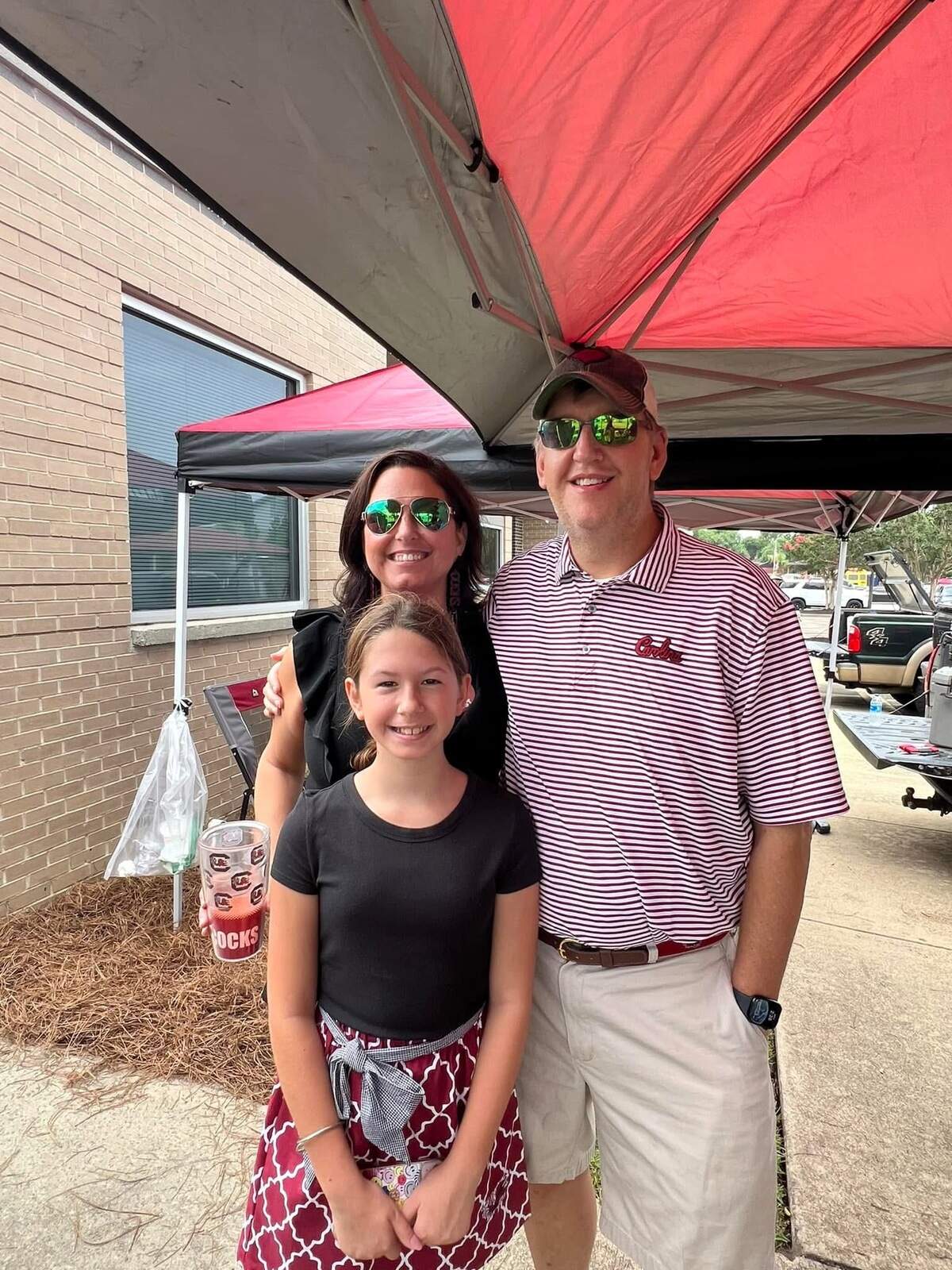
The night before his colonoscopy, he talked with Tonya and their 12-year-old daughter, Elise, on FaceTime, in great spirits, telling them how he couldn’t wait to get home.
Reed Dyches passed away a few hours later — on Sept. 20, 2024. He was 46 years old.
“Tonya called us and told us what was going on,” said Polin. “I was just in shock. Like there’s no way. He was fine? Did he have a heart attack? What happened?”
“His liver just gave out,” Tonya said. “I just think it was too much on his liver.”
Dad, daughter and Gamecock football
Everyone met up at the hospital. Tonya and Elise were able to sit next to Reed, hold his hand one more time and say their goodbyes.
And then it was 10 a.m. and everyone was just crowding the hallways. What more was there to do? What do you do after a loved one dies? What are you supposed to do?
Elise looked to her mom.
“Does this mean we can’t go to the football game tomorrow?” she asked.
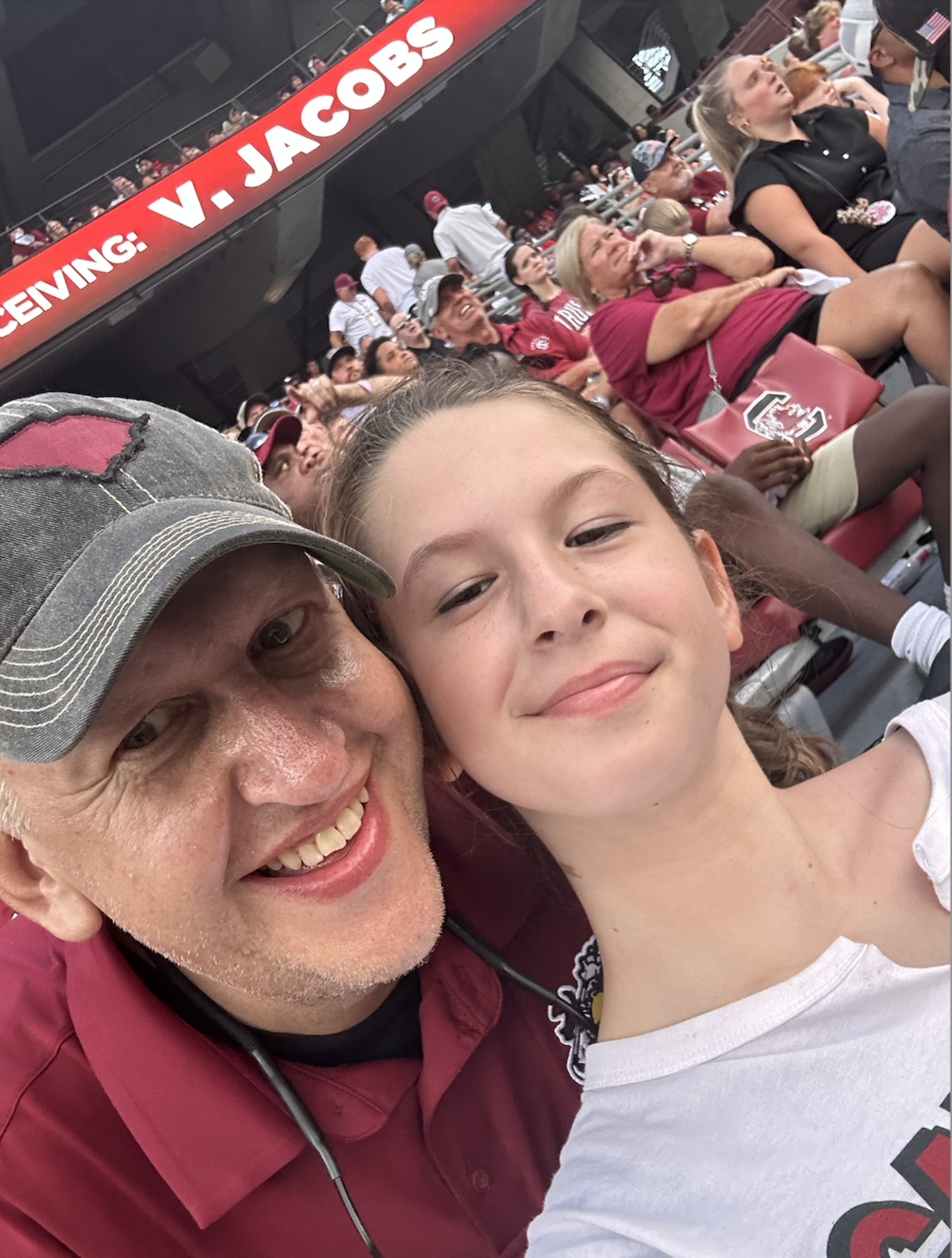
All Elise knew was Gamecock football. That was her and her daddy’s thing: Game days at Willy-B. It is possible the grief hadn’t hit her yet. It is also possible that, as her world was being spun sideways, the closest thing to normalcy was going to a South Carolina football game.
Tonya told her daughter she could go with friends, but she was gonna stay home.
They drove back to their house in St. Matthews around noon the day Reed died. On the front porch sat a little package. Reed told her earlier in the week that he ordered some new tailgating flags, presumably for the game he was supposed to attend.
Tonya walked inside and ripped open the plastic. Inside was a throwback, garnet South Carolina jersey — the one USC was going to wear the next night against Akron. The one Tonya mentioned six months earlier that she wanted.
The tears came immediately.
Later, she looked through Reed’s email and found that he bought the jersey on Wednesday and expedited the shipping so it would be there on Friday. She found out later, too, that Reed spent his last days calling old friends, people he hadn’t spoken to in years, just to reminisce.
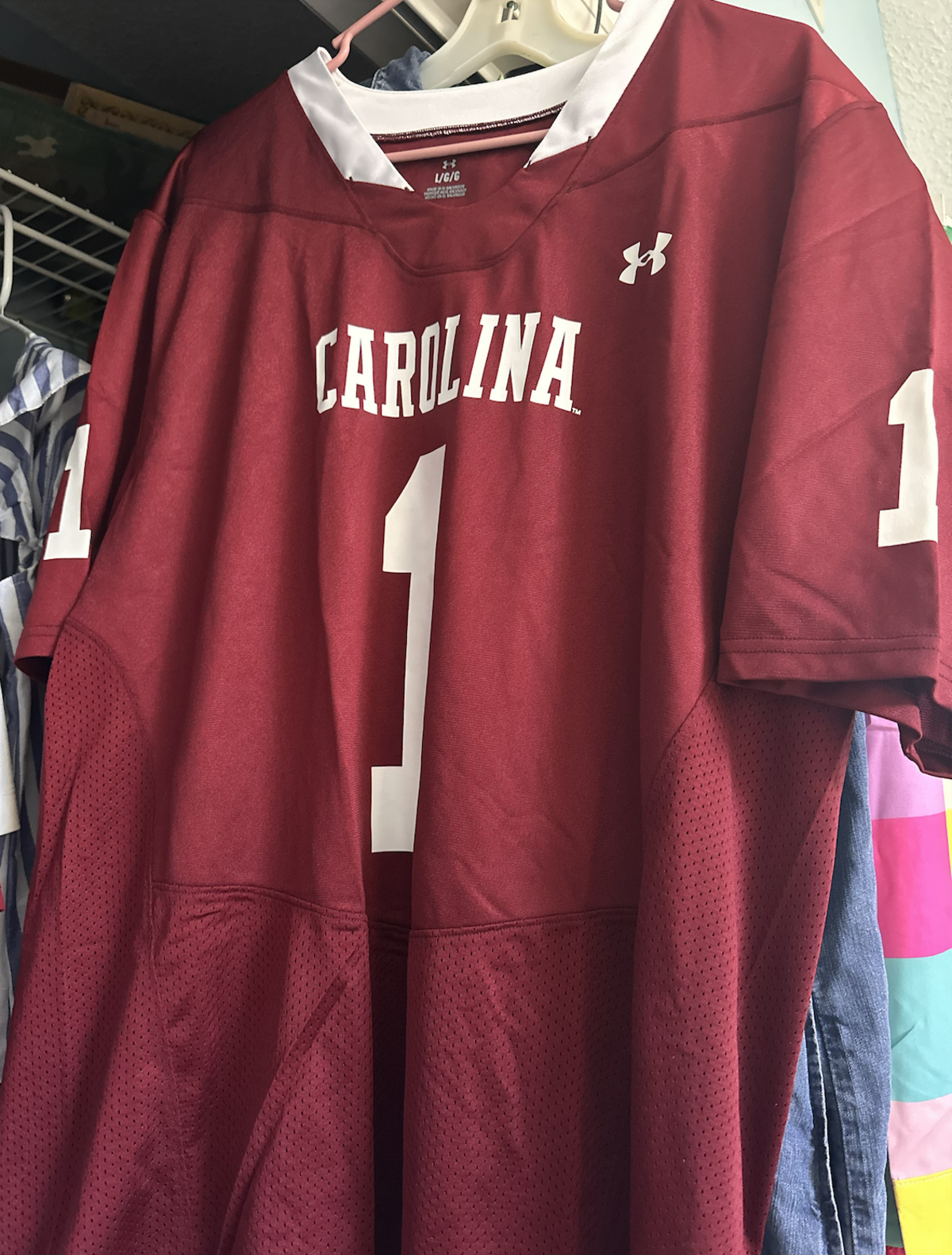
“I think he might have knew,” Tonya said. “I think he knew if he told me how progressed it was — I just don’t think he wanted to worry me.”
Instead, he left behind a breadcrumb — a symbol of his after-life wishes.
“It was,” Polin said, “just a jersey for her, basically saying, ‘Go to the game.’ I’m gone, but go to the game.”
Honoring Reed’s memory through South Carolina football
Healing is two-pronged. What isn’t included in the seven stages of grief, though, is the nagging worry that you’re not grieving correctly. Or maybe not grieving or living how your loved one would’ve wanted you to.
Am I living in a manner they’d be proud of? Am I getting on with life fast enough? Am I doing what they would’ve wanted me to do?
Reed made that easy on his family. There was no need for a note. Just a jersey. A polyester permission slip to not let his death keep them from living.
So, the day after Reed died, Tonya woke up and drove to Williams-Brice Stadium.
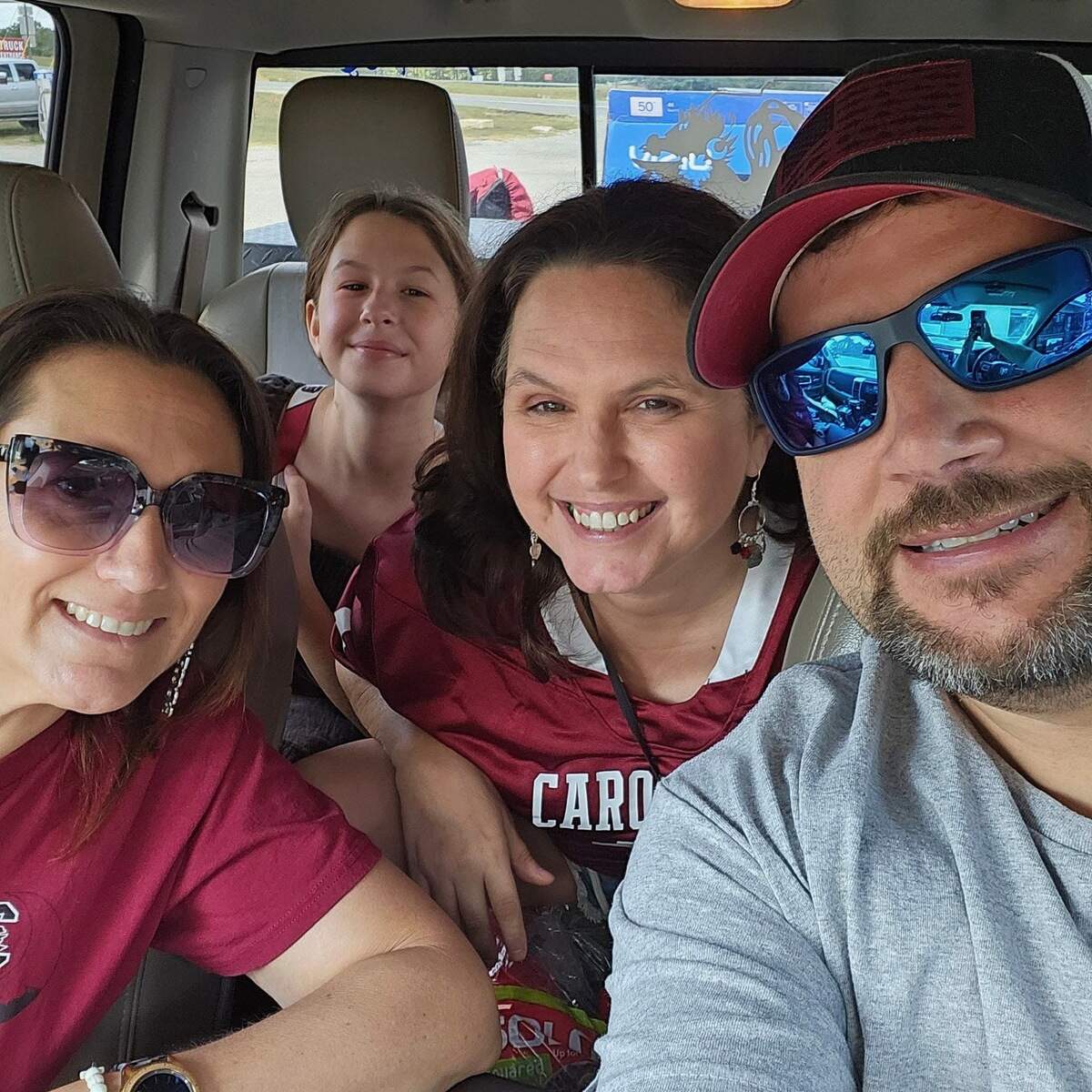
“It was kind of surreal,” Tonya said. “It was weird being there without him. Even throughout the whole season. But at the same time, I felt like he was there.”
A celebration of life was held on Sept. 28, 2024, inside St. Paul Methodist Church in St. Matthews. There was another memorial about a month later. This was in another sacred spot — the dirt parking lot across from The Loose Caboose, where a tailgating family meets on Saturdays.
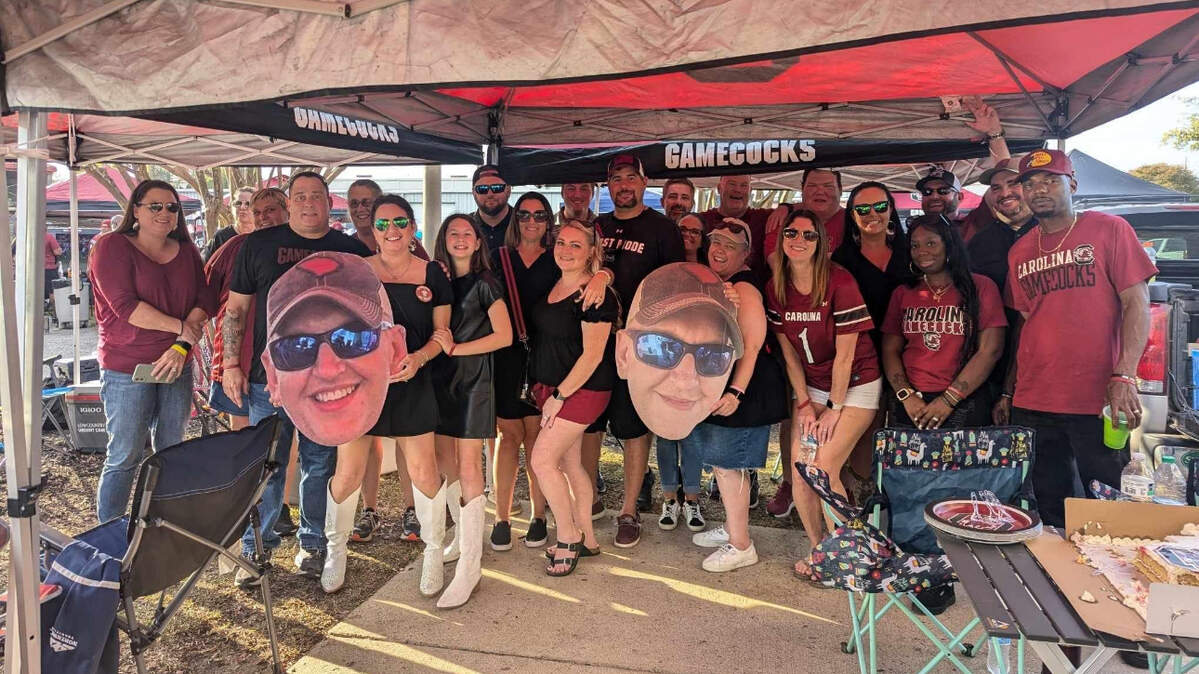
The memorial was before the Nov. 2 Texas A&M game. Nearly 60 people showed up, wearing bracelets that honored Reed. There was a food truck. Drinks. Stories. Good times. It was the perfect tribute.
And then the most inexplicable thing happened. South Carolina won. Scratch that, the Gamecocks dominated. South Carolina whooped the No. 10 team in America, throwing Williams-Brice into a fervor that pushed thousands of Gamecock fans onto the field. Tonya and Elise, along with Brad and his wife, Betsy, rushed to the 50-yard line for a picture.
“You talk about emotional,” Brad said. “That was emotional.”
And then Brad reached into his pocket. He pulled out a little plastic baggie and scattered Reed Dyches’ ashes into the soil of where he always wanted to be.
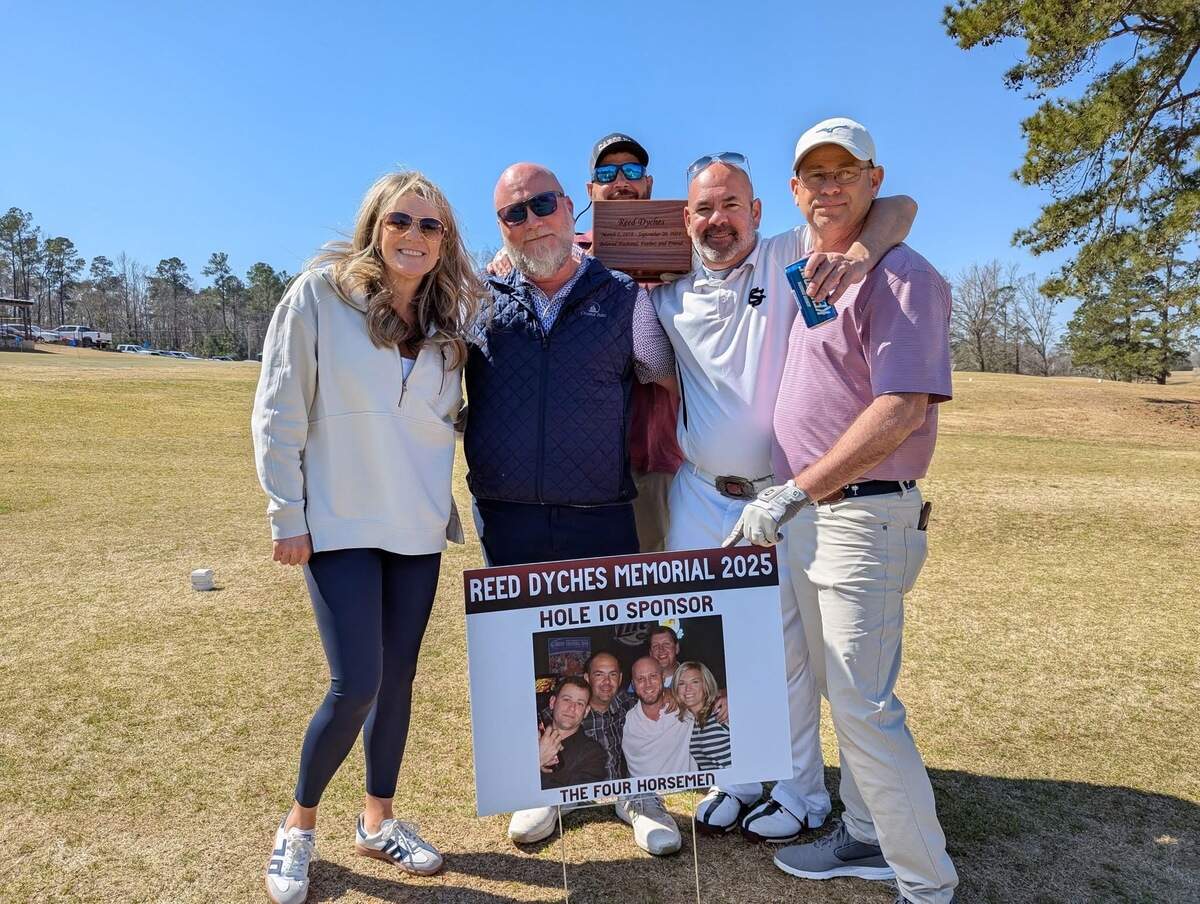
The second Reed Dyches Memorial Golf Tournament will be held on March 7, 2026 in St. Matthews. All funds will be donated to the Elise Dyches Education Fund. If interested, reach out to Brad Polin at 843-345-8987 or at bradpolin@gmail.com.
This story was originally published September 19, 2025 at 7:00 AM.