For South Carolina athletics, support from top booster Joe Rice goes beyond money
There is what you think Joe Rice does… and then there is reality.
In make-believe land, one of the University of South Carolina’s top boosters — his name appears on two USC buildings — is whisked from his tailgate in a helicopter, flown to the roof of Williams-Brice Stadium, funneled into a private elevator and led down a red carpet before entering his suite to watch the Gamecocks.
As if he’d enjoy such grandeur. The reality is, Rice walks from his mega-tailgate 30 minutes before kickoff and goes through a metal detector only to be stopped by a security guard who points to a baton-looking thing in his hand.
Rice twists it open, revealing a cigar he packed in there.
.“For when we win,” he says. “A victory cigar.”
It was as if he was holding a python. The young woman grabbed her supervisor, who stared in silence for a few seconds, either perplexed by the cigar or the case.
“You just can’t smoke it in there,” he said.
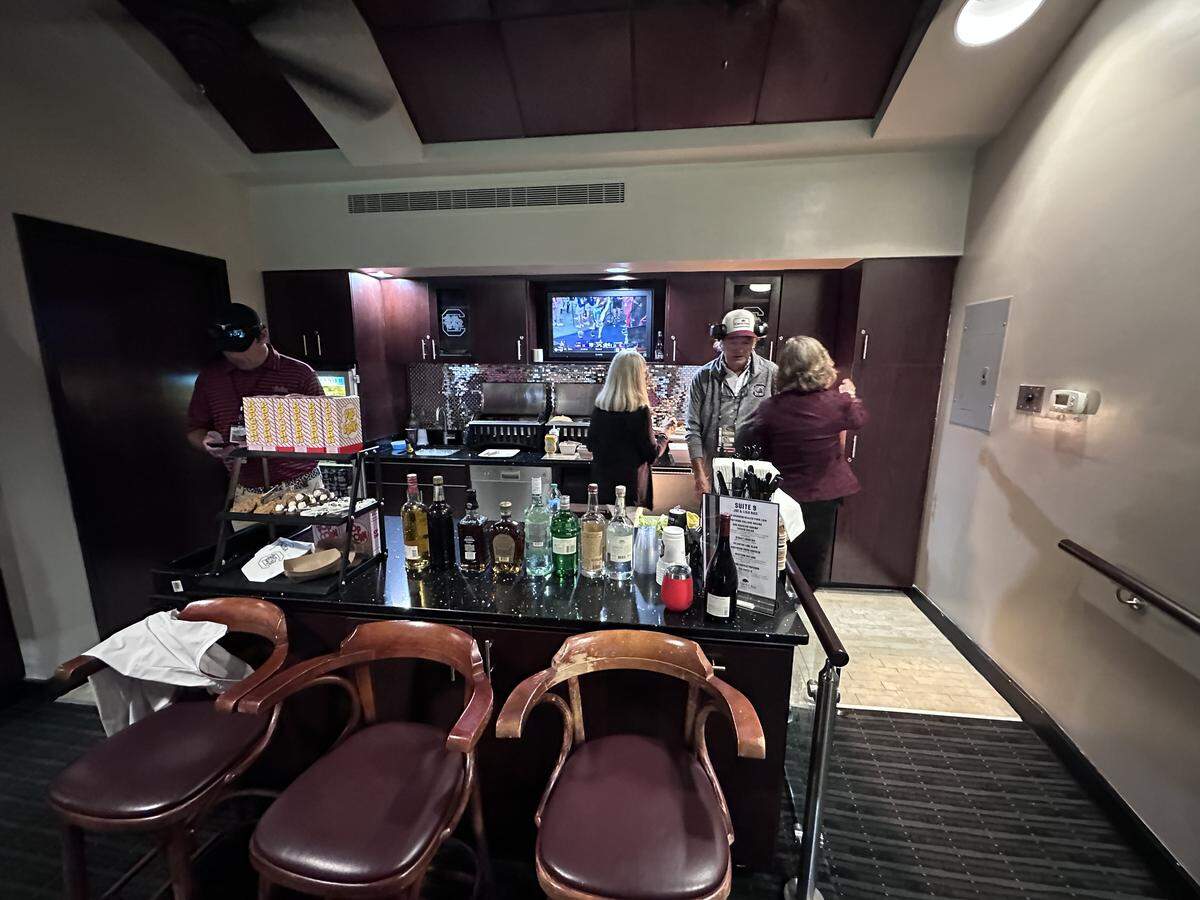
Rice nodded and continued on to Suite 9 in Williams-Brice Stadium. The cigar sat in a high cabinet until South Carolina’s 35-13 win over Kentucky went final, at which point Rice fetched it and readied to smoke it on the short walk back to his condo.
“I don’t live a complicated life,” Rice says. “Professionally I do, but not personally.”
Finding his way into South Carolina
Rice, now living in Mount Pleasant, is considered one of the most influential legal figures of the past 50 years, among the select members of The Trial Lawyer Hall of Fame, his name alongside former president John Adams and Johnnie Cochran (yes, of the OJ Simpson trial fame).
He rose to prominence as a key negotiator in the $246 billion Tobacco Master Settlement Agreement and continued on to pursue multibillion-dollar settlements related to the Sept. 11 tragedies, the BP oil spill, Volkswagen emissions fraud, opioids, asbestos and more.
In the new era of college athletics, where schools are reliant on boosters to fund NIL and revenue-sharing, many donors are increasingly using their money to garner influence and prestige. But Rice, 71, is doing what he’s always done: funding the causes that he believes will be most beneficial for South Carolina while acting as a seasoned advisor for those inside the university.
He simultaneously lives in grand luxury and below his means. He takes to the water in his 100-foot yacht and plays golf at a club he owns (Bulls Bay in Awendaw), yet gets to each driving a 2004 Quadrasteer truck (all four wheels can turn) that doubles as a storage shed: Fishing rods, butane lighters, guns, ammo, Cracker Jacks — it’s all there.
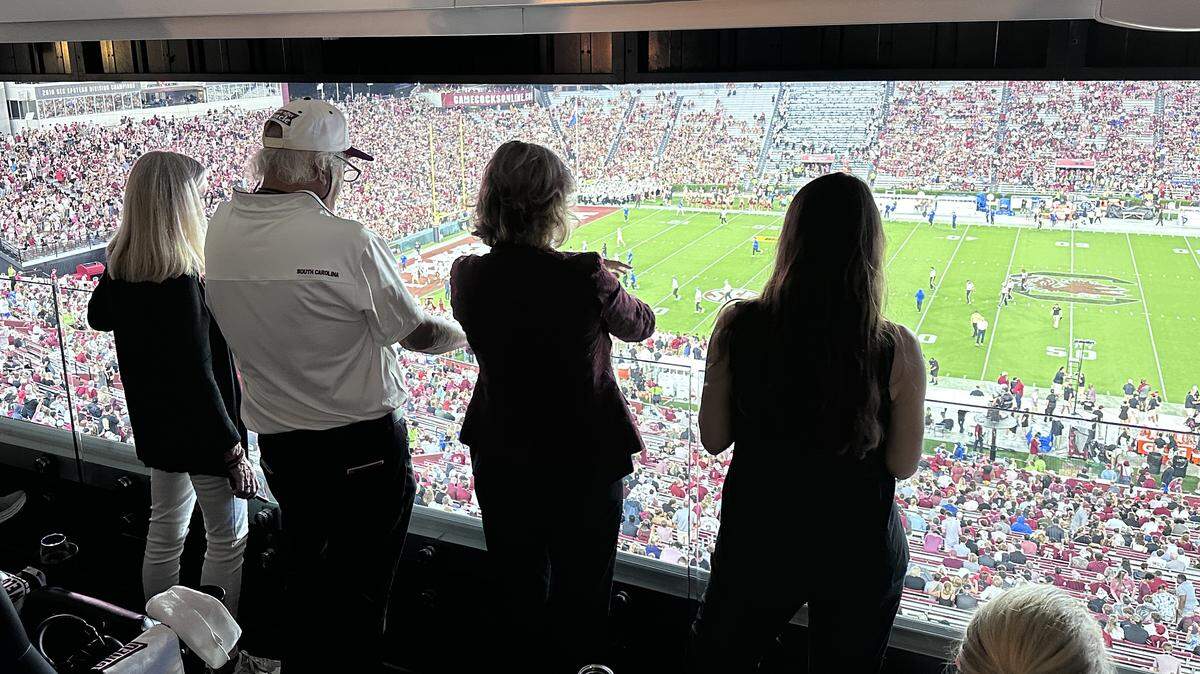
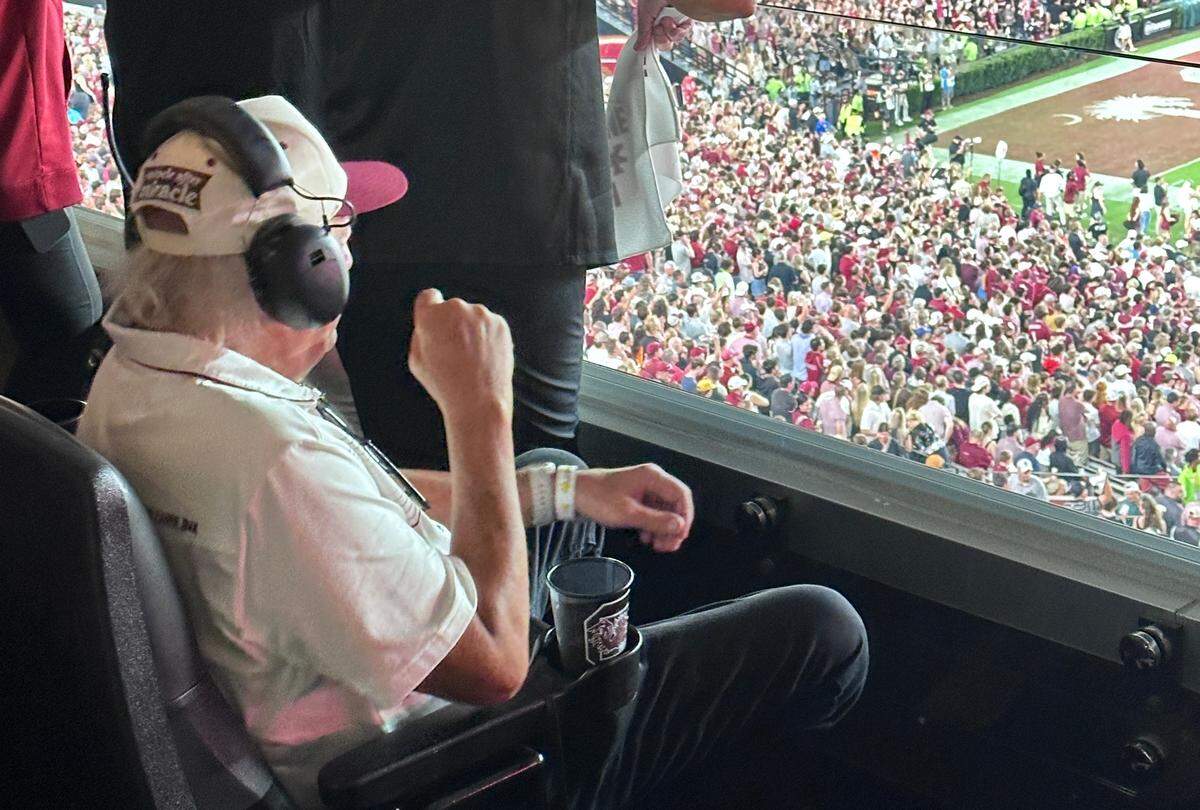
He watches South Carolina football games surrounded by friends and family in his suite at Williams-Brice Stadium … yet hardly says a word the entire time. His wife, Lisa, whom he met at USC, sits beside him and cheers louder and more passionately than anyone in the suite. Rice watches while wearing thick, over-the-ear headphones with an attached antenna that’s tuned to the Todd Ellis and Tommy Suggs radio broadcast; allowing him to ignore everything around him.
“He looks like a 70-year-old NASCAR fan,” barks Don Sherard, who’s been friends with Rice since their time in South Carolina’s Alpha Tau Omega chapter nearly 50 years ago. Sherard is yelling, knowing Rice can’t hear him. “He’s on with Richard Petty in the pits.”
This life, to Rice, is only possible because he backdoored his way into the University of South Carolina Law School.
He had decent grades toward the end of time as a South Carolina undergraduate — but, well, he was also running Alpha Tau Omega.
“I had a good time as the president of my fraternity,” Rice said with a grin.
Which meant he didn’t have the grades to be accepted into South Carolina’s law school. Rather than completely deny Rice, USC’s law school offered him a spot in their summer program alongside 40 or 50 others. There were just three courses focusing on torts, property and contracts. The top performers from the program were admitted into the law school.
Rice was a part of that group.
He graduated with his law degree in 1979 from what is now called the Joseph F. Rice School of Law.
Rice is South Carolina’s hidden resource
Talk to anyone at South Carolina about Rice and — perhaps surprisingly — it takes a while before they mention anything he does financially. To those working for the Gamecocks, he is a sounding board — a consultant, of sorts.
When special advisor to the head coach Carey Rich is recruiting for the USC men’s basketball team, Rice is always willing to be a navigation system.
“If I need to get somewhere, if I need to know a particular person or I just need some insight or instruction,” Rich said, “he’s my first phone call when I’m headed to the Lowcountry.”
When South Carolina was working through plans about the Williams-Brice renovations, the USC higher-ups sought out Rice for guidance.
“When they started, they were talking about putting in 80 boxes,” Rice said. “And then they told me how they were pricing them and I said, ‘You don’t have the financial support to sell $10 million boxes.’ And I don’t think they do.”
Naturally, USC pivoted. It’s building 42 suites on the stadium’s west side — including a dozen 40-person “founders suites” — and, if demand is there, USC has the possibility of adding more suites in future phases.
At his tailgate in late September, Rice was just a few hours removed from going through South Carolina’s innovative suite preview center — an informative and creative way to show off the post-renovation seating options. To purchase a founders suite, Rice said, South Carolina was asking for a $10 million commitment, to be paid out over 10 years ($1 million annually for 10 years) plus another $150,000 per year for food and beverage, he added.
Rice said he wanted to talk it over with some of his law partners, but he eventually opted against purchasing one. Still, few donors are able to see the bigger picture as well as Rice and his wife, Lisa.
“Joe is not just a donor,” Gamecock Club CEO Wayne Hiott said. “Joe is somebody who cares about this place and has had relationships with a lot of the top people over the years. … His historical perspective on things is incredibly important, and that has nothing to do with the amount of money he’s given.”
As of late October, per South Carolina, over $121 million in capital gifts had been pledged toward the Williams-Brice renovation project. That news comes on the heels of The Gamecock Club setting its all-time fundraising record, bringing in $107 million in fiscal year 2024.
At the tailgate, a friend of Rice’s came over and started peppering him with questions about the renovations, livid that he gave a massive campaign gift for a premium area a few years ago and South Carolina is already asking for another donation.
Rice explained things the best he could.
“They’ve got a formula,” he said. “Go in there and take the tour (at the preview center). They’ll take you through everything.”
Not but 30 minutes later, Hiott and South Carolina Athletic Director Jeremiah Donati came by Rice’s tailgate. He hardly moved an inch, continuing to puff on his cigar while asking Hiott how former AD Ray Tanner was doing after stepping down in January to become a special advisor to the president.
Later, inside his suite as South Carolina was pulling away to a win over Kentucky, Rice explained the new dynamics leading the Gamecocks into this new era of college athletics.
“Ray did a great job. … He understood the players,” Rice said. “But the game has changed from a financial point of view. But Jeremiah is a very good marketing, business guy. And those in charge — and maybe they’re right — felt we needed to change to more of a business-management style versus a player-management style.”
Rice went on to rave about what Donati has done since taking over at South Carolina, switching the Gamecocks from Under Armour to Nike, signing Dawn Staley to a contract extension and securing a lucrative field-logo sponsorship deal.
Being a donor in the NIL era
Among the changing landscape of college athletics is the introduction of bizarre dynamics. You have players making more than some of their coaches. You have guys who just hop from school to school until their eligibility is up. And, perhaps most strange, you have fans and donors bankrolling rosters.
Of course, that is expected to change in the wake of the House Settlement, which OK’d schools to begin paying its student athletes up to $20.5 million. And perhaps that will curtail the most-financially-mighty programs from spending the most money every season — but, well, who knows?
And since NIL was legalized in 2021, a new superhero has emerged in college athletics: The booster.
The lifeblood of college athletics has always been tied to those willing to provide their favorite schools with copious amounts of money. But those were for resources. Now, money can buy talent — which means the ultra-rich can load their favorite college football program with cash and give them an edge in recruiting.
Pre-NIL, the only boosters in the public psyche were Nike founder Phil Knight and all those who got caught paying players under the table. They were Wizard-of-Oz-like figures, hidden behind a curtain. Nowadays, people like oil tycoon Cody Campbell — a man who’s poured millions into Texas Tech athletics to bring in top talent — can be as loud and boisterous as they want.
Which leads us back to Rice, who seems to be the antithesis of the Campbell archetype.
Rice says he’s not really involved in South Carolina’s NIL efforts, “but I’ve given them some money,” he says. To the notion that Rice was asking folks around the program last year how much they needed to keep quarterback LaNorris Sellers, he shakes his head.
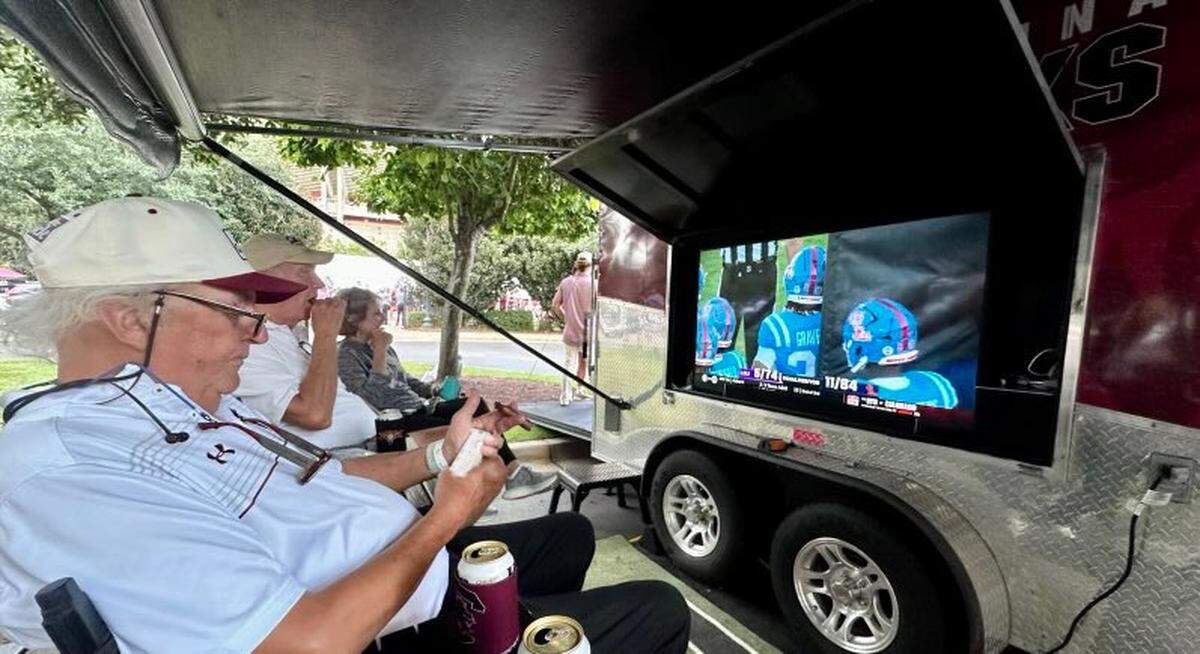
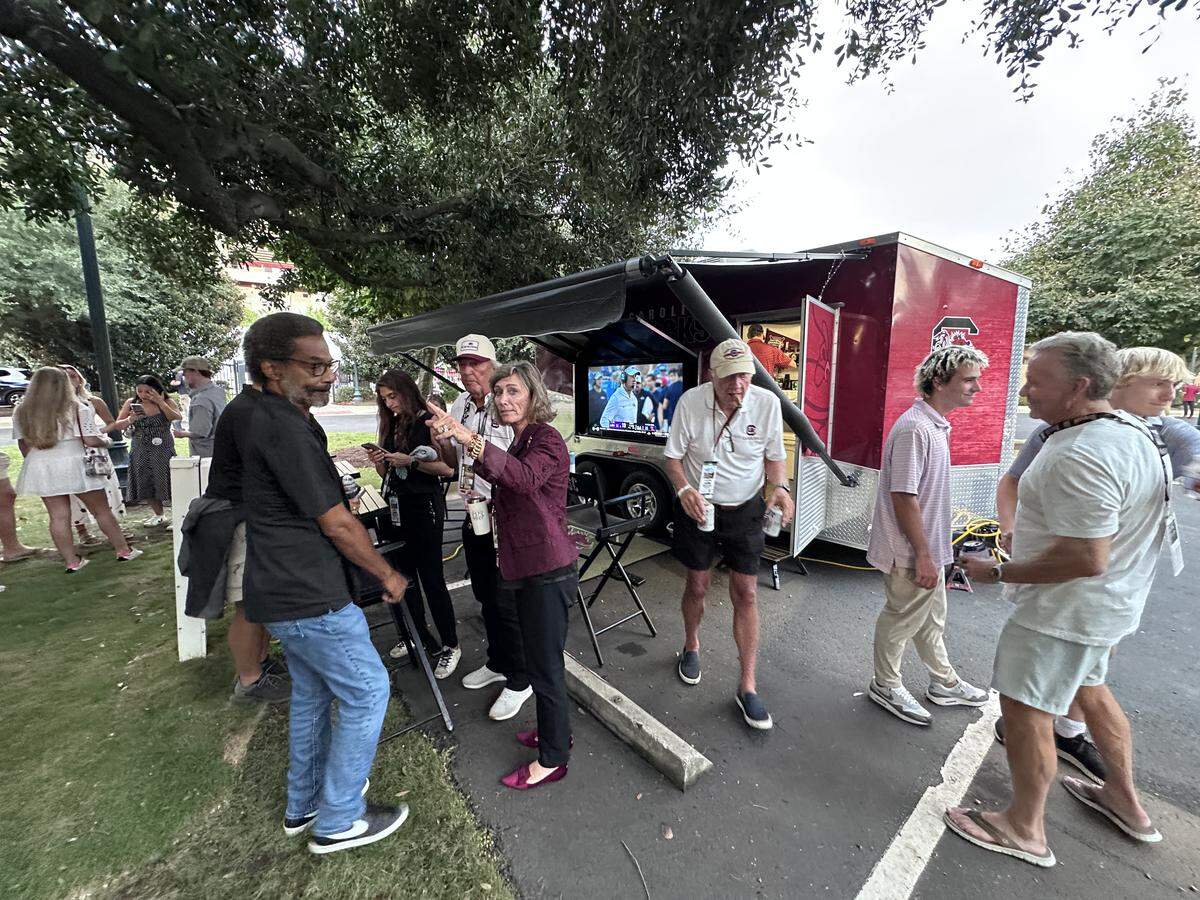
As Rice was tailgating ahead of the Kentucky game — which consists of him lounging in a chair, drinking Miller Lite, gnawing on the same cigar for hours and watching SEC football — a friend comes over. Somehow, a winding conversation turns to a rumor about Texas A&M offering a sophomore in high school $10,000 a month.
Rice looks befuddled.
“Is that legal?” He asks. “What happens if the kid doesn’t go?”
“They have to pay the money back,” the guy responds.
“I don’t really have a problem with a player being paid for marketing,” Rice says. “But what he’s talking about, that’s just total bullsh—. And I like the fact that the NCAA has now shut down the second transfer (window), so you can only transfer the first month after the season. At least a coach knows what he’s got.”
The whole dynamic, to Rice, is wonky, almost running counter to an ethos built on finding ways to impact the most amount of people possible.
Funding South Carolina athletics
To understand the power of Rice, you must understand the dynamic happening at universities across the country. You see, there are folks fundraising for education and there are folks doing the same for the athletic department. And, well, they aren’t always working for the same team.
For years at South Carolina, the university higher-ups were reluctant to ask their biggest donors to support athletics, out of fear those folks would stop giving to academics. Think people like billionaire Bob McNair, a USC alum who owned the Houston Texans.
“That’s a prime example,” said Eric Hyman, South Carolina’s athletic director from 2005 to 2012. “They wouldn’t let us come within a 10-foot pole of him.”
Changing that mindset at South Carolina began, in large part, because of Rice.
As a way to kickstart Hyman’s Garnet Way capital campaign — an ambitious fundraising mission aimed at upgrading South Carolina’s facilities to be on par with the rest of the SEC — South Carolina President Andrew Sorensen allowed Hyman and head football coach Steve Spurrier make a pitch to Rice.
They met Rice at the Charleston Yacht Club and, well, there were actually two pitches. Hyman and Spurrier tried to sell Rice on donating to athletics. Sorenson and VP of university advancement Bradford Smith asked for further donations to the law school.
Rice chose athletics. Walking out of the Yacht Club — out of sight of their university counterparts — Hyman and Spurrier high-fived.
“I appreciated (Joe) so much,” Hyman said. “He was one of the first people to really jumpstart athletic fundraising and helping with our facilities.”
Nearly 15 years later, as if a permanent reminder that donors can spread their wealth, Rice got his name on the law school after a $30 million pledge — money that will go toward scholarships, hiring and retaining faculty and, notably, no infrastructure. It was people that opened the door for him to get into law school, so that’s who he’s going to invest in.
Asked how he balances what he gives to the university and athletics, Rice veers.
“I don’t do it that way,” he said. “When I wanted to do something, I just did it. I didn’t have a budget.”
That Yacht Club meeting ultimately led to Rice giving the lead gift on the $8.5 million Rice Athletics Center, which opened in 2012. The building included the office of the athletic director, which Tanner occupied from 2012 to 2024.
“He was more of a mentor at that point,” Tanner said of Rice. “A guy like Joe Rice can lend some valuable insight to you, can be a real asset to you in so many different capacities”
He also defied the typical meddling donor stereotype, which allowed Tanner to genuinely ask for advice without fear that Rice would — as many donors do — think he’s making the final decision.
Before Tanner hired head coach Shane Beamer, he spoke with Rice about who he was looking at and what he was thinking about the future.
“There might have been a conversation periodically,” Tanner said. “(But) he was not going to be influential. He was not going to be the person who said, ‘Well, I’ll tell you what we should do. I’ll tell you what needs to be done.’ He’s never been that guy.”
Tanner continued, practically summing up the Rices in a sentence: “With Joe and Lisa, I’ve never sensed any sort of agenda whatsoever, expect they want what’s best for the University of South Carolina — period.”