
10 names to know in South Carolina’s offensive coordinator search
South Carolina football coach Shane Beamer will take another crack at hiring an offensive coordinator, and he’s got a lot of options in front of him.
After Mike Shula didn’t last a full season, and with a sense outside the program that Beamer has to deliver in 2026, the success of this hire seems like it will carry a lot of weight.
And the potential for a staff change with the Gamecocks is there if 2026 doesn’t go well, so that is something a candidate will likely consider.
So who are some of the names out there? Let’s take a look at some potential options.
Although Beamer has yet to hire a sitting OC, this list is entirely composed of them. That reflects the thought process that with stakes potentially this high, an experienced hand could be required.
(Note: There are no on-staff names here, reflecting the fact the last hire was from within the staff and lack of Division I play-calling experience)
John David Baker, ECU OC
In two years as a coordinator, the acolyte of Graham Harrell has seen a bit. He had to make a QB change last year as well as weather a coaching change. Right now he’s got a highly efficient attack that keeps opponents off-balance, running in throwing spots and throwing in more traditional running spots. He came up with that Air Raid background and then spent three seasons working with Lane Kiffin’s hybrid, Bear Raid-adjacent attack. If the aim is for an up-and-comer with SEC experience, South Carolina could do worse.
Jonathan Brewer, Duke OC
His resume isn’t the longest, but his early work has been solid. Brewer helped build a nice complimentary offense on a nine-win team last season with a pretty inconsistent QB, and this year has a top-35 offense despite not having that much of a run game. He mostly learned under Rhett Lashlee, and his offenses have been somewhat pass forward, but he could be a good, sturdy option.
Jason Beck, Utah OC
Only in his third year calling an offense, the last two seasons are doing a lot of work for his job prospects. Working for a somewhat grizzled defensive coach, he’s got a 40-point-per-game attack with a high-grade running game and decidedly efficient pass game. A year ago, he helped jump-start a New Mexico offense with a really nice spread run game (he brought his Lobos QB Devon Dampier with him to Salt Lake City). Before that, he had one ill-fated year with a doomed Syracuse staff. Most of his career was spent under Robert Anae, who built a range of underrated offenses at BYU and Virginia.
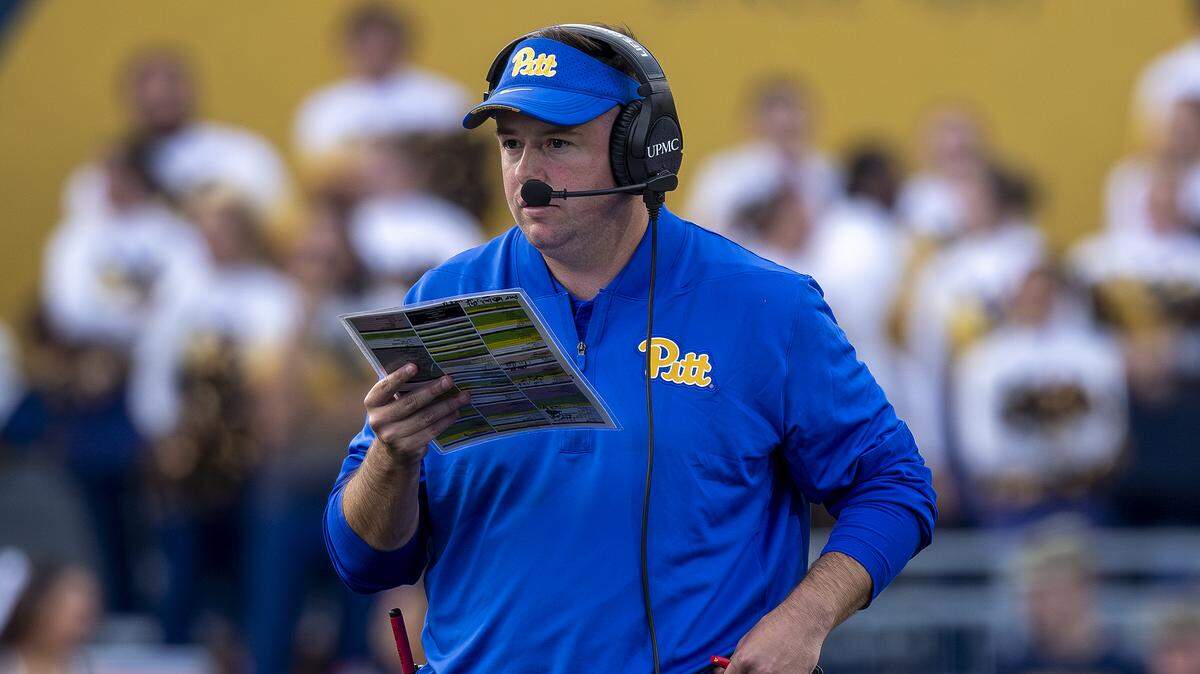
Kade Bell, Pitt OC
One of the hotter names out there, Bell has managed to build a highly explosive, up-tempo offense for a heavily defensive coach — no easy feat. They’re definitely a throw-heavy team, and have developed a spark after plugging in a young QB. Bell’s background is mostly working for his dad, Kerwin, a one-time Steve Spurrier graduate assistant who infused much of Spurrier’s offense into his philosophy. Under his dad, the younger Bell was coordinator for a title winning offense at Valdosta State, helped build up Western Carolina into a respectable FCS attack and also delivered some high-flying results in an abbreviated year at Tusculum.
Tim Cramsey, Memphis OC
An absolute veteran hand, he’s been coordinating offenses, albeit not in power conferences, since 2009. He’s always had pretty good offenses with the Tigers, took a while to get a Marshall offense on track and ran a Sam Houston State offense that averaged 43 points per game. He’s primarily a product of a highly consistent FCS New Hampshire program and worked for K.C. Keeler at Sam Houston. There have been some ups and downs with his stops, and it should be considered that his Memphis teams usually have a good bit of talent.
Kevin Decker, Old Dominion OC
Working under an offensive coach in Ricky Rahne, Decker helped add some Art Briles Bear Raid style and revitalize the Monarchs offense that’s now averaging 32 points and 7 yards per play. Before that he built up a Fordham attack that averaged nearly 50 points per game. Beyond not having much power conference seasoning, timing may be an issue. It took three years and finding the right QB to get ODU on track, and Fordham wasn’t a quick build. The Gamecocks probably don’t have a year for things to get figured out.
Buster Faulkner, Georgia Tech OC
One of the hottest names out there, Faulkner has had a good reputation since even before he went to Atlanta and built a dynamic attack around a quarterback run game centered on Haynes King. He’d previously run effective offenses at Arkansas State and an OK attack at Southern Miss before spending three seasons working under and with Todd Monken. The biggest challenge will be getting him to take an opportunity like South Carolina’s with a coach in a tight spot. He may well have head coaching opportunities or the chance to take over an offense with top-10 talent (think similar to a return to UGA), so the situation in Columbia might be a hard sell.
Brad Glenn, Cincinnati OC
This is one has a tie to the USC staff, as Glenn was Shawn Elliott’s coordinator for much of his time as Georgia State head coach. Together they built a run-first attack that did some pretty interesting things with the quarterback as a ball-carrier. His first few Cincinnati offenses didn’t really pop, but this year’s has taken off. There have been some questions as to him actually calling plays. Setting those aside, the biggest concern comes on the passing game front. Both this year’s Bearcats and those GSU teams tended to not be the most consistent throwing the ball, with passers who shined most as runners.
Kevin Johns, Oklahoma State quarterbacks coach
Ignore the mess he’s in now, and the weird spot he was in at Oklahoma. He had a pretty good run of success at Western Michigan, Texas Tech and Duke under Mike Elko (his time at Memphis had a downward trend). He worked much of his career with one-time offensive guru Kevin Wilson, and has worked under some coaches who like calling plays. Still, the work at Duke with Riley Leonard was pretty solid, and he’s a seasoned option.
Dean Kennedy, James Madison OC
In three years, one at Holy Cross and two at JMU, he’s run a trio of offenses that averaged at least 33.3 points per game. The past two have leaned a good bit run-heavy, with a quarterback playing a role in the ground game. Much of his ascent in the profession was under Dan Mullen, which can mean a good sense of maximizing talent, often with simplified schemes that get the best play-makers the ball and get going. That could be a look that might catch Beamer’s attention.