
What to expect Kendal Briles’ offense to look like at South Carolina
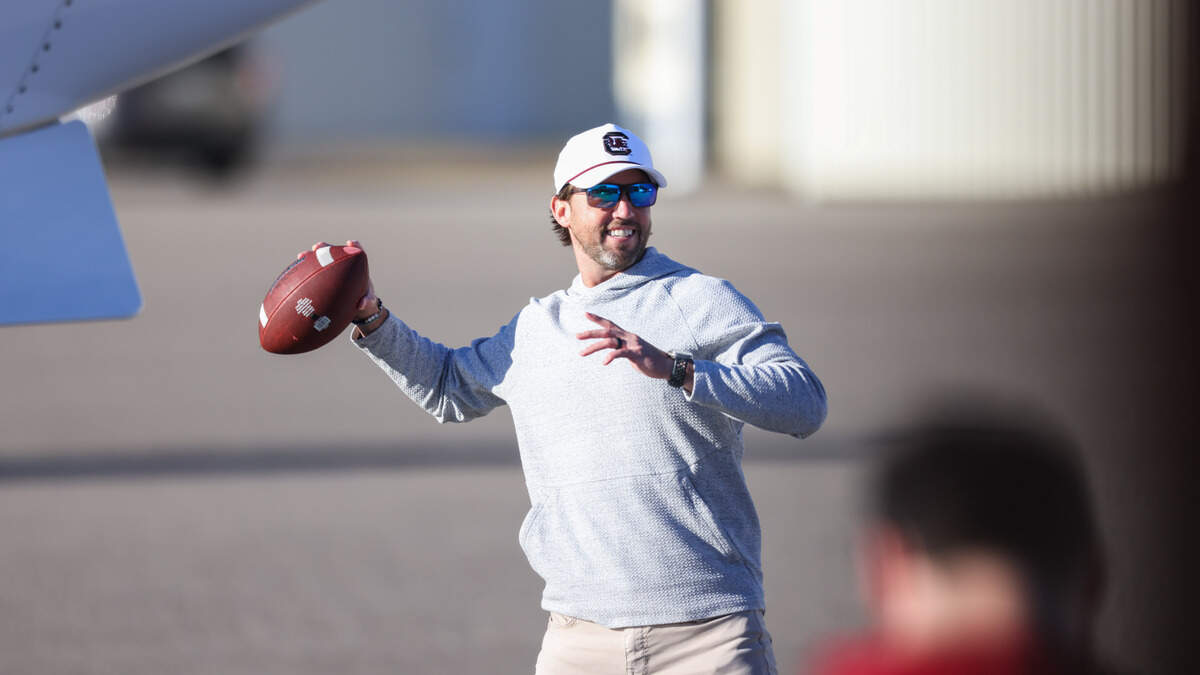
South Carolina football coach Shane Beamer is making the highest-profile offensive coordinator hire of his tenure in Columbia with the addition of Kendal Briles from TCU.
That much is clear.
After three hires with less pop, this is someone with an extensive resume of mostly successful college work. The three previous OCs who actually called games all had a bit of NFL experience and some odd and varied backgrounds.
Briles’ hire was made official Thursday morning. And his style of offense is a bit of a different look than all of his USC predecessors.
Here are five key things to know about the man being entrusted with the Gamecocks attack:
Expect up-tempo
Coming from his father Art’s school of Bear Raid/Veer-and-shoot offense, Kendal Briles’ attacks tend to want to use tempo to take the guidance of the sideline away from a defense. They want to make defenses align quickly, which tends to lead to mistakes, and ideally stay closer to their sidelines to make it harder for defensive coaches to get in calls.
That’s true for Briles, whether the offense leans more toward the run or the pass.
That’s mostly a difference from the three men who have called plays for the Gamecocks under Beamer, especially Marcus Satterfield and Mike Shula. The final numbers for Shula’s lone offense weren’t purely grinding, but between the offensive and defensive play, the offense ran the 116th most plays per game in the country (and that picked up considerably after the first five games).
He’ll be adaptable
One of the best factors that Briles has shown in his time is the ability to work along a spectrum between run- and pass-heavy, depending on personnel. His last few TCU teams have been prone to slinging it around. His best Arkansas team was power running as poetry, with Rocket Sanders and KJ Jefferson just hammering folks.
That could prove valuable as the Gamecocks under Beamer have always had to adjust a bit to different types of rosters. That was most clear with Dowell Loggains, who worked around a thin, top-heavy group his first season and then eventually figured out how to make LaNorris Sellers shine. But Satterfield also had to work around some things, and Shula never seemed quite able to get the most from some solid receiving talent and Sellers.
There’ll be a reliance on RPOs
The Briles scheme relies heavily on run-pass option plays (RPOs), including some that do more with fewer reads and more deep balls. They do some of the more simple ones, but they also have different ways of using them to generate long balls, the fine points of which they kept under wraps for a while within the coaching tree.
One odd part of this: Receivers who are not involved with the play sometimes just jog through a route — and it’s not because they’re loafing. Because they are not going to be targets, they conserve energy having held up a defender by just lining up in space.
Part of what they do also involves a lot of letting receivers change their routes based on how defensive backs play them. It’s something you see with the current Tennessee offense and makes life difficult on defenses when the quarterback and receiver can make them guess wrong mid-play.
The Gamecocks have used run-pass options to a degree under the previous OCs, but likely not to the depth they’ll see under Briles. That was a particular concern this past season, when it seemed like a lot of plays that looked like RPOs didn’t necessarily spit the ball outside on the throw.
Watch how it’s spaced out
Briles’ style of offense looks a bit different from a lot of other schemes, including much of what has been run in Columbia the past five years, because of how wide their receivers play. You’ll often see most of the receivers out closer toward the sideline, leaving fewer bodies near the box to block.
The key there is to give the defense few options to have a defender in coverage who can also help with the run. It makes defenses choose whether to have fewer players outside or leave the box light against the run.
The wait-and-see factor
No coaching hire is guaranteed, and Briles’ career is a monument to that. Since the fallout of the Baylor scandal under his father settled to a degree, he’s had five other stops with up-and-down results.
He had a very effective attack at FAU, working under another decorated play-caller in Lane Kiffin. He helped supercharge a dual-threat attack at Houston with Major Applewhite, but a horrendous defense got that staff fired.
Briles was imported to Florida State to invigorate a ‘Noles offense and save Willie Taggart’s job. That didn’t happen, with a pretty messy roster and situation. With Arkansas he built a ground-and-pound offense that really popped for a couple years.
And then he went to TCU to work for a traditional Air Raid coach in Sonny Dykes. Although the offense has averaged more than 30 points per game, the team hasn’t quite been as close to the top of the Big 12 as fans would like. A three-game losing streak in November, with no more than 17 points in any of those games, seems to have left the Frogs fanbase less than enthused.
And that’s often life with an offensive coordinator. The baseline is dissatisfaction, and across a long period there are good and bad stops.
The Gamecocks need a good one, as the Beamer era could have a lot riding on next season. And the coach has gone big — bigger than he ever has before at the position — to meet that challenge.
This story was originally published December 11, 2025 at 7:00 AM.