South Carolina AD Jeremiah Donati explains new NIL process, misconceptions
As the coaching carousel was spinning the past month, some reports began trickling out about what potential coaches were being promised throughout the process.
Like at LSU, where the Tigers promised head coach Lane Kiffin “significant NIL and revenue share roster investments exceeding $25 million,” Yahoo! Sports’ Ross Dellenger reported.
Or at Auburn, where new head coach Alex Golesh is reportedly going to have around $30 million in roster payroll for 2026.
As more and more of these reports came out, it was hard not to think, ‘’Wait, I thought there was supposed to be a salary cap.’’
And, technically, there is.
In the wake of the $2.8-billion House Settlement, which paved the way for athletic departments to begin directly paying athletes, each school was given a salary cap of $20.5 million combined for every sport program.
And because scholarship increases — up to $2.5 million — count above the cap, the actual revenue-sharing value is around $18 million. While the revenue-sharing cap went into effect on July 1, almost every school — including South Carolina —front-loaded their deals to be able to pay more than $18 million.
While South Carolina, and many other schools, won’t say how they’re splitting up the $18 million among each program, many schools are expected to align with the back-payment formula outlined in the House Settlement.
That calls for giving 75% of revenue-sharing funds to the football program, 15% to men’s basketball, 5% to women’s basketball and the final 5% to every other sport.
An athletic department using that formula would give its football program $13.5 million in revenue-sharing funds (75% of $18 million is $13.5 million).
So that’s the hard cap, right?
Well, sort of. In addition to the revenue-sharing cap, student-athletes can earn above-the-cap NIL dollars through real brand partnerships. Think: A student-athlete filming a commercial for a car dealership, or posting about a pizza shop on social media, or signing autographs at an event.
Every deal worth over $600 has to be put into a system called NIL Go (run by the financial giant Deloitte), which approves or denies deals based upon fair-market value. In theory, this would make it impossible for NIL collectives to pay an athlete $1 million for signing a few autographs.
What’s odd, though, is the average deal cleared by NIL Go in October was less than $7,500, according to the College Sports Commission (CSC) — the independent body created by the Power 4 conferences to implement and enforce the NIL and rev-share rules.
Knowing that, it seems impossible to think that a school could provide a single sport-program anywhere near $25 million or $30 million — especially without the loophole of front-loading contracts.
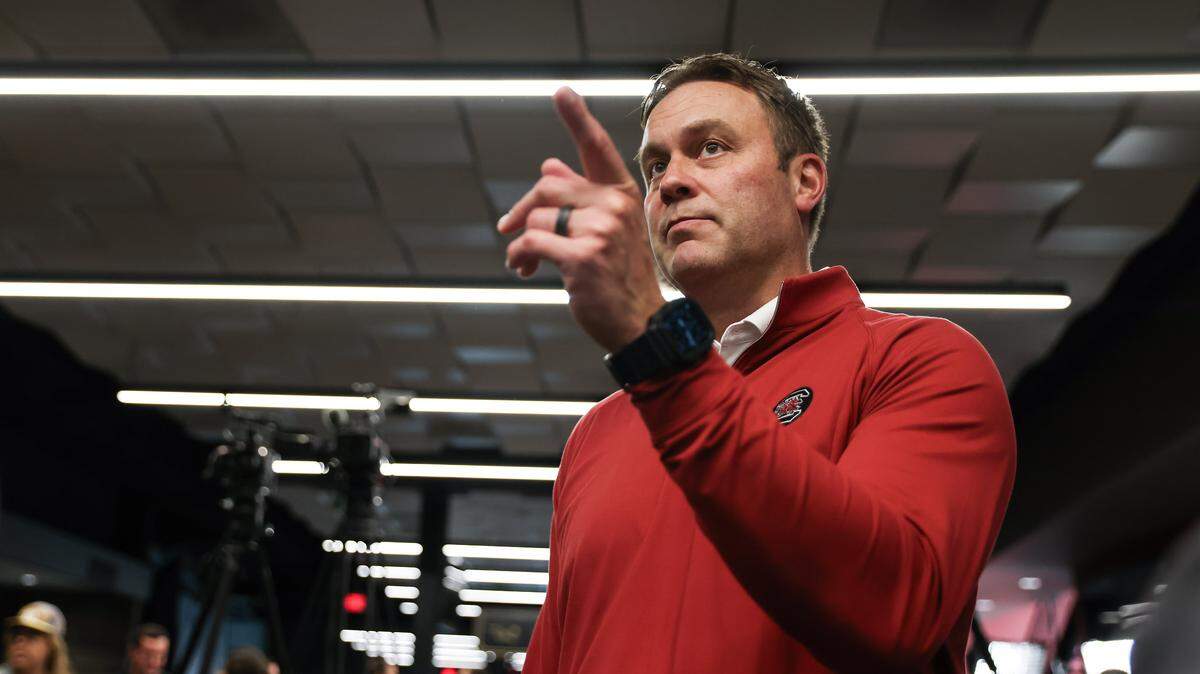
Regardless, what’s South Carolina’s plan for navigating this new revenue-sharing world? Recently, The State caught up with Gamecocks Athletic Director Jeremiah Donati and asked him. (Some responses have been edited for length and clarity.)
The State: You see reports of LSU or other schools saying they have $25 million or $30 million for NIL and you think what?
Donati: What remains to be seen is how you actually spend the money. Because with the CSC and getting these deals approved for NIL Go, it’s not as easy as it was last year when you could just pay the players. Right now, we’re doing a fresh share. So I think when you see these media reports — I think people are planning to do that, just as we are planning to do something similar. But when you actually talk to these schools, none of the money has been deployed. So we’re keeping our plans a little close to the vest because we do have a plan. We’ve got a good plan. But we are doing this as they’re building the plane. And so, all these deals still need to pass third-party NIL Go, fair-market-value scrutiny.
We are having plenty of conversations with the guys on the team that the coaches want to retain. And, you know, the portals open in two weeks, and so we’ll be ready to roll.
The State: Now that there’s an actual hard salary cap, are agents and players pushing back because one would imagine the salaries are decreasing? Has it been tough to educate the agents and players?
Donati: Yeah, incredibly tough. And the reality is, even though that’s the case, they are actually asking for more (money). So it doesn’t make a lot of sense when you think about that a hard cap should suggest those salaries aren’t going to go up exponentially. But in some cases, candidly, the conversations we’ve had with other agents, the cost, the price, the salary is double, triple, quadruple (what it was last year). That’s why you hear about this over-the-cap (NIL). The problem with the over-the-cap (dollars) is those are real. The pay for play is now taken by the rev-share. The above the cap is NIL strategy, fair-market value, valid business purpose. It needs to pass the CSC muster. Well, none of those are guaranteed — and, by the way, you can’t guarantee those.
So there are just some fundamental issues with — you want to offer money to a player, but you can’t guarantee it, and you don’t even know if It's going to pass (NIL Go). So, there’s risk there. There’s risk that we’re all trying to access (like), what are you comfortable with? Because you don’t want to break promises to kids. If you’re going to tell someone, they’re going to be here and this is what comes along with it, you want to deliver those things. That’s what we do. You don’t want to go back on your word.
The State: So with the above-the-cap NIL dollars, is it right that it can offset the rev-share money? So if you tell a kid, ‘Hey, you get $1 million’ and then he comes in and gets an above-the-cap NIL deal worth $100,000, then the school would only pay $900,000?
Donati: It could. That has to be negotiated ... directly with the agent or player. In some ways, it would be easier if there was just a hard cap, but because NIL is a thing — and it’s an important thing — that’s not a thing in the pros. In the pros, it’s your salary and then whatever you do on your own. Here, we’re responsible for helping facilitate that.
The State: How do you even put that in the contract? Do you say, ‘Here’s your salary and we’ll work our hardest to get you more?’
Donati: Basically. Every school has got a little different version of it, but the reality is it still hasn’t been finalized. You know, a lot of the rules of enforcement are still being developed And, so, we’ve agreed to the House settlement — to the general framework of it, but a lot of the nitty-gritty, the penalties for this, the penalties whatever it is, those things are still being developed. It’s a little bit shooting blind here. We want to follow the spirit of the settlement, for sure, but we also want to be competitive. So you try to find this balance of doing everything you can within the rules, but sometimes the rules haven’t been written yet.
The State: So do you expect a lot of kids to get in the transfer portal because they get bad information?
Donati: A tremendous amount. I’m not throwing stones at any particular agent or agents, but there is a tremendous amount of bad information in the marketplace. And some of that is the fact that a lot of these agents haven’t been trained. It’s an unregulated environment. For example, if you’re in the NFL PA (NFL Player’s Association), you’re certified by the player’s association. There’s a standard education requirement, there’s certification process. We don’t have that. So anybody could be an agent. And some are really good agents. Some are really not —and we have a mixture of both. So that just adds more confusion in the marketplace. And then you hear, ‘Well, this school is doing this. This school is doing that.’ I’m sure you all hear the media every. And then when you actually talk to those athletic directors and coaches, they say, ‘That’s crazy. That’s not what we’re doing.’ So it just gets stirred up there, and we’re trying to navigate through that, just like every other school is.”
This story was originally published December 17, 2025 at 7:00 AM.