Maik Kotsar weathered hard times far from family. His time at USC ending on good note
On Tuesday night in Colonial Life Arena, South Carolina big man Maik Kotsar’s family will watch him play and get to walk with him on senior night.
They watched him last week several times and will be around through Saturday’s game at Vanderbilt. These are the first times the Estonian’s parents and siblings have seen him play ball in the flesh in three years.
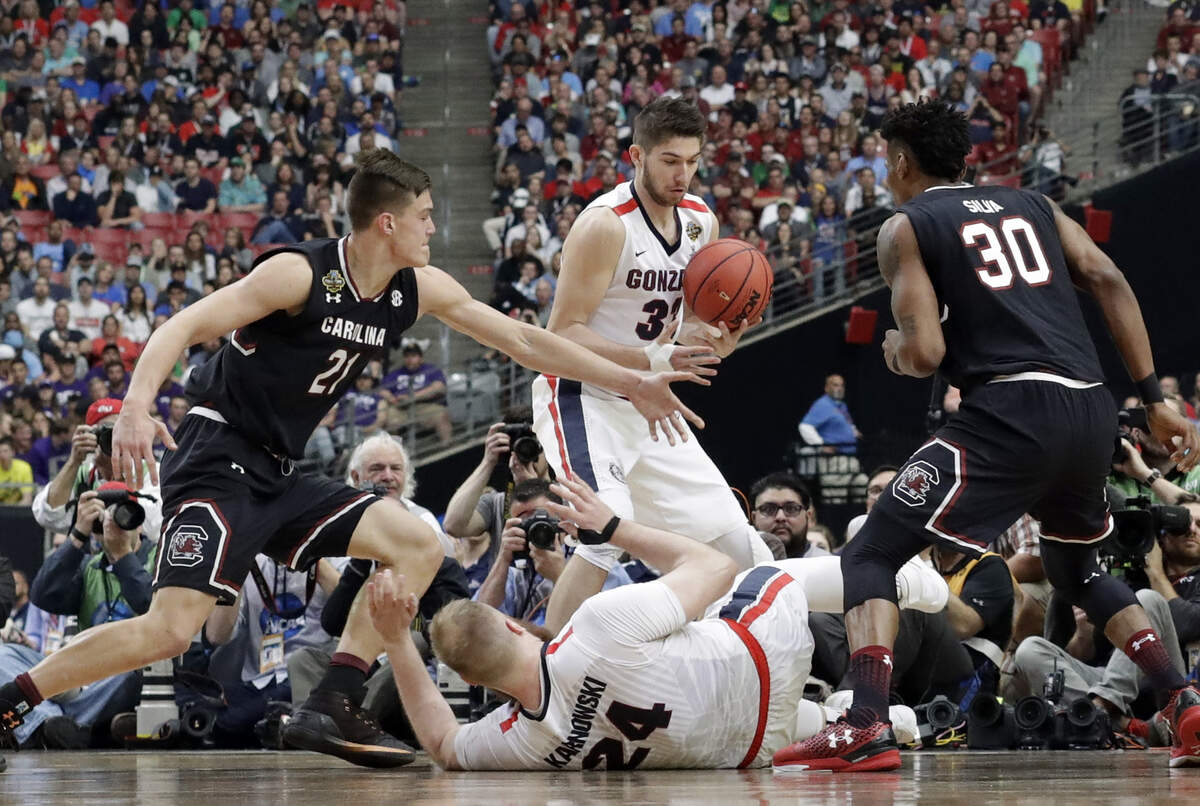
The last time was not in Columbia, but in Glendale, Arizona. Their son and brother had partaken in a wild ride. He’d broke into the Gamecocks’ starting lineup as a true freshman and was part of an improbable run to the program’s first Final Four.
Kotsar didn’t return to campus with the team in April 2017. His family had traveled across an ocean and the United States to see him, and they were staying out West for the weekend. So he did as well. To that point, the nine months of not being around them was the longest they’d been apart, and he said it was amazing to spend that time with them.
And that’s how he found himself squeezing a 6-foot-11 frame into a cramped airline seat in a small plane departing Atlanta for Columbia at 30 minutes to midnight, the final leg of a trip back to USC. Near the gate before he departed, a TV aired the North Carolina-Gonzaga national championship game, a contest his team fell just short of playing in.
Talking early this week, he didn’t remember much about that flight at all. It came at the end of season loaded with big moments for his team and personally, capped by a family reunion. At that hour, one could only expect he was exhausted in the dim cabin lights, legs angled into the isle and not thinking about much.
That’s a lot to take in, especially for a player with so much to look ahead to and with accomplishments already under his belt as a freshman. He’ll wrap up his college career soon knowing how far he’s come. Looking back now, Kotsar was asked what advice he might give to that younger version of himself.
“Just enjoy it,” Kotsar said. “There’s nothing else to it. Just enjoy the ride. Enjoy every moment, take everything out of it. Don’t look back.”
Far from home
Maik Kotsar’s journey in Columbia has brought with it certain lessons about the perils of living great distances from loved ones.
His coach, Frank Martin, pointed out that even if a player is from Texas or Miami, they might have the chance to slip away for a long weekend if the opportunity presented itself. For Kotsar, it’s an international trip.
He said he gets home only once a year, usually for three or four weeks at a time. There’s something hard about being absent for stretches like that, only getting snapshots of friends and even family.
“I’m really close to them,” Kotsar said. “All the siblings are younger, so I have not been around them as much to see them grow up, which obviously hurts, but overall love them and miss them a lot. It means a lot that they’re here.”
He had the unusual experience of his girlfriend and parents meeting for the first time without him present because they arrived late in the evening the night before USC’s Feb. 26 game against Georgia.
Kotsar started his American basketball career in high school in Kansas, but that was only a five-month stretch away from Estonia. Martin said that kind of thing can help in recruiting, as a player has already overcome the barrier of going somewhat far from home.
The academic path helped bring him to Columbia, as did the weather and proximity to the beach. (Estonia is not known for its warm climate.)
But all those opportunities can’t replace a face-to-face conversation with a parent, or hanging out with brothers or sisters.
“I don’t care how many times you FaceTime somebody,” Martin said. “It’s not the same as sitting there and giving them a hug. It’s not the same to sit there and laughing at each other’s jokes in person, eating dinner with your family members.”
An uncommon thing
Listen to Frank Martin assess his current team, and he’ll harp on the fact freshmen are playing prominent roles. It’s a simple reality that players in their first seasons have lessons to learn about the game at another level.
But Kotsar was the sort of player who started his first game in college — and the next one, and the next one. He, in fact, started 32 of 36 games that first season, and was far and away his team’s No. 5 player in minutes played.
So what made him the sort of player who could do that?
“You don’t play guys you like,” Martin said. “You play guys that accept responsibility. And he accepted responsibility better than other freshmen or first-year players on that team.”
The group had a void because a few players were dismissed from the team for an off-campus incident involving BB guns. Multiple players had a chance at filling that void, and Kotsar’s attention to detail made the difference.
Martin pointed out that Kotsar was at peace with the role and responsibility, operating in a framework with Chris Silva, Sindarius Thornwell, P.J. Dozier and Duane Notice.
When a player shows that kind of ability early, fans expect him to build on that and take steps forward. But Kotsar’s next steps were not so easy.
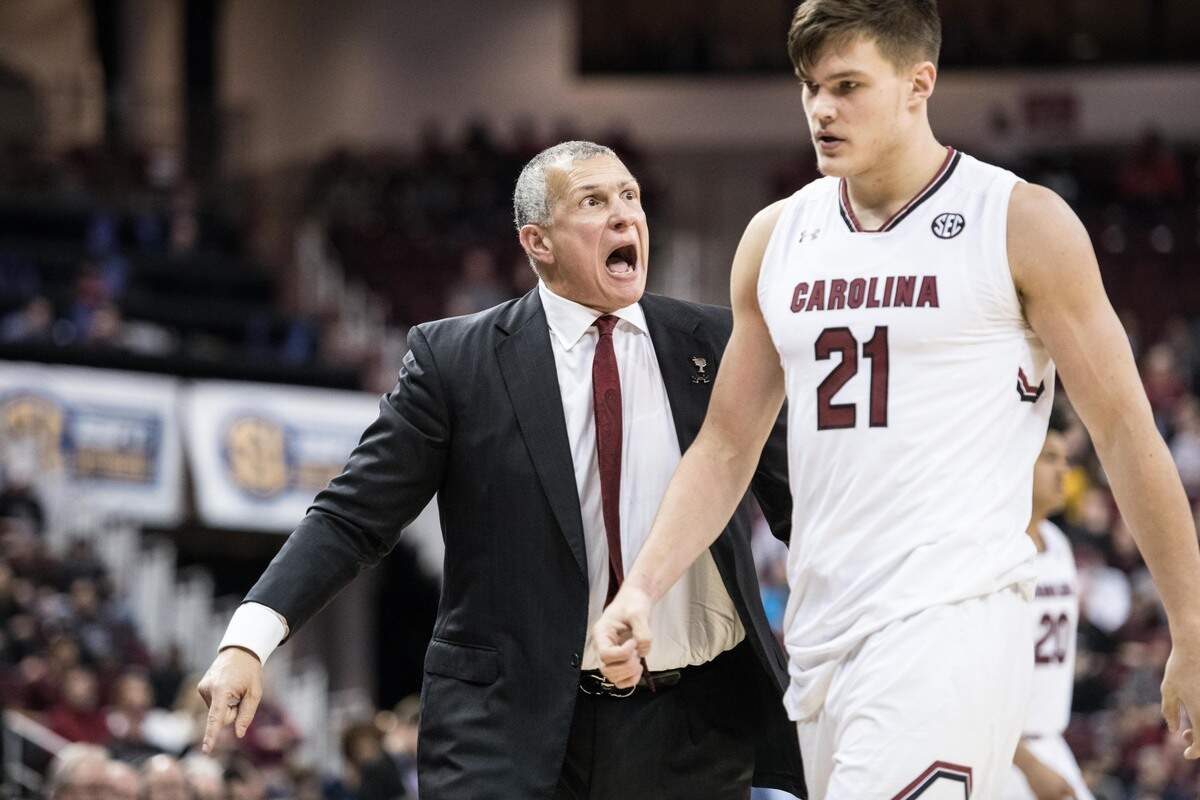
The past two seasons have featured their share of ups and downs, punctuated by a coach being hard on his player. Martin was never satisfied with Kotsar those years, and his game didn’t develop much consistency.
A 260-plus pound inside player, he connected on less than 45 percent of his 2-point shots across two seasons, struggling at the free throw line. His minutes never really dipped, but he battled inefficiency, showing well on the defensive end but not bringing that much on offense.
During the summer of 2019, Martin said Kotsar often over-analyzed things and got too into his own head.
For his part, Kotsar seemed disinterested in chatting too much about his battles, just thanking players and coaches for helping him through “the ups and downs.”
But he did say he came to understand that a coach being hard on him was about getting more from him.
“I’ve challenged him a lot,” Martin said. “Especially the last two years I’ve been, not as much this year, but last year I was really hard on him because he needed it. He can be so good. And he just, he’s always doubting in himself. And he never ran away from that.
“He never, never ran away, whether it was from not playing well, whether it’s from the responsibilities, whether it’s me down his throat to play better. He’s continued to grow and that’s all you ever ask for as a coach.”
Blossoming
Kotsar didn’t want to talk about how his game came together. He didn’t want to talk about his offensive game clicking this season, about stepping up as a defensive anchor with Chris Silva gone, or growing into a reliable scorer in addition to the other things he does on the court.
He just wanted to think about his team’s success, letting the positives of a remarkable final step just roll off his back.
So it was up to Martin to add a little poetry as to what he’ll remember about his four-year starter.
“The 15-foot jump shot,” Martin said. “You look back to his freshman year, he made one to send us to the most incredible moment this university has ever experienced in men’s basketball. If you keep hitting fast forward, his senior year has been full of 15-foot jump shots.
“And then his courage.”
The jump shot referenced was from just inside the free-throw line, two minutes left in the Elite Eight game to put the Gamecocks up two scores against Florida. The courage was leaving family for a foreign land to learn and grow.
And beyond that, Kotsar learned to be patient. He learned to let the development happen at its pace, putting in the work to help it happen, even when it didn’t happen all at once.
Not all players get to end on a high note with a measure of satisfaction. Many don’t have the role they envisioned or perhaps play well, or they can’t match expectations by the end of a career. That’s life.
But Kotsar gets to close out his career playing his best, putting aside two seasons that were far from perfect and get that productive final chapter.
Martin wouldn’t take satisfaction in a player peaking at the end because he was focused beyond the finish of a college career. Speaking about Kotsar, he invoked questions about things down the road, dealing with real-life adversity, the preparation he’ll be sent with off into the world.
For his part, Kotsar seems to have internalized some of the lessons and come to peace with some of Martin’s tactics. Passing along a piece of advice to those coming after him, he crystallized his understanding of the tough love he felt through the years.
“First thing, I feel like that every young player here needs to understand is that Frank’s, when Frank’s yelling at you, he’s not yelling at you because he’s mad at you or he doesn’t like you or whatever,” Kotsar said. “He’s yelling at you because he wants the best for you. He wants you to be better and he sees that you can be better.”
Final steps
Kotsar, to a degree, shrugged off the questions about his senior day. Martin warned that it creates a kind of emotional weight before a team and player have to focus in. Kotsar guessed it might be his last game at Colonial Life Arena, even if it created a little dissonance with more games to play.
“I get why it’s being done right now,” Kotsar said. “And obviously it’s going to be a little hard to put the emotions aside, but, I mean, what matters right now is the Mississippi State game.”
Assuming he starts the rest of the season and USC at least makes the NIT, Kotsar will depart Columbia with the most starts in a Gamecocks career and have played in the fifth-most games.
It’s been an unusual run, freshman starter to a player often ridden by his coach to a senior who had everything come together to leave on a good note. Martin, who in the offseason said he and Kotsar couldn’t go through the same dance again, was pumping him up in recent weeks for All-SEC honors.
He’s a long way from folding himself into that small airplane seat after the ride of the Final Four. And this week, he pondered what that younger version of him might think about where he is now.
“I think he would be proud,” Kotsar said. “I hope so. I am”