
How Nick Pringle, Zach Davis, other USC MBB transfers are doing at new schools
South Carolina men’s basketball brought in 12 newcomers this past offseason, including six transfer players. This was done, in large part, out of necessity after Gamecocks coach Lamont Paris lost 10 of his 13 players from the 2024-25 roster.
Jacobi Wright and Jamarii Thomas left school and began their professional careers overseas. Benjamin Bosmans-Verdonk and walk-on Weston Coggeshall left the team but are still around as USC law and undergraduate students, respectively. Collin Murray Boyles left school early to become an NBA rookie with the Toronto Raptors.
But the rest of USC’s departures — five players — all chose to forgo another year with the Gamecocks and leave via the transfer portal for new schools.
None of these outgoing transfers are putting up eye-popping numbers at their new destinations, but there is an argument to be made about the Gamecocks potentially benefitting from keeping some of their former teammates around.
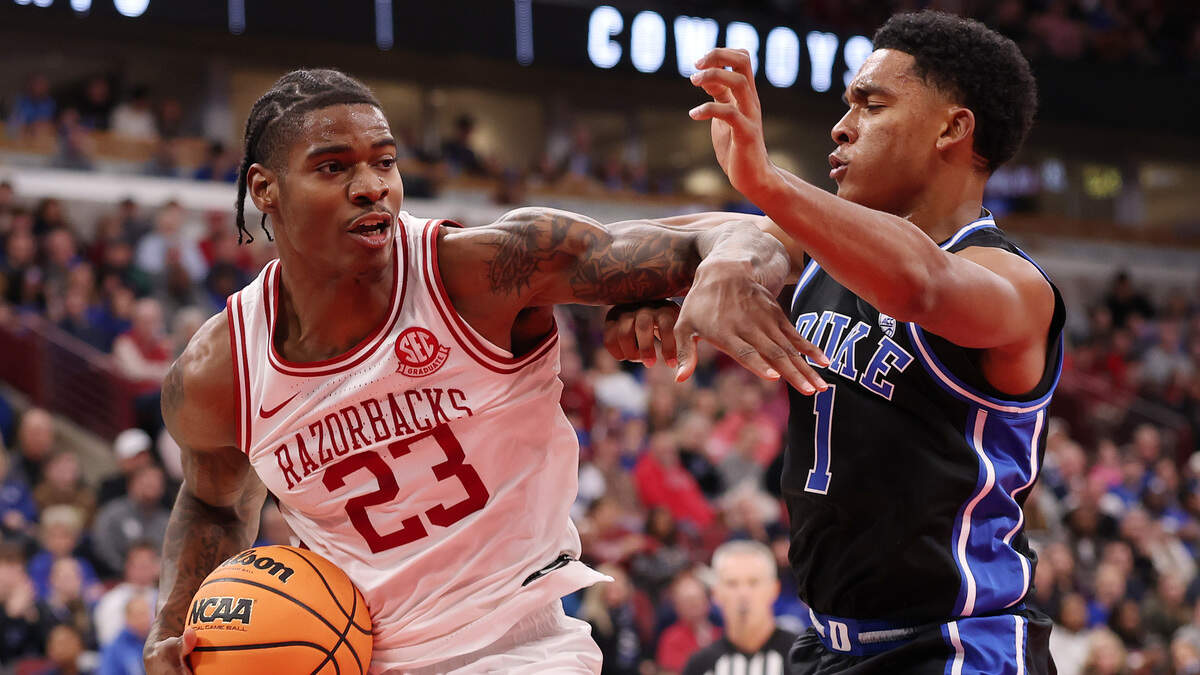
F Nick Pringle, Arkansas
Pringle, a product of Seabrook, South Carolina and Whale Branch High, is one of college basketball’s first generation of journeymen after the introduction of the NCAA’s new no-limit transfer portal rules. USC was one of four stops for him in a five-year collegiate career, which will end with his 2025-26 campaign with Arkansas.
As a Gamecock, Pringle started all 32 games and played 24.6 minutes per game, averaging 9.5 points and 6.3 rebounds a game.
With Arkansas, Pringle has taken a step back. He’s still a starter, but averages 20.3 minutes, 5.0 points and 4.9 rebounds per game. Still, his rebound average would be second-best on USC and he’d be one of four Gamecocks 6-foot-9 or taller.
It’s hard to say that USC wouldn’t benefit from Pringle’s interior presence. The Gamecocks will take on Pringle and Arkansas in Fayetteville on Jan. 14.
G Zach Davis, Memphis
In three years with USC, Davis played in nearly every game and increased his scoring average from 2.2 points per game as a freshman to 8.7 points per game as a junior. Still, he never became a full-time starter for the Gamecocks and left for Memphis and head coach Penny Hardaway this past offseason.
If the goal was more opportunity, it’s not going exactly to plan so far.
Davis has started in half of his 14 games played this season and averages 20.6 minutes per game, the lowest since he played 13.9 minutes per game as a freshman Gamecock. He’s turning in 7.5 points, 4.2 rebounds and 1.3 assists per night for the Tigers.
One thing that’s seemed to plague Davis statistically over the course of his career is a habit to turn the ball over as much as or more than he creates assists. With Memphis, he’s averaging a career-high 2.2 turnovers per game.
G Arden Conyers, Charlotte
Conyers, a product of Columbia and Westwood High, signed with USC in 2023 as the consensus No. 3 player in South Carolina. He redshirted and began his official first year in the 2024-25 season, where he didn’t make much of an impact. But looking at his numbers since he made the move to Charlotte this Summer, it begs the question of how he might fit the 2025-26 USC team’s mold.
In 14 games (eight starts), Conyers is averaging 7.5 points in 16.4 minutes per game. But here’s what really stands out: He’s shooting 42.9% from 3-point range on 4.5 attempts per game. That sounds like the perfect mold for a USC team that shoots more than 27 3-pointers per game but makes 32.1%.
It’s not guaranteed Conyers would shoot at the same clip at USC. He had a 28.8% 3-point percentage on 2.6 attempts per game as a Gamecock . But it’s interesting to see a former Gamecock shoot so efficiently elsewhere while USC is trying to do the same things.
G Morris Ugusuk, West Virginia
Ugusuk played two seasons at USC, mostly off the bench, averaging 3.8 points and 1.8 rebounds in 16.4 minutes per game. He played in 22.3 minutes per game as a sophomore.
Since transferring to West Virginia, Ugusuk has taken a step back. In 13 games off the bench, he’s averaging 2.2 points and 2.3 rebounds in 15.4 minutes per game. His 3-point percentage also dropped from a career-best 40.7% on 3.5 attempts per game to a career-worst 26.1% on 1.8 attempts.
G Austin Herro, St. Thomas
Herro, younger brother of Miami Heat guard Tyler Herro, walked on and redshirted his first year at USC before earning a scholarship prior to his sophomore campaign in 2024-25. He appeared in 10 games and averaged less than two minutes played.
Herro transferred to the Summit League’s St. Thomas for his junior year and is finally playing some significant minutes as a regular starter. In 14 games (11 starts), Herro is averaging 5.9 points, 3.4 rebounds, 2.7 assists and 1.9 steals per game.
This separation seems to have been mutually beneficial. Herro gets to play real minutes with St. Thomas, and USC opened up an extra roster spot.