
Lamont Paris reflects on season, looks ahead. Would Gamecocks accept NIT bid?
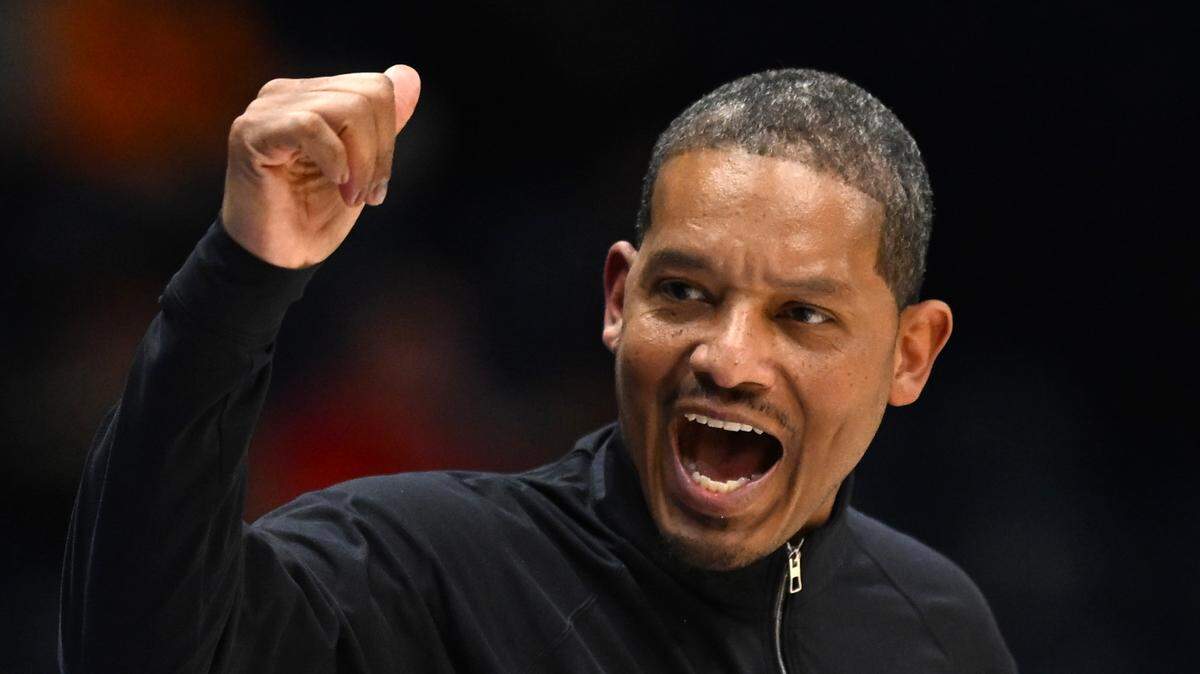
South Carolina men’s basketball coach Lamont Paris, in the moments after Wednesday’s 86-74 SEC Tournament loss to Oklahoma, spent a lot of time reflecting on the 2025-26 season and talking about what’s ahead.
Here are highlights from his final postgame news conference of the year:
Question. What can you as a coach learn from the experience of the struggle this season was?
LAMONT PARIS: Patience I think is a big part of it. Trying to get a particular message across, trying to get guys to pick up on certain things.
We did. We improved. We got better at a lot of things. I always say growth happens on your timeline. You can’t force growth. It just happens on whatever the timeline is as you absorb and can process information.
This team, while it grew significantly, grew slower. So I think in some ways that led to part of it. Early on we also had a lot of different lineups. It was a combination of not only consistency on behalf of some guys’ parts but we also had some injuries. We had three different concussions early on in the season. We didn’t have a long stretch of the same lineup for a long time.
You try to take some time to process the season after, immediately after the season. But it’s just how to keep on persevering and learning more about how the guys process information. It changes from year to year. I feel like in the last couple years it’s changed even more for a variety of reasons.
Just you’re constantly always trying to learn your team. I think I’ve heard probably more coaches saying that this year more than any other year I’ve been around. Constantly trying to learn your team and push buttons that can help them be better.
We did have a resilient group. Even if you look at this game, the way we came out and played, it wasn’t for any lack of effort certainly that we didn’t come out on top. Hopefully it will be a good experience for some of the guys, some of the younger guys.
Yeah, really just how to always learn and taking in how to get a message across and what buttons to push. The buttons continually change. That’s a part of your job as a coach, find a button that incites a particular reaction.
Q. Now that you know you’re back for next season, what will the first steps of the off-season look like for you?
LAMONT PARIS: Yeah, so immediately after this, I mean, you process what’s gone on. You end up getting back to campus. We’ll have meetings immediately with all the guys, the guys that are out of eligibility, then certainly all the guys that have eligibility still. That’s par for the course in any year. In this landscape, certainly those are important meetings to have.
A lot of honesty in those meetings, self-reflection on both behalves. Ultimately there’s so much mobility that in conjunction with a player and their family, any of the people that are in their circle, you come to a decision on who will be here the next year and who won’t be here the next year. Those will generally happen relatively quickly, relatively quickly. Then you’ll have an idea of what you need to bring in to fill some of those voids.
Some of that stuff happens, will start happening, immediately. Even just evaluation of players and what that looks like, that will happen pretty quickly. In fact, probably some of it has been happening to some degree.
That will start to happen pretty quickly. It’s pretty universal, I would guess. Even the people that are going to continue to be playing.
Q: If there was an opportunity for you to potentially play in the NIT, would that be something you’re open to?
LAMONT PARIS: NIT? I don’t know. Some of it will depend on I’ll talk with a couple of guys. Guys have to be motivated to play in the NIT. God bless the NIT. I’ve always really liked the NIT. But guys have to be really motivated.
We live in a different world now. You got guys that are going to start training for the NBA combine or for any workouts that they may have. It’s just different now. That was the deal last year with Collin Murray-Boyles, who went ninth in the draft, but he was already preparing and working with a trainer. He wasn’t going to be available. That was a large part to why we decided not to play in the NIT last year.
I think if you look across the landscape, particularly with high majors, that’s happening more frequently. I’ll consider it, but a lot of it will be dependent upon if we were invited, what our older guys, where they are in terms of their appetite for playing in the NIT.
I don’t think it does you any good just to play in it if guys aren’t really excited. I’ve been in it as a mid-major, too. I’m telling you, if you come in as a high major and you’re not ready to play, you’re not excited about playing, you’re going to lose. You’re going to lose.
It just doesn’t do anything to do it just because, oh, I want to do it selfishly to get a couple more wins or maybe we’ll do it for, you know — if I thought there was real merit and excitement about it, it would be a good experience. But a lot of that will just depend on the guys, too.
Q. You said you can’t force growth. It seems like next year has to come about quicker. How do you spur a team to grow more quickly than it did this past year?
LAMONT PARIS: That’s a good question, fair question. The process of recruiting has changed so much. There’s some level of the unknown just with a smaller window that you have recruiting guys than you have in the past. Used to recruit guys out of high school, you’d recruit them when they were in ninth and tenth grade. There’s a little bit of the unknown that way.
Some of it is recruiting some players that specifically already do certain things. Recruiting some guys that will have less growth needed. Some of our growth was as a team, but I think that happened pretty well for our group. I think we played together. I think we shared the ball. I don’t think we had anybody that was selfish that we were spending a lot of time on determining what was a good shot and a bad shot. We grew pretty quickly that way as a unit.
The growth that I’m talking about was by and large some individuals that needed to improve this or improve that. In some ways, in the recruiting process, you can recruit guys that do certain things a little more advanced in certain areas.
I mean, don’t kid ourselves. Now the more advanced players are, there’s a price tag that’s attached to those guys. I hate to even say it that way, but that’s kind of what it is. Versus if you think about a seasoned veteran, a fifth-year senior that was All Conference in some other league, versus a young and proven player, those guys are going to command different amounts.
Some of it is just trying to in the recruiting process identify some players that are a little more advanced in this area or that area to begin with.
This story was originally published March 12, 2026 at 1:11 AM.