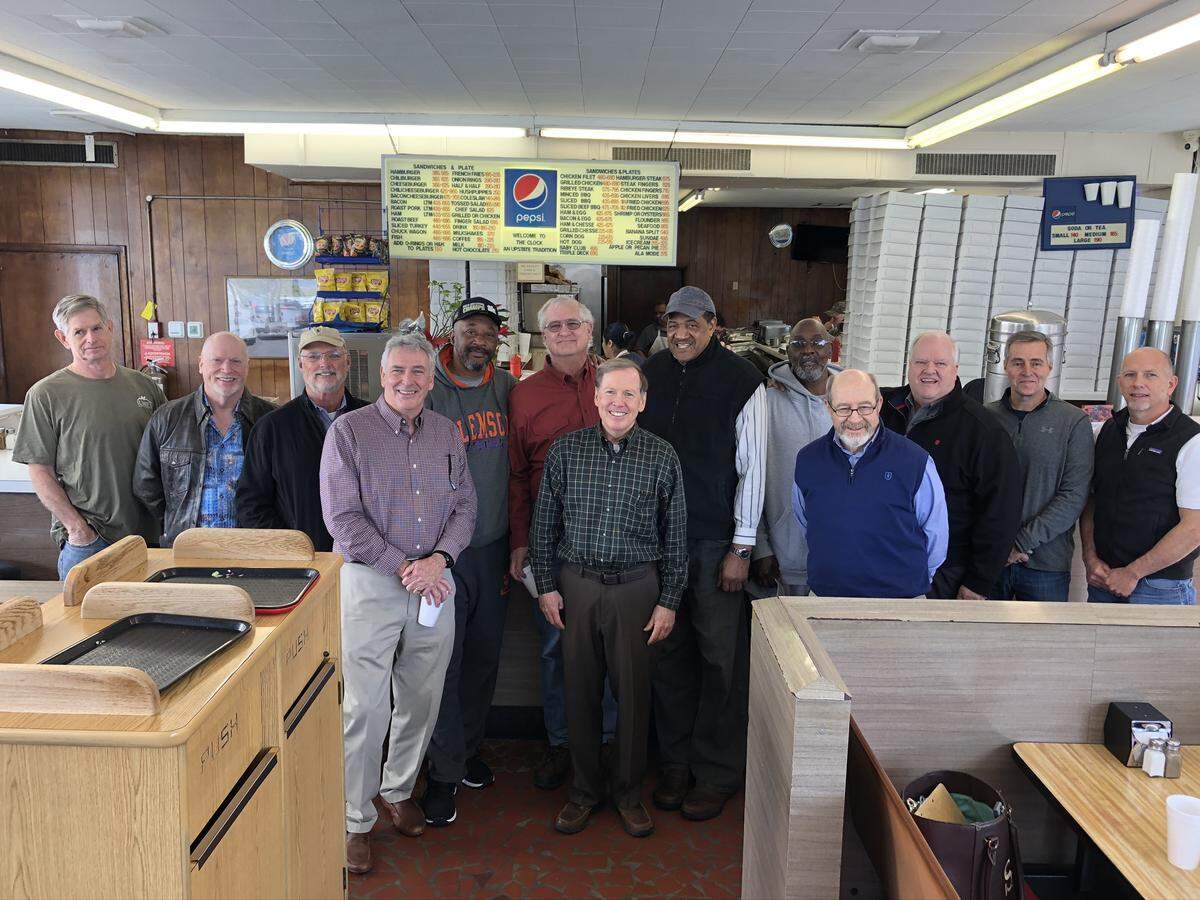
In an era of deep division, Wade Hampton basketball team fueled ‘one team, one school’
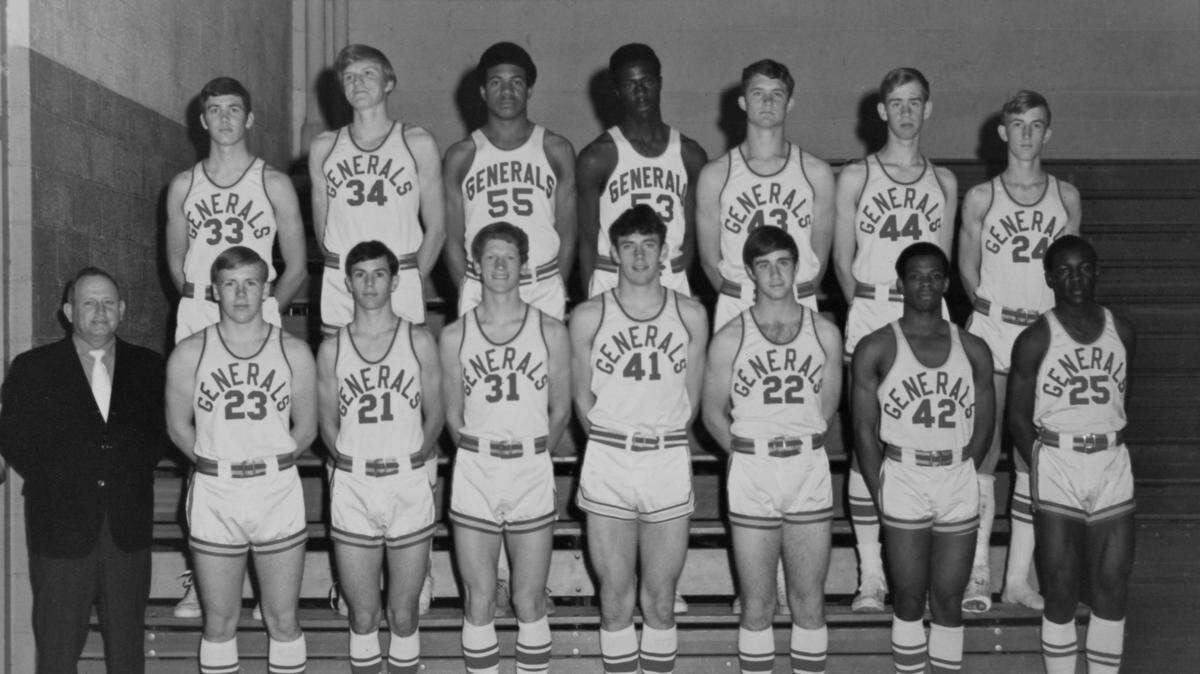
Mike Chibbaro was a basketball-crazed 10-year-old from Greenville when he first witnessed the dominating play of Clyde Mayes, a 6-foot-7, 225-pound junior at Greenville’s Wade Hampton High in 1970.
With his father and iconic Columbia coach and friend Harry Parone, Chibbaro traveled to the S.C. Class 4A basketball semifinals in Spartanburg, where Mayes led the Generals past Lancaster High, 76-46, scoring 19 points and snaring 20 rebounds.
The next night, Mayes would again make his case as the state’s best high school player with 20 points and 20 boards in Wade Hampton’s 60-46 championship win over Edmunds High of Sumter. But it wasn’t until months later that Chibbaro got his real up-close-and-personal moment with his hero.
That summer, he attended a youth basketball camp at The Citadel, where Mayes and rival Clyde Agnew of Greenville High battled daily on the court in front of the campers. When the camp ended, Chibbaro’s father gave Mayes a ride home to Greenville — a five-hour memory etched in the youngster’s brain.
“Clyde sat in the back and didn’t say much … (but) I was in awe,” Chibbaro said. “He’s this superstar, and I’m just a kid. … (Mayes) sitting with you was every 10-year-old’s dream.”
Fifty years later, the two men, both in their 60s, have reconnected to tell a story of basketball and more.
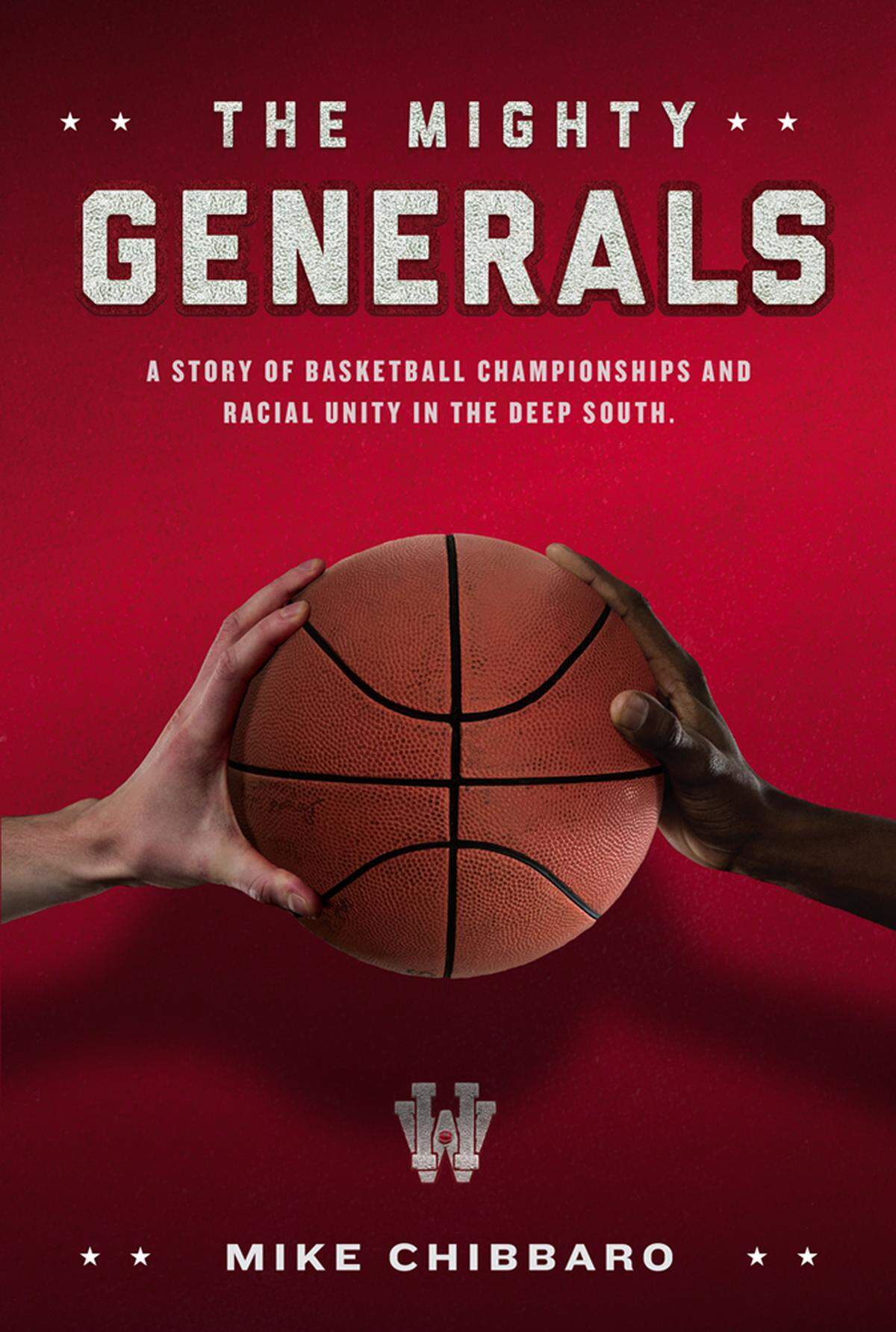
In February 1970, Greenville County schools had grudgingly integrated, sending hundreds of black students to previously all-white schools such as Wade Hampton in the middle of the school year. Remembering that — and seeing a movie about a similar moment — inspired Chibbaro to write “The Mighty Generals: A Story of Basketball Championships and Racial Unity in the Deep South.” The book, released late last year, is already in a second printing, Chibbaro said.
After viewing the 2000 movie “Remember the Titans,” a true-life story of T.C. Williams High in Virginia winning a state football title in its first year of integration, Chibbaro realized “that also happened here at my high school, and I thought it would be neat if someone told that story.” Eventually, that someone would be the USC graduate and sports fan, who in 2014 wrote “The Cadillac,” the life story of 1950s Gamecocks football star Steve Wadiak.
Chibbaro had another incentive to tell the Generals’ story: Two years ago, about the time he was first considering the project, black students at Wade Hampton High started a petition to change the school’s name from that of the Confederate general whose Reconstruction-era “Red Shirts” terrorized newly freed slaves and their allies.
“There was so much divisiveness in the community, so much anger,” he said. “I thought, ‘Now’s the time to tell a wonderful story about people in a tense time coming together to win basketball games and titles.’ ”
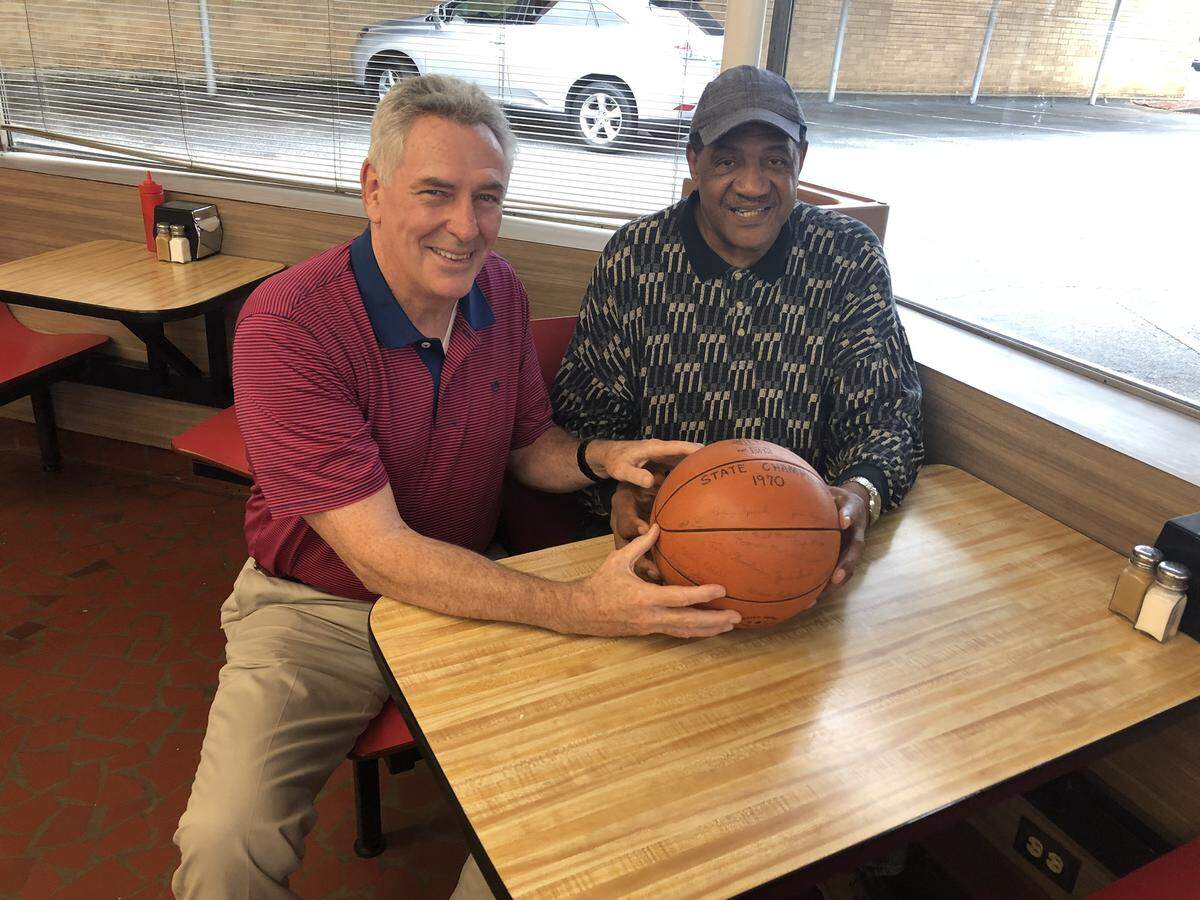
Chibbaro found vital allies in Mayes and white former teammate Norman MacDonald, both 66, who remain great friends all these years after their time in high school and later as athletes at Furman. Mayes, who enjoyed an extended professional basketball career and now works in security for a Greenville hospital, and MacDonald, with a Greenville realty company, met Chibbaro three years ago for the first of many lunches together to map out a plan.
“Mike wanted to write a book and I thought, ‘Sure, why not?’ ” Mayes said. “I think people should know the story, a story that needs to be told.”
MacDonald said that around that same time, he was serving on a committee to select members for a Wade Hampton Hall of Fame.
“We’d inducted two classes, and we didn’t have any sports figures or any blacks. I made my wife nominate Clyde, because I couldn’t as a committee member,” he said. “People needed to know Clyde’s impact on blacks and whites back then, how if he said (something was) OK, everyone fell in line.”
A prime example of Mayes’ leadership qualities, on and off the court, is demonstrated in a story about the day he and four other black basketball players arrived for their first practice with the Wade Hampton High team. At all-black Beck High, Mayes had been part of a 1969 state championship team and was off to an 18-1 start in February 1970; the Generals were a decent 12-7.
But when the county district decided to initiate integration then, rather than wait for the following school year, it created a tense situation for white and black players and Wade Hampton coach Johnny Ross.
“There was total shock and anger” among black students at Beck and other schools, Mayes said. “(Officials were) breaking up a great (Beck) team that had won the year before ... there was a lot of that.”
Ultimately, though, Mayes decided that “you take it for what it is and make the best of the situation,” he said. “(Wade Hampton) had a decent team, and after we met the players and coaches, (I thought) we can have something here.”
That first day, black players walked into the Wade Hampton gym, where their white teammates-to-be waited. Mayes, always outgoing as well as a good student and player, strolled over, plopped down between two WHHS players and smiled. With that simple gesture, the stage was set for what would be an amazing season.
Mayes and 6-foot-9 Horace Anderson, previously at all-black Washington High, dominated under the basket, and the Generals won eight straight games, finishing their 20-7 season with the state title and all-state honors for Mayes. A year later, in Mayes’ senior season, Wade Hampton finished 25-2 and captured its second straight 4A title with a 61-53 championship-game victory over Dreher High and another star-in-the-making: Alex English.
Mayes and MacDonald acknowledge now that, as 17- and 18-year-olds, they were more concerned about winning games than promoting racial harmony.
“We knew something was happening then, but not to that extent,” Mayes said.
In November 1970, racial protests occurred at Wade Hampton and other Greenville schools and were mostly resolved without serious violence — interestingly at WHHS, about the time preseason basketball practice began.
Similarly, if Chibbaro’s book was about nothing but basketball, it would be a good tale told. But “Mighty Generals” is much more.
Dr. Carlos Grant, a Columbia native, Keenan High and S.C. State graduate and Wade Hampton’s first African-American principal, came from Iowa last year with general knowledge of the state’s racial history, but not the particulars of the 1970-71 basketball story. Reading Chibbaro’s book, he said, “has been an education for me to understand the personal stories of that time.”
The book “took me to a place of remembering why I do what I do in education. I think it’s important for Wade Hampton and all Greenville schools to know the history and remind ourselves of a time when we were divided, but able to come together as one team, one school. That’s the most important aspect of the book: that hope.”
This year, Wade Hampton students are being encouraged to read “Mighty Generals,” available in the school library, and some classes have had conversations about its story. The school on Feb. 7 held a “Mighty Generals Day” assembly, followed by recognition of 1970-71 players at halftime of the current team’s basketball game.
“A lot of (former players) were flying in from around the country to be here,” Grant said.
“Mighty Generals” was a labor of love for Chibbaro, who said his favorite part is a comment he used to end the book. One of Mayes’ and MacDonald’s teammates, James “Big O” Brooks, was asked by the author how the players, black and white, were able to mesh over a matter of weeks into a championship team.
“When you play basketball together,” Brooks said, “you realize that you really aren’t that much different.”
Fifty years later, that still rings true.