NASCAR’s total ban of the Confederate flag was the right way to go
Bubba Wallace was right.
It was time — long past time, actually — for the Confederate flag to be completely banned from all NASCAR tracks. Period. No exceptions.
Wallace — the lone black driver in NASCAR’s top series — said on CNN on Monday night about Confederate flags: “No one should feel uncomfortable when they come to a NASCAR race. So it starts with Confederate flags. Get them out of here.”
On Wednesday afternoon, NASCAR did just that. The sport’s governing body released a statement that read, in full: “The presence of the confederate flag at NASCAR events runs contrary to our commitment to providing a welcoming and inclusive environment for all fans, our competitors and our industry. Bringing people together around a love for racing and the community that it creates is what makes our fans and sport special. The display of the confederate flag will be prohibited from all NASCAR events and properties.”
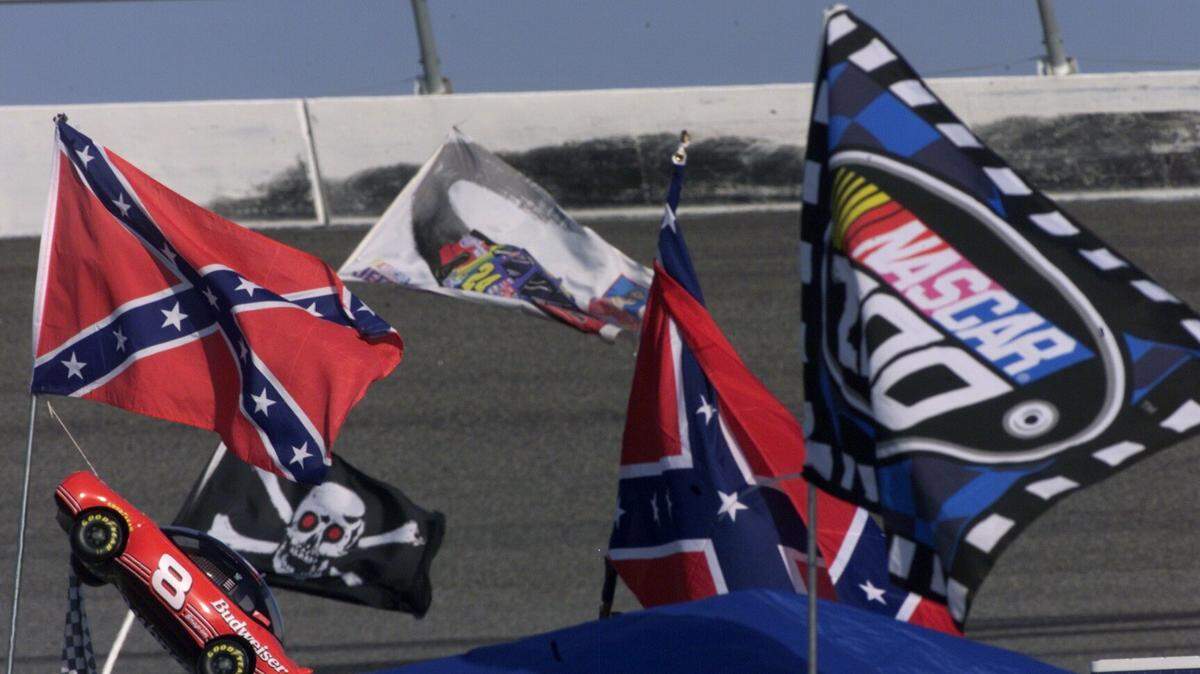
To some extent, NASCAR had already banned the flag — but not completely. Up until very recently, when COVID-19 meant no fans were allowed to attend any top-level NASCAR races, you could still find some Confederate flags flying on fans’ campers in the infield.
The sport’s authorities understood these displays are a stain on the sport’s attempts at inclusiveness, which have progressed in fits and starts at best — and that’s putting it nicely.
NASCAR has had a long-standing policy of not allowing the Confederate flag to be used in any official capacity, including in paint schemes on competitors’ cars, in Victory Lane, in the driver/owner motor home lots and in the other areas of the track it controls. No official NASCAR merchandise can include the Confederate flag, which is seen as a symbol of slavery and white supremacy by many.
In 2012, NASCAR vetoed a plan from Phoenix Raceway to have pro golfer Bubba Watson drive the “General Lee” car from the TV show “The Dukes of Hazzard” on a parade lap around the track. That car had an enormous Confederate flag painted on its roof. (Watson originally said he was disappointed by that decision but in 2015 announced that he was going to paint over the Confederate flag and replace it with the American flag.)
In 2015, shortly after Dylann Roof shot and killed nine African Americans in a Charleston church, photos circulated of Roof posing with the Confederate flag.
In the aftermath of that horrid massacre, NASCAR asked fans to refrain from displaying the Confederate flag at its facilities and events. Stars like Dale Earnhardt Jr. supported that stance.
Said Earnhardt at the time of the Confederate flag: “I think it is offensive to an entire race. It really does nothing for anybody to be there, flying. It belongs in the history books, and that’s about it.”
Still, that didn’t eradicate the Confederate flag’s presence at NASCAR races. The Confederate flag is like a cockroach — it is hard to stamp out entirely.
I’ve attended races at Charlotte Motor Speedway for 25 years. There is always someone — and often a dozen someones — flying the Confederate flag high somewhere in the fans’ section of the infield or else at a nearby campsite. It can be even more prevalent at other tracks.
Wallace understandably wants that to stop. He wants to effect societal change following George Floyd’s recent death while in custody of Minnesota police, which has sparked hundreds of protests nationwide. Wallace wore an “I Can’t Breathe/Black Lives Matter” T-shirt before Sunday’s race in Atlanta.
In his CNN interview, Wallace also praised Kirk Price, the black NASCAR official who knelt during the national anthem and invocation before the race as a form of “humble protesting,” as he told The Observer. Wallace said he would have knelt beside Price if he had viewed the event in real-time, but Price was too far up the racetrack for him to see.
As a whole, NASCAR is both deeply Southern and deeply Republican. The sport’s leaders are trying to balance a lot in the air right now, including this: Now that they have banned all forms of the Confederate flag once fans are allowed back to the tracks starting June 21 on a limited basis in Talladega, how will they enforce that?
You can make a fan lower a flag on her RV in the infield, sure. That’s easy. But what if the Confederate flag is custom-painted on the front of that RV? What if the fan is wearing a T-shirt with the Confederate flag on it? What if the fan is wearing a sleeveless shirt and has a Confederate flag tattooed on his shoulder?
All those issues can be thought out and solved, though, using common sense.
And so it goes with the Confederate flag, too. A history book, yes. A sporting event, no.
“Get them out of here,” as Wallace said. It’s past time. Good for NASCAR for realizing it.
This story was originally published June 10, 2020 at 6:00 AM with the headline "NASCAR’s total ban of the Confederate flag was the right way to go."