
Bill ordering body cameras for S.C. officers advances
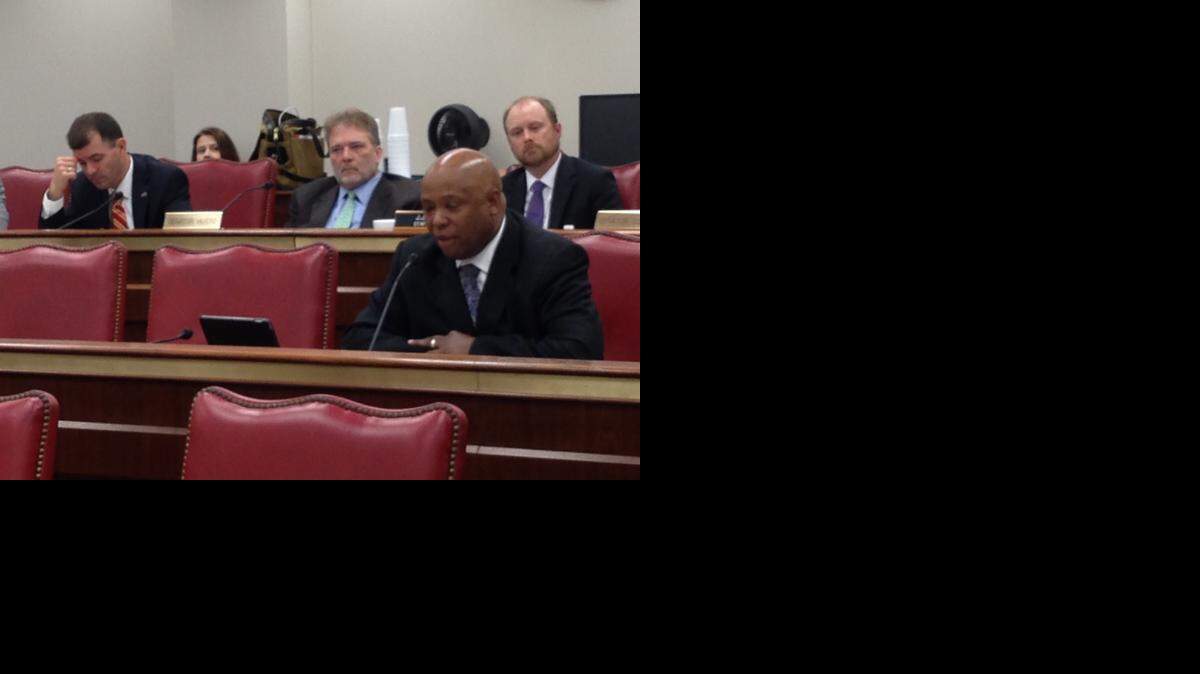
A bill that would require body cameras for all South Carolina police officers was passed unanimously out of an S.C. senate subcommittee Wednesday morning.
The bill is now headed to the full judiciary committee for another hearing next Tuesday. Police body cameras typically capture both audio and video.
“It will be the first on the agenda on Tuesday,” said Sen. Larry Martin, R-Pickens, Judiciary Committee chair, who attended Wednesday’s subcommittee hearing.
Supporters of the bill also hope to get a proviso written into a finance bill that will pay for the estimated $21 million for the first year’s financing of the new technology.
Since April 4, a cellphone video taken by a bystander of an unarmed African-American man running as a North Charleston police officer shoots him in the back has become worldwide news. The video caused Michael Slager’s prompt firing and arrest on murder charges in the killing of Walter Scott and created an outcry for police body camera legislation.
The body camera bill was introduced in December by Sen. Gerald Malloy, D-Darlington. It already has had three hearings this year in a Senate Judiciary Committee subcommittee led by Sen. Brad Hutto, D-Orangeburg.
After Wednesday’s hearing, a pleased Malloy said his prefiling the bill in December made it possible for lawmakers to have extensive discussions about the subject, along with buy-in from law enforcement, so that the Legislature was ready for the volatile situation earlier this month in North Charleston.
“I’m glad we are having our discussion in State House walls rather than out on the streets where property is being destroyed,” Malloy said, referring to riots last year in Ferguson, Mo., after a police shooting of an African-American teen there.
More than a dozen people testified before the subcommittee Wednesday as lawmakers sought to craft to craft a bill that balances competing issues of transparency, victims’ privacy, the public’s right to know and police rights to keep some matters confidential during an ongoing investigation.
For the bill to be effective, some said, it will have to include funding not only for the purchase of the cameras, but also for the storage of digital information, officer training and even perhaps additional prosecutors to oversee legal issues relating to computerized images the body cameras capture.
Laura Hudson, executive director of the S.C. Victims’ Rights Council, told the subcommittee that although many police departments would like to have dashcams in patrol vehicles, not all do because of a lack of funding. If a body camera bill is passed, ample funding is necessary, she insisted.
“As it is, we are just going from one new toy to another,” Hudson said. “We have a lot of mandates that are not fully funded.”
Hudson also said that unless the law is written correctly, defense attorneys will use any technicality to get good cases dismissed because of what might not be in a body camera video. For example, defense attorneys routinely get good DUI cases dismissed because the officer didn’t give a Miranda warning to a suspect who is completely visible on a dashcam video, as is required under state law, she said.
An unanswered question that also hung over the hearing was: If police have the power to make public or withhold what their body cameras cover, would they have made public the video that showed Slager shooting and killing Scott? The release of that video by a private citizen – not police detective work – is what caused Slager’s fast firing and quick arrest. Up to the release of the video, Slager had claimed he had no choice but to shoot Scott. Detectives might have eventually been able to craft a case against Scott, but the video provided indisputable evidence of a possible crime by a police officer.
Jarrod Bruder, executive director of the S.C. Sheriffs’ Association, said he was speaking for a variety of state law officers’ groups, including SLED, the S.C. Law Enforcement Officers’ Association, the S.C. Police Chiefs’ Association and the S.C. Crime Victims’ Council.
Bruder stressed the need to protect the privacy of juveniles, informants, those who are innocent and sexual assault victims. Important, too, he said, is determining which law enforcement officers should wear body cameras.
Also, making police body camera footage subject to S.C. Freedom of Information requests would be unduly burdensome on law enforcement agencies, Bruder said.
“We want to be sure law enforcement agencies can continue to enforce the law rather than being forced to respond to excessive or abusive Freedom of Information requests,” Bruder said. However, people whose pictures are taken by police should be able to view that footage and make it public if they wish, he said.
Taylor Smith, an attorney for the S.C. Press Association, spoke in favor of the public’s right to know. “The effectiveness of this bill and this law, if passed, will be how it increases transparency,” he said.
Rep. Justin Bamberg, D-Bamberg, who represents Scott’s family, urged passage. “I know there are a lot of particulars that need to be worked out,” Bamberg said. “The idea of body cameras is not only good for citizens, but also good for law enforcement.”
Nelson Rivers III, pastor of North Charleston’s Charity Baptist Church and vice president of the New York-based National Action Network, told the subcommittee that if Slager had a body camera, Scott might still be alive and Slager might still have a job.
The bill has bipartisan backing.
A revenue impact study done for Malloy’s bill estimates it would cost some $21 million to equip most state and local law officers with body cameras the first year, and $12 million per year after that.
S.C. Department of Public Safety executive director Leroy Smith said he was pleased with the bill. “As long as it’s got funding attached to it, we feel it’s moving in the right direction,” said Smith, whose 600-plus Highway Patrol officers have long used dashcam audio-video cameras.
This story was originally published April 15, 2015 at 12:49 PM with the headline "Bill ordering body cameras for S.C. officers advances."