
SC Juvenile Justice lacked police chief, gang expert when violence broke out
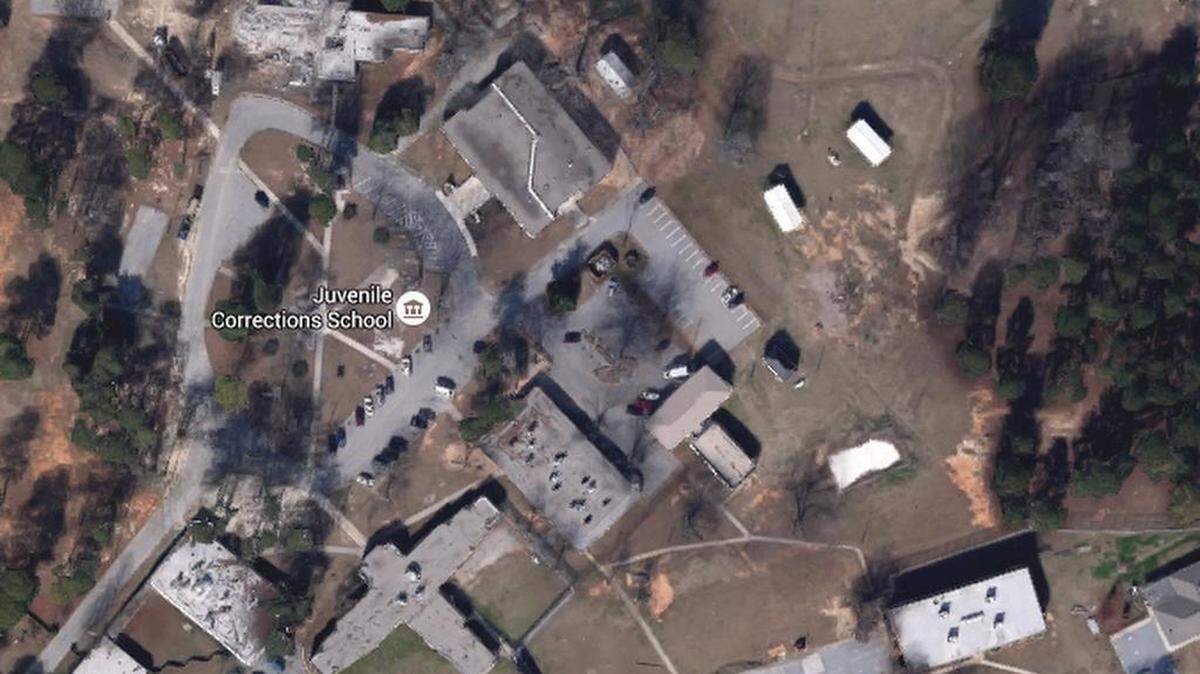
The state’s juvenile detention center had no police chief, gang intervention specialist or rapid-response emergency team on staff when riots broke out recently, the agency’s leader said Thursday.
The vacant police chief’s duties were being handled by the agency’s inspector general, S.C. Department of Juvenile Justice director Sylvia Murray told an S.C. House panel reviewing the agency.
Meanwhile, a Juvenile Justice officer who spends 12-hour shifts working directly with the agency’s youthful inmates told lawmakers that gang activity led to a Feb. 26 riot at the agency’s Broad River Road facility.
Catherine McKnight, who joined Juvenile Justice after retiring from a 31-year career with the Federal Reserve, said gang members jumped a rival gang member at a Black History event.
After the incident, McKnight said she noticed inmates hatching a plan to retaliate. She said she told a coworker, “ ‘They’re planning something.’ There was nothing that I could do. There was nothing that the director could do.”
Poorly trained officers, mistrust among employees and absent supervisors leave employees and youth inmates vulnerable, McKnight added. “Is DJJ in a crisis? Yes. Am I afraid? Yes. Is there an escalation of violence? Yes.”
McKnight testified under oath before a House Legislative Oversight panel tasked with reviewing the agency. The February riot was the third serious incident in eight months, according to state Rep. Kirkman Finlay, R-Richland, the panel’s chairman.
McKnight said she just had left work when violence broke out. When she returned, the dorm where she works was destroyed, she said. “Sinks were gone, monitors were gone, fire extinguishers were everywhere. I went around the campus and saw all the cars destroyed, buildings destroyed, staff still finding radios all around campus. I cried.”
At least one inmate escaped during the Feb. 26 riot.
Five juvenile inmates were arrested and charged as adults in relation to the incident. The inmates were taken to the Alvin S. Glenn Detention Center, where they remain.
Outlined in 16 arrest warrants, the inmates’ charges range from attempted murder and sexual assault to burglary, arson and malicious damage to property.
One inmate is accused of backing a motor vehicle into a man, then attempting to drive the vehicle into the man.
Two inmates are accused of breaking into a facility for girls and sexually assaulting female victims. One inmate put his hands in a girl’s pants and another inmate pinned a girl’s hands behind her back and pressed himself against her.
Others are accused of breaking glass windows and doors causing thousands of dollars in damage, throwing glass at a corrections officer and setting a fire in the dorm.
Juvenile Justice spokesman Eric Rousey said the agency expects to bring more charges on some of the five arrested and against additional inmates as the investigation continues.
Visibly surprised by the news about the police chief vacancy, Finlay asked DJJ director Murray, “Do you think the fact that that position was unfilled for (2 1/2) years could have led to some of this rioting?”
“I would say that probably has contributed,” said Murray, who said the agency recently hired an interim, temporary police chief from SLED.
Murray said the police chief’s position has been advertised for five months. She also said the agency — which carried over more than $3 million into this year’s budget from last year — has suffered from high turnover and difficulty in recruiting officers.
Hiring woes also have plagued the state’s child welfare agency. That agency’s director resigned after reports that children were falling through the cracks as caseworkers managed heavy caseloads, leading to poor morale and high turnover.
Murray became DJJ’s director in January 2015, after director Margaret Barber retired.
Murray offered lawmakers examples of steps the agency has taken to improve safety for inmates and officers, including:
Installing shatter-resistant glass, more razor-wire fences, tamper-proof plumbing and electrical fixtures, and better locks.
Creating a rapid-response team of correction officers to respond to emergencies.
Offering more overtime to increase staffing during the most vulnerable hours between 6 and 10 p.m., after inmates are out of school.
Murray said a new approach to housing also is underway that will group inmates based on their behavior: creating a dorm for well-behaved inmates, and other dorms for aggressive and rule-breaking inmates.
State Rep. Doug Brannon, a Spartanburg Republican and attorney, asked Murray about plans to isolate well-behaved inmates from violent ones.
Saying he represents some youths who end up at Juvenile Justice, Brannon asked how the agency would separate gang members. Brannon told Murray that he is “sending, sometimes involuntarily, children to your department and putting them in the middle of a gang war.”
Murray said a team would screen inmates and decide where they should be housed, adding, “You don’t want to put them together.”
The House panel agreed Thursday to ask the S.C. Legislative Audit Council to review the agency’s operations and finances for efficiency. The panel also will hold another hearing Wednesday on the agency.
Earlier this month, the panel sent a letter to the state inspector general detailing some allegations, including officers being instructed to downplay or not to report incidents involving inmates, and rapes being labeled as “inappropriate touching.”
Legislators did not ask about the rape allegations, and Murray was not available to comment after the hearing.
However, state Inspector General Patrick Maley said his agency would open a preliminary investigation focusing on allegations of false reporting of incidents.
Finlay told McKnight that many people who have provided the House panel with information about Juvenile Justice wish to remain anonymous. “They are afraid of retaliation,” Finlay said. “They are also afraid of favoritism within the department.”
Gazing at the Juvenile Justice administrators, Finlay asked McKnight, who plans to retire in April, to keep him posted on how that process goes. “(I)t would make me feel more comfortable to make certain that there wasn’t anything that we didn’t understand that, all of a sudden, prevented you from making that retirement date,” he said.
McKnight said corrections officers who work on the “front line” with the youthful inmates know nothing about the charges against those offenders.
However, Elizabeth Hill, a Juvenile Justice attorney, said that is not unusual. In adult prisons, she added, officers are not told what offenses inmates have committed. Hill said youth corrections officers take “universal precautions” because they understand the inmates are there for “serious offenses.”
But Finlay questioned that. “If you’re going to treat every child as if they are someone who may have perpetrated a serious offense, how could you possibly not have a police chief for two-and-a-half years?
“That belies the point that you are taking the security seriously.”
Jamie Self: 803-771-8658, @jamiemself
This story was originally published March 10, 2016 at 3:55 PM.