
Columbia church votes to leave its denomination. Bishop blames ‘misinformation’
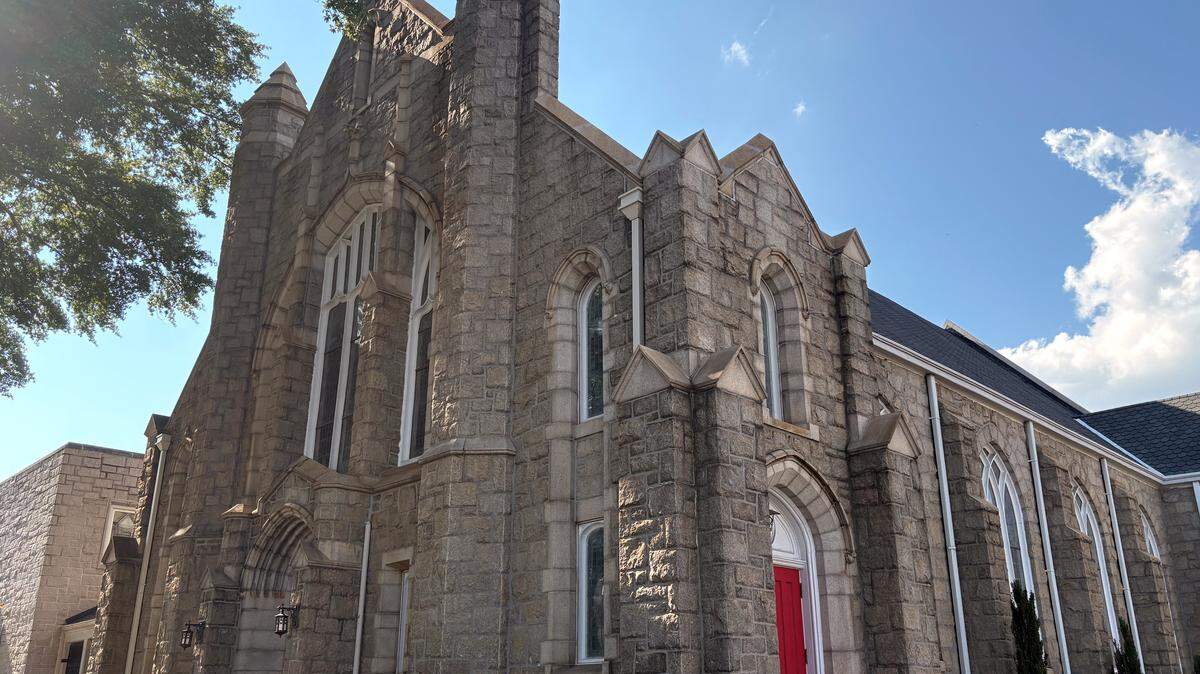
A prominent Columbia church has voted to leave its denomination, in another sign of the shifting foundations of American Protestantism in the 21st century.
Worshipers at St. Paul’s Lutheran Church at the corner of Blanding and Bull streets recently took an initial vote to disaffiliate from the Evangelical Lutheran Church in America, the largest Lutheran denomination in the United States.
If affirmed by a two-thirds vote in a second round on Nov. 16, St. Paul’s would leave the ELCA and potentially join another denomination, like the North American Lutheran Church, a group of local congregations that broke off from the ELCA in 2010.
Paula Benson, the president of the church council at St. Paul’s, said the process began earlier this year when St. Paul’s longtime pastor retired. As the church council considered a replacement, “a group came forward asking us to consider disaffiliation with the ELCA and potentially affiliate with North American Lutheran Church,” she said. The 10-person council had meetings with pastors from both denominations before voting in August by the necessary two-thirds majority to leave the Evangelical Lutheran Church.
Under denomination rules, a second vote 90 days later will make the change official.
Shifting allegiances
If members of St. Paul’s ultimately decide to make the switch, they will join with other churches in South Carolina and beyond that have shifted their allegiances in recent years as American churches seek to sort themselves out according to prevailing political, cultural and theological differences and disagreements.
In recent years, the United Methodist Church has seen an exodus of more than 100 South Carolina churches from the denomination, as other United Methodist congregations have become more open and welcoming to LGBTQ+ people. Those changes have continued to simmer discontent among some churches in the United Methodist conference today, which would still like to break away.
Before that, the S.C. Supreme Court in 2017 had to settle a similar dispute after the Episcopal Diocese of South Carolina attempted to split from the national Episcopal Church and affiliate with the more conservative Anglican Church in North America. In that case, the justices ruled some churches would remain the property of the Episcopal Church while others could remain with the departing congregations, depending on the trust status of their individual properties.
St. Paul’s departure won’t be as contentious, Benson said, because its constitution allows for it and other churches to freely disaffiliate from the ELCA, and that the denomination’s South Carolina synod have indicated ELCA officials will respect the outcome of any vote by St. Paul’s congregation, which dates back to 1886.
“We own our own property, we control over our own property and financing,” Benson said. “I assume it will be a peaceful transition.”
Misinformation?
Bishop Virginia Aebischer with the S.C. synod told The State that the ELCA would respect any decision by St. Paul’s members taken in line with the denomination’s rules. The initial vote taken by worshipers in August to disaffiliate was 88-31 in favor of leaving the ELCA, Benson said, leaving the congregation with a 90-day period of “prayer and discernment” before they make the final decision.
But Aebischer blamed “misinformation” being spread by the North American Lutheran Church meant to scare local congregations into switching their affiliations.
“One example is the bishop of the ELCA is going to take their property, and that the churchwide assembly is going to vote to allow that,” Aebsicher said. “That’s not even on the agenda, and it’s not possible.”
The difference between her church and the Methodist and Episcopal fights is that the ELCA’s only requirement for churches to leave — with their church buildings and other property intact — is that the leavers continue to operate as a Lutheran church, of whatever affiliation.
Other churches have been told that they would be “forced” to take a gay or lesbian pastor by the denomination. “That will never be the case,” the bishop said. “Our churches vote on their own pastors.”
Pastor Dawn Rister is the dean of the North American Lutherans’ mission district in South Carolina, and has spoken with members of St. Paul’s about her denomination.
“I don’t talk about the ELCA,” Rister said, focusing instead about the mission of her own church, St. Paul Lutheran in Pomaria. “I have dear friends serving in the ELCA. I don’t see them as enemies.”
But she does see the story of her church as instructive. Before she became pastor in Pomaria, her St. Paul church voted to leave the ELCA but was blocked by the South Carolina synod for reasons that are still unclear to her. The Pomaria church had to go to court to legally dissolve St. Paul Evangelical Lutheran Church and then form a new church body, carrying over the title to the same property on St. Paul’s Road.
“They were a congregation with a pastor of 28 years, much like St. Paul’s in Columbia, who preached the word and loved the people,” Rister said. “And whenever they left, they started to see things that weren’t quite the walk that they wanted to make, when things turn into social agendas rather than gospel agendas.”
The North American Lutheran Church is “Christ-centered and congregationally-focused,” she said. “Those are our core values.”
As council president at St. Paul’s in Columbia, Benson has tried to navigate the differences among her parishioners, but said there were strong concerns among her fellow worshipers with trends in the wider ELCA.
“They had concerns about some activist positions that the national and international ELCA had taken on,” Benson said. “They had some concerns with what they were hearing about what some churches had done in changes to liturgy. Those were individual churches, so I don’t know if that was something that would come down from the ELCA. But it would not be in line with the beliefs that are represented in the congregation at St. Paul’s.”
While the synod will respect St. Paul’s decision, Aebischer said, she grieved how painful the process can be for so many.
“It’s not just a vote to disaffiliate from us, but from one another,” she said. “The people within the church divide from one another. These are families and friends who have gone to church together for years. It’s very difficult.”
Updated with comments from the dean of the North American Lutheran Church’s mission district in South Carolina.
This story was originally published September 18, 2025 at 5:00 AM.
.jpg)