‘Militaristic’ jail culture to blame for mentally ill man’s death, SC solicitor says
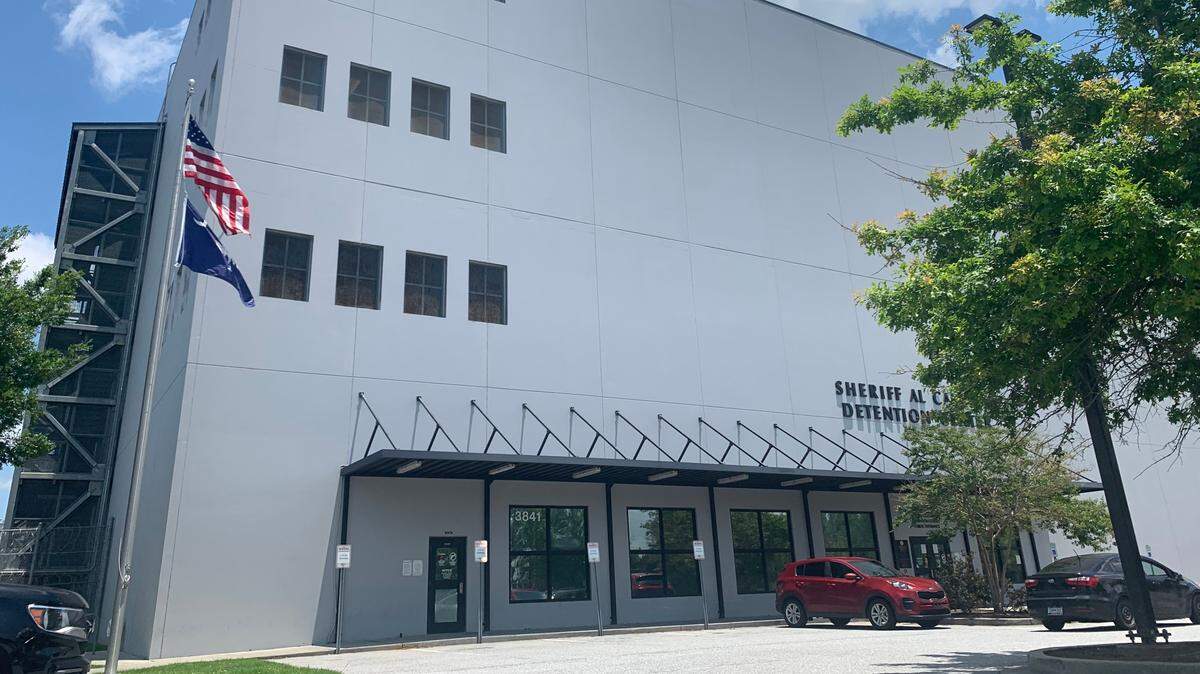
Even though two deputies will not be criminally charged in the death of a man with mental illness in the Charleston County jail, their actions were “negligent” and the officers’ training was to blame, according to a South Carolina prosecutor who explained Monday why there will be no charges.
Ninth Circuit Solicitor Scarlett Wilson said the Charleston County jail has had a “militaristic” culture that emphasized intimidation over deescalation for more than a decade. That laid the groundwork, she said, for the circumstances that resulted in the death of Jamal Sutherland, a 31-year-old Black man with a history of mental illness, on Jan. 5.
“To this day, (the officers) don’t know what they did wrong, because they were acting from their training,” Wilson said Monday in a news conference, where she explained that Sutherland’s death was unnecessary and unjustifiable, but the two Charleston County deputies involved could not be held criminally responsible. “They knew that what they were doing had been taught to them by their administration and had been sanctioned.”
Sutherland died after two officers at the Al Cannon Detention Center — detention deputy Brian Houle and detention Sgt. Lindsay Fickett — forcibly removed him from his cell to attend a bond hearing. Sutherland was facing a misdemeanor charge in connection with a fight at Palmetto Lowcountry Behavioral Health, the mental health facility where he was voluntarily seeking help for diagnoses that included schizophrenia and bipolar disorder.
In explaining how she pursued the possibility of criminal charges against Houle and Fickett, Wilson called on an expert in police use of force in detention settings, Gary Raney.
Raney slammed the Charleston County jail for its “dismaying, concerning” tactics that resulted in Sutherland’s death.
“Nothing (Houle and Fickett) did violated policy or training practices,” Raney said. “This was taught over and over again, ‘This is the way you do it.’”
Raney described an “elite” tactical team of jail officers who carried “tactical shotguns ... at all times in the jail,” a practice he said was unlike any other jail he was aware of.
“A shotgun ... sets the stage for the mentality,” Raney said. “When you create elitist mentalities that become gladiators rather than guardians, you create that culture where you result to force.”
Wilson, too, expressed anger toward the jail’s policies, which she said led Houle and Fickett to use the force they did against Sutherland. The deputies twice used pepper spray in Sutherland’s cell and fired their Tasers at least 10 times, collectively, as they tried to remove the man from his cell and take him to bond court. Sutherland wailed in pain as he lay face down on the floor, at one point screaming for 34 seconds straight.
Sutherland’s death highlights a pressing need not only for changes at the jail and improvements in officers’ training, Wilson said, but also a need for a statewide statute on police use of force.
“With the tools that we have, we are limited in our options” for prosecution, Wilson said. “Frankly, we’ve gotten lucky that we haven’t had more of this. I hate it that this happened to Jamal Sutherland. He didn’t deserve it. He didn’t ask for this. It’s not his fault. But if the detention center doesn’t change its training, it will happen again. There’s no question about it.”
In the months since Sutherland’s death, new Charleston County Sheriff Kristin Graziano — whose first day on the job was the day Sutherland died — has ushered in numerous changes at the Al Cannon Detention Center.
The changes include:
▪ Ending the policy that inmates must attend bond hearings in person.
▪ Implementing a “duty to intervene” policy, which compels officers to step in when they see another officer using physical force inappropriately.
▪ Better utilizing the assistance of mental health experts.
▪ And emphasizing deescalation training for officers.
“The Sutherland case gave us an opportunity, I think, to be better, and to be better at what we do when dealing with people with mental health (issues),” Graziano told The State in June. “But it’s also an opportunity to be better for our employees (and) to get them the training that they need.”
This story was originally published July 26, 2021 at 3:54 PM.