
New sewage plant upstream of Richland County creek opposed by county council
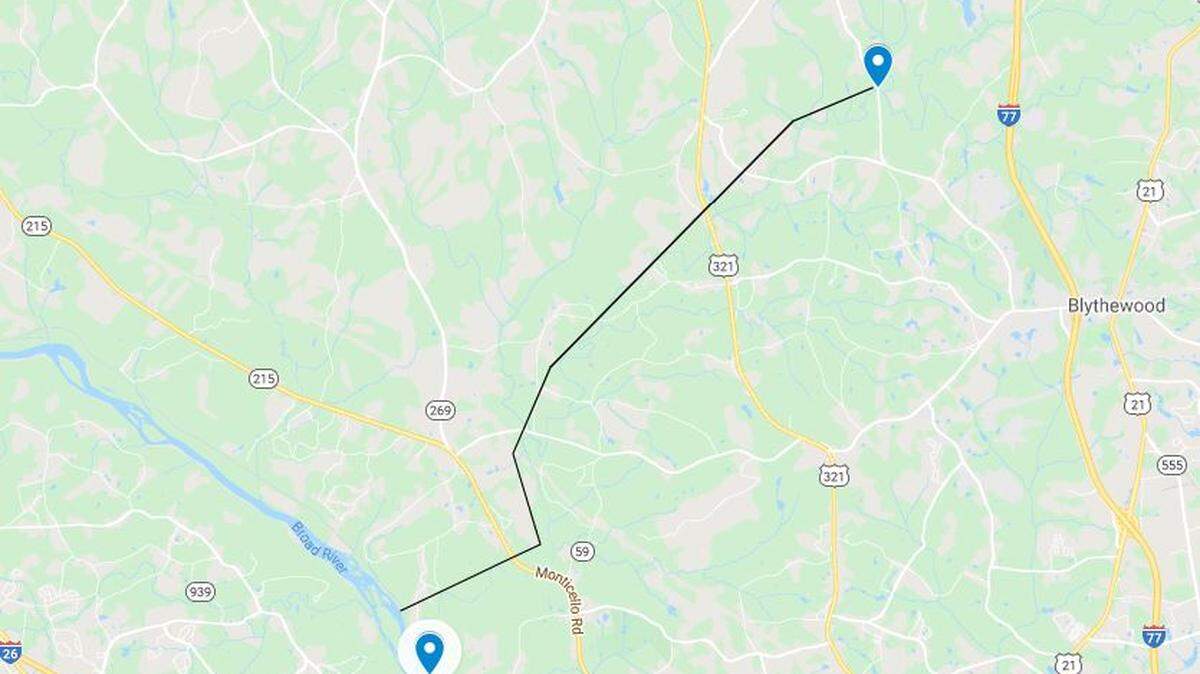
Richland County is pushing to stop the construction of a wastewater treatment plant in neighboring Fairfield County that some residents fear will send treated sewage into a creek that runs through their property.
County leaders are taking a stand against the wastewater plant proposed by Fairfield County officials, fearing the impact it will have on homeowners downstream along Cedar Creek.
The county has voiced its opposition to the S.C. Department of Health and Environmental Control and the Central Midlands Council of Governments, which has to review Fairfield County’s proposal.
The proposal was set to be discussed at this week’s meeting of the Council of Governments’ environmental protection advisory committee, but was postponed until Fairfield can finish an engineering report.
“During the summer it runs dry, so the only water source will be treated water,” Assistant Richland County Administrator John Thompson told a tele-town hall last week for Councilwoman Joyce Dickerson, whose district includes Cedar Creek.
Dickerson said she wants more information about the project before she’s comfortable seeing it move forward.
“I want Fairfield to succeed, but what we’re talking about is going to impact Richland County,” Dickerson said.
Thompson warned that the plant could affect sources of drinking water, since many homes in the Cedar Creek area depend on well water, and that changes in oxygen levels caused by the treatment could affect aquatic life.
“They can attach to the city of Columbia or upgrade their current facility,” Thompson said.
Garry Coats, a resident of the Cedar Creek area, said the push for a new wastewater plant is a “sales job.”
“They’ll say the water’s great, but if you look around South Carolina, they (wastewater plants) leak all the time,” Coats said. “They all leak several times a year. And it won’t take many to ruin the well water on Cedar Creek. We all depend on the aquifer for clean water.”
When wastewater leaks occur, they often happen in the delivery system — pipes and pump stations — instead of at the treatment plant.
Lynn Robertson, another creekside resident, said the area is dealing with the “fear of the unknown” when it comes to the plant.
“From my research, it’s impossible to get all the toxins out, no matter how treated it is,” Robertson said.
In South Carolina, DHEC sets limits on how much of a pollutant can be released. But the agency still allows some low levels of the pollutants to go through the plant and there are multiple pollutants that treatment plants are not designed to filter.
Coats said residents along the creek will continue to keep the pressure on officials to stop the plant.
“They’re the only ones who can stop this foolishness, and we’re going to send the message that it’s not going to be tolerated,” he said.
Ty Davenport, Fairfield’s economic development director, said the county is still committed to moving forward with a plant somewhere along Cedar Creek.
“We don’t see a whole lot (of options),” he said. “We’ve ruled out all the ones that don’t work, and the only one that does is Big Cedar Creek.”
Fairfield County Council voted in January to build a wastewater treatment plant, with a planned site on Syrup Mill Road near Big Cedar Creek. The creek feeds into the Broad River after winding its way through Richland County from Blythewood down past Winnsboro and Monticello roads.
Fairfield County Administrator Jason Taylor told The State in February that the county is still lining up financing and permitting for the project, and construction could be years away.
He said the plant is needed because Fairfield is working to attract more industry to a county industrial park, and will need to expand its sewer capacity to accommodate new tenants. Cedar Creek is the only inland waterway in Fairfield County that could absorb the estimated 1 to 4 million gallons per day that could be produced by the new treatment facility.
Davenport said Fairfield officials are “real disappointed” with Richland’s opposition to the project, because modern technology ensures the effluent from the plant will be “near potable.”
“We’ve taken a couple kicks in the gut in the past few years,” he said. Fairfield County has faced the failure of a multi-million dollar nuclear power expansion project and the closure of the county’s only hospital. The plant is needed to ensure the county’s economy can rebound, he said.
Davenport said Columbia’s wastewater system has the capacity, but tying it in with Fairfield County’s system could cost twice as much as the county building a wastewater plant of its own. Winnsboro’s existing system is also at capacity, and DHEC would not permit more effluent to be added to the system.
Reporter Sammy Fretwell contributed to this story
This story was originally published May 22, 2020 at 11:50 AM.
.jpg)