
USC obtains nearly 100 letters written by Anne Frank’s father, Otto
The University of South Carolina’s Anne Frank Center has received nearly 100 letters and cards written by Frank’s father, Otto, a donation that researchers say helps provide more insight into her legacy.
The donation was announced Wednesday, four days before what would have been Anne Frank’s 93rd birthday and less than three weeks before the 75th anniversary of the publication of her diary.
The donation was made by Cara Wilson-Granat, who began writing letters and building a close relationship with Otto Frank in 1957 when she was 12. The correspondence started when she auditioned for the part of Anne in The Diary of Anne Frank movie, which came out in 1959. Originally from the San Fernando Valley, California, Cara currently resides in Colorado.
Anne Frank was a 12-year-old Jewish girl who journaled her family’s turmoils while hiding from Hitler’s Nazi regime. Her diary has become one of the most prominent writings from World War II.
“There were talent scouts everywhere looking for the part of Anne and a scout found and asked me would I like to come to 20th Century Fox and audition for the part of Anne Frank,” Wilson-Granat said.
“At that point that’s really when I read the diary. It moved me so deeply, I never know the depth of it,” said Wilson-Granart, 77. “I asked ‘is Otto Frank still alive?’ They said yes, he’s in Basel, Switzerland, and they gave me his address.”
That started an exchange of correspondence that lasted for years. Otto Frank died in 1980.
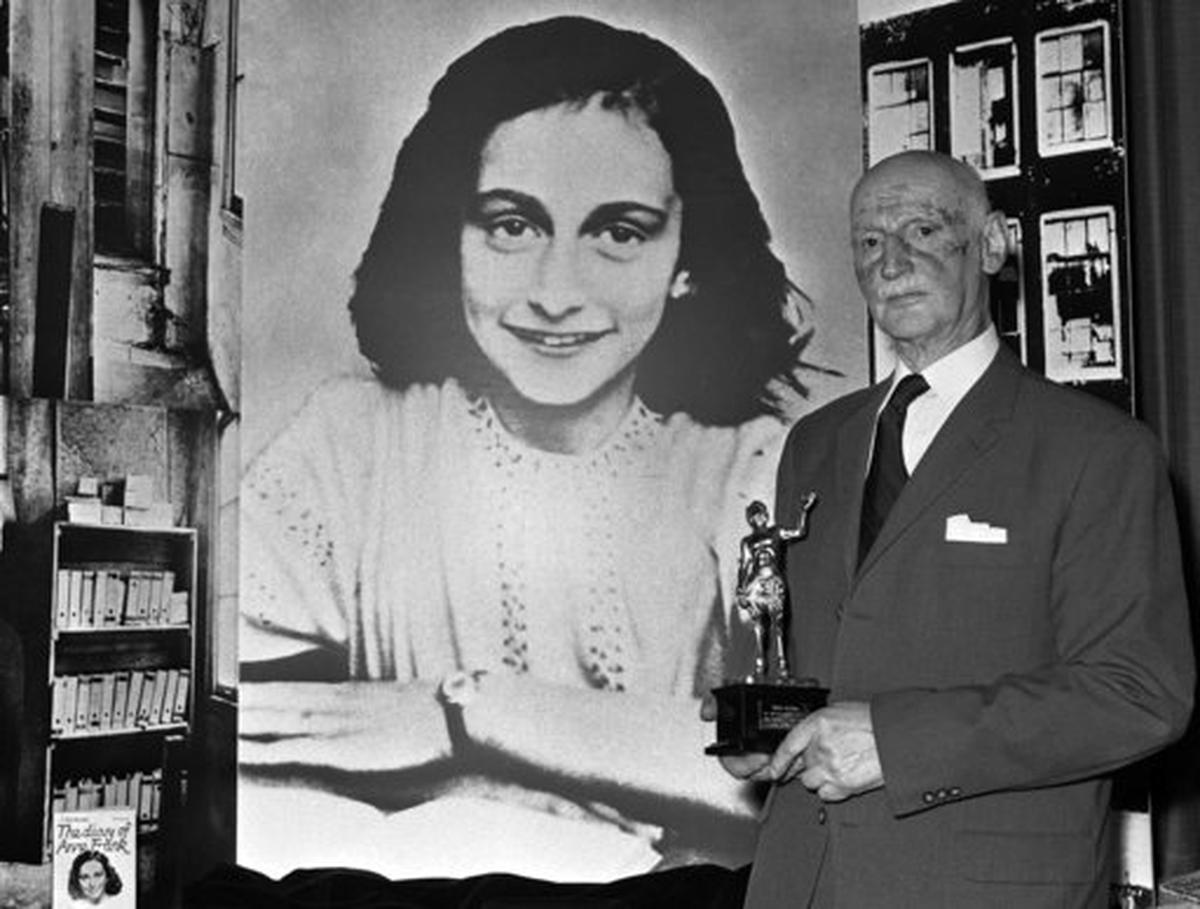
The Anne Frank Center at USC opened on Sept. 15, 2021. Wilson-Granart, an author and inspirational speaker, said USC’s center is the right place for the letters. One of her books is about Otto Frank.
“I feel a great sense of peace knowing they’re in the right home, the right place — where there is education, caring, compassion, and love. That’s what all that Otto Frank represented,” Wilson-Granat said.
The center is one of only four that is dedicated to Anne Frank and the only one in North America.
The letters give insight to the Holocaust and afterwards leading all the way into the latter half of the 20th century. Otto Frank’s writings back-and-forth with Granat-Wilson put Anne Frank’s words into perspective.
“The correspondence with Otto shows us how people responded to her and her words. That set of letters really makes a contribution to helping us understand Anne’s legacy, the response to the diaries, and why it’s one of the most important books in the history in the world,” Dr. Doyle Stevick, the executive director of the Anne Frank Center, said.
“Cara’s letters help us appreciate the American response to Anne and why her writings were so meaningful,” Stevick said.
The letters even give us a view of how to treat one another despite the disparages and create conversations. Otto kept contact with Wilson-Granat up until his death in 1980 and spoke about different societal topics.
“When I was introduced to the Anne Frank center and met Dr. Stevick I thought ‘he is Otto Frank re-imagined’. He is an educator, and he is about inclusivity so the letters will have a life where there’s discussion. We already have that with students sitting down talking about antisemitism, racism, and bullying,” Wilson-Granat said.
“There so much I believe we can grow from these letters,” Wilson-Granat said.
“The letters we’re receiving in this amazing collection are resource of students, scholars and will likely shape our vision,” Stevick said.
“Otto had such a crucial legacy in guiding Anne’s diary. The creation, the publication, the creation of the play, the movie, and the Anne Frank house,” Stevick said.
The center is still searching for more letters written between Otto Frank and others. According to Stevick, there could be more than a thousand letters and cards out there that Otto wrote and sent. The center wants to help keep the Frank’s name alive.
“There are likely a thousand of these letters across the United States and world that are not yet documented. This gift gives us the opportunity to see what letters may turn up in the United States,” Stevick said.
The writings will be held in the Earnest F. Hollings Special Collections Library.
This story was originally published June 9, 2022 at 5:00 AM.
.JPG)