Will voters support another Richland County transportation tax? Residents have mixed feelings
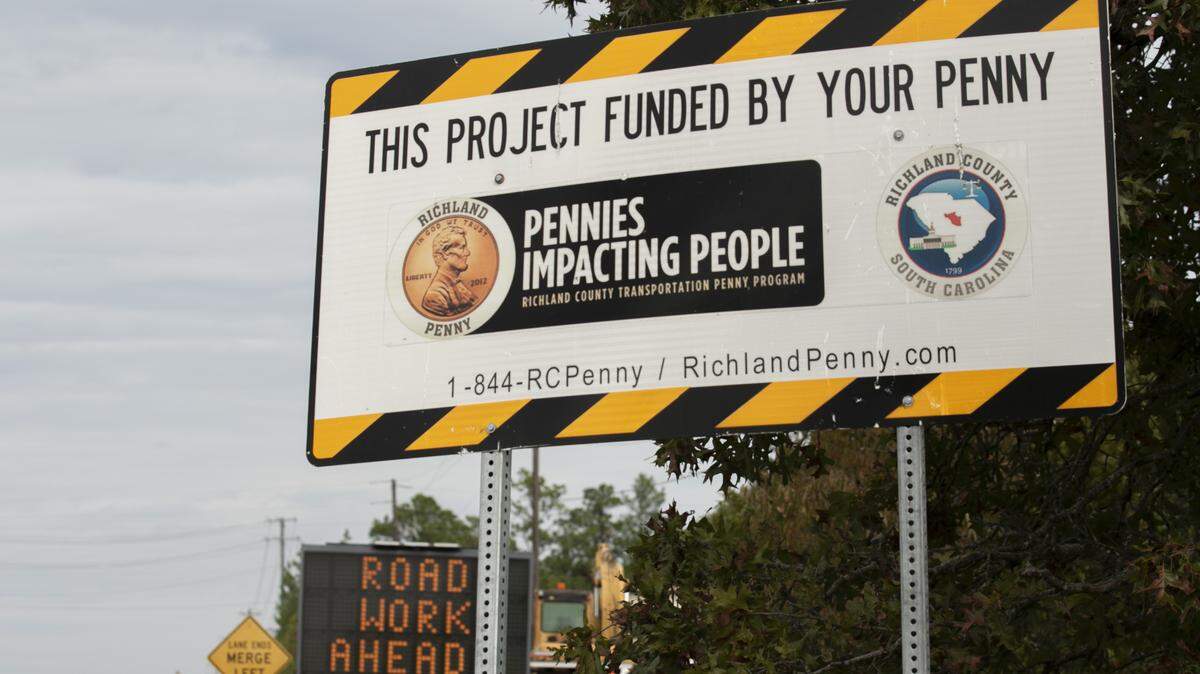
A local tax that helps pay for new roads, sidewalks, green spaces and the public transit system in Richland County is about to run out. The tax has been plagued with controversy and legal strife, and residents have shared mixed feelings on if there should be another one.
Richland County hosted The State of the Penny Thursday night — a presentation meant to share details on the current transportation tax program, what projects have been completed and what is up next.
But many people in the audience were more interested in the potential that the tax could be renewed once it expires.
Consequences of misspending
“People are sick of it, they’ve destroyed the public trust,” said Tracy Robins, who attended the Thursday meeting to voice opposition to a renewed transportation tax. Robins is also a Republican candidate for S.C. House District 75 in the 2024 election.
In 2012, voters approved a 1-cent sales tax in Richland County to pay for a variety of transportation-related projects, including the COMET bus system and major road work such as the Greene Street bridge.
That tax was meant to last for 22 years or until $1.07 billion was collected for the fund. Richland County estimates it will meet that collection limit around December 2025 — about 13 years into collection.
Richland County has also been mired with legal troubles over its management of the tax. The county and the state Department of Revenue sued each other over a disagreement about how money from the tax was spent. The DOR claimed the county had misspent the money on non-transportation related projects, while the county asserted it had done nothing wrong.
The Department of Revenue provided varying estimates for how much money was misspent by the county. An initial audit report identified $41 million in misspent dollars, then the amount was reduced to roughly $32 million. The state agency determined the county had misspent the money on coffee, cars, computers and other office equipment, as well as for outside public relations work.
Eventually, the state Supreme Court stepped in, ruling in favor of the Department of Revenue. In a settlement agreement, Richland County agreed to pay $15.5 million from the county’s general fund back into the transportation program.
That back and forth has left many residents skeptical about the county’s ability to steward another tax, Robins said. But she also said even if the county had properly managed the money, she would still oppose a new tax.
“It’s spend, spend, spend,” she said, adding she would like the county to look internally at what it could cut from its budget before proposing another tax.
Support for the penny
Not everyone in attendance Thursday opposed a new tax. A resident named Martha, who did not want her last name published, said she is worried the tax won’t get renewed.
“If you don’t ride public transportation, you don’t understand,” she said.
One third of the money collected by the penny tax program pays for the COMET bus system, which Martha uses to get to the grocery store, to medical appointments and more.
Without the buses, she and many others would have no affordable way to get around Columbia, she said.
County officials declined to speak during the meeting on the potential for another transportation tax, but County Council chair Overture Walker briefly discussed the issue with reporters after the meeting. He said that without the transportation tax he thinks the bus system will be in flux by 2028.
“Without a penny sales tax, these buses will most likely stop,” Walker told reporters Thursday.
Those leading the meeting were there to share the various ways they said the transportation tax has benefited Richland County.
For example, investing $24 million in the southeast section of Shop Road led to the growth of the Pineview Industrial Park and more than $1 billion in new industrial investments in that area, said Carrie Turner with Richland County Economic Development.
The penny program has also allowed the COMET system to grow dramatically in Richland County, said Pamela Bynoe-Reed, director of marketing for the COMET.
Before the tax was authorized in 2012, the bus system had 18 routes. Now it has 47. In 2012, there was not a single bus shelter on the COMET’s routes. Now, there are 160 shelters. And ridership has doubled, with 2.8 million riders in 2021, Byone-Reed said.
Richland County Council in October passed a resolution authorizing county staff to prepare for another penny tax referendum. (That resolution stated the tax would reach the $1.07 billion collection total around November 2026. Richland County Director of Public Works Michael Maloney said the December 2025 estimate is the most up-to-date figure.)
If the county moves forward with holding another referendum, voters would again be asked to support a transportation tax, “not to exceed one cent,” to help fund the public bus system, along with other possible transportation-related projects in the county.
Further details of a prospective transportation sales tax — such as the goals for the amount to be collected, or specific projects that could be funded — have not yet been publicly spelled out by the county.