
Living relatives of Lexington lynching victim found. Can he now be exonerated?
It’s been a year and a half since The State re-examined a 135-year-old crime that left a Lexington County teenager dead. But that look at the 1890 lynching of Willie Leaphart — broken down in a series of articles and a multi-part podcast — left the injustice of Leaphart’s death, and his criminal conviction for raping a young white woman, unresolved.
Now, the push to get Leaphart’s conviction overturned has gotten a boost.
Living relatives of the lynching victim have been identified, paving the way for his conviction to be challenged. Meanwhile, attorneys who took up the young man’s case have worked to determine if, by the standards of the time, his conviction has already been tossed out.
Willie Leaphart was only about 16 years old when he was arrested walking home from church one night in Lexington. He was accused of assaulting 18-year-old Rosa Cannon in a fine antebellum Main Street home. Unlike many young Black men facing similar accusations in South Carolina at the time, he was taken to the county jail and went through the justice system, being convicted within a month and sentenced to death.
But when Leaphart’s court-appointed attorney George Graham appealed for clemency to S.C. Gov. John Richardson, he managed to get Leaphart’s execution postponed and may have been on the verge of getting his client transferred to Columbia ahead of a new trial. That’s when a mob of around 30 men broke into the Lexington County jail and forced Sheriff George Drafts to hand over the keys. When Leaphart fought back inside his jail cell, his assailants shot him multiple times right there, killing him. No one was ever convicted of taking part in Leaphart’s murder.
That’s where things stood until 2021, when Michael Burgess, a history teacher at River Bluff High School, began looking into the topic after a student asked whether there were any lynchings in Lexington County. His research led him to conclude Leaphart couldn’t be guilty of the crime he was convicted of — and may have been a scapegoat to cover for the misdeeds of more powerful people in the community.
But when Burgess started looking into the prospect of getting Leaphart’s rape conviction overturned, he ran into a legal barrier. A person would need standing to challenge the 1890 verdict, and that would mean they would need a family connection to the defendant himself. With no living descendants of the Leaphart family able to be found, there didn’t seem to be any way to proceed.
“I would say I’m optimistic but impatient,” Burgess said of the case. “I really want to get on with it at this point, and have a reckoning ... while all of us who have worked together on this are here and in good health.”
But it turns out, Willie Leaphart did have living relatives in the 21st century.
What’s needed to overturn Leaphart’s conviction?
Aaronde Seckou Creighton didn’t grow up in Lexington County, except for annual trips down south from Richmond, Virginia, to visit his extended family. But he got a lesson in family history a few years ago when he visited the National Memorial for Peace and Justice, a monument to the victims of lynching in Montgomery, Alabama.
Between 1877 and 1950, there were more than 4,000 lynchings in the United States, according to the Equal Justice Initiative — incidents where African Americans were murdered, often by large mobs and without due process, after they were accused of committing crimes or simply violating Jim Crow-era social norms.
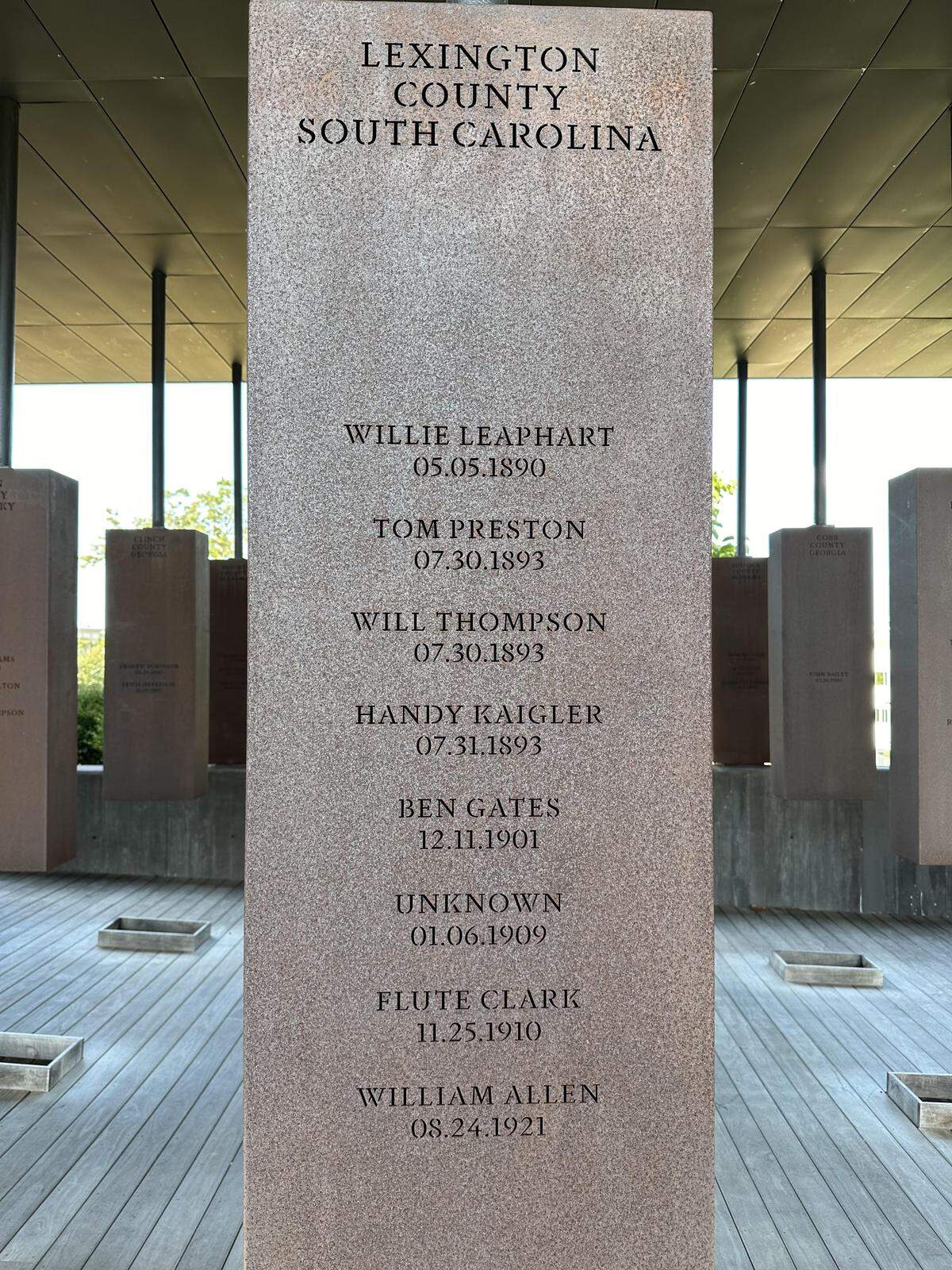
At the memorial, Creighton took a picture of the names listed for Lexington County, carved into a steel rectangle.
When he later showed the photo to his grandmother, who grew up near Lexington but lived much of her later life in Ohio, she recognized the first name on the monument: Willie Leaphart.
“She said, ‘You know, we’re related to the Leapharts,’” recalls Creighton, an Army veteran and executive coach who now lives in Atlanta. “That kind of peaked my interest and I filed it away in the back of my mind.”
That connection became clearer when his mother, Gwen Corley Creighton, was doing genealogical research on her family in Lexington. When she found records related to her great-great-great-grandfather, Ephraim Sewell, she discovered he had left money in trust for his daughter, Adeline Leaphart, Willie’s mother. That makes Corley Creighton and her son distant cousins of the lynching victim.
Corley Creighton said she became emotional when she found that name, which opened a whole new side of her family history.
“My mom had said we were related to the Leapharts, but I didn’t know what that relationship was,” she said.
Establishing that family relationship is important, because the Creightons may have legal standing to challenge Willie Leaphart’s 1890 conviction for raping Rosa Cannon, the crime for which he was initially sentenced to death.
Burgess believes that Graham, Leaphart’s attorney, was able to conclusively prove that Leaphart was present at New Bethel AME Church at the time of the alleged attack on Cannon, a mile away from the crime scene. While they were intimidated out of testifying at Leaphart’s trial, witnesses account for Leaphart’s whereabouts for all but 20 minutes that night — far too little time for him to walk a mile on foot to commit the crime and then make it back to the church. That evidence convinced Gov. Richardson to grant Leaphart a reprieve before his murder.
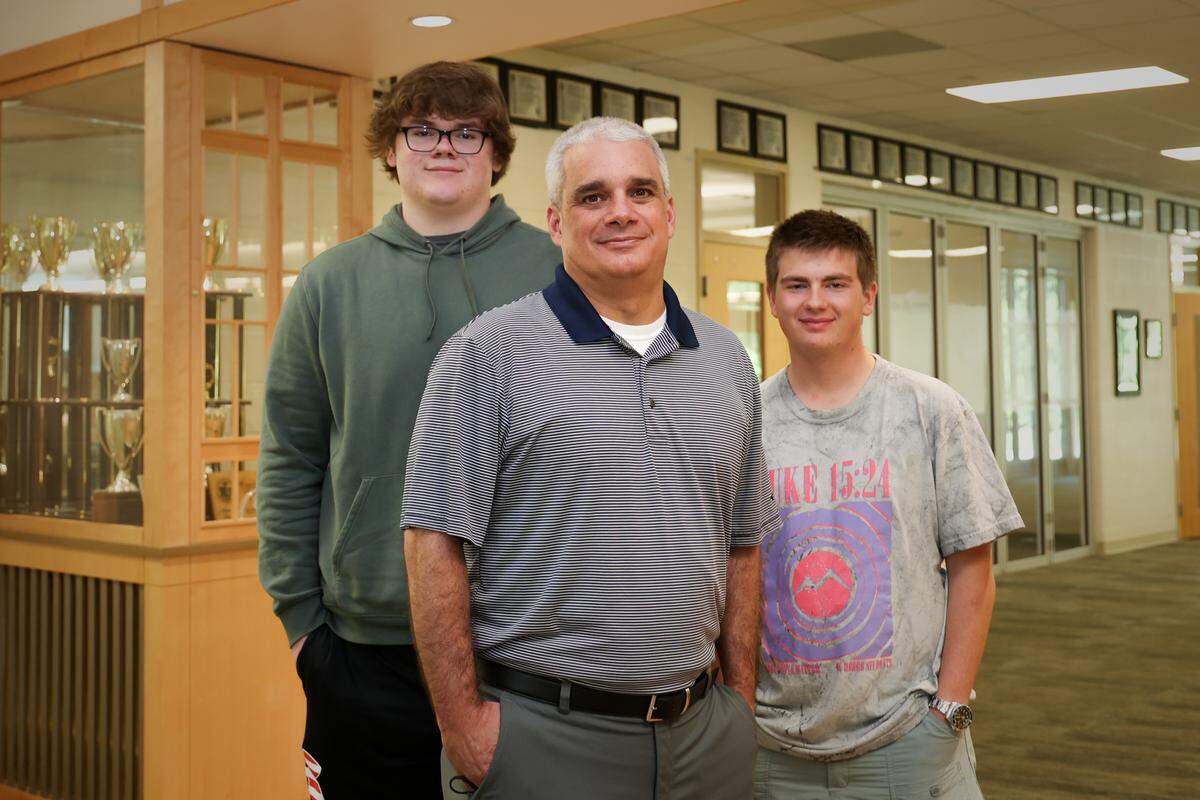
That conclusion was strengthened last year by students in Burgess’ own class. As their junior history class project, a group of River Bluff students set out to prove that it was impossible for Leaphart to have committed the crime.
When student Kyle Lam first learned about the Leaphart case in Burgess’s class, he “latched on and got really into it,” he said.
“A lot of it had to do with transcribing documents and building the time and case for the project,” Lam said. “I did transcriptions from the 1890 records. They were all written in cursive, and I would transcribe them to get a clear timeline, but also these documents didn’t necessarily have a clear timeline.” The sequence of events students were able to put together from the relevant documents “didn’t line up to what the prosecution was saying,” he said.
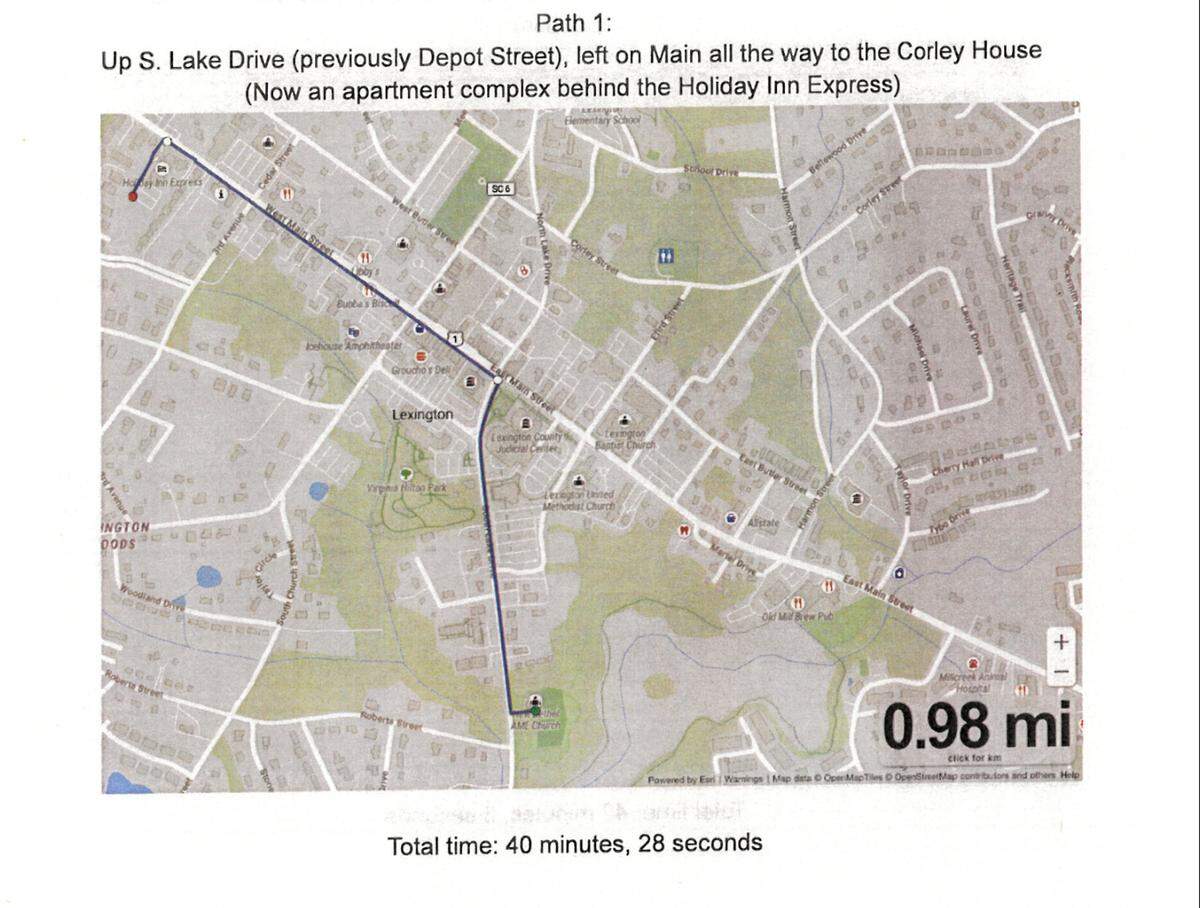
Cooper Dempsey was one of the students who walked the route Leaphart supposedly would have taken that night.
“I actually did the walk, and the first part was all uphill,” Dempsey said. A mile the whole journey. “It’s a mile in total, and the fastest I was able to do it was 40 minutes, 28 seconds. And that’s with me stopping the stop watch at crossing lights and stuff, and it was still 40 minutes, which is way outside the time frame.”
Burgess was impressed enough by what his students found that he presented it to Solicitor Rick Hubbard, the top prosecutor for Lexington County, in order to get Hubbard’s support for having the conviction his predecessor secured more than a century ago overturned. The teacher thinks there’s a reason Leaphart’s story resonates with the young people in his classroom.
“This is a young man who was brutally murdered in their hometown,” Burgess said. “There’s a connection there, and that’s something that could be quite persuasive, to get justice for someone that was their age. You’ve got kids now wanting to clear this young man. That’s powerful.”
Attorney Taylor Bell thinks that reprieve may have been more significant than merely postponing the date of Leaphart’s execution. South Carolina lacked a formal appeals process in 1890, so he believes the governor’s override of the trial court may have had the effect of setting aside the jury’s guilty verdict altogether.
“He might not even have a conviction to overturn,” Bell said.
Bell began researching the case along with fellow attorney Eric Bland after he listened to The State’s podcast on the Leaphart case. He shared his theory with Hubbard, and plans to ask for an opinion from the S.C. Attorney General’s Office on whether Leaphart’s conviction can already be considered as set aside by the state.
“That’s something that a modern-day lawyer might not have an answer to,” Bell said. “But there are historians at the AG’s office who understand the historical context, and that’s the question that we’re going to propose.”
If his theory is affirmed, then Bell says Leaphart would be eligible to have his record expunged, and the next step would be to put that request before the Court of General Sessions.
If the attorney general doesn’t support Bell’s interpretation, then any alternative remedy would need to be initiated by a living family member.
“If we can’t get confirmation that it was set aside, then we would file for a pardon application and argue actual innocence before the pardon board, and at that stage would need a relative in order to do so,” Bell said.
Tracing the history
Burgess first met the Creightons about four years ago, because of their family connections to another local figure he’s researched: World War I veteran Davis Gantt, who died of wounds he received fighting in France and was buried in the Mount Zion AME Church cemetery which now forms part of the River Bluff campus. Burgess has used that cemetery to educate his students about local history and commemorate the church’s legacy, as well as keep up the historic site in their own backyard.
He found out about the connection when they were discussing a market they had worked to erect on another historic site, the Bookman Cemetery near Irmo, when they casually started discussing their connection to Willie Leaphart.
“The way they were talking, I thought, ‘Wait a minute, are y’all related?’” Burgess said. “And they started laughing and said, ‘We thought you knew!’”
“I sincerely think the hand of God was involved,” Burgess said. “Out of nowhere, while working on a completely different story, it ends up being the connection we need. ... I think God wants to see justice done.”
The Creightons were helped in their quest when genealogist Paul Stoetzel discovered a large amount of information about Leaphart’s family from records left by John Fox in the Lexington County Museum. Fox at one time enslaved Willie Leaphart’s father, who was called Doll Leaphart in other records, but we know from Fox’s records that his real name was Merriman.
“Fox enslaved 77 people in Lexington County, and he kept extremely detailed records,” Stoetzel said. “Willie’s father, his siblings and his grandparents are probably the most well-documented enslaved people in Lexington County.”
Stoetzel has researched to build a database of enslaved people from the area, hoping to make it easier for Black people to trace their ancestry back further. His goal is to “ID anybody who has ever been enslaved in Lexington County.” It can be challenging, because some enslaved people may only have one or two written references. But Stoetzel said Fox’s records provide detailed information about the people he kept enslaved on land that now forms the Governor’s Grant neighborhood.
One record he was able to find was the will from Ephraim Sewell leaving money to his daughter Adeline, tying one well-documented area family to the Leapharts. In 1874, Ephraim’s son John bought 140 acres on Cromer Road near today’s U.S. 378 at auction. Many of his descendants would go on to live on the property, including Corley Creighton’s mother, and the family still owns land in the area today.
“My mom and all her siblings lived there, but left as part of the Great Migration,” said Corley Creighton. “When my dad came back from Korea in 1953, there was not a lot of work for Black folks, so we made the decision to go to Akron, Ohio, the rubber capital of the world.”
“We still came back to Lexington at least once a year,” she said. “I was always going back and forth.”
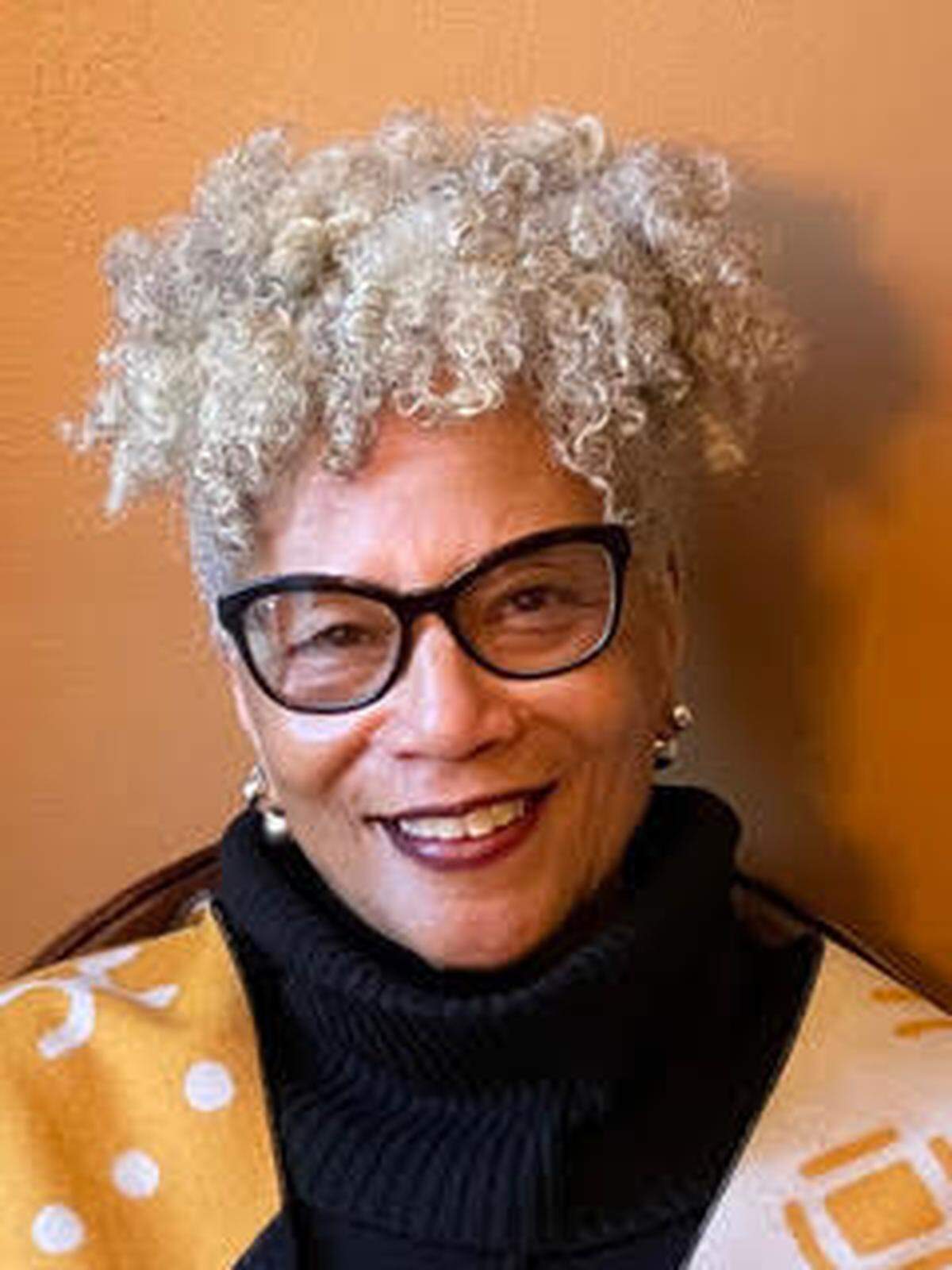
Now she’s expanded that family history to include the Leapharts. Corley Creighton said she even found a record of Merriman Leaphart going to court after his wife’s death to access her trust money on behalf of his sons.
“It was quite the ‘a-ha’ moment,” said J.R. Fennell, director of the Lexington County Museum. “Because we knew who Willie Leaphart’s father was and some of his ancestry, but because his mother had died [earlier], we just didn’t know who she was. Being able to find out how she’s connected, I don’t want to say I jumped for joy, but it was something.”
Stoetzel found that Willie’s grandfather, Solomon Leaphart, had enough money by 1870 to purchase land along what is today West Main Street in Lexington, including the present-day site of St. Paul Missionary Baptist Church. Willie Leaphart likely would have lived on the property, which is less than half a mile from the home where Rosa Cannon claimed to have been attacked in 1890. Burgess thinks that casts more doubt on her claims that an unknown man had attacked her, if that man was Willie Leaphart.
“This was a small community,” he said. “It’s likely Rosa knew who Willie was. ... He lived across the street.”
Learning his family history has made Aaronde Creighton want to see justice done for his cousin.
“My perspective, being that Gov. Richardson was willing to have a second trial, how full circle would it be to exonerate Willie?” he said. “We’re continuing to try to find some avenues, best approach to get the exoneration done.”
It’s hard for him not to think of the next generation of the family when he thinks about what happened to Leaphart.
“I’ve got adult kids, 24 and 20, so for him not having the opportunity to begin his life, all because of what happened, is a driver for me,” he said. “Especially given the climate, it’s important to recognize history and recognize that we can right wrongs.”
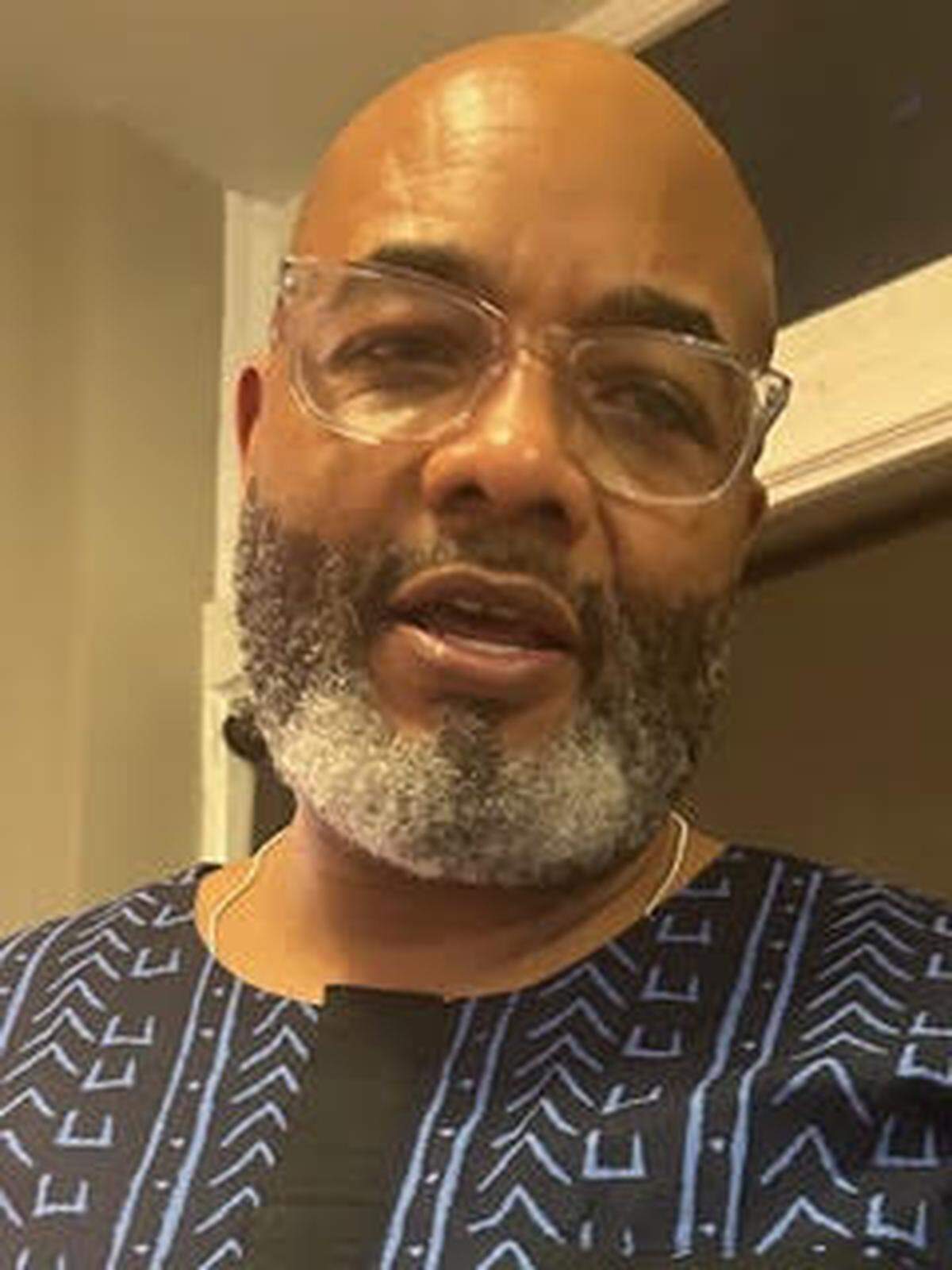
While Corley Creighton was glad to finally learn this side of her family history, she’s sad to know such an injustice could be done to a member of her family.
“He had not really begun to live his life, and doing something so innocent as walking home from church, it just breaks my heart, it really does,” she said. “Justice always prevails, no matter what it looks like or how long it takes. It goes to my faith and personal belief that God honors righteousness and justice, and this would be an example of that.”
“It’s a sad situation to show that relationship,” Corley Creighton added, “but I’m grateful that we’re uncovering that history, so it’s not lost in the family storytelling.”
This story was originally published October 8, 2025 at 5:00 AM.
.jpg)