
Third South Carolina death row inmate chooses to die by lethal injection
The South Carolina Supreme Court has denied the habeas corpus petition for Marion Bowman Jr., clearing the way for him to be the third person executed in the state since the death penalty was resumed last year.
In their unanimous decision, the five members of the court cleared the way for Bowman’s execution to take place on Friday, Jan. 31.
Bowman was sentenced to death for the 2001 murder of Kandee Martin, a 21-year-old white woman, in Dorchester County. Bowman shot and killed Martin, who he knew, before setting her body on fire inside of a car. According to court records, Bowman had been planning to commit a robbery the night of Martin’s murder, when he grew paranoid that the young mother was wearing a wire, leading to him shooting her.
Bowman and his attorneys had filed the habeas petition in December. In it, they argued that his execution should be paused to examine allegations that prosecutors had withheld material information about key witnesses, including a supposed jailhouse confession by his accomplice and secret deals with another witness, as well as allegations that Bowman’s original trial attorney “infected” the trial with his own racist beliefs toward Black people.
Bowman’s attorneys also argued that the execution should not take place because of Bowman’s personal growth since his incarceration.
One of Bowman’s attorneys, Lindsey Vann, said that his team was “reviewing” the denial and considering next steps.
“Marion has spent decades fighting to prove his innocence in this capital case in a state that has disproportionally applied the death penalty to young men of color. We will continue to support him and hope that South Carolina does not execute another innocent man. Or proceed with this egregious injustice and needlessly kill another human being,” Vann said in a statement.
The high standard for granting a habeas petition can only be met when the condemned has been denied a “fundamental fairness shocking to the universal sense of justice,” according to the order.
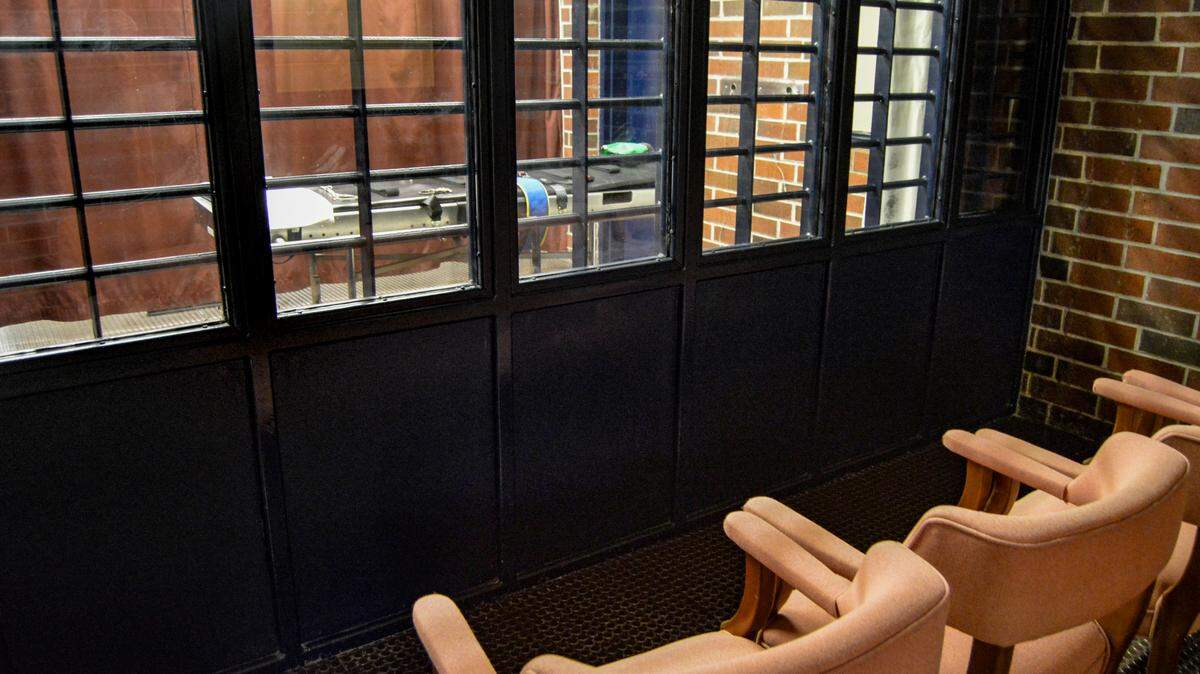
On Friday, Bowman opted to select death by lethal injection. In South Carolina, death row inmates are given the choice of dying by lethal injection, electric chair or firing squad.
The first two men to be executed, Freddie Owens and Richard Moore, both opted to die by lethal injection. While almost all of South Carolina’s lethal injection protocol — including how the drugs are acquired and stored — is hidden from public view by a “shield law,” documents from the state Department of Corrections have confirmed that the method of execution is a single dose of pentobarbital. This powerful barbiturate causes death by asphyxiation.
Like Owens and Moore, Bowman is Black. Like Owens, Bowman was a young man when he committed his crime. Bowman was 20 years old when he shot and killed Martin. Owens was 19 at the time of his crime.
Few options remain for Bowman. His lawyers still have the option to appeal to the U.S. Supreme Court and petition South Carolina Gov. Henry McMaster for clemency. Neither avenue was successful for either Owens or Moore.
What did the court say?
Most shocking among the filings by Bowman’s attorney was the claim that one of his original trial attorneys had “injected odious racial prejudice into the case.” Among other evidence, Bowman’s attorneys point to his attorney’s description of Bowman as a “Black man” and Martin as a “white girl,” despite Martin being a year older that Bowman, who was 20 at the time of the murder.
They also pointed to his attorney’s decision not to introduce testimony about Martin’s supposed history of drug addiction and prostitution as well as statements during a post-conviction hearing. While testifying, the attorney addressed Bowman and asked what his former client was doing “at that time of the morning with a white female and African American males in Dorchester County? Really. This is 2001 but what good are you doing out there on a dirt road?”
However, the Supreme court said it “flatly” disagreed that this was evidence of racism. Describing these allegations as a “meritless narrative,” the justices said there was “no evidence trial counsel exhibited racism during his representation of Bowman or during the PCR hearing.”
Many of the choices the attorney made were valid strategic decisions to “defuse any racial animus the jury may have had,” the justices wrote.
Asked to consider that Bowman’s personal growth over the last 22 years, justices wrote that Bowman’s lawyers did not present evidence of a constitutional violation. The law also did not permit them to review the proportionality of Bowman’s sentence due to changes in his character or adaptability to prison.
The Supreme Court also dismissed Bowman’s claims that prosecutors violated the Brady rule, a requirement that the state hand over all evidence relevant to their case to the defendant before trial.
Addressing Bowman’s petition, the court found that his attorneys should have had adequate information to discover that a jailhouse informant wrote a note to investigators that eyewitness James “Tawain” Gadson reportedly confessed that he was the one who actually shot Martin.
Additionally, the court noted that the informant testified at a post-conviction hearing that Bowman had pressured him to write the note using information that he supplied.
Furthermore, while Gadson was reportedly suffering from blackouts and consuming up to six blunts (a type of marijuana cigar) a day, the court found there was no evidence that he was impaired by anything other than alcohol on the day of Martin’s murder.
The Supreme Court also agreed with the federal Fourth Circuit in finding that while prosecutors may have hidden a deal to dismiss charges against witness Hiram Johnson, his testimony was “ancillary” and corroborated by other witnesses. A jury found that testimony sufficient to render a verdict even though some of those other witnesses stated in court that they were testifying in exchange for plea agreements, according to the order.
“We reject Bowman’s argument that these pieces of evidence would have affected the outcome of his sentencing,” the justices wrote. “We conclude the evidence did not create a reasonable probability that at least one juror word have decided upon a sentence other than death.”
This story was originally published January 16, 2025 at 5:23 PM.