
After claims of ‘botched’ firing squad, SC prepares to execute Stephen Bryant
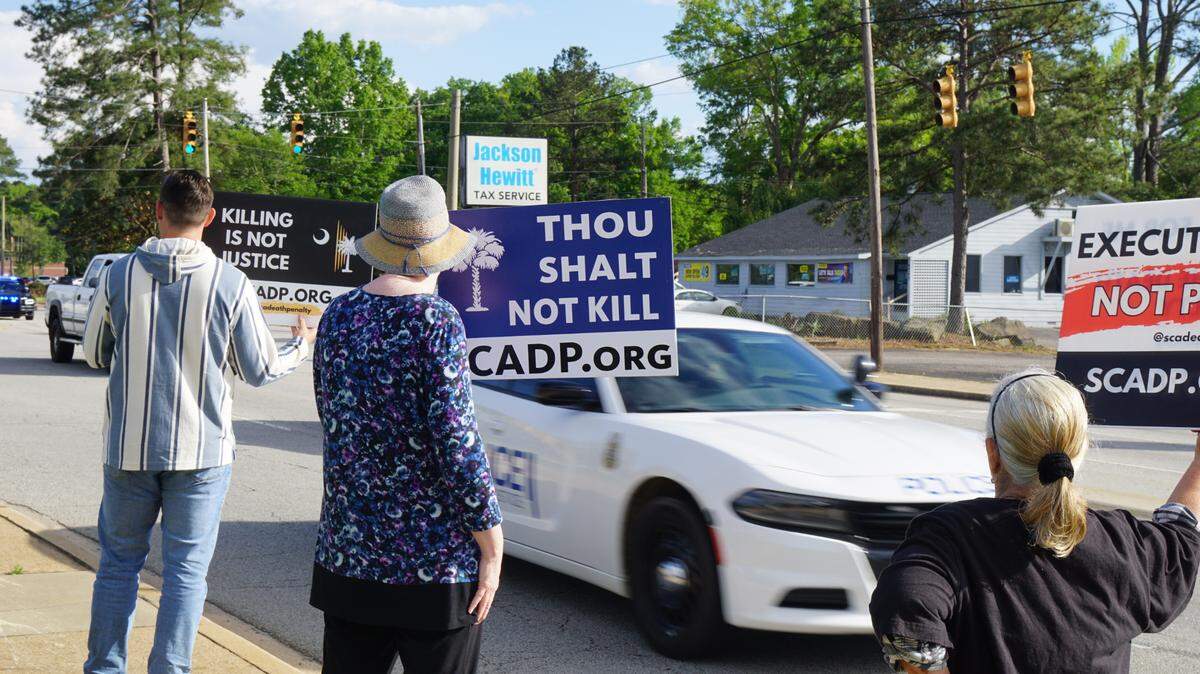
Today, at 6 p.m., Stephen Bryant is scheduled to be executed by firing squad inside the South Carolina Department of Correction’s death chamber in Columbia.
Bryant was sentenced to death after pleading guilty to three murders in Sumter, South Carolina, where he taunted cops with a message written in one victim’s blood.
If the sentence is carried out, Bryant will be the third person executed by firing squad since the state introduced the divisive method as part of a push to resume the death penalty after a 13-year pause.
South Carolina law requires death row inmates chose between firing squad, lethal injection or electric chair. Bryant’s choice of firing squad comes follows the controversial death by firing squad of Mikal Mahdi in April 2025, who gave a groaning yell on being shot.
“There was some agony in the cries,” said Jeffrey Collins with the Associated Press, who was a witness to the execution. Collins, who has witnessed 13 executions, said at a press conference following the execution that it was the first time he had heard an audible expression of pain from a condemned person.
After an autopsy revealed only two bullet entry wounds (South Carolina’s firing squad has three people), which were lower on his chest than expected, Mahdi’s attorneys filed a notice with the South Carolina Supreme Court calling it a “botched” execution.
But despite concerns, the Department of Corrections has maintained that their policy was followed and that all three rifles were filed.
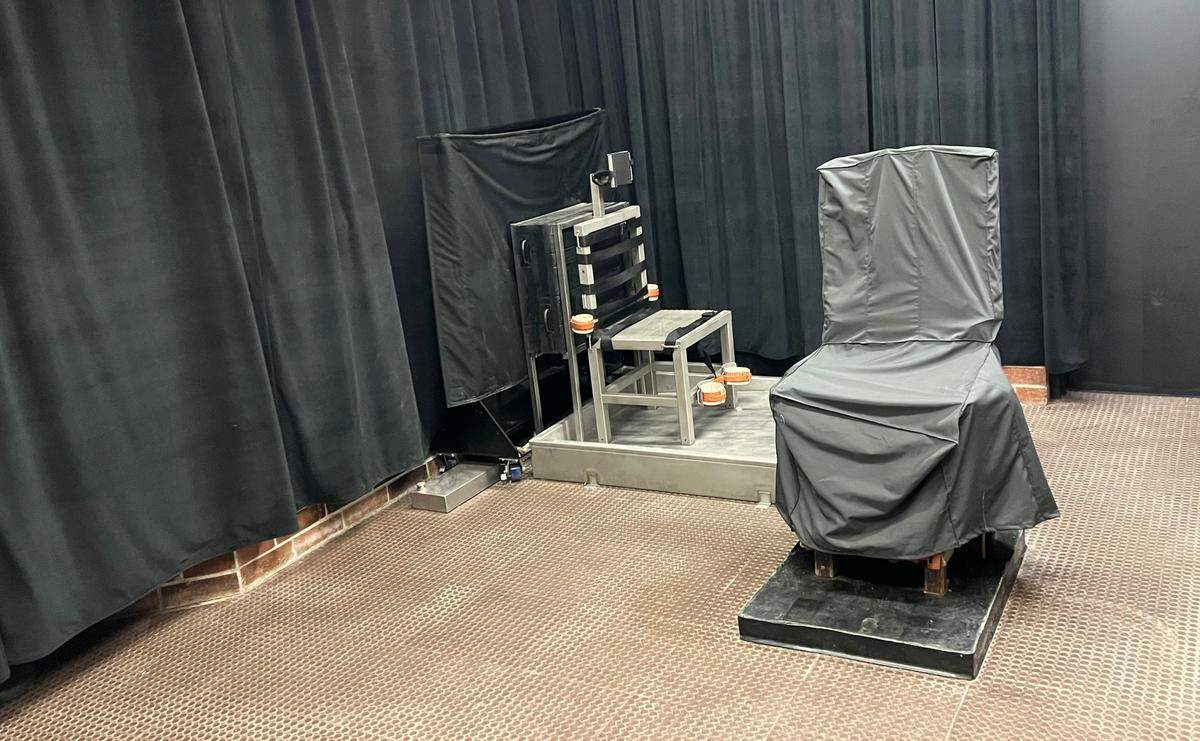
Speaking to The State, Chrysti Shain, director of communications at the department of corrections said that it was her understanding that the policies for the firing squad had not changed since the last execution.
“We’re not going to comment on our policy as usual but we’re going to follow it,” Shain said.
Lindsey Vann, who is executive director of Justice360, has represented several individuals sentenced to death, said that she was unaware of changes in the department of correction’s firing squad protocol.
South Carolina’s death penalty tasks the department of corrections with developing those protocols. But it also prevents much of that information from being released to the public.
What happened to Mikal Mahdi?
Mikal Mahdi was sentenced to death for the murder of Orangeburg Department of Public Safety Capt. James Myers during a 2004 crime spree across five states. Mahdi ambushed Myers at his home in Calhoun County, South Carolina. Mahdi was also serving life in prison for the killing of Christopher Boggs, a gas station clerk in Winston-Salem, North Carolina.
An autopsy of Mahdi found the shots did not destroy the heart and that there were only two bullet entry wounds – South Carolina’s firing squad has three shooters all carrying loaded guns. Attorneys representing another man on death row wrote in a court filing that the executioners “intended to miss.”
The South Carolina Department of Corrections has maintained that all three bullets were fired and that two bullets entered Mahdi’s body at the same place. The bullets used in the executions are .308 Winchester TAP URBAN rounds, which are designed to fragment on impact causing catastrophic damage to internal organs. The department of corrections said that no fragments were found in the death chamber and no witnesses reported hearing a ricochet.
But Dr. Jonathan Groner, a trauma surgeon and professor of clinical surgery at the Ohio State University College of Medicine who studies the death penalty, called the claim that two bullets hit at the exact same spot “below the level of probability that’s acceptable in any human brain.”
Done correctly, an execution by firing squad should “shred” the heart, immediately cutting off blood flow to the brain, Groner said. Supporters of the firing squad have argued that it is more humane than either the electric chair or the lethal injection – the state’s two other options for carrying out the death penalty.
The autopsy of Brad Sigmon, the first person to be executed by firing squad, found that his heart had been completely destroyed by the three bullets. Instead, Mahdi’s autopsy found only partial damage to Mahdi’s heart and evidence that the bullets had struck too low on Mahdi’s chest, said Groner, who had reviewed Mahdi’s autopsy.
Who is Stephen Bryant?
Bryant was sentenced to death after pleading guilty to the murder of Willard Tietjen during a killing spree across Sumter, South Carolina in October, 2004. He also pleaded guilty to the murders of Cliff Gainey and Christopher Burgess as well as the attempted murder of Clinton Brown.
Over an eight-day-long crime spree, Bryant robbed homes and committed the three murders. Bryant’s lawyers have said that he suffered from fetal alcohol syndrome resulting in a lower than average IQ and poor impulse control. Bryant was diagnosed with PTSD as a result of childhood sexual abuse, which his attorneys argued led him to perceive some of the men he killed as threats.
However, a state Supreme Court ruling denying Bryant’s final appeal said that his crimes displayed “a high level of planning, decision-making, and calculation.”
The crime spree began with the burglary of two homes in Sumter, where Bryant acquired the .40 caliber Smith & Wesson handgun he would use in the coming slayings. That same day he shot Gainey, who was fishing by a river, in the back.
On Oct. 9, Bryant took Gainey, a co-worker, to buy beer. Bryant shot Gainey on the side of a road before returning to Gainey’s rented trailer to steal TV equipment, a stereo and an aquarium. He then burned the trailer down.
Two days later, Bryant murdered Tietjen inside the disabled 62-year-old’s isolated ranch house. Bryant had met Tietjen the day before while pretending to search for his friend. Bryant shot Tietjen nine times, before pulling the Masonic ring from his finger and stubbing a cigarette in Tietjen’s eye.
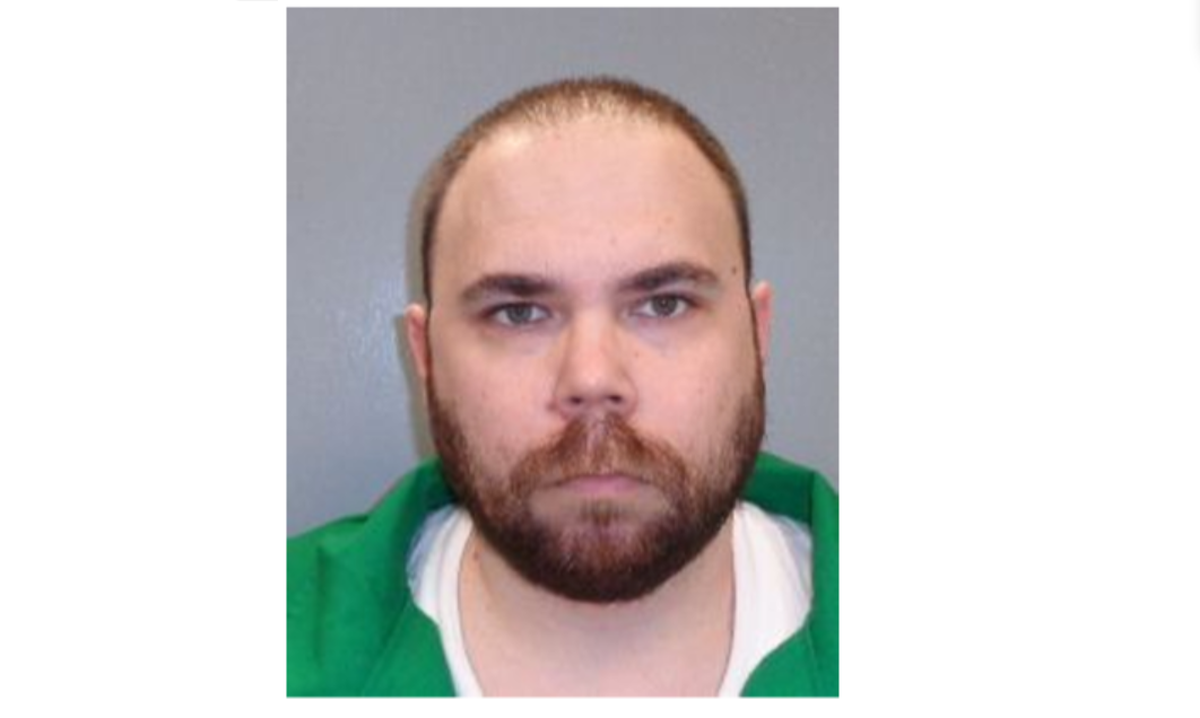
Bryant then ransacked the house, stealing change, jewelry and power tools. When Tietjen’s wife called to check on him, Bryant picked up the phone. “T.J. is dead,” he told her. Before he left, Bryant used Tietjen’s blood to write, “Victim 4 in 2 weeks. Catch me if u can,” on the walls of the home.
Two days later, Bryant murdered Christopher Burgess, a stranger he met by chance in a convenience store in the early morning hours. Bryant shot Burgess twice, once in the face and once in the chest.
Bryant’s last chance to be spared the death penalty will likely be clemency from Gov. Henry McMaster. However, chances may be slim as McMaster, a former prosecutor, has never granted a clemency petition.