
How can USC mend black eye left by Caslen? How other top colleges handled scandals
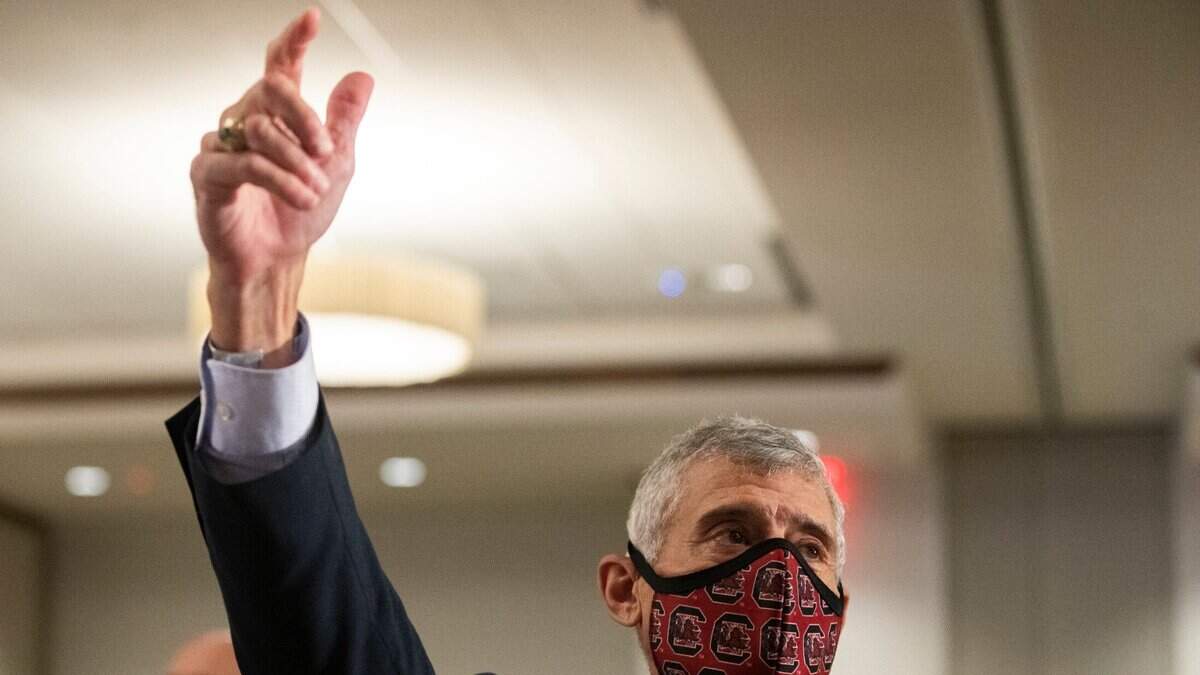
Experts who study controversies at public institutions say the University of South Carolina can easily move on from the embarrassment that led to the resignation of its president Robert Caslen last month.
But, they warn, the school should first heed lessons learned from other major schools around the country to ensure history isn’t repeated.
There has been no shortage of misconduct from higher education leadership over the past two decades, from a plagiarism claim that cost Gregory Vincent his job as president of Hobart and William Smith Colleges in New York, to more high-profile and criminal cases with permanent effects, like the Jerry Sandusky child abuse sex scandal at Pennsylvania State University.
Experts say the host of examples — both big or small — prove that transparency, listening to concerns from the student body and faculty and holding leadership accountable are crucial steps to earning back the public’s trust and avoiding future black eyes.
“The tendency for presidents to do dishonorable things is about equal to anyone else in society ... ,” said Ronald Smith, a professor emeritus at Penn State who wrote a book about the Sandusky scandal. “They have often gotten to where they are by stepping on people’s hands on the way up the ladder and they often don’t tell the truth or they hide something with a cover-up.”
Last month, Caslen resigned as president from USC after he plagiarized part of a graduation speech. Some students, faculty and lawmakers demanded he step down. The decorated lieutenant general, who has more than four decades of experience in the U.S. Army, also had a viral moment when he mistakenly called the school the “University of California” during his speech. The series of blunders piled onto the distrust some already felt about his administration, dating back to before he was ever hired.
USC officials, however, appear eager to move on, quickly appointing interim president Harris Pastides, who previously led the school from 2008 to 2019, and gearing up for a search for a new school leader.
Experts like Ron Sachs, CEO and founder of the Florida-based Sachs Media Group, which specializes in crisis management, said the university made the right move accepting Caslen’s resignation. Other schools have also severed ties with leaders accused of wrongdoing.
“The terrible irony, if the allegations are true, is that the head of a higher educational institution, where academic integrity, candor and honesty matter ... it’s a complete violation of those honored principles and sets a horrible example for students and for the university community,” he said.
University of Central Florida
Quickly removing wrongdoers from leadership positions sends an important message: that misconduct will not be tolerated at any level, said Sachs.
“(Students) have to be encouraged and inspired by a leader, like a university president, and not become cynical or believe that if he could (plagiarize), then they can do it, too,” he said.
A prime example of a school cutting ties with its leader can is the University of Central Florida where, oddly enough, Caslen was hired in 2019 to help find a new president and financial leadership team. The school was still in recovery mode after an investigation revealed that roughly $85 million had been misspent on construction projects.
The Orlando Sentinel found in 2019 that the school used leftover operating funds on new buildings, including $38 million for its new academic Trevor Colbourn Hall facility. An investigation by the state’s auditor general soon followed, leading to the resignation of UCF President Dale Whittaker.
Four other employees were fired and the school’s board chairman and its chief financial officer resigned. Whittaker, who said he didn’t know the funds were being misused, also forfeited tens of thousands in pay bonuses, the Sentinel reported, prior to his resignation.
Experts say the school made the right move, not only admitting to the misspending but moving to fix them.
The school’s former chief financial officer later took on full responsibility for the misspending, according to Florida Today, and reported that the school has since made “aggressive” changes and reorganized personnel to prevent the issue from happening again, though no actions were taken prior to the incident being investigated by news outlets.
Michigan State and Nassar
Students, faculty and staff must be included in the development of a post-scandal plan, experts say, particularly the search for a new leader.
Failing to do so is a critical misstep for universities in the recovery phase, they add, pointing to Michigan State as an example.
In 2018, MSU hired interim president John Engler despite opposition from students and faculty who argued he was a poor fit following the Larry Nassar sexual assault scandal. Nassar, an MSU and USA Gymnastics doctor was sentenced up to 360 years in prison in 2017 and 2018 for sexually abusing at least 265 women and girls dating back decades.
Just three months into his role, Engler proved he was the poor fit that students and faculty feared. He was accused of offering a sexual assault survivor a payout and suggesting in an interview that some survivors enjoyed the attention from the Nassar controversy. He resigned six days later.
Listening to students and faculty would have likely resulted in a better presidential pick, experts say.
“In crisis management, there’s a principle worth knowing about — and it’s that the crisis before the crisis is not having a plan, and the crisis after a crisis is mishandling it,” said Sachs, adding that the damage done to the schools’ brands are difficult to measure but pale in comparisons to the crimes committed and lives hurt.
In addition to listening to stakeholders, presidential searches must be apolitical, professional processes, said Sen. Dick Harpootlian, D-Richland. That wasn’t the case when Caslen was hired at USC, according to a review by the university’s accrediting body that determined that Gov. Henry McMaster had undue influence in Caslen’s selection, drawing criticism from students and staff.
“The other lesson the university better learn is that its (USC’s) process to pick Caslen was the most nakedly political, non-transparent process,” Harpootlian said. “It was destined to fail from the start.”
USC and Holderman
Hiring a new permanent president who is scandal-free and dedicated to repairing the school’s image will also be key, experts say.
USC officials can look at their own history for proof of that.
In 1990, then-president Jim Holderman resigned in arguably the school’s biggest scandal for using his office for personal gain, using millions on lavish hotel stays, trips around the globe, gifts politicians and secret scholarships for their children. He was later accused of sexual assault by four men in an article by the Charlotte Observer, which was investigated and found to be true. He also pleaded no contest to tax evasion for money received through the university’s foundation and was sentenced to three years in prison for a money laundering scheme stemming from his time while president of the school.
He was also stripped of his honorary degree and tenure by the school’s board of trustees.
By all accounts, Holderman’s successor, John Palms, didn’t shy away from the issues left behind by Holderman and spent nearly a decade carefully rebuilding the university’s reputation. The Observer reported that he helped raise more than $500 million over the next five years, a record at the time, and had support of wealthy alumni, including its largest donor financier Darla Moore, who in April said she was embarrassed and humiliated by her association with USC.
In an interview with the Observer in 2002, Palms said the most important task he had was re-establishing the school’s “moral authority.”
“South Carolinians are very sensitive about their reputations,” he told the outlet. “They weren’t sending their kids to a place that was blemished.”
Harpootlian, who charged Holderman with several crimes while working as the county’s solicitor, said the hiring of Palms was done professionally and proved to be the best move the university could have made post-scandal.
“There was never a breath of scandal or inappropriate activity on his part, none whatsoever,” he said.
Getting ahead of the story
There is likely a silver lining for Caslen when the dust settles, experts agree.
The former West Point superintendent wasn’t accused of anything illegal. Others have recovered from worse offenses, they add.
Just take the case of E. Gordon Gee, the current president of West Virginia University.
Gee was met with demands for his resignation while at the helm of Ohio State University on several occasions for controversial statements, including jokingly referring to Notre Dame students, graduates and faculty as “those damn Catholics” and poking fun at the academic quality of other schools in 2013, according to The Herald Dispatch.
The school’s board of trustees sent Gee a letter, saying he had embarrassed the university. They also issued an action plan, which included Gee apologizing to those he offended.
Gee’s time at OSU ultimately ran its course, as he retired from his post roughly three months later in July 2013.
But he quickly bounced back, and was hired at West Virginia in December 2013, where he previously served as president in the 1980s.
While USC could drag out the Caslen controversy for untold months by creating a committee to investigate the plagiarism claims, that’s unlikely since Caslen has already owned up to the misdeed.
“(Schools) always say, ‘We want to move forward ... and put this behind us,’” Smith said. “In three years, this will all be forgotten, my guess is. He wasn’t there very long, almost no one knows him and the board of trustees, which does know him, will want to forget him and not make any statements about him. It all plays out about the same ... and South Carolina can go on again leading the grand destiny of the institution.”
This story was originally published June 6, 2021 at 5:00 AM.