
USC faculty group urges Pastides to defy attorney general and require masks on campus
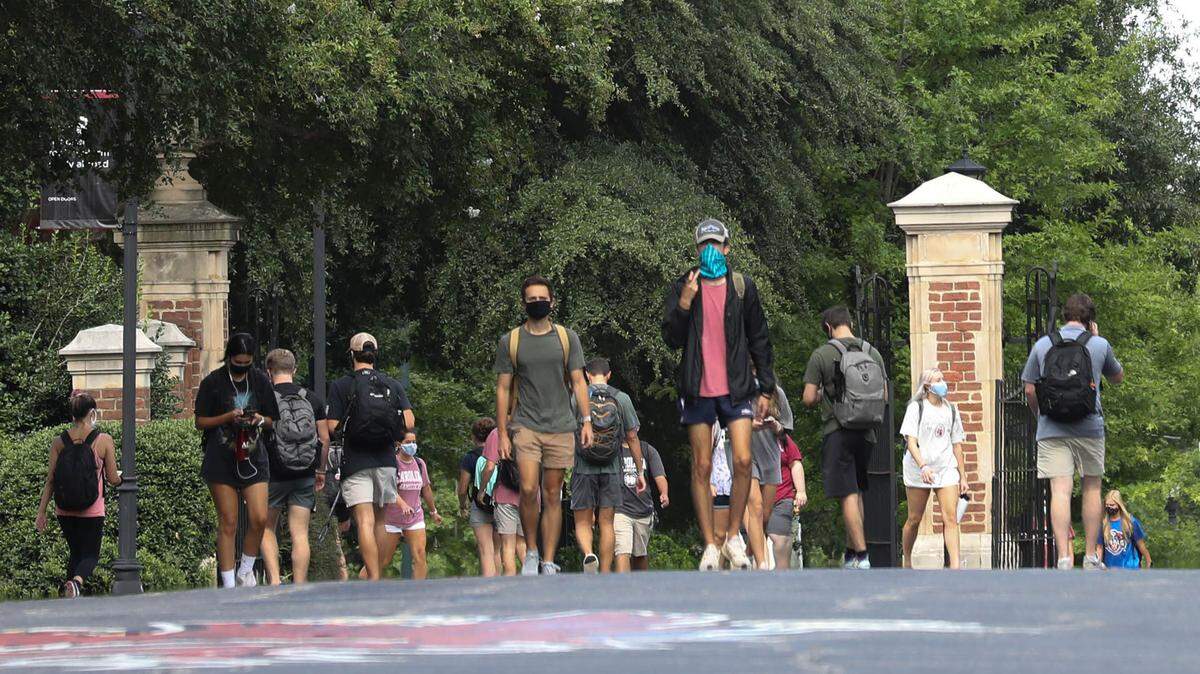
A group of University of South Carolina faculty members are urging the school’s interim president to defy the state attorney general and require masks inside campus buildings.
USC’s American Association of University Professors chapter sent a letter Friday to interim President Harris Pastides saying, “The case for mandatory masking and testing is strong and ... it does not infringe state law,” according to the letter, which was signed by four professors, including the association’s president, Carol Harrison.
Last week, Pastides — who holds two degrees in epidemiology, both from Yale University — said everyone on campus would be required to wear masks indoors. On Monday, S.C. Attorney General Alan Wilson sent a letter to the university, advising it to change its masking policy because, Wilson argued, it violated the legislative intent of a one-year law written into the state’s budget. After Wilson’s letter, USC backed off its coronavirus mask policy.
“Last Friday we believed that you were willing to defend a persuasive interpretation of state law that allowed the university to protect its members without discriminating against any of them,” the letter said. “Instead, you have given Alan Wilson’s opinion what we believe to be undue weight, allowing it to upend public health protections that, as a public health scholar, you know are urgently needed.”
Wilson’s letter set up a back and forth that most recently included S.C. Sen. Dick Harpootlian, a Democrat whose district includes USC, filing a legal request for the state Supreme Court to rule on whether mandatory masking on campus violates the one-year law, which is termed a proviso.
Asked for comment, USC spokesman Jeff Stensland said, “This issue is now a matter for the court and we look forward to its review.”
Pastides’ planned mask rule was announced as COVID-19 cases are increasing throughout the state and the delta variant, which scientists believe to be more contagious and dangerous than the initial strain, is becoming more prominent in S.C.
“Given current infection rates, we approach the coming semester with concern and, for some of us, even fear,” the letter said.