Inside the creation of USC’s most time-honored tradition: The Tiger Burn
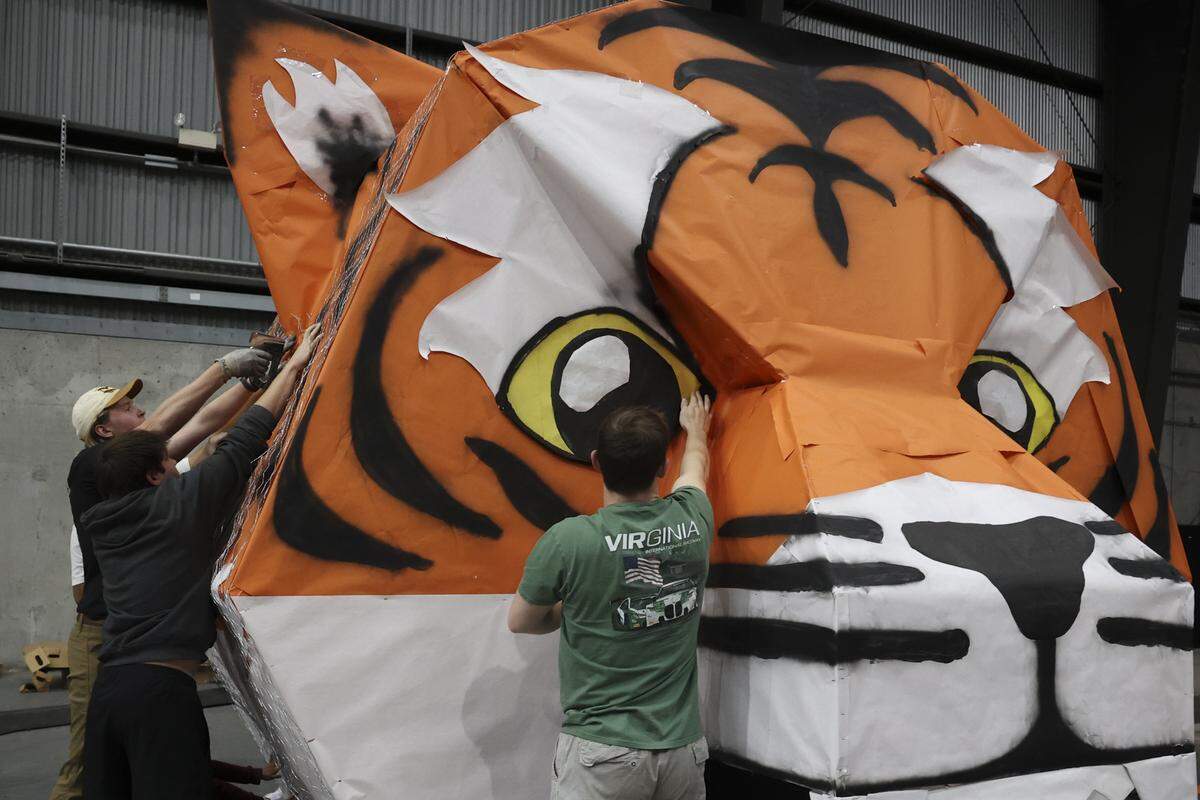
Wooden planks, paper, chicken wire and spray paint come together in an unassuming warehouse on Columbia’s Catawba Street to create a colossal cat.
Then it’s destroyed.
The University of South Carolina’s annual pep rally, the Tiger Burn, is one of its most time-honored traditions, both celebrating and fueling the feud between the Palmetto State’s flagship school and its fiercest rival in the Upstate: Clemson University.
The Gamecocks and the Tigers have faced each other in a football match since 1896, and have gone uninterrupted since 1909. The Tiger Burn was born out of the burning of a drawing of a beaten tiger and “full-scale riot” in 1902, when USC won in an upset.
USC began officially hosting the Tiger Burn as a pep rally in 1920. Since then, the Tiger Burn has become increasingly elaborate.
Months in the making
Engineering students with the USC chapter of the American Society of Mechanical Engineers have been the minds behind the Tiger Burn for more than a decade.
Plans for the big event begin the spring before, and dozens of students invest months of planning and hours of labor into the process.
Jordan Henderson, an engineering and art student and president of the club, said the group begins conceptualizing what the tiger will look like as early as May. It takes a lot of trial and error. It’s an exciting process, and is one of the reasons she decided to attend USC.
“I just thought it was the coolest thing ever,” Henderson said.
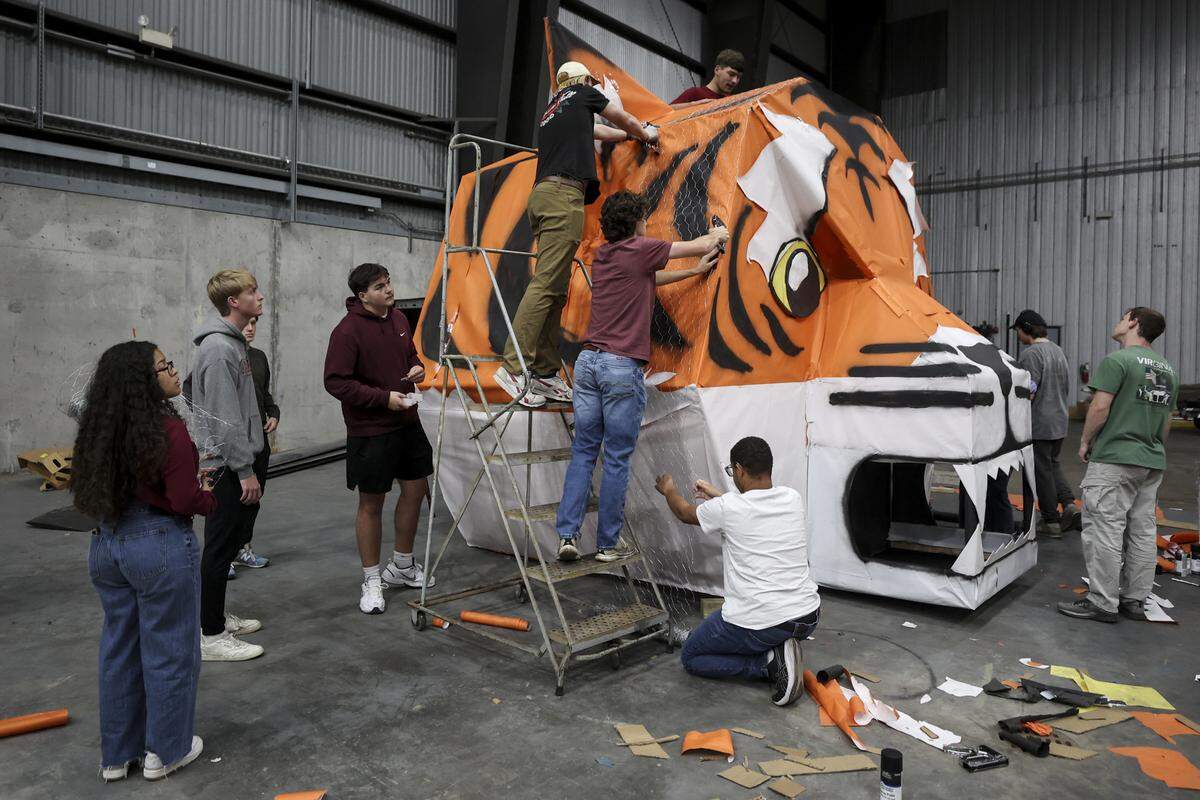
Construction began in October. Students work doggedly for several hours a day, four days a week for six weeks.
The bones of the structure are created with 270 planks of wood, screwed into place. It’s encased in several layers of orange and white paper. Tiger stripes are spray-painted, whiskers and claws are added, as are tufts of fur, ears and a nose. Menacing teeth are placed. Beady, yellow eyes as big as dinner plates are meticulously hung.
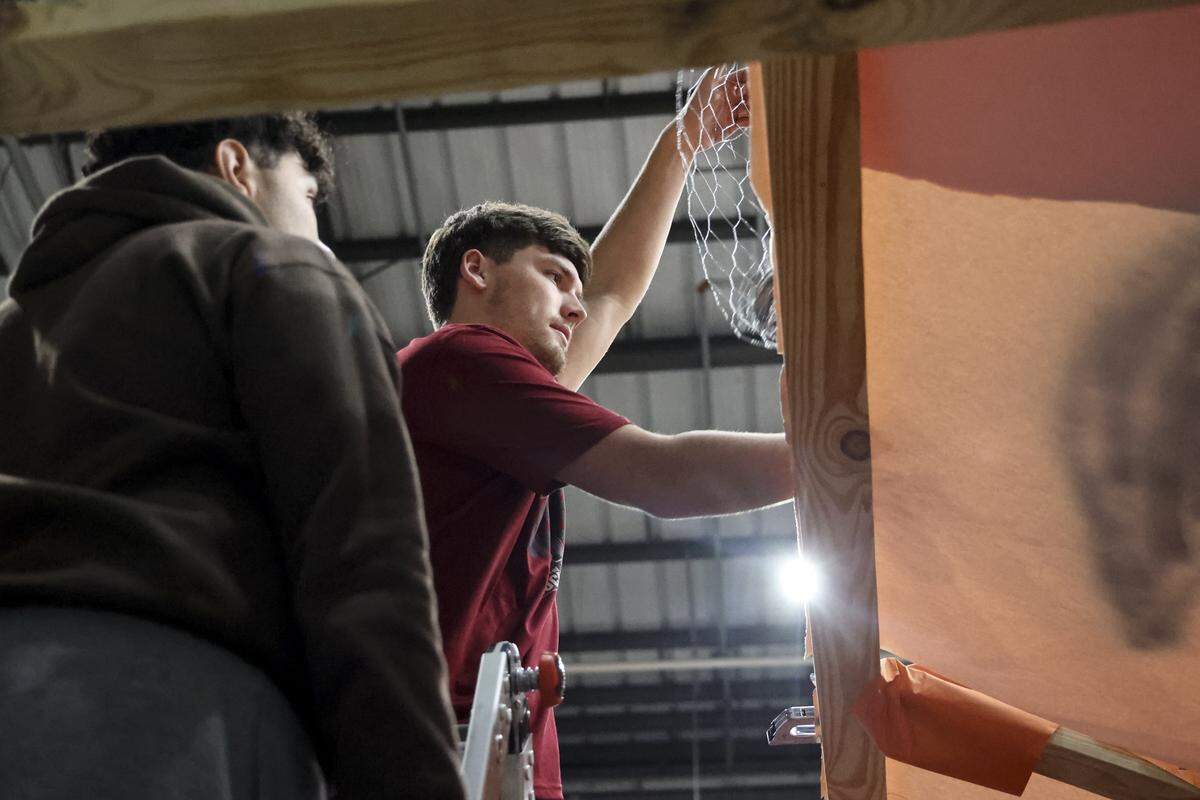
On Monday night, students made finishing touches on the tiger. They covered everything in chicken wire, a mechanism to safeguard pep rally onlookers from smoldering flyaways, and secured it with staple guns. So many staple guns.
The structure, 34 feet tall with a base that is 8 by 16 feet, will be filled with scrap fabric, pine straw — just about anything flammable. Later it will be doused in lighter fluid, so it catches on fire quickly.
As well-thought-out as the tiger’s design is, perfection isn’t necessary.
“At the end of the day it’s going to burn to the ground,” one student said with a laugh.
The day of the rally
On Wednesday morning, the roads near the warehouse will be closed off, and 14 carefully fashioned pieces will be transported to Blatt Field. There, a crane will puzzle them together, forming a towering feline figure, more than 32 feet tall. Some of the student engineers said they skip class to watch it come together.
Students and alumni gather at 6 p.m. for the event.
Gamecock Entertainment, the university’s fun department, contributes around $25,000 towards the pageantry, which includes performances by cheerleaders, band members and an appearance by USC’s mascot, Cocky. Coaching often stop by.
A “tongue-in-cheek” eulogy is read before the tiger goes up in flames around 7 p.m., as the local fire marshal stands at the ready.
When it’s all over, the ashen remains are removed and discarded.
“It’s fun for students to have something to kind of come together on with this rivalry,” Henderson said. “It’s just a good time to get some energy out.”