Santee Cooper shows off failed nuclear construction site in SC
Scattered across a flat, weed-filled plain northwest of Columbia are hundreds of millions of dollars worth of equipment that went unused when two power companies abandoned an atomic energy project nine years ago.
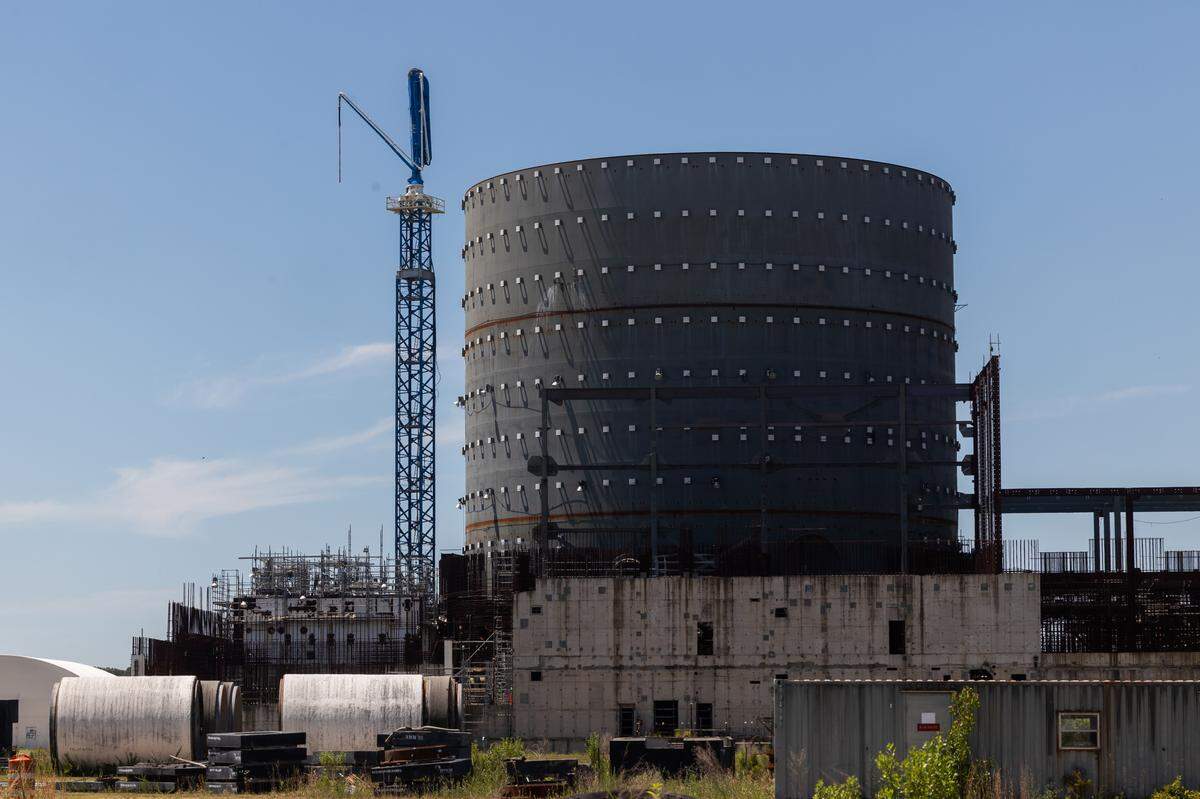
The massive circular domes of unfinished nuclear reactor buildings lie exposed to the elements, still awaiting installation following the construction project shutdown in July 2017.
Nearby, sections of a large crane used to pick up heavy parts like the reactor domes are on the ground, deconstructed following the project’s suspension. Not far away are warehouses, filled with more sensitive nuclear equipment that at one time was destined to become part of two new reactors at the V.C. Summer power plant.
Today, the fact that the equipment is still on site is a reason many people want to restart construction of the nuclear project, which was partially completed when work ended in 2017 after what was one of the worst business failures in state history.
Some of the equipment, including pipes and rods, shows rust on the exterior, but power company officials say that’s nothing to be concerned about. Boosters of the restart say finishing V.C. Summer’s two additional units is preferable to building a new nuclear plant at a time when South Carolina needs more energy.
Santee Cooper, the state-owned power company, is spearheading the effort to restart construction as support builds among South Carolina leaders.
“It can be done and it should be done,’’ said Steve Nance, director of nuclear development for Santee Cooper. “Here we are with a plant that is half completed. With what we know, and the components we have on hand, it seems pretty simple to me.’’
Santee Cooper sold roughly $100 million worth of equipment after walking away from the original project in 2017, according to previous news reports. But it did not sell the key pieces needed for restart, officials said Tuesday. Santee Cooper and Westinghouse, a major contractor, own the equipment.
All told, some 85 percent of the equipment needed to complete the project is on the V.C. Summer site, Santee Cooper estimates. Most of what was sold could be more easily replaced, officials said.
A look at the V.C. Summer nuclear expansion site generates an eerie feel. Thousands of employees who once worked on the project are gone, leaving the impression of a ghost town. There is almost no noise, other than the wind and a few calls from birds circling above the exposed equipment and the partially built concrete and steel structures. Clumps of weeds and other vegetation have grown up around some of the equipment and the abandoned, partially constructed buildings.
That will change if the restart occurs.
During a tour Tuesday, May 19, of the abandoned project for a Santee Cooper advisory board, Nance pointed out how much progress he said was made before the shutdown. The tour was one of the first inside looks for South Carolina media since the project was abandoned.
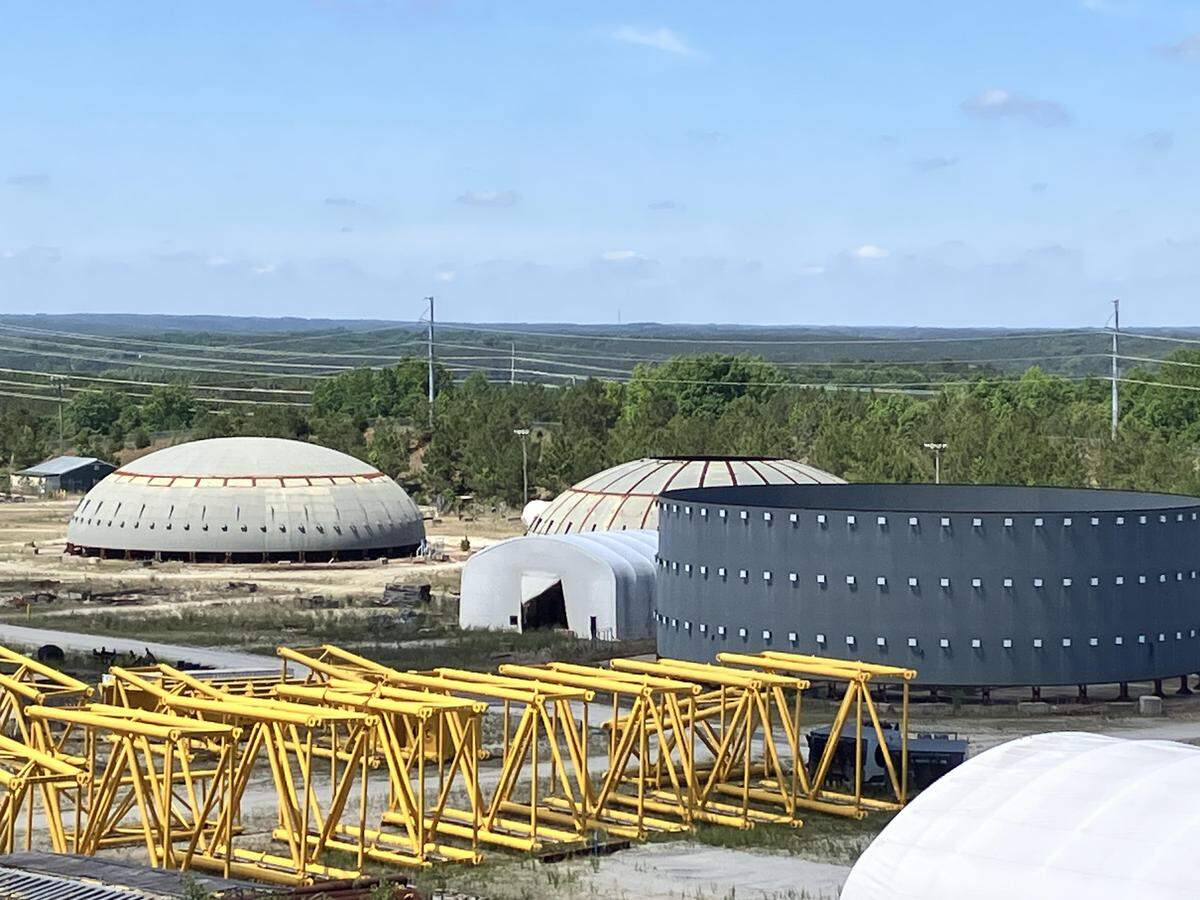
One reactor building is largely constructed, except for the top, and an adjacent turbine building is framed out with key equipment already installed. The reactor dome was close to being put on top when the project ended, Nance said. All told, the first of the two units was about 45 percent complete.
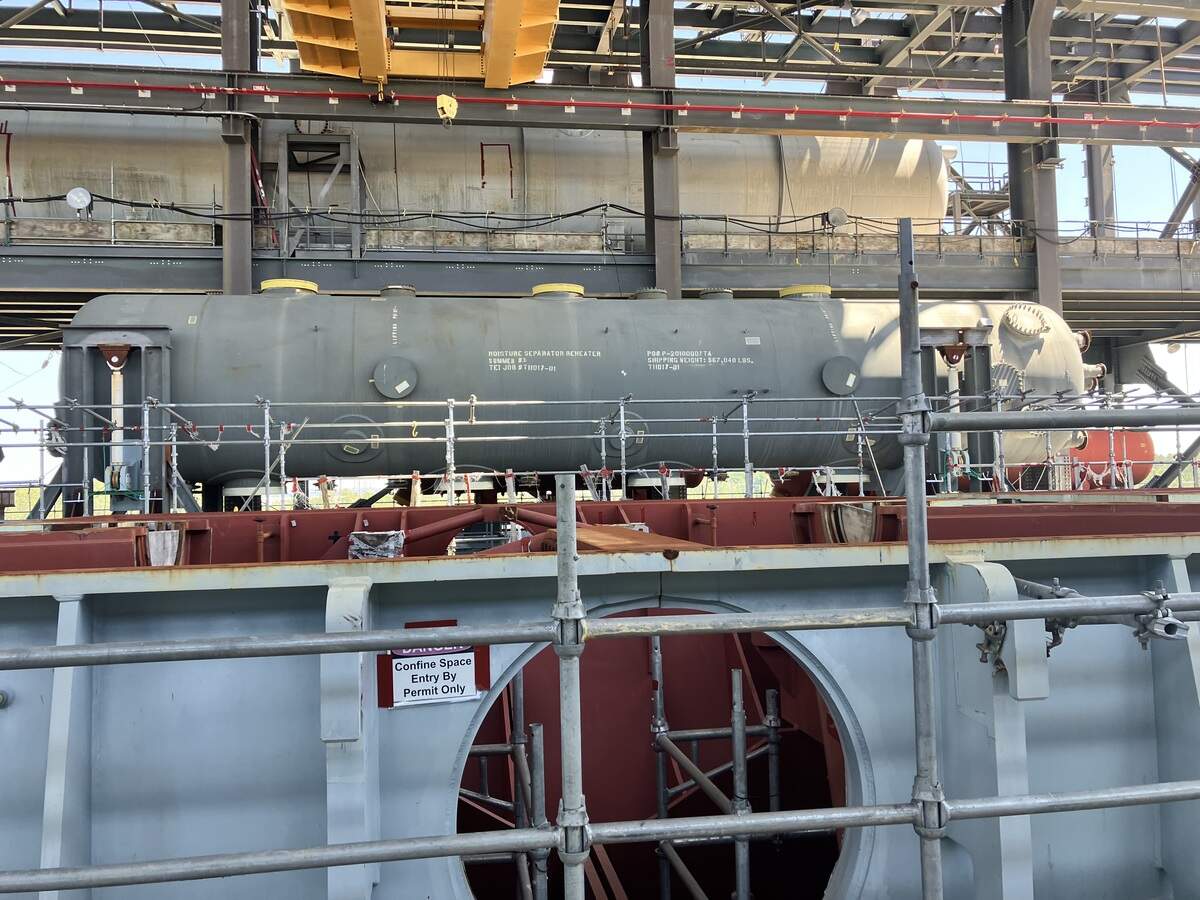
Inside the framed-out, multistory turbine building are two massive tanks, appearing to be the size of railroad cars, one on top of the other. A red, rectangular generator, made by Toshiba, also is positioned for use on an upper floor of the building.
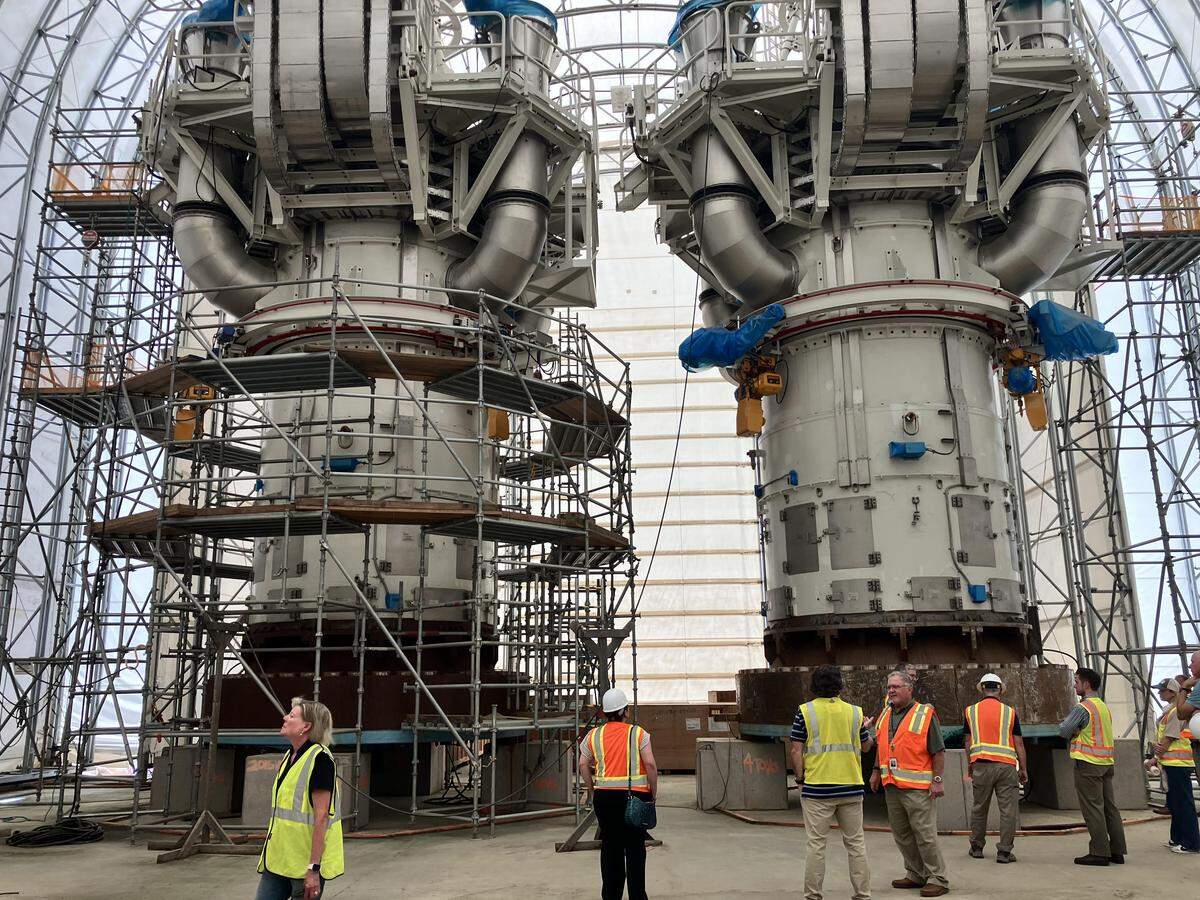
The reactor that would go into one of the two nuclear reactor buildings is being housed in a temporary storage structure, as is the reactor vessel head in another climate controlled storage building.
The reactor, which is the heart of a nuclear plant, would generate heat to make energy. The reactor seen during Tuesday’s tour was rusty, but Nance said the interior where all the reactions occur is spotless. He also noted that the reactor’s exterior was seamless, which is a big deal because nuclear plant problems often start at weld seams in equipment.
The vessel head, which is 39 feet high, would sit atop the reactor in one of the nuclear containment buildings on the project site. Another reactor has already been placed inside the other containment building on part of the site known as Unit 2.
The Unit 3 reactor building and adjacent structure, which also are partially built, were not as far along when work ceased nine years ago. The two Unit 3 structures are easy to spot across the flat land.
As they walked through the towering storage unit where vessel heads for both of the unfinished reactor containment buildings are being kept, advisory board members talked with Nance and other Santee Cooper staff about the project components.
Stacy Taylor, a Santee Cooper board member who co-chairs the advisory panel, said seeing the site was eye-opening, noting after the tour that pursuing completion is worthwhile.
“It was impressive actually getting to see the work that was put in by Santee Cooper’’ during the first construction project, Taylor said. “You can see how far long this is, why it’s an emphasis and why it’s a priority.’’
One building on the tour is a warehouse where thousands of nuclear components, large and small, are stacked neatly in rows. One room inside the warehouse contains the main computer that would help run the power plant. It is housed in multiple wooden crates more than six feet tall.
The computer is worth $700 million, Santee Cooper officials said.
“This is the brain’’ of the nuclear operation, Nance said.
Longtime nuclear critic Tom Clements, who was not on the tour, said the utility and its supporters may be assuming too much if they think the equipment is ready to be used.
Clements said the Nuclear Regulatory Commission would need proof that all the components being kept on site are in good shape and ready. The NRC would have to grant a license, a process that in the past has taken extensive time.
“They don’t have an NRC license and they have to go back and get that,’’ Clements said. “So they are going to have to document that all of the things can still function for the purpose for which they were bought.
“It could be a monumental job.’’
Those on the Santee Cooper advisory panel include representatives of the state Department of Commerce, private businesses, people living below the poverty line and clean energy organizations, although not all of them attended the tour.
The V.C. Summer nuclear site is in a sparsely populated area of South Carolina about 25 miles northwest of Columbia. The existing reactor, located just outside Jenkinsville in Fairfield County, has been operating since the early 1980s.
The plan to expand the V.C. Summer atomic power site from one to three reactors never happened because of delays and rising costs that threatened to make the project far more expensive than expected.
At one point, the expansion was forecast to cost $11 billion, but projected costs had risen to more than $20 billion when utilities walked away from the effort, The State reported in August 2017.
On July 31, 2017, Santee Cooper and its then-partner, SCE&G, quit the project after at least $9 billion had been spent, partly from ratepayers who are still being charged for the project through higher monthly power bills. The work had been ongoing for nine years and was about four years behind schedule.
The failure produced a public outcry and a flurry of lawsuits, as well as criminal charges against several high-ranking SCE&G executives, who knew the project was running off course but did not tell the public about it. The South Carolina Legislature eventually approved a change in the law in an effort to prevent a future nuclear construction fiasco from occurring again.
But in 2024, momentum began to grow to restart the project as the state faced the need for more power, particularly to pay for the expansion of data centers across South Carolina.
The Governor’s Nuclear Advisory Council toured the site, writing a report that said the equipment and partially completed buildings were in good enough shape to justify looking at a restart. From that point, legislators began to entertain the idea, and in May 2025, Gov. Henry McMaster urged Congress to help make finishing the project possible.
Now, with widespread support in the Legislature, state-owned Santee Cooper is spearheading the project without SCE&G, which was acquired by Dominion Energy after the construction debacle weakened the South Carolina utility.
Late in 2025, Santee Cooper picked Brookfield Asset Management to help ensure the project is completed. Brookfield owns Westinghouse, a major contractor involved in the 2017 construction failure. A key reason cited for the failure was Westinghouse’s bankruptcy at the time.
Santee Cooper says restarting the project could allow it to refund customers some $2.7 billion from the original project failure. The company would receive that amount from the restart, while owning a quarter of the energy to be generated. The reactors would generate about 2,200 megawatts of electricity, roughly the same amount as a natural gas plant proposed for Colleton County. Brookfield and partners would have control of the remainder of the nuclear plant at Jenkinsville.
This story was originally published May 20, 2026 at 2:36 PM.