Majestic oaks cut down to make room for parking lots, new buildings as Bull Street expands
For generations, one of the most shade-covered areas of downtown Columbia lay on the grounds of the state mental hospital, a Bull Street institution where large trees and cooling green space were believed to soothe the minds of patients who lived there.
Then in 2010, the state agreed to sell the property with the big trees. And as developers moved to create a much anticipated residential, shopping and entertainment district, crews armed with chainsaws and earth-moving equipment went to work.
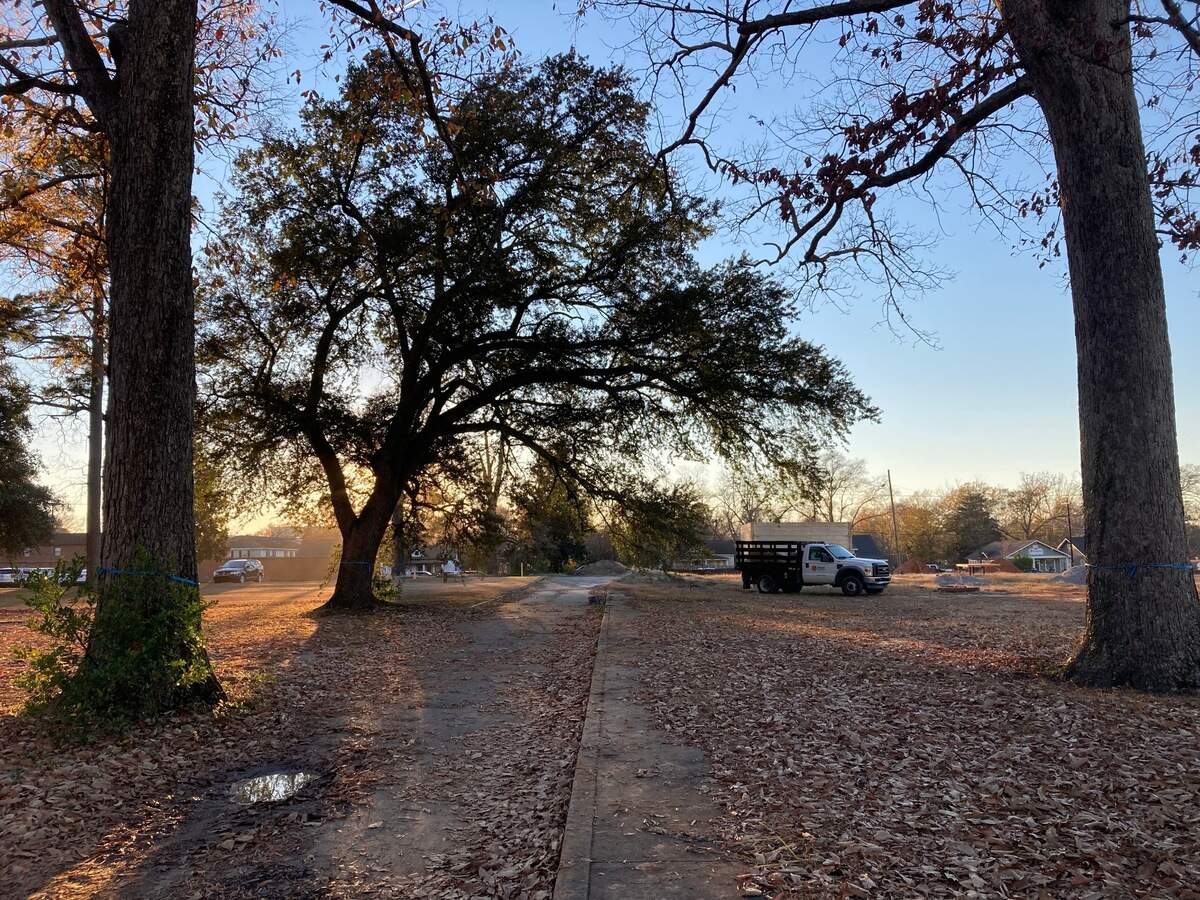
Since the sale, workers have cleared away broad groves of trees in the Bull Street district, leaving a hole in the forested canopy while making room for new buildings, parking areas and other amenities.
It’s a change in the landscape that was inevitable at the development site, but it also saddens many people who loved the dark, forested look the Bull Street property has historically provided.
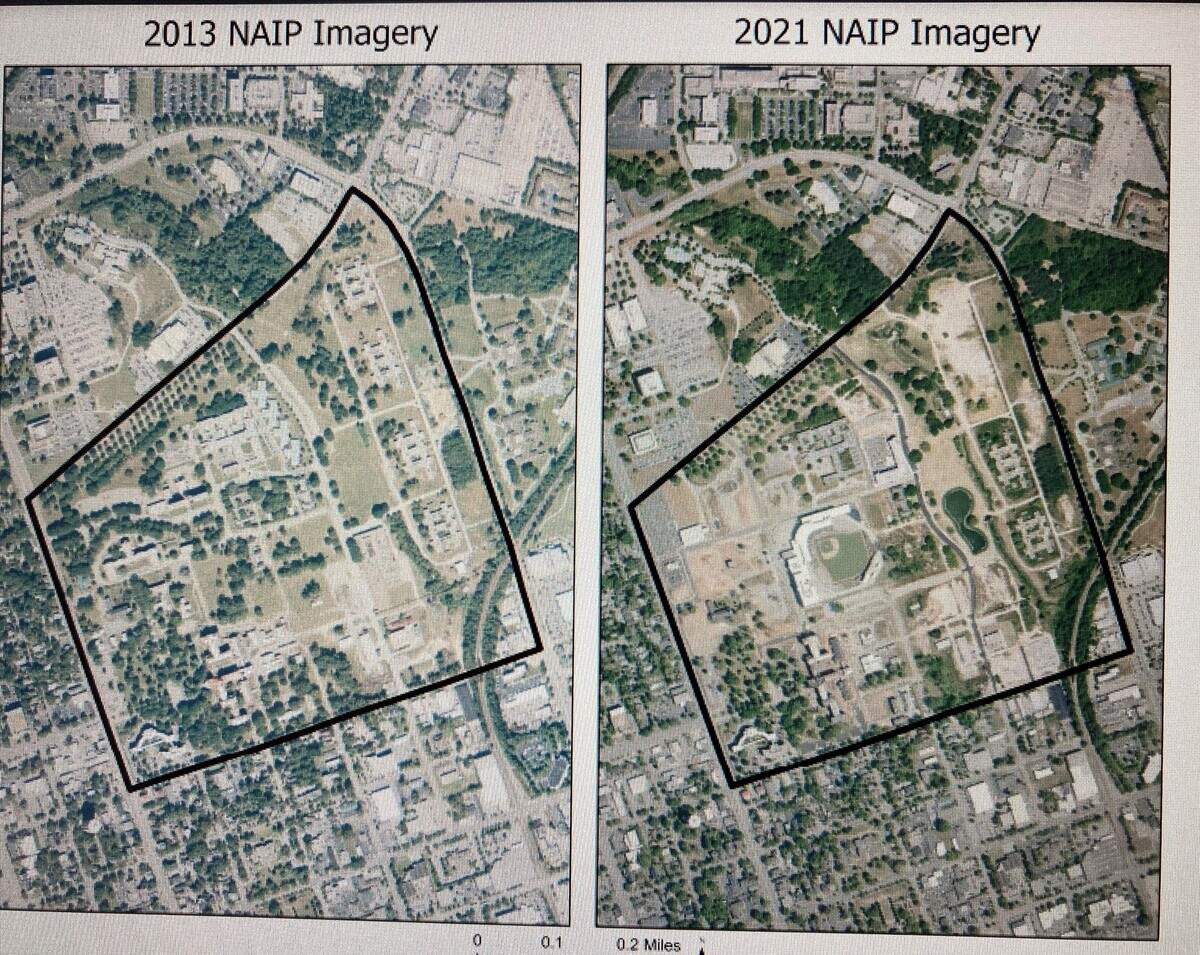
All told, the tree canopy loss could be as high as 44%, according to one University of South Carolina analysis that compared and digitized aerial imagery from 2013 and 2021. The property had 49.4 acres of tree canopy in 2013, compared to 27.57 acres last year, researchers in USC’s geography department found.
The loss of trees “is crushingly disappointing,’’ said Rosie Craig, a 73-year-old Columbia resident who formerly headed the Columbia Tree and Appearance commission, a citizens group dedicated to saving trees.
“When I go by there, the pro-business part of myself goes ‘Damn, I’m glad that thing is finally moving and getting developed’,’’ she said. “But I’m also one of those who cringed.’’
Hughes Development Corp, the primary developer of the Bull Street district, is skeptical the canopy loss is 44%, saying the USC analysis appears to include some areas not under the company’s control. The analysis also counts an area as losing trees where none have been cut, the company says.
But there’s little doubt the property has fewer mature trees than in 2013, based on aerial imagery and arborist reports.
Andy Boone, an arborist working with Hughes Development, estimated the tree canopy loss at about 30%.
USC professor Kirstin Dow, an environmental geographer and a regional leader in climate change research, said the reduction in tree canopy will make the property hotter as the area bakes in the sun, while making the site less able to soak up storm water, a function provided by trees and vegetation.
She also understands the emotion of losing forested areas.
“Having seen all those trees, I will just miss the aesthetic beauty and how long it took for them to grow,’’ Dow said. “They were part of a history on that piece of land.’’
Oaks versus buildings
Questions about the loss of trees at Bull Street follow research at USC that shows Columbia, overall, has lost nearly 22% of its tree canopy since 2005, much of it in the rapidly developing northeast side of town.
Grayson Morgan, a PhD student who works with Dow, conducted both the overall Columbia analysis and the specific look at the Bull Street development site, the latter at the request of The State. He produced the analysis by examining and digitizing U.S. Department of Agriculture aerial imagery of clusters of trees on the Bull Street property.
The entire Bull Street tract is more than 180 acres, but parts of it along Harden Street are more open and have not had the heavy tree canopy historically found in the center and western portion of the site closer to Bull Street, USC says.
A variety of trees have been cleared from the Bull Street site, including live oaks. These massive oaks are signature trees of the southern coastal plain, known for their wide branches, year-round shade and ability to live hundreds of years. Other big hardwood trees that have been lost include laurel and water oaks.
Arborist reports for the development project show concerns about unstable trees. In some cases, trees were cut down because they had been neglected and were in poor condition, the studies show.
But that wasn’t always the case. Sometimes, trees considered in sound shape were removed, according to arborist reports and aerial imagery. Other times, the development project damaged trees enough to make them less desirable to retain, arborist studies show.
Hughes and supporters of the Bull Street project say clearing trees was unavoidable, but the company is in the midst of a robust reforestation effort to compensate.
“Keeping every tree would not only put every visitor to Bull Street in danger, but also would have kept the site from ever being developed,’’ according to an email from Robert Hughes, the company’s chief executive officer.
Hughes Development says it values a forested canopy as an amenity at Bull Street. The company already has developed a park, replenished vegetation and saved trees in an area beyond the Columbia Fireflies baseball stadium.
Overall the company also has planted 143% more trees than it has removed, “with plans for that number to grow,’’ Hughes said in an email. The company will eventually have hundreds more trees than existed when the project started, the email said.
At the same time, some of the most significant oaks and cedars, along Pickens Street near the historic Babcock building, are targeted for protection, complementing the renovation of Babcock into apartments, according to plans.
“Our original attraction to Bull Street is the authenticity and the uniqueness of the site,’’ Robert Hughes said. “And what makes a site like that authentic and unique are the old buildings and mature trees.’’
Morgan, the USC researcher who analyzed the loss of forest canopy, said Hughes’ plans for the future won’t restore the lost tree canopy anytime soon.
“The final plan does show them having quite a bit of trees added,’’ he said. “If that is going to happen, wonderful. But the replanted trees won’t initially be as large as the large oaks that were there before. It will take some time to grow.’’
Outdoors store complaints
Hughes did not say how many trees existed on the site before the development project started, but a report obtained by The State from the city of Columbia indicates it was substantial.
More than 300 trees grew at one point on the central and west side of the property between Colonial Drive to the north and Calhoun Street on the south side, according to an assessment Boone conducted of a 2014 report by the engineering firm Davis and Floyd.
Of the more than 300 trees, 90 were in either fair or good condition, while 122 trees were in poor condition. Another 89 trees were not large enough to warrant detailed study, Boone’s assessment found.
The State recently counted about 170 trees in the middle and western sides of the property between Colonial Drive and Calhoun Street.
So far, the biggest losses of tree canopy are near the intersection of Colonial Drive and Bull Street, according to USC’s research and Google Earth imagery reviewed by The State. That area, on the property’s northwest corner, is now largely barren of big trees.
Mature trees were cleared to make way for an REI outdoors store and a Starbucks coffee shop. One 2019 study by Boone’s company, Dendro Diagnostics, found that 10 of 52 trees along Colonial Drive near the REI development site were in fair condition, with about 25 in poor condition.
Work crews also cleared a substantial number of trees from the site of what later became Segra Park, the baseball stadium that is home to the Columbia Fireflies minor league team.
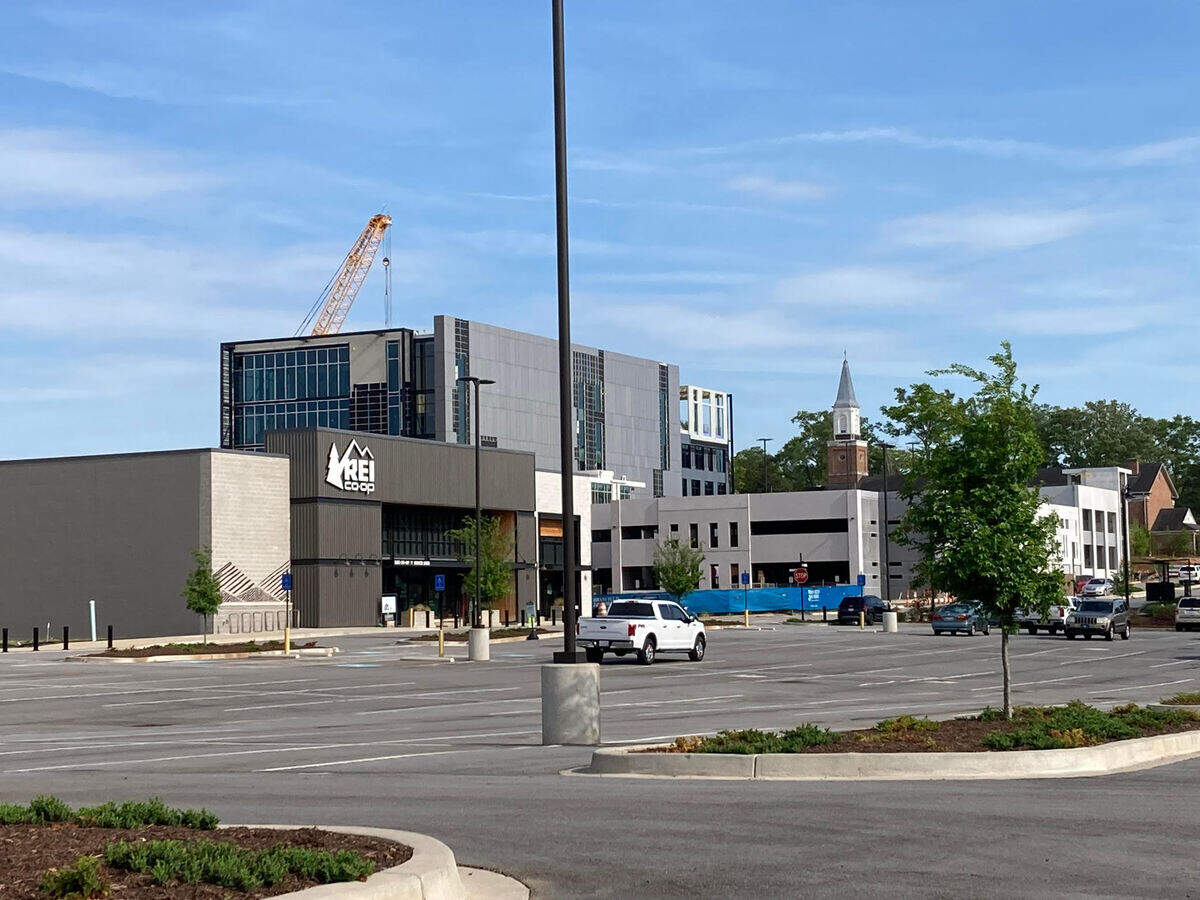
The loss of trees on the REI property — one of the most visible parts of the Bull Street development site — has stirred questions among some people in Columbia because the company has been vocal about addressing climate change and is an advocate for outdoor recreation. The clearing prompted complaints several years ago when it occurred.
“It was such a shock to the system to see that,’’ said Scott Holder, a Columbia planner who tracks tree issues for the city. “The trees down Colonial used to come all the way up to Bull Street. When REI was under construction, the first thing they did was take down everything that was existing on that corner.’’
Megan Behrbaum, a spokeswoman for REI, did not answer questions from The State about why the company located on a site that was clear-cut. The State had asked REI if the company knew about the cutting when it decided to locate the store.
Robert Hughes said trees on the tract were in poor shape or dangerous condition. REI announced the store in 2019, opening it about a year later.
More trees are expected to be cleared from other parts of the Bull Street land as it develops because they are considered either in poor condition, are undesirable species, or they are in the path of future buildings. The condition of a tree isn’t always obvious, Boone said.
“A tree can appear to be fairly healthy, at least to an untrained observer, but can have structural defects that predispose it to trunk breakage or other types of catastrophic failure, thereby causing risk to people or buildings near them,’’ according to one of Boone’s arborist reports.
Among the trees in poor shape that have been cut down were a 57-foot tall, century-old laurel oak. It had been “heavily attacked by insect borers’’ and was dying, according to a 2019 arborist’s report. The tree was located near Colonial Drive.
Another tree, a 79-foot tall water oak that was 100 years old, had been struck by lightning, had surface decay and much of the trunk was hollow, the report said, noting that 50 percent of the large limbs were dead or broken. The report said the tree posed an “immediate risk.’’ The tree was near the old mental health facility’s chapel.
“Booming’’ project
It should be no surprise that more trees are likely to be removed because the Bull Street project is one of the biggest and boldest in Columbia in years -- maybe ever.
Soon after the Hughes project came together in 2013, it was labeled the most significant land deal in modern city history, The State reported. Hughes acquired the land in an $18 million deal with the S.C. Department of Mental Health.
Construction crews have been working to develop apartments, condominiums, a parking garage and more places for retail stores.
The property already has a retirement complex beyond left field of the baseball stadium. The ballpark was the first major structure to be erected after the property was sold.. The University of South Carolina’s medical school plans to locate on the property near Harden Street, an effort that could top $300 million.
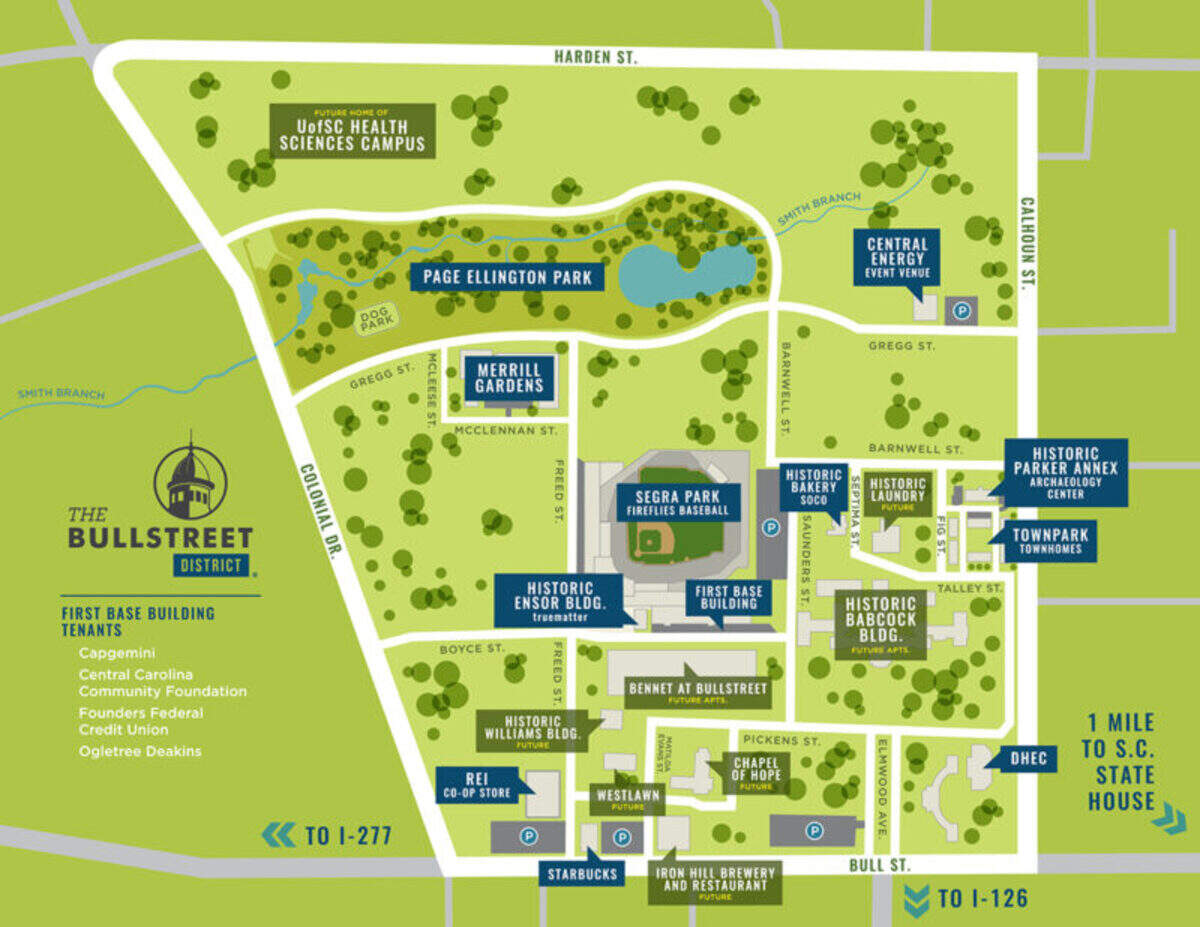
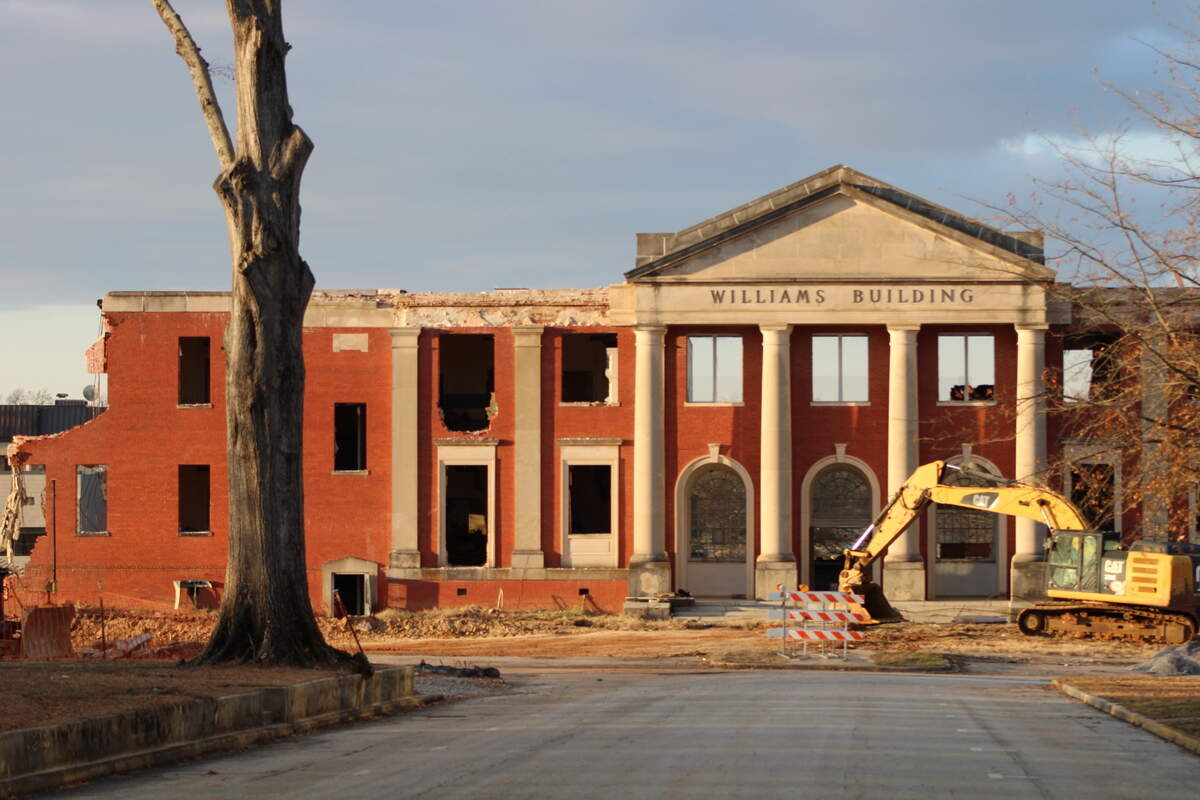
To develop the Bull Street land, some of the old buildings on the mental health facility site have been torn down, but the ones considered the most historic have been kept and are being renovated, in whole or in part.
Those include the Ensor building, next to the baseball park, and the facade of the Williams building. The Babcock building, a huge structure that is the cornerstone of the old mental health campus, is being renovated and will become apartments.
Initially criticized for the methodical pace when construction work began, the growth of the Bull Street project has begun to accelerate.
”It is really booming now,’’ City Councilman Howard Duvall said, noting that the 20-year project is ahead of schedule. “It’s just amazing. I ride through there two or three times a week because things are changing so quickly.’’
Hughes Development Corp. has been instrumental in the redevelopment of downtown Greenville, a point not lost on Columbia leaders. Downtown Greenville’s change from a sleepy textile town to an entertainment and tourist hub is one of the state’s biggest revitalization stories in the past three decades.
Columbia Mayor Daniel Rickenmann said the city has a stake in seeing the project succeed because it has invested roughly $100 million in the Bull Street site in partnership with the developers.
“It is going to end up contributing nicely to our community,’’ he said, noting that he hopes any large healthy trees can be saved.
Trees facing an uncertain future include rows of oaks along Colonial Drive, as well as a mixture of trees between the old mental hospital’s chapel and the Mills building occupied by the S.C. Department of Health and Environmental Control along Calhoun Street.
None of those tracts is being developed now but they are part of the overall Bull Street development plan, the project’s website shows.
Baseball and trees
While many trees that have been chopped down were considered too damaged to save, others were in sound shape, records show.
Among them was a 39-foot tall, 75-year-old live oak. The oak grew near an old Department of Mental Health office building along Bull Street, providing heavy shade to that side of the campus.
It was not expected to be hurt by construction that would have caused the tree to deteriorate, as had occurred with other trees on the site, the 2019 DendroDiagnositcs arborist report shows. But the office building was torn down, and aerial images today show the adjacent oak tree is gone, replaced by an open grassy field along Matilda Evans Street next to the new Starbucks. Boone said the tree has been removed.
Aerial images also show a row of large trees between Bull Street and the new baseball stadium has been removed. The area once had a cluster of large oak trees, some of which were rated in fair shape as recently as 2019.
One of those was a 75-year-old live oak tree that stood 36 feet tall. It was considered a significant tree with little risk to the public. The 2019 tree evaluation report by arborist Boone said it had deteriorated the least of any trees in the immediate area. But Boone said the tree was removed.
In other cases, trees that remained standing when the Bull Street project began deteriorated because of activity near them, making them less important to save. (Development rules generally do not require the protection or replacement of big hardwood trees if they are considered non-significant and in poor shape).
Sometimes, cars parked beneath trees for baseball games and during construction, causing the trees to deteriorate, Boone’s reports show. After the baseball park opened in 2015, fans were directed to park in tree-lined areas near the stadium.
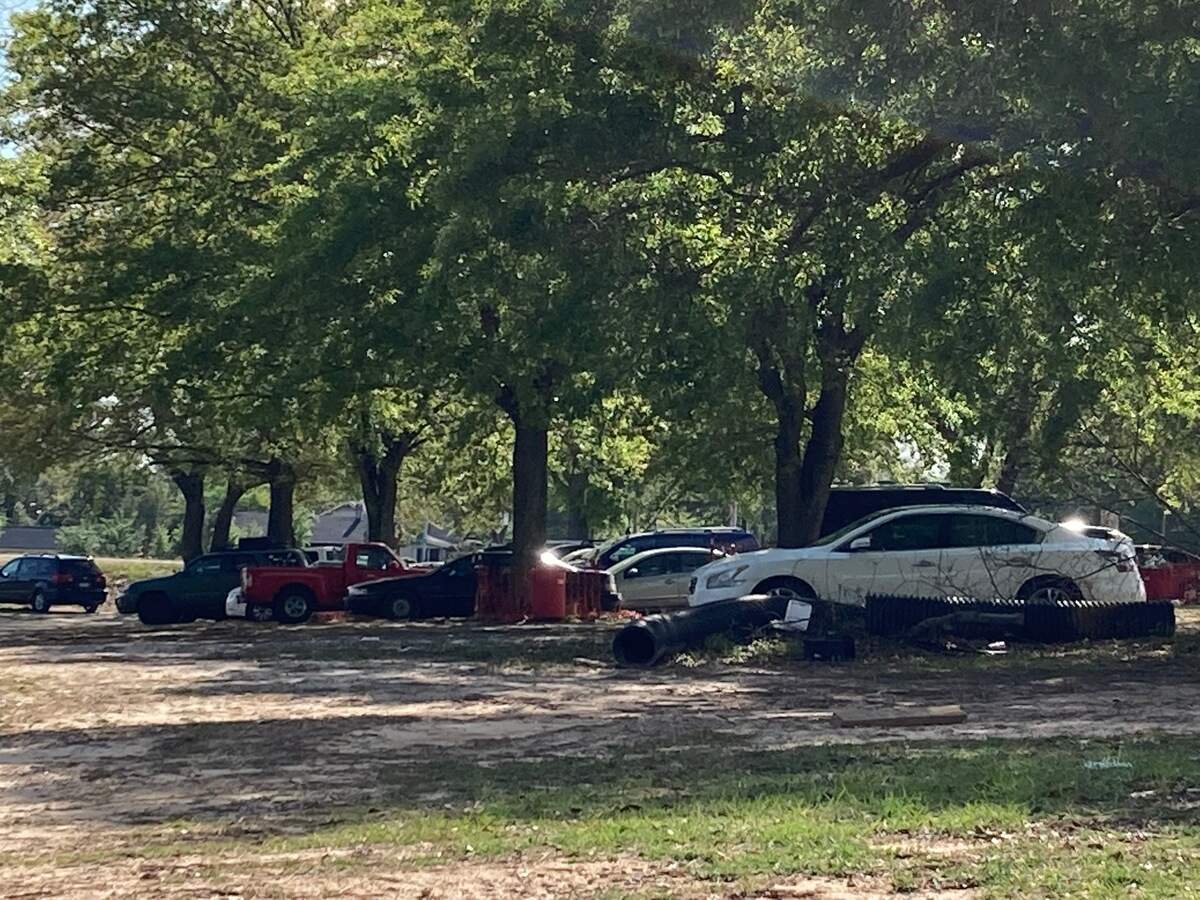
“This portion of the Bull Street site had been used for temporary stadium parking and the trees had been adversely affected by that activity,’’ according to a 2019 tree evaluation report, obtained from the city by The State under an open records request.
A parking garage has since been developed, opening this year.
Will Blozan, an arborist from western North Carolina who works with property owners to save trees, said cars should not be parked under trees because it can be damaging.
“If trees are dying after two years of construction, that’s neglect,’’ said Blozan, who has not worked on the Bull Street site but does work in South Carolina. “That’s just ridiculous – and totally avoidable.’’
Parking under trees not only can directly damage roots, but it can compact the soil, making it harder for roots to get the air they need. Barriers can be put up around trees to protect them from cars parking on the roots, Blozan said.
Among the trees that suffered from parking and construction activity was a live oak. It was in poor condition because of damage that occurred from 2016 to 2019, according to maps and arborist reports from both years. The live oak was 75 years old and more than 27 feet tall.
One water oak, just off Colonial Drive that stood more than 42 feet tall, “deteriorated considerably” from fair condition in 2016 to poor condition by 2019, the report said. The 75-year-old tree was among a cluster cut to make room for the REI store near the corner of Bull Street and Colonial Drive.
Meanwhile, a 65-foot tall, 100-year-old live oak near an entrance road to Segra Park from Colonial Drive is still standing and remains in fair condition, but it has deteriorated since the project cranked up. The tree deteriorated from a good condition to fair condition after “construction of the stadium access road had caused damage to about one third of its root area,’’ the 2019 arborist report said.
Healing forest
Historically, managers at the Bull Street mental hospital placed an emphasis on the tree canopy and plants.
A booklet produced by the Department of Mental Health said the original grounds of the Bull Street mental hospital were maintained with patients in mind. The land was “carefully landscaped to contribute to the moral treatment of patients,’’ according to the brochure, titled “Hortitherapy and History.’’
Trees planted on the property included magnolias, oaks, beech, deodar cedars and black walnuts, the booklet said.
“Carefully planned plantings in a relaxed atmosphere were thought essential to helping clients to peacefully retrieve their senses,’’ the booklet said. “Before the Civil War, local citizens and out-of-town dignitaries who paid casual visits to the asylum particularly valued the flower and vegetable gardens.’’
An official with Clachan Properties in Virginia told The State earlier this year that the company is aware of the history. Clachan is developing a 208-apartment project at the Babcock building and is working with the National Park Service on the effort. Protection of trees near Babcock is emphasized in a city development agreement with Hughes.
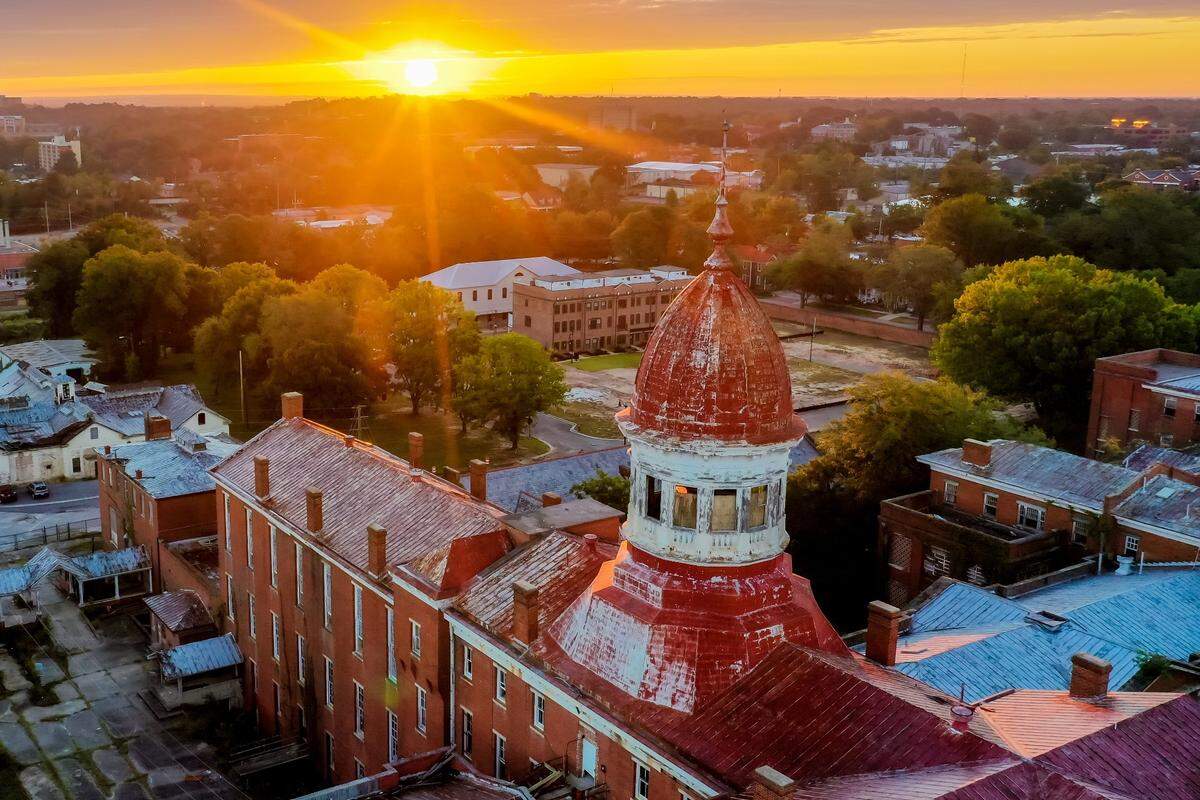
“Residents of the asylum would have access to nature and it was part of their mental health and healing,’’ Clachan’s Katie Coleman said during an interview in January.
The domed Babcock building, for years the property’s most visible historic structure, was built in the mid- and late-1800s. It served as the front door to the state hospital, which housed and employed hundreds of people, according to Historic Columbia.
Patients were kept in the Babcock building overnight and long-term, the Department of Mental Health said. The building closed to patients about 30 years ago and was abandoned for good in 1996, according to a brief history of Babcock, published by digitalsouthus.org.
The last patients on the Bull Street campus were treated there in late 2015, before mental health services were moved to another facility in the Columbia area, mental health department attorney Mark Binkley said.
Part of the Babcock building’s interior burned several years ago and the dome caved in, but it is being renovated and restored as part of the apartment project.
Woodlands in the future
Robert Hughes said the tree canopy’s legacy is too important to ignore at Bull Street.
Although many trees have been chopped down, Hughes said his company is planting about 500 trees and another 3,500 tree cuttings, meaning that, long term, the property will have a robust canopy interspersed with the new development at Bull Street.
The hundreds of trees and sprigs being planted will one day produce shade to replace what is lost.
At the same time, the developers have opened a creek through the property — it had been piped for decades — and have created a nature park on the east side near Harden Street.
It’s a source of pride to Hughes Development. The 20-acre public park, located beyond the left field fence of the baseball stadium, has running and walking paths and a two-acre pond.
Smith Branch Creek, a once neglected stream, has been restored in the park on property that was in poor shape when Hughes began working on the Bull Street project, the company says.
The area once was used for dumping, but today, nearly 30 species of plants, including flowers and dogwood trees, have been installed at the new park, Hughes Development says.
Several large oak trees have been retained, one of which had initially been slated to be cut down.
Overall, the project site will eventually have nearly five miles of new tree canopy along new rights-of-way, Robert Hughes said. It’s considered good business and good for the environment.
“Every single street will be tree-lined,’’ he said.
This story was originally published April 25, 2022 at 1:04 PM.