If SC utilities can’t provide enough energy, big companies want OK to look elsewhere

With state utilities saying they need to build more power plants, some of South Carolina’s largest energy users are offering another option that they say could decrease the urgency to establish new sources of electricity.
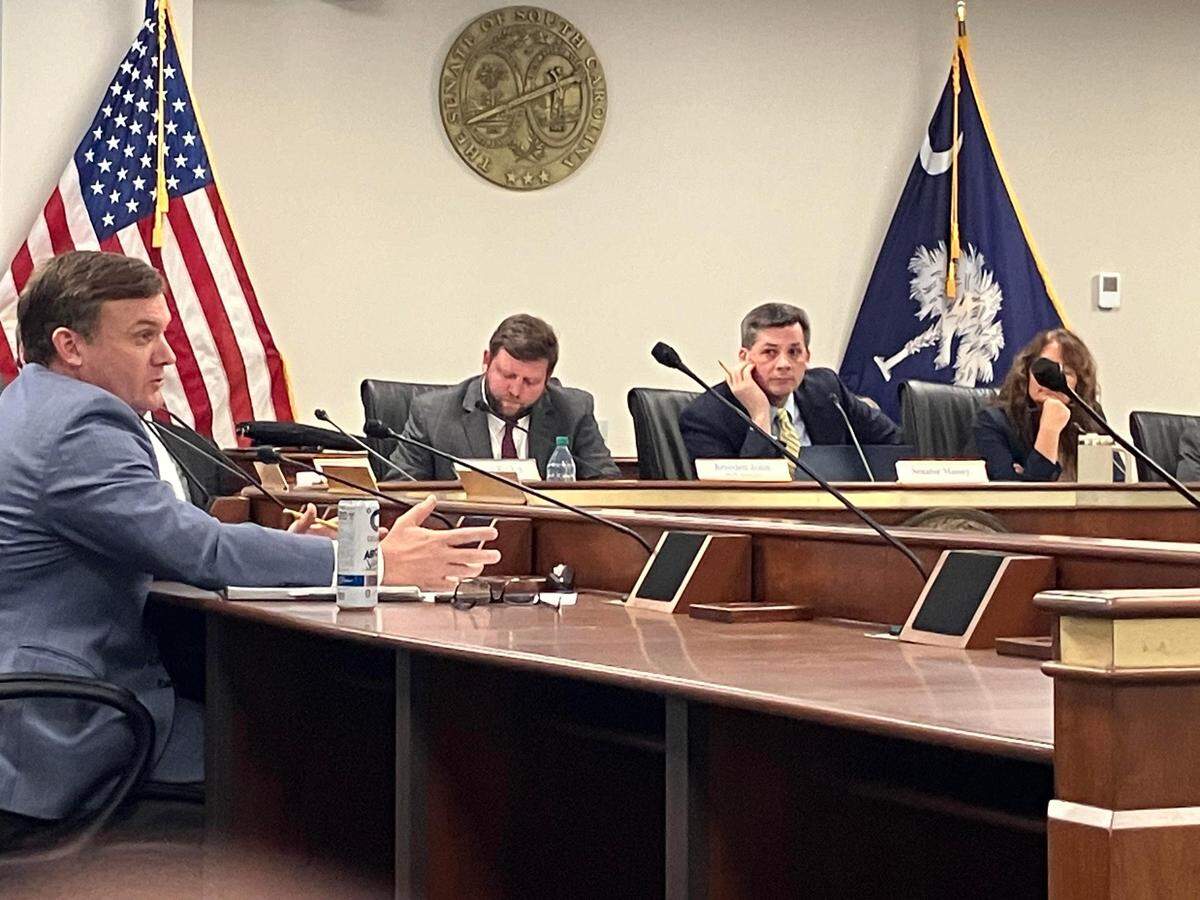
During a Senate hearing Wednesday in Columbia, representatives of major power users said they’d like flexibility to buy energy from other utilities, rather than being limited to Dominion Energy, Santee Cooper and Duke Energy.
“This is a perfect time to try this,’’ S.C. Energy Users Committee lawyer Scott Elliott said, noting that “at least in the case of Dominion and Santee Cooper, they don’t have a whole lot of extra generation capacity.’’
Elliott said if capacity to provide power is thin, allowing the largest users of electricity to find other sources would take pressure off Dominion, Santee Cooper and, possibly Duke to build more power plants.
“Let the larger guys buy it somewhere else,’’ he told members of a special Senate energy future committee .Large energy users could potentially get more favorable rates from other companies than those in South Carolina, he said.
As it stands, utilities in South Carolina have monopolies to operate in specific service territories, meaning anyone in those areas must buy power from those utilities. Dominion Energy primarily serves the Columbia and Aiken areas, as well as Beaufort County, while Santee Cooper primarily provides power to electric cooperatives and directly serves homes in the Myrtle Beach area. Duke Energy provides power to both Carolinas, including the Upstate and eastern parts of South Carolina.
At least 19 states, including Georgia, now allow some freedom for energy users to choose their power sources from outside service territories. Georgia’s allowance is limited to new industrial customers moving into the state, according to testimony Wednesday.
Utility representatives were cool to the idea, saying the matter is more complicated than many people might realize.
But John DeZee, executive vice president and general counsel for Century Aluminum, said investor-owned utilities are motivated to build more power plants because it helps them make money.
“From their point of view, they always want to build more generation,’’ Dezee said. He questioned the immediate need to build plants, if big energy-using companies could buy power from other sources.
Dezee said allowing industrial plants to choose energy suppliers creates competition that he suggested would keep a utility’s rates lower.
“Here’s how this works: Utilities are going to have only two options. One is to build more generation or two is to allow large customers to go out and purchase power from somebody who’s already built’’ a generation plant, Dezee said.
Century Aluminum operates a smelting plant in South Carolina that has a reported $700 million annual impact on the economy in the Berkeley-Charleston area. In addition to Century, the S.C. Energy Users Committee represents multiple major industries, including Michelin, Milliken, Kimberly Clark, Alpek, Amick Farms and several paper companies.
The practice of acquiring power from other states has occurred before in South Carolina, but only in special cases and it is not generally allowed under state law, Elliott said after the meeting. He said legislation would need to pass the General Assembly to allow for the regular use of power from providers other than South Carolina utilities.
Wednesday’s hearing follows more than a year of discussion in the Legislature about changing state law to allow for more power plants in South Carolina. The state is growing rapidly and increasingly needs more ways to meet demand, particularly from new industries, including data centers that use extraordinary amounts of energy, many legislators say.
Dominion Energy, formerly SCE&G in South Carolina, has said the need for more power is real. The state came dangerously close to having power outages at Christmas two years ago during an unseasonable cold snap, Dominion officials have said.
The state’s major power companies are backing legislation this year that contains a variety of ways they say will help meet energy demand.
Among those are changes in state law that would limit some environmental and consumer regulation of new energy plants and to allow expanded nuclear capacity. The changes also would give state-owned Santee Cooper approval to work with Dominion Energy to build a large natural gas plant in the Canadys community of Colleton County between Columbia and the coast.
An extensive bill that contains many of those elements has been introduced in the House. It was discussed Wednesday by a subcommittee that met at the same time as the Senate hearing.
After testimony from Elliott and Dezee, Santee Cooper and Duke Energy executives said allowing big industries to choose energy providers outside a utility’s territory might actually hurt the average ratepayer.
Jimmy Staton, chief executive at Santee Cooper, said there could be additional costs that would be borne by power companies and existing customers. Power companies, for instance, would still have to deliver the energy through transmission lines, he said.
“Making adjustments in what is an incredibly complex electric market to benefit a single set of customers needs to be exceptionally well thought out — and it has huge potential for unintended consequences,’’ Staton said, telling committee members opening up the market hasn’t always worked in other states.
Elliott said additional costs to South Carolina power companies could be recovered. Utilities, for instance, could charge big industries for the right to use power lines, even if the utilities are buying power outside the state.
Heather Shirley Smith, Duke Energy’s South Carolina vice president for regulatory affairs and policy, also urged legislators to move carefully in opening markets for big users. She said Duke has a legal requirement to serve its territory in South Carolina, regardless of whether a customer seeks to acquire power elsewhere.
She and Elliott disagreed on whether allowing big companies to acquire power outside of their South Carolina service territories is legal.
“The utility still has the obligation to serve,’’ she said. “I’ve never heard of a customer come to Duke Energy and ask to be completely unhooked from the grid.”
Despite concerns by power companies, Staton said he is willing to listen to plans that help big industrial customers as long it doesn’t cost the average ratepayer. Staton noted that, unlike Duke and Dominion, Santee Cooper is a state agency that doesn’t need to make profits from new power plants.
During Wednesday’s hearing, a data center representative said there is interest in helping South Carolina meet future energy demand, through nuclear power. But she made no commitments to help pay for new nuclear power or natural gas plants, as some legislators hope.
Google’s Katie Ottenweller said her company’s power use in South Carolina actually keeps rates lower for other customers, allowing energy suppliers to spread costs across a larger customer base. She also noted that the company has invested in 128 megawatts of solar power in South Carolina.
“We commend members of this committee for exploring opportunities for new nuclear power in South Carolina, and are eager to explore ways that Google can support this effort,’’ said Ottenweller, a southeast energy market leader with Google. “And while we strongly believe in nuclear, Google itself doesn’t build, own or operate nuclear’’ plants.
Companies are increasingly looking at South Carolina to establish data centers as the state recruits industry.
Meta, the parent company of Facebook, said in August that it would establish the company’s first South Carolina operation with a new data center in the Aiken area. The investment would be about $800 million and provide about 100 jobs, Gov. Henry McMaster’s office has said.
Two major energy construction projects are being discussed for South Carolina: One is the proposed Santee Cooper-Dominion natural gas plant in Colleton County at the site of an old coal plant. The other is the restart of the V.C. Summer nuclear plant expansion, a project in Fairfield County that was never finished because of cost overruns and delays.
The nuclear construction, which shut down in 2017, wound up costing ratepayers billions of dollars for a project they are still being charged for. The project started after the Legislature passed utility friendly legislation that allowed utilities to charge customers for the construction cost before the project was completed, rather than wait and charge them after completion.
Sen. Tom Davis, R-Beaufort and Senate Majority Leader Shane Massey, R-Edgefield, said they support studying whether the V.C. Summer project could be finished. Two reactors under construction were 20 percent and 40 percent complete, respectively, when the project shut down in July 2017, utility officials have said. The reactors were being built to complement the existing Summer reactor.
Santee Cooper, the state owned utility, is seeking proposals from companies interested in completing the construction project. Davis said on the Senate floor Wednesday the state needs to move rapidly. Gov. Henry
McMaster, in his state of the state speech Wednesday, said he supports restarting the Summer project and the use of nuclear power to energize South Carolina.
“It absolutely makes sense,’’ Massey said. “We need to find out what we have got and what it would take to finish it.’’
This story was originally published January 30, 2025 at 7:31 AM.