Citing expense, wealthy beach house owner fires lawyers in seawall dispute

A wealthy Isle of Palms property owner who faces a $289,000 state fine for building a seawall on the beach fired his lawyers this past week — just days after a judge’s ruling put a potential dent in his legal defense.
In a message to the state Administrative Law Court, Rom Reddy said he dropped his legal team because the attorneys were too expensive.
Reddy’s message asked the court to delay for three months a May 6 trial in which he plans to challenge the fine, but on Friday, Judge Ralph King Anderson III denied that motion. Friday’s order follows Anderson’s decision April 24 to deny a request by Reddy to dismiss the state fine.
“I was forced to terminate their services, as no ordinary citizen, even a citizen of some means like myself, can afford to spend the money they seek in Administrative Court to protect private property that the government is attempting to confiscate,’’ according to last week’s note from Reddy to Anderson.
Reddy did not initially say how much he was being charged, but later indicated in an email that the amount exceeded substantially more than $100,000. He characterized the matter as a “fee dispute’’ with lawyers from Williams Mullen.
Reddy, a supporter of President Donald Trump and a financial supporter of many political candidates, put $2.5 million into a political action committee he founded earlier this year. The political action committee advocates for less government regulation and less spending. It is named after the federal Department of Government Efficiency, a new entity headed by billionaire Elon Musk that is slashing federal jobs as Trump seeks to cut government services.
Reddy’s seawall case is being watched closely because its eventual outcome could determine how aggressively the state is able to enforce restrictions on perilous beach development. Anderson refused April 24 to toss out the $289,000 fine and order to remove the seawall, saying the state’s action was warranted.
The law firm Reddy terminated, Williams Mullen, has some of the most experienced environmental lawyers in South Carolina. Among them are Ethan Ware and Dick Willis, who have decades of expertise defending clients who face sanctions by environmental regulators or prosecutors.
In a Wednesday, April 30 letter to Anderson, Willis said the upcoming trial over seawall construction should be postponed “so that he can obtain other counsel or prepare to represent himself.’’ Willis declined comment when asked about the matter by The State.
The law firm’s letter to Anderson included the note Reddy wrote, saying the case was expensive.
Leslie Lenhardt, an attorney representing the Coastal Conservation League environmental group, said the organization opposed the request to postpone the hearing, saying Reddy has had multiple lawyers and plenty of time to prepare for the case. The seawall is still on the beach and needs to be removed to improve public access to the seashore, she said. The league has intervened in the case in support of the state’s fine and order to remove the seawall.
In Friday’s order, Anderson agreed with Lenhardt’s arguments, saying he had previously warned Reddy he was “reluctant to grant further continuance.’’ Anderson said Reddy had not provided evidence that another delay is warranted and that the decision to fire his legal counsel did not appear to be “based on financial inability.’’
Now that Anderson has denied the request to postpone the May 6 trial, Reddy would have to represent himself unless he can find another lawyer before then. The trial centers on Reddy’s challenge to the $289,000 fine, a case that could have larger implications on whether the state can uphold development restrictions on beaches.
Seawalls are a major concern to environmental regulators because, while they protect property by repelling waves, the force of the water worsens beach erosion. That’s significant in a state like South Carolina, where wide beaches are important to the state’s multibillion dollar coastal tourism economy.
New seawalls have been illegal on the sandy beaches of South Carolina since 1988 under a law that attempted to gradually move development back from the ocean because of the hazards.
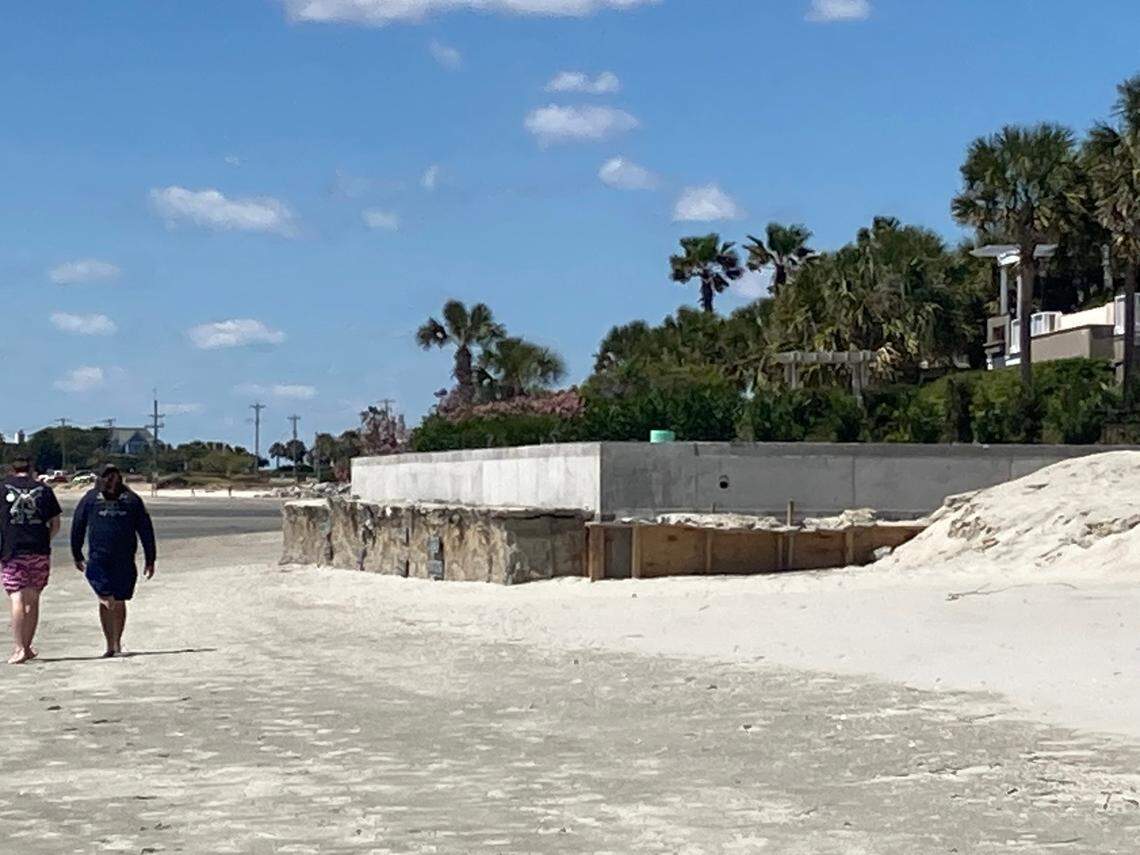
Reddy, and his wife, Renee, are accused of building a seawall two years ago on the beach to protect their home at the Isle of Palms outside Charleston.
Last year, the state Department of Environmental Services ordered the Reddys to remove the seawall and pay the $289,000 fine. He challenged the order in the case Anderson is scheduled to hear.
Anderson, in his decision April 24, dismissed Reddy’s effort to have the fine and removal order dismissed on grounds that the wall was built outside state jurisdiction. on the beachfront.
In denying the request, Anderson said all areas of the sandy beach are within state jurisdiction, a ruling considered an important affirmation of existing coastal law. That potentially set the tone for how the judge might rule after the trial since Reddy’s argument is that he was outside state jurisdiction.
The Department of Environmental Services declined comment on whether it opposed the request to delay the trial.
Reddy said in a May 1 statement that he is fighting for the interests of other people.
“This is not just my fight but a fight for several people across this state who have contacted me and several others who have not but are subject to this confiscation that defies the United States and South Carolina constitutions,’’ his statement said. “Most people are unable to defend themselves as the system is rigged against the citizen.’’
This story has been updated to reflect Judge Anderson’s ruling not to delay the trial and with a statement from Reddy from May 1.
This story was originally published April 30, 2025 at 2:42 PM.