Some charter school authorizers would need to restructure under SC House plan
READ MORE
Unchartered Territory
Unchartered Territory is an ongoing series by The State Media Co. about South Carolina’s changing charter school landscape
Expand All
Charter school districts affiliated with colleges and universities would be required to restructure under a House amendment to the South Carolina Senate’s charter school accountability bill.
The 45-page proposal, adopted Tuesday by the House Education and Public Works Committee, expands on the Senate’s effort to reform the state’s burgeoning charter school sector and more clearly defines the types of entities that can authorize charter schools.
Unlike the Senate bill, which defines a higher education authorizer as either an institution of higher learning or a nonprofit directly affiliated with one, the House version clarifies that only institutions of higher education, not their nonprofit designees, can authorize charter schools.
Authorizers, also called sponsors, are responsible for opening, closing and overseeing the charter schools in their charge in exchange for a portion of each schools’ state funding. In addition to institutions of higher learning, authorizers can also be local school districts and the legislatively-created Public Charter School District.
Since all of the state’s higher education authorizers are independently-operated university affiliates, the seemingly small difference in the House amendment would render all of South Carolina’s higher ed authorizers unable to sponsor schools as they’re currently constituted. College-affiliated authorizers oversaw roughly 40% of the state’s charter schools at the start of the 2025-2026 school year, according to S.C. Department of Education data.
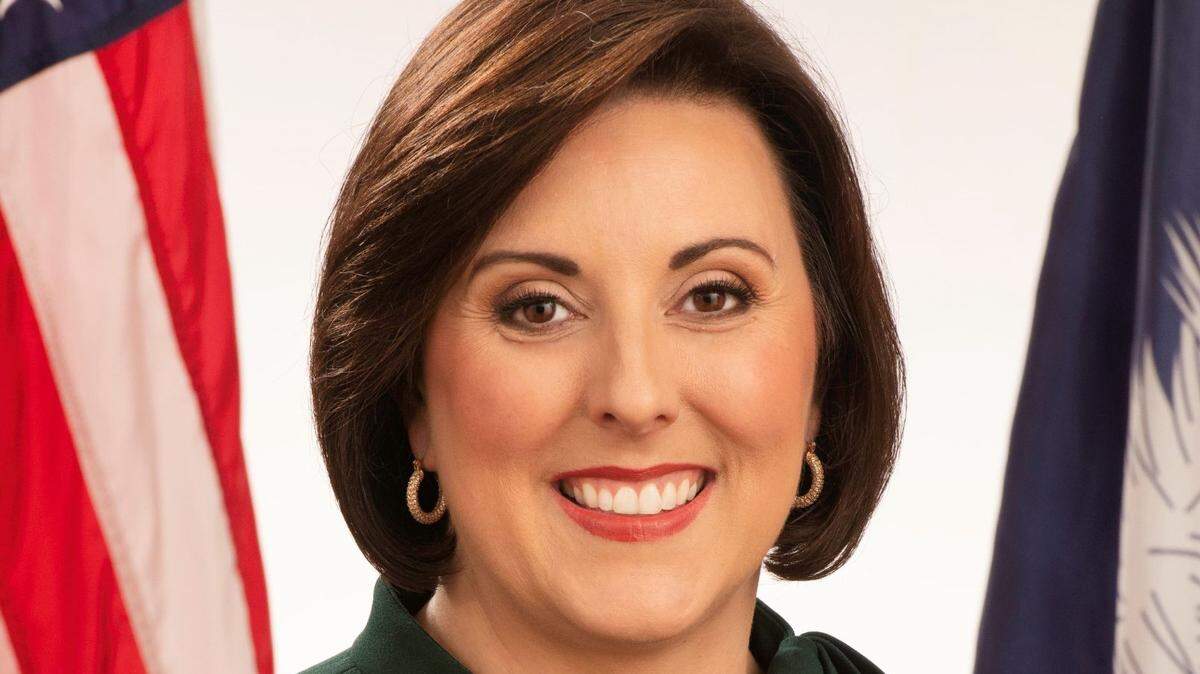
House Education committee chair Shannon Erickson, who crafted the amendment with input from more than a dozen constituent groups, said she thought university authorizers had been skirting the law by delegating their authorizing duties to “unaccountable” private organizations.
While the Charter Schools Act doesn’t say anything about colleges delegating authorizing responsibilities to affiliated nonprofits, in practice, that’s what they’ve always done.
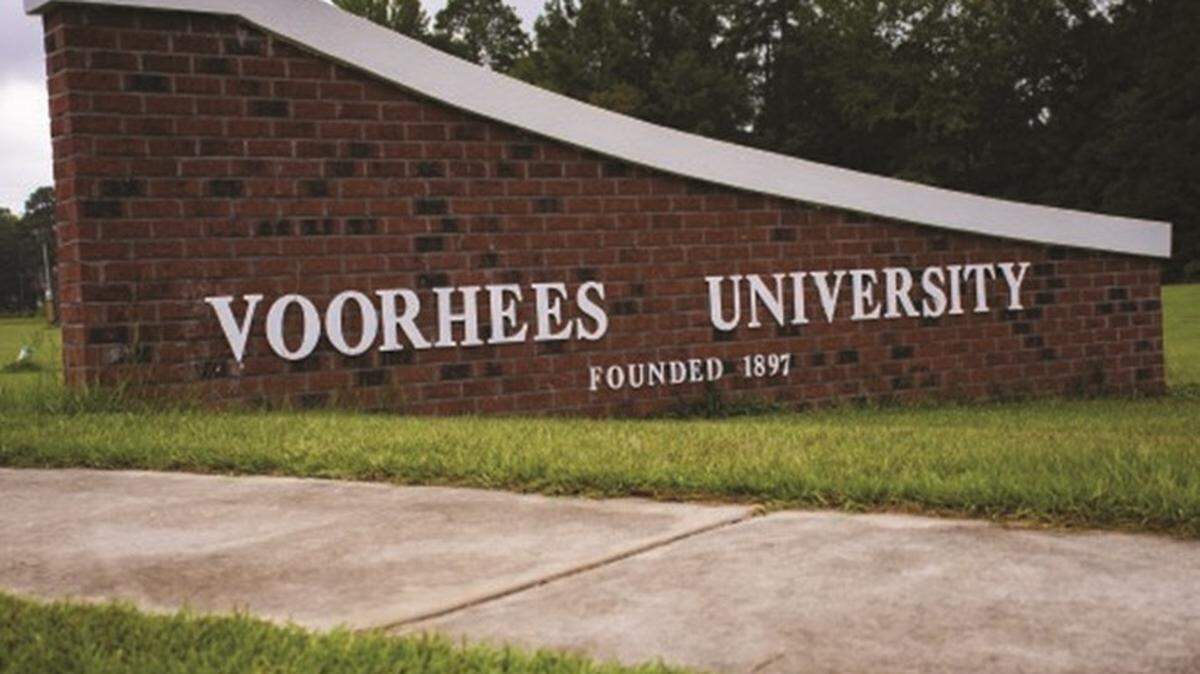
All three higher ed authorizers that have approved schools in South Carolina — Charter Institute at Erskine (Erskine College), Limestone Charter Association (Limestone University) and, most recently, Voorhees University Charter Institute of Learning (Voorhees University) — are nonprofits that operate independently of the universities that created them.
Erickson, a Beaufort County Republican who has served in the House for nearly 20 years, said lawmakers didn’t intend for universities to delegate their authority when they amended the law to give them authorizing powers.
“The university had to do it, not some nonprofit group,” said Erickson, who supported the 2012 amendment that gave institutions of higher education the ability to sponsor charter schools. “If we were gonna say it’s some nonprofit group, then we would have opened it up to other people. There are plenty of nonprofits who probably would like to be charter school authorizers.”
Concerns with higher ed charter school authorizers
Erickson said she didn’t always have a problem with higher ed authorizers delegating their sponsorship duties, but had come to rethink the practice in recent years after questions about the affiliated nonprofits’ finances and operations started to swirl.
An ongoing dispute over the Limestone Charter Association’s alleged unwillingness to transfer bank account passwords and student information data to the South Carolina Department of Education cemented her concerns, Erickson said.
Limestone Charter Association, whose board recently voted to dissolve the authorizer following the closure of its namesake university, is withholding public funds earmarked for its former schools, she said.
As a result, Erickson said, the S.C. Department of Education had been forced to take legal action against both the nonprofit and the defunct Gaffney university.
“While we’re trying to access funds that were public dollars, paid to the schools based on enrollment of students, we are now being met with two different factions telling us, ‘Sorry, we can’t help you. No, we’re not going to give you this,’ ” Erickson said.
Limestone Charter Association board chair Bridgett Fowler disputed the lawmaker’s account and said the district had paid all of its schools what they were owed.
The disagreement, Fowler said, stemmed from the Department of Education’s insistence that it be given passwords to corporate accounts it was not authorized to access and that would expose Limestone to legal risk.
“We explained to them, by law, why we can’t give (the passwords) to them,” Fowler said. “I’m not going to jail for that.”
The Department of Education, which on Wednesday filed suit against Limestone, said the charter school authorizer had failed to grant it systems access and provide it requested financial records and documentation to support its amended budget.
Major changes ahead for higher ed authorizers?
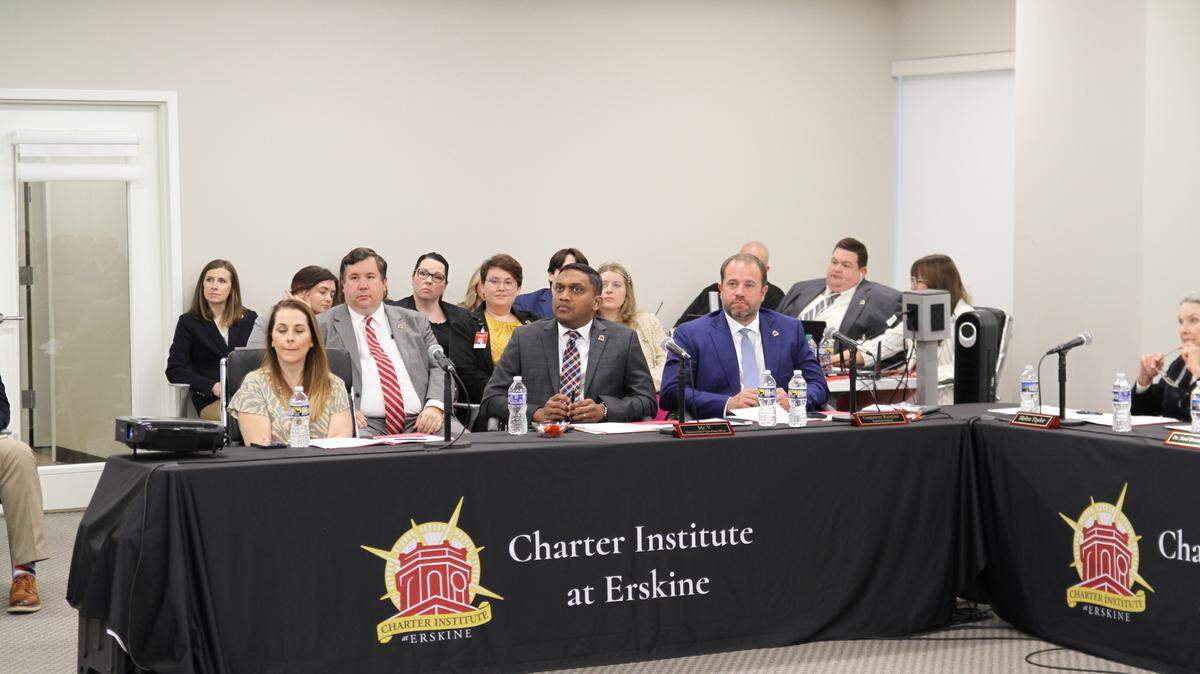
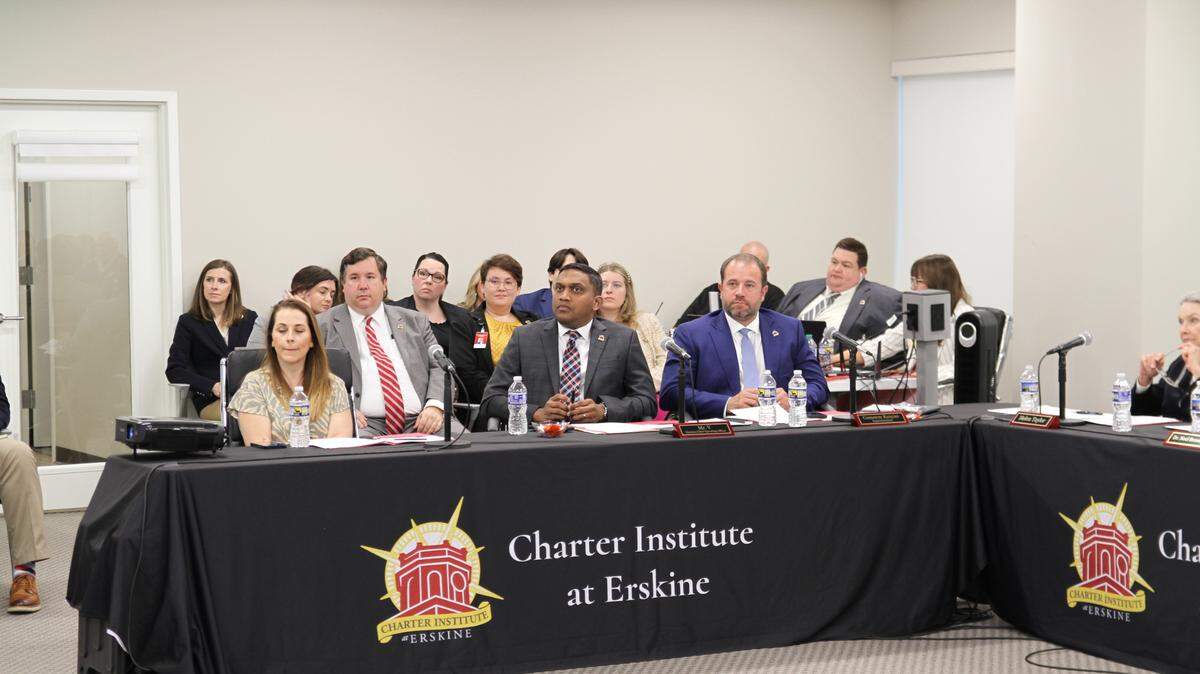
If the House’s amendment to the charter school accountability bill were to become law, it would significantly impact the state’s largest higher ed authorizer, the Charter Institute at Erskine, which currently oversees 28 schools and has many others in its pipeline.
“They’ll have to restructure,” said Erickson, who expressed confidence that Erskine College could absorb the Charter Institute and its employees or transform the nonprofit into a fundraising organization.
“I don’t see this putting anybody out of business,” she said of her amendment. “I think it’s a restructuring issue. But if you’re good at management and business, which I hope they are, because they’re running a business of education, then they’ll have to restructure and find a way to be underneath the university.”
When asked for comment on Erickson’s proposal and its potential impact on the district’s structure, the Charter Institute released a statement in support of the Senate version of the bill.
“We continue to support the efforts and thoughtful legislation contained in the Senate version of S. 454 and oppose any effort to limit South Carolina’s historic Christian, HBCU and secular institutions of higher education from their ongoing and successful support of the state’s children through the public charter school sector,” the statement reads in part.
Senate Education Committee chair Greg Hembree, R-Horry, who sponsored the Senate bill, said he’d yet to review Erickson’s amendment and would reserve judgment until he sees what the House ultimately passes.
What else does the House amendment do?
In addition to clarifying the definition of “higher education authorizer,” Erickson’s amendment also makes more than two-dozen other changes to Hembree’s bill.
A few notable additions include a restriction on authorizers contracting with schools for services over which they have direct oversight; a requirement that charter schools post monthly transaction registers on their websites; and the creation of a process by which parents and community members can file complaints about charter schools and authorizers.
The Beaufort Republican credited her committee for taking an engaged and collaborative approach to the amendment that she said had made for an improved final product.
“The input on this bill has been the largest I’ve ever seen,” Erickson said. “And with great success.”
Most of the committee’s changes expand upon the reforms outlined in the original version of the bill, which enhances oversight of charter school authorizers; brings additional transparency to potential conflicts of interest within the sector; and cleans up various procedural and definitional questions that are vague or unaddressed in the current law.
A controversial provision that would have required virtual schools to provide no more than 20% asynchronous instruction was struck from the House amendment prior to its introduction Tuesday in response to feedback from stakeholders.
In its place, lawmakers added a section outlining several specific assurances that virtual schools must provide students, including daily access to certified teachers during the entire instructional day and regularly scheduled synchronous instructional opportunities.
“I’m really happy with that section and those options because I think virtual learning is a good tool for us,” Erickson said. “We just needed to somehow quantify what was happening in those times when there wasn’t direct instruction.”
It’s not clear at this point when the full House will take up the amended charter school accountability bill.
But with the legislative session entering its final weeks, lawmakers will need to act quickly to fulfill their goal of enacting charter school reform this year.
This story was originally published April 23, 2026 at 5:00 AM.