SC pipeline route surfaces after months of secrecy. Environmental concerns rise
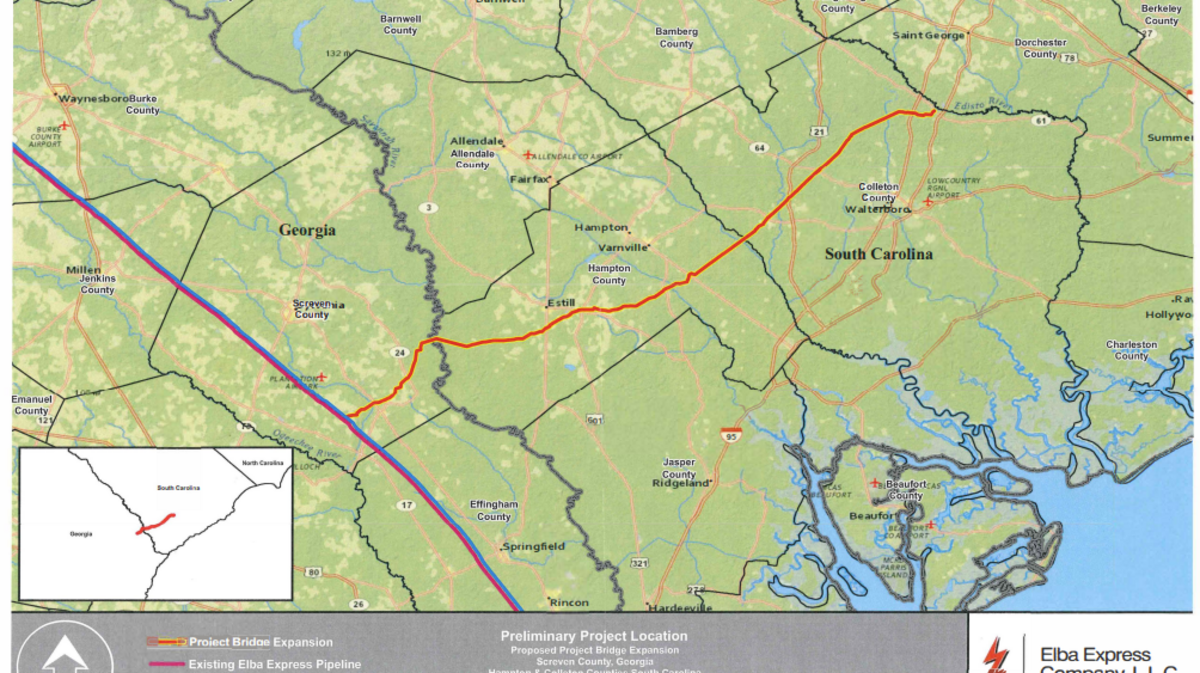
A map obtained by conservationists shows that a new natural gas pipeline will cut through an area of swamps and rivers that has been targeted in South Carolina for protection in recent decades.
The area includes undeveloped property that would someday become part of the ACE Basin, a nationally acclaimed nature preserve that has been the focus of state and private efforts to save the landscape as development pressures mount in South Carolina. It’s possible the pipeline also could touch already protected lands, although the map was not detailed enough to show that.
State utilities and pipeline companies have declined for months to release the route for the pipeline, which would serve a huge natural gas plant in the Canadys community of Colleton County. A pipeline company confirmed Tuesday the authenticity of the map obtained by conservationists.
A Colleton County Council member revealed the map during a public meeting recently in the Lowcountry, according to the Southern Environmental Law Center, which released the map to the media this week. The map shows a pipeline crossing into South Carolina from Georgia west of the small town of Estill, and continuing in a northeasterly direction above Interstate 95 to the site of the proposed natural gas plant in Colleton County.
The map confirms a route discussed last month by a pipeline company that was not chosen to provide the line to the Canadys natural gas plant site.
That company, Carolina Gas Transmission, said a rival business that won the contract — identified as Kinder Morgan — would take a more devastating toll on the environment with its pipeline route, crossing both the Savannah and Coosawhatchie rivers. Carolina Gas said the Kinder Morgan route would affect 50 percent more waterways and 67 percent more wetland acres, as well as crossing the land of more property owners than the one Carolina Gas had proposed.
Asked about the map obtained by the Southern Environmental Law Center, a Kinder Morgan spokeswoman provided an identical map Tuesday confirming the proposed route for the pipeline.
“It’s extremely frustrating that basic information about this pipeline and the proposed gas plant at Canadys has been kept secret from the public for this long,’’ according to a statement from the Southern Environmental Law Center’s climate associate Robbie Maynor.
Maynor said “regular people’’ have been left in the dark about a project that could pollute their air and affect their property.
“South Carolinians deserve to know the basic details about major projects like this that could have lasting impacts on our land, our waterways, our health, and our wallets,’’ the statement said.
Officials with Santee Cooper and Dominion Energy, which are proposing to build the plant that would be served by the pipeline, referred questions Tuesday to Kinder Morgan. Kinder Morgan did not provide a comment. The utilities and Kinder Morgan have previously said the $451 million pipeline would be done in an environmentally safe manner, using existing rights of way when possible, despite their not providing an exact pipeline route.
The natural gas plant, expected to cost well in excess of $1 billion, is being proposed by the utilities to meet future demand for electricity in fast-growing South Carolina, which is drawing requests for power by an array of entities, including data centers that seek large quantities of energy. The Legislature approved a bill earlier this year intended to make building the plant easier.
Many environmental groups have expressed reservations about the plant, saying it might not be needed, as proposed. And they say the pipeline could trample on people’s private property rights, while affecting scenic and environmentally important areas that should be left alone.
Natural gas pipelines also present environmental concerns because they can leak and explode, and because they can cause power companies to seize private property to locate pipelines that serve the energy plants, critics say.
Disrupting the natural landscape is the last thing some environmentalists and lawmakers want to see if the Canadys line runs through areas targeted to become part of the ACE Basin. The basin includes some 300,000 acres that already have been protected, but vast areas nearby have not.
Areas sought for protection, under the ACE initiative, extend from near Orangeburg and Denmark to the northwest to areas in the coastal plain between Charleston and Beaufort. The proposed natural gas pipe would run near Interstate 95.
The ACE Basin is considered one of the state’s biggest environmental protection achievements because the area is composed of both public land and private property, where landowners have been paid to restrict development to preserve important plants and wildlife habitat. Partnerships struck with private property owners have helped save environmentally significant land before developers could acquire it. The protection effort began in the late 1980s.
This story was originally published August 12, 2025 at 7:01 PM.