Pine trees or rooftops? Forest industry struggle forces choice for SC landowners
Conservation issues sometimes divide environmentalists and South Carolina’s ultra conservative legislature, but one matter brought plenty of agreement at a briefing for lawmakers Wednesday.
South Carolina needs to protect its forests and the investment people make in woodlands before the land is sold off for development as the state grows, environmentalists and lawmakers said..
With the closure of multiple paper mills in the region, the forest industry has lost markets for its trees. And when the demand for wood diminishes, it puts pressure on private forest owners to sell to developers, rather than maintain their land for timber harvesting, they said.
“Without a thriving forest products industry providing opportunities for private forest landowners to monetize their wood, they’re forced to make hard decisions about the future of their land,’’ said Tim Evans, director of land conservation with the environmental group Audubon SC. “Forest lands of the Lowcountry grow two things extremely well: pine trees and rooftops. We have to decide which ones we’re going to pursue.’’
Vacant land already is being converted to developed areas, and if the conversion trend continues, South Carolina could lose 50 percent of the farms and 30 percent of forested land during the next 50 years, the Open Space Institute’s Maria Whitehead said.
Sen. Everett Stubbs, a Republican from Richburg, said protecting land from development is tied to “making timber and agriculture profitable again.’’ He went on to say “the best defense that we have of rural lands going into mass housing situations, is if the farmer can at least be a little profitable.’’
Senators did not discuss specific ways to protect farms and forests, but one measure advocated by Sen. Chip Campsen, R-Charleston, is the use of former power plants to burn wood chips from South Carolina forests.
A new utility law passed last year requires Dominion Energy to consider converting its Wateree River coal plant in Richland County into a wood biomass factory. The law also urges the state to encourage biomass plants as a source of energy.
The pulp and paper industry, which generated more than $23 billion for the state’s economy in 2023, has suffered from cutbacks or outright closures involving 10 mills in the region in the past two years, a 2025 report by forestry industry leaders said.
Those included the shutdown of International Paper’s mill in Georgetown, a long-time employer that relied on wood from forests in South Carolina.
Property owners with timber can not only earn money from wood sales, but can be paid to not ever allow the land to be developed.
“We need to really continue to work,’’ Campsen said, noting that he will have a meeting with the forest industry for an update on its challenges.
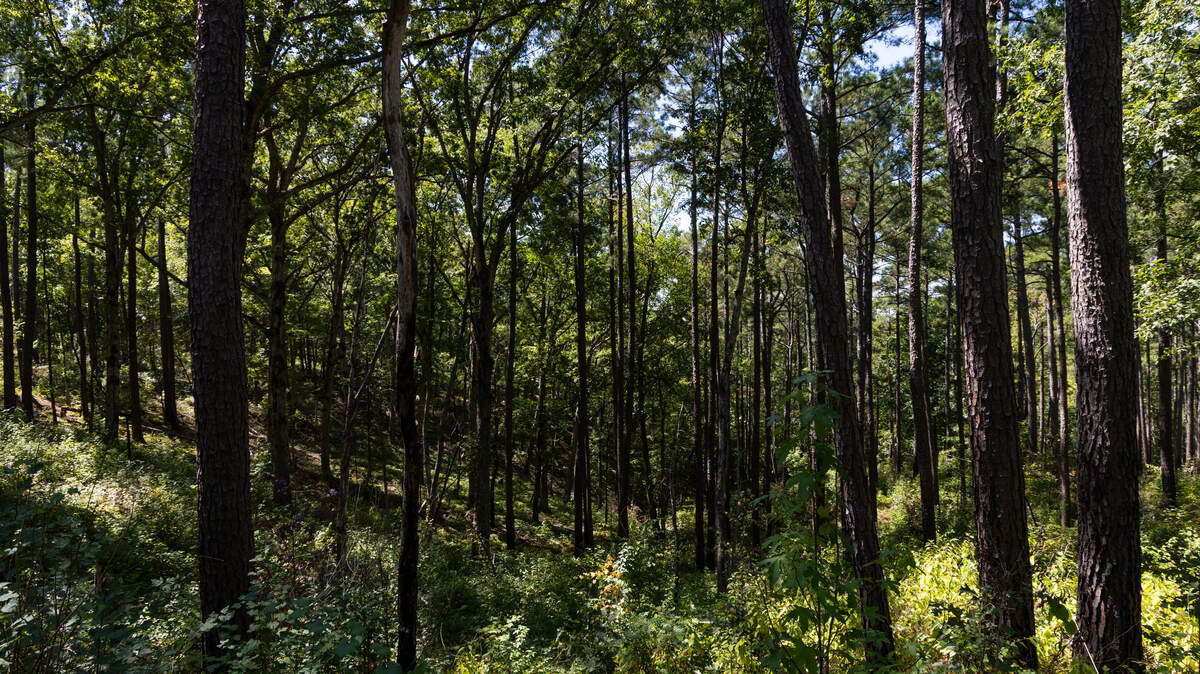
Forests cover most of the state, in part because it was never developed or because the property was planted in pine trees years ago as the timber industry grew in the Southeast. Open farm fields and eroded areas have been planted in pines.
Not everyone has been happy about the trend in South Carolina of converting natural forests, which include a mix of hardwoods, for planted pine plantations. Pine plantations are less significant for many types of wildlife, for instance.
But environmentalists conceded that pine plantations , while not ideal from some standpoints, provide forest cover that can protect water quality by filtering tainted runoff.
Water usage and safety also discussed
Wednesday’s briefing for the Senate, known as “Conversations with Conservationists,’’ was the latest installment of a session environmentalists provide each year to lay out their conservation priorities.
In addition to the discussion of protecting and saving land, environmental groups also briefed senators on affordable energy, clean water issues, the state’s new water plan and the need to maintain regulations that protect the environment..
One of the biggest water matters that has sparked disagreement is whether to post signs at river discharge pipes so that boaters and others who spend time on the water can find out what type of pollutant is being released.
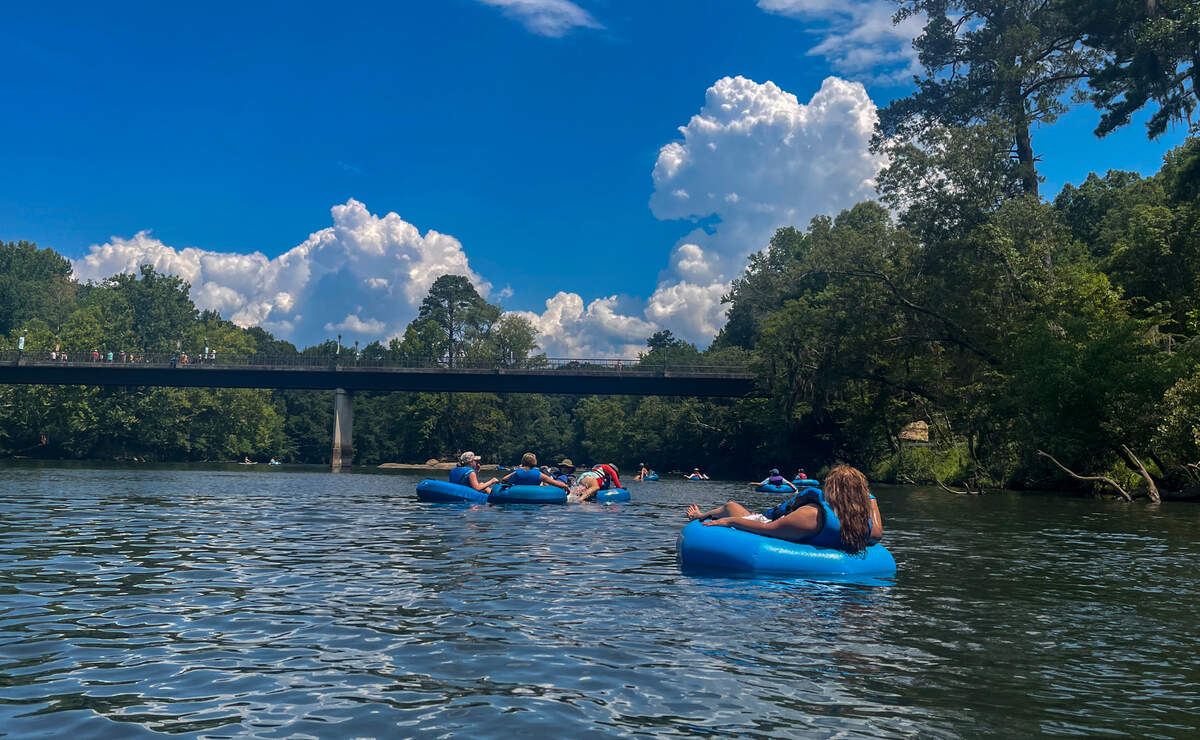
Lawmakers have balked at the idea in recent years in the face of opposition by members of the business community. But Congaree Riverkeeper Bill Stangler said the state needs to pass legislation requiring signs at discharge pipes. Having signage helps boaters and kayakers know what’s going into the water, while allowing a way to report violations from pipes they might see.
“This is an idea that’s rooted in transparency,’’ Stangler told senators. “We’ve asked for signs that would have a permit number … so you know ‘Is this the spot I want to stop and fish for a while? Do I want to get out and swim? Do I want to let my dog jump out of the boat here?’ ’’
Also at Wednesday’s briefing, environmentalists urged senators to study and consider controls on data centers.
Data centers, which use tremendous amounts of energy, have caused a stir the past two years in South Carolina because of the major impact they have on natural resources. Stangler said more oversight is needed because data centers sometimes do not disclose the amount of water they use.
A huge data center proposed for Colleton County has drawn complaints from local residents worried about the environmental impact and how it will affect private property.
“Right now, some of these data centers can purchase their water from a municipality, sign (a non-disclosure pledge) and nobody knows how much water they’re using,’’ Stangler said. “That’s not fair. We need to know because it is going to be an incredible strain on our water systems in South Carolina. At the very least, we need to understand how much of that water is being used.”
While environmentalists focused on a handful of priorities – land protection, outfall pipe signage and water issues, and affordable energy – they did not discuss a number of other environmental issues that are unfolding in South Carolina.
One of those is forever chemicals, the toxic compounds that can cause certain types of cancer, immune system deficiencies, and thyroid problems, among other things., when people are exposed in sufficient amounts through the water they drink or food they eat.
Scores of South Carolina drinking water systems have learned they have some forever chemicals in the water piped to customers.
And rural South Carolina residents are increasingly concerned about forever chemicals in sewer sludge that has been used to fertilize crop fields. The state still allows it to be used, despite problems that have surfaced in the recent past.
Sludge was once pushed as a way to reuse waste, rather than send it to a landfill, because the gooey material has nutrients. But in recent years, federal officials have learned some of the sludge used as fertilizer contains forever chemicals, formally called PFAS. These materials once were used widely by industry but have escaped into the environment.
This story was originally published January 21, 2026 at 4:20 PM.