Pipeline company takes SC property owners to court; seeks access to their land
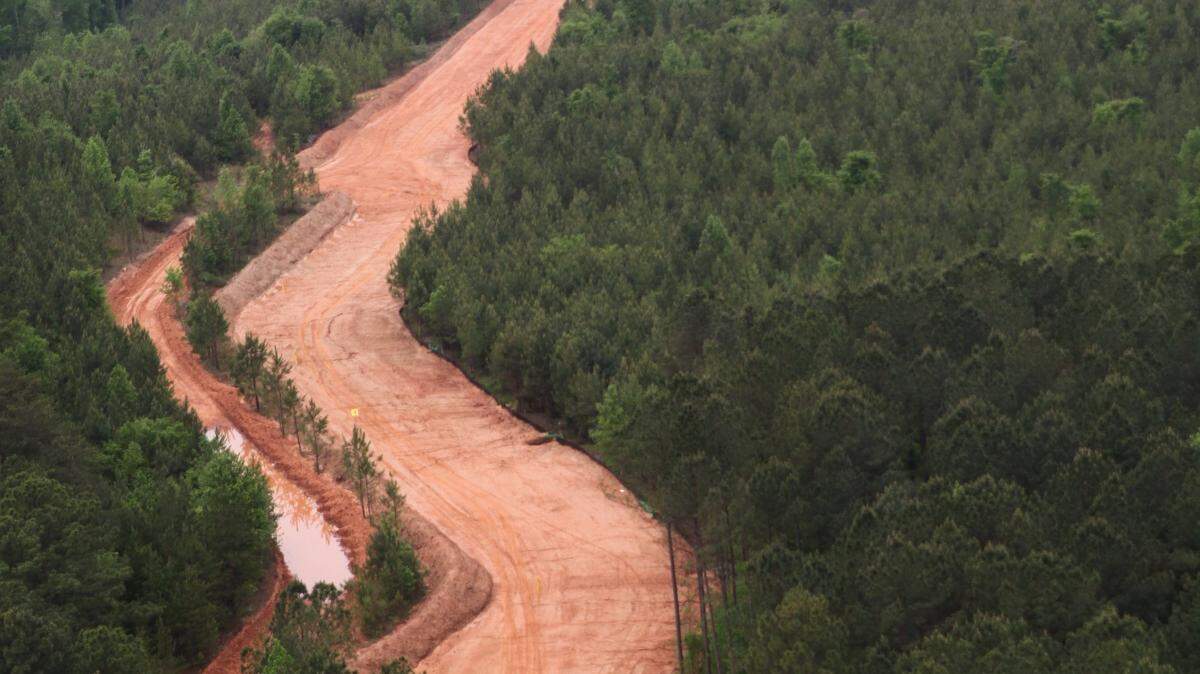
A company planning a natural gas pipeline through the Lowcountry has taken more than 60 South Carolina property owners to court, seeking approval to survey their land for possible use when pipes are laid to serve a new power plant.
Elba Express LLC, a division of pipeline company Kinder Morgan, is asking a state court to prevent people from blocking company surveyors from their property in Hampton and Colleton counties.
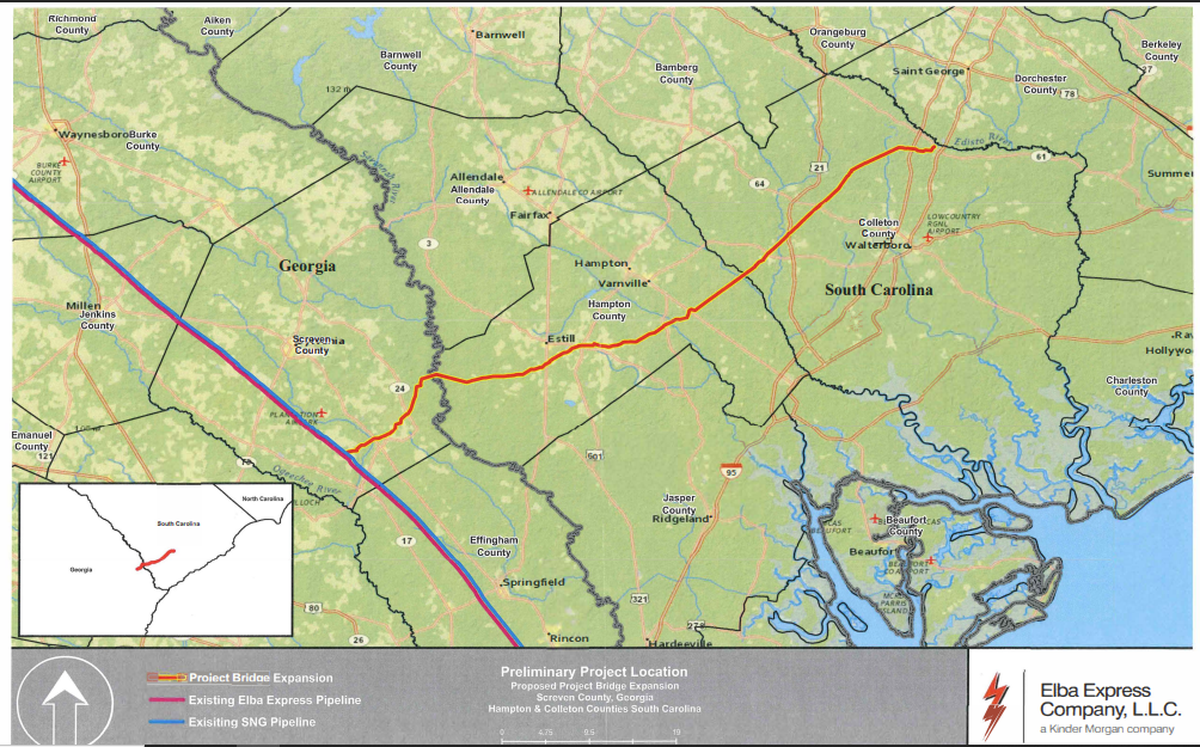
At least 75 cases involving more than 60 landowners have been filed with a circuit serving the two counties, court records show. Kinder Morgan is seeking to route a gas pipeline from a major connection in Georgia to a planned 2,200 megawatt natural gas plant in the Canadys community.
Similar court action has been filed in Georgia seeking access to more than 20 property owners’ land along the pipeline route, records show.
Some landowners have not allowed Elba Express workers onto their property to conduct surveys, while others have failed to respond to written requests for access. Some cite an infringement on private property rights. Some worry about the disruption they believe a pipeline would cause on farms and woodlands
The pipeline would cross miles of forests, streams and open land. Elba Express had threatened to sue landowners who resisted efforts to look at their property for possible use for the $431 million pipeline project.
Among the concerned property owners is John Crapse Jr. of Estill.
He is named in five of 75 different legal actions seeking access to property in Hampton and Colleton counties. Crapse, 73, has been farming the land with his family since the 1970s. He grows crops on about 2,800 acres.
Crapse worries about the disruption a pipeline would cause, particularly for a natural gas power plant he’s not persuaded is necessary.
“I’ve got fields that have irrigation pipes; I’ve got power lines down in the ground,’’ he said. “I just don’t know what it’s going to entail.’’
Those are legitimate concerns, said the Southern Alliance for Clean Energy’s Eddy Moore. Kinder Morgan says it only wants to survey the land, but that’s the early stages of possibly condemning people’s property for the pipeline, said Moore, a critic of the natural gas plant and pipeline project.
Tonya Bonitatibus, who runs the Savannah Riverkeeper organization, said Kinder Morgan is putting too much pressure on landowners who own scenic, environmentally sensitive land in Georgia and South Carolina. In addition to private land, the Savannah River itself would be impacted by a pipeline, she said.
“The pipeline is going through a place where the river often gets up to a mile wide; it is the great swamp; it’s the area that is really the functional kidney and liver system of the river,’’ she said, basing her assessment on a look at the proposed route. “It is specifically upstream of Hilton Head and Savannah. That flow of the river is really important.’’
She noted that one of the most significant private tracts in the area of the pipeline is the Groton Plantation property, a wild slice of the South Carolina Lowcountry where property owners have committed to environmental protection. It contains more than 13,000 acres of private land protected through the Nature Conservancy.
Natural gas pipelines can threaten the environment by digging corridors through natural land, and from possible explosions if the lines rupture. They do not pose the same threat as oil pipelines, which can spill petroleum and pollute the landscape for years.
Pipeline officials say the lines are safe and the pipes are installed with a sensitivity to environmental protection. Some stretches of line, for instance, are expected to go through existing rights of way, such as routes for power lines, rather than across virgin land. The proposed Canadys line would go in a 300-foot wide corridor, according to a legal filing in Georgia.
Court filings in South Carolina ask that Kinder Morgan workers be allowed to enter people’s property for surveys. The filings, which include 45 in Hampton County and 30 in Colleton County, seek to “restrain’’ property owners from “blocking access to the property or interfering any way with’’ Kinder Morgan’s work on their land.
Kinder Morgan spokesman Allen Fore said his company wants to work with landowners. Taking resistant or non-responsive landowners to court is a part of the process often found in efforts to extend pipelines, he said. It does not mean the company wants to condemn their land, only look at it, he said.
Granting access helps generate talks with property owners about the company’s needs, while giving property owners opportunities to explain how the pipeline would affect features of their land that the company may not know about, he said. Kinder Morgan could adjust the pipeline route away from some areas after talking with landowners, he said. If the company finds it needs the property, landowners would be paid for the use.
Concerns like those raised by Crapse are why landowners should talk with Kinder Morgan, Fore said.
“There are a lot of accommodations we can make for landowners,’’ Fore said. “If we can’t make accommodations for that particular property …. we potentially will look at an alternate route. But we won’t know any of that until we talk to the landowner and get on the property.”
The company is hoping to conduct most surveys this summer before submitting a proposed route for the pipeline later this year to the Federal Energy Regulatory Commission.
The Elba Express/Kinder Morgan pipeline would extend more than 70 miles from an existing pipeline in eastern Georgia to Canadys. Maps indicate it would skirt the ACE Basin nature preserve, a nationally known region of South Carolina with dark rivers, extensive wetlands and abundant wildlife.
Dominion Energy is working with state-owned Santee Cooper to develop the natural gas plant at Canadys to accommodate future needs in rapidly growing South Carolina. Critics say a power plant as large as the one proposed for Canadys isn’t needed.
They complain that much of the power would be used by data centers, which use huge amounts of energy and water. Data centers are increasingly moving into South Carolina, a trend that has sparked large community meetings in which many have argued against them.
At the same time, concerns about the Canadys project have surfaced over the potential acquisition of Dominion Energy of Virginia by energy giant Next Era. Senate Majority Leader Shane Massey, R-Edgefield, recently voiced concerns during Legislative debate in Columbia. The state Public Service Commission has given the Canadys plant a key approval, but Massey suggested that might be revisited.
This story was originally published May 28, 2026 at 11:58 AM.