Hidden study casts doubt on need for nuclear weapons factories in SC, NM, critics say
The federal government is being accused of withholding a key report that could shed light on whether the United States needs to build nuclear weapons factories in South Carolina and New Mexico.
Four environmental groups are calling for the release of the study that examines the life span of plutonium pits, the central cores of nuclear weapons that could be used to defend the country. The government says the existing pit stockpile is getting old and needs replacement, but critics say past studies have suggested otherwise.
That’s why releasing the report could answer important questions in the ongoing debate over construction of pit production plants at the Savannah River Site in South Carolina and the Los Alamos National Laboratory in New Mexico, environmentalists say.
The report being sought updates some studies that have indicated pits could last up to 100 years, making the need to replace the country’s existing stockpile less urgent, they said. Most plutonium pits were produced at a now shuttered plant in Colorado from 1952-1989. The report being sought is known as a “Jason’’ study.
“If the new Jason pit life study supported claims that we need to produce new pits because of the alleged aging effects, they would have released it,’’ said Jay Coghlan, director of Nuclear Watch New Mexico, an atomic weapons watchdog group. “But they are covering it up.’’
Savannah River Site Watch director Tom Clements and S.C. Environmental Law Project director Amy Armstrong said people need to know what’s in the study.
“This study is clearly relevant,’’ Armstrong said. “So it’s something that should be released. We should have full transparency.’’
Environmentalists say pit production could encourage a new nuclear arms race at a time when the world has more than enough atomic weapons.
Pit production also could be environmentally dangerous because plutonium is one of the most toxic nuclear materials, and some forms do not break down for thousands of years.
A July 10 report in The New York Times said if plutonium escaped the New Mexico facility under a worse case scenario, the town of Los Alamos could become unlivable. As many as 3,200 people could get cancer, leading to 1,000 deaths, the Times reported, relying on a new study affiliated with Princeton University .
Beyond that, critics of the pit plant effort say the more than $30 billion estimated cost of the project is a concern.
Coghlan said a Freedom of Information Act request he filed this year with the federal government for the study has not been acted upon. A spokesman for the National Nuclear Security Administration, which is working on the project, had no immediate comment on why the study has not been released.
Environmental groups seeking the study and two other reports include Coghlan’s organization, Savannah River Site Watch and Tri-Valley Cares in California. The S.C. Environmental Law Project also wants the government to produce the Jason study and others. The groups previously convinced the federal government to conduct a comprehensive environmental impact statement of the project.
At issue is a plan by the federal government to begin producing at least 80 plutonium pits each year to replenish nuclear weapons, while also having a supply ready for new atomic weapons. More recent efforts have looked at ramping up production to some 200 pits a year. The goal is to get the program going by 2030.
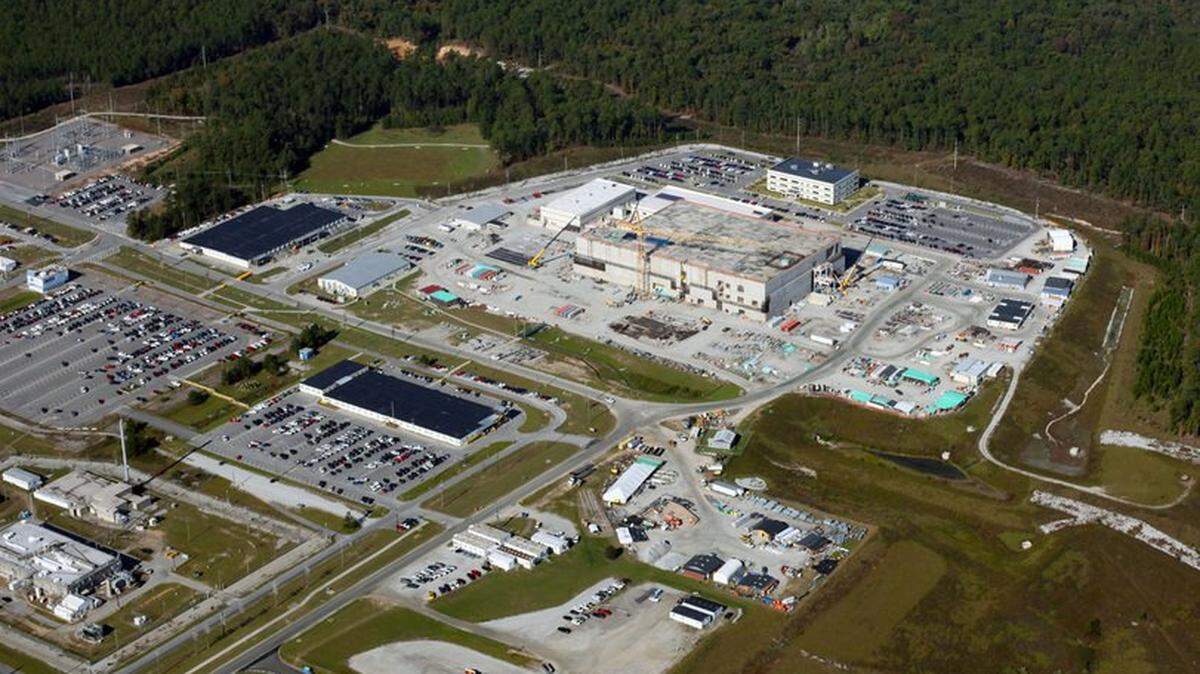
To meet that goal, the government plans to upgrade production facilities at the New Mexico lab, which has previously produced small numbers of pits, and to build a new pit production plant at the Savannah River Site near the South Carolina-Georgia border.
SRS, which would produce the bulk of the pits if new factories are built, is a complex that opened during the Cold War and was at one time a key cog in producing tritium and plutonium for atomic bombs. Supporters of the South Carolina plant, which at times has employed more than 10,000 people, have been seeking new missions for more than 30 years.
While the NNSA did not address why it isn’t releasing the Jason document, one official with the U.S. Department of Energy said it’s too risky to avoid updating the pit stockpile, even if some studies show the pits have years of life left.
“There are some conflicting pieces of information; some of the studies say these pits are good for 100 plus years, but some of the science disagrees with that,’’ according to the government official, who asked not to be identified because the person was not authorized to speak on the matter. “The military is privy to non-public information and they have made the determination these are needed.’’
“God forbid you would ever launch a weapon, but if you do, you damned sure want to make sure it works,’’ the official said.
Establishing a pit production factory at the Savannah River Site has been on the table for at least 20 years and has been supported by both Democrats and Republican administrations. Among the plant’s boosters has been U.S. Sen. Lindsey Graham, R-S.C.
The government is now working to remodel a failed mixed-oxide fuel plant for use as the pit production factory at SRS. The old fuel plant project was never finished after billions of dollars were spent.
Some members of Congress are critical of plans for the pit plants, including U.S. Sen. Elizabeth Warren, a Democrat from Massachusetts, and Rep. John Garamendi, a Democrat from California. In a Dec. 16, 2025, letter to U.S. Energy Secretary Chris Wright, they called for more information to be released before the Department of Energy and the NNSA move ahead with new pit production.
“In rushing to production, NNSA has developed an excessively risky program structure, with management concerns around fundamental aspects such as the cost and schedule,’’ the letter said. “To prevent further risk, DOE should halt the planned production of new plutonium pits at the Savannah River Site until preliminary or complete aging studies validate the requirement for new pits.’’