
Seafloor cameras find creatures eating each other in remote South Atlantic islands
The remote South Sandwich Islands in the South Atlantic are a perfect place to find new and rarely seen species, and a Schmidt Ocean Institute expedition in the region is finding many of those species eating each other.
A monthlong mission to search the region’s seafloor was launched Feb. 20. In that time, the team has seen a buffet of predation, including instances where experts weren’t quite sure what was being eaten.
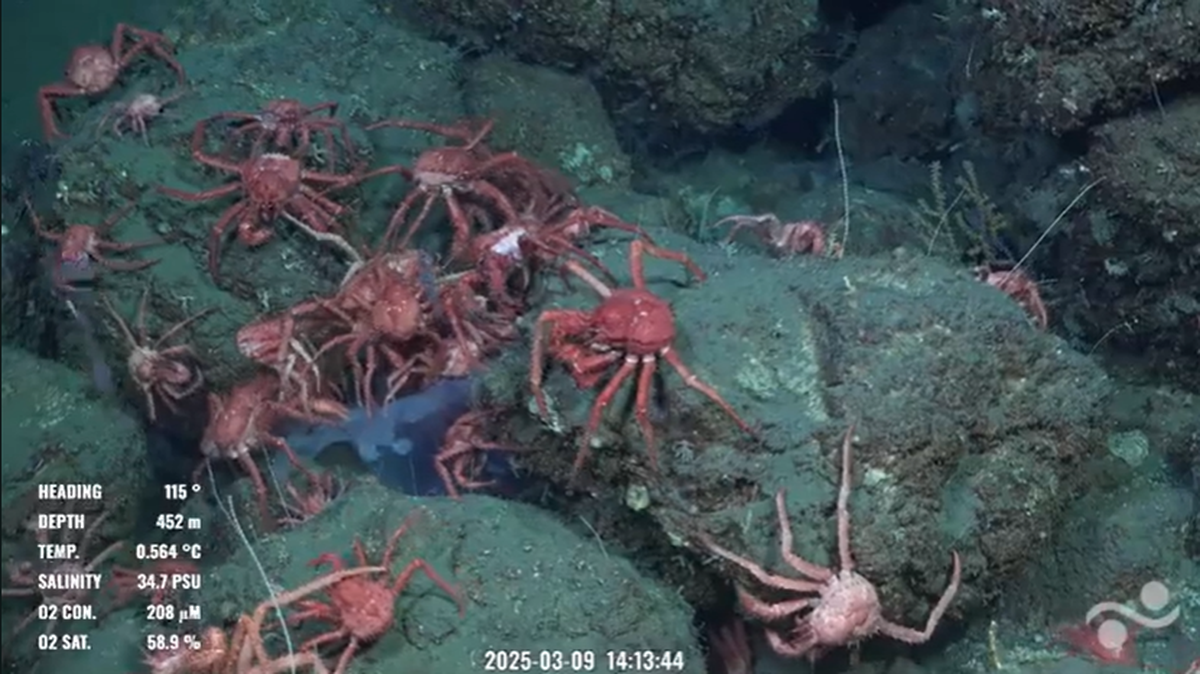
The most frenzied of the episodes was recorded March 9, when a remotely operated camera stumbled onto crabs ripping a helmet jellyfish to pieces at a depth of about about 1,482 feet.
“It’s a crustacean feast,” one scientist observed.
More than two dozen crabs were involved in the feeding, including one that appeared to have gotten inside the jellyfish and was eating its way out.
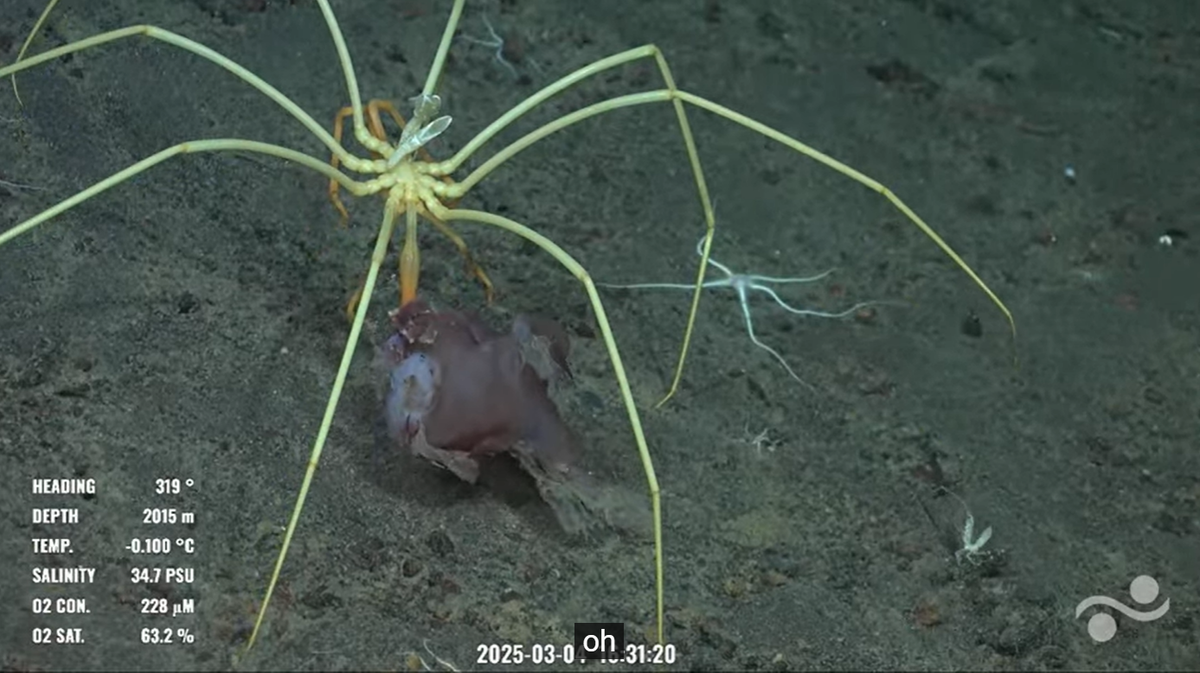
On March 4, a “baby” sea spider was spotted at a depth of 6,607 feet, dragging a pink ball of flesh. It might have been a squid, but the researchers gave up trying to identify the victim.
The expedition began finding examples of predatory behavior almost immediately, starting with mystery bones seen on the first dive March 2.
Closer inspection revealed “bone-eating worms” were feeding on the pile, the team noted. One bone was collected for closer inspection, as the scientists considered whether it might be a seal.
“You can see the teeth,” one scientist observed. “This is grim.”
The isolated nature of the region was highlighted when the Schmidt Ocean Institute noted “the closest human beings to the Research Vessel Falkor (too) during this expedition might be orbiting the Earth on the International Space Station.”
Plans included venturing into the 26,246-foot deep South Sandwich Trench, “the most geographically isolated and coldest trench on Earth.”
The islands are a British Overseas Territory, about 1,600 miles east of Argentina.
“The South Sandwich Islands is one of the most remote island chains in the world. It is a volcanic archipelago created by the South American Plate subducting beneath the South Sandwich Plate,” the institute noted.
“Situated between the Southern and Atlantic Oceans, these islands are part of a rich mosaic of tectonic forces that create geologic features such as hadal zone trenches, underwater volcanoes, and spreading centers. These features (support) species found nowhere else.”
Ocean Census and GoSouth are collaborating with Schmidt Ocean Institute on the expedition, which began Feb. 20 and will continue through March 26.
This story was originally published March 12, 2025 at 7:37 AM with the headline "Seafloor cameras find creatures eating each other in remote South Atlantic islands."