
Proposal would close ‘revolving door’ between State House and SC state jobs
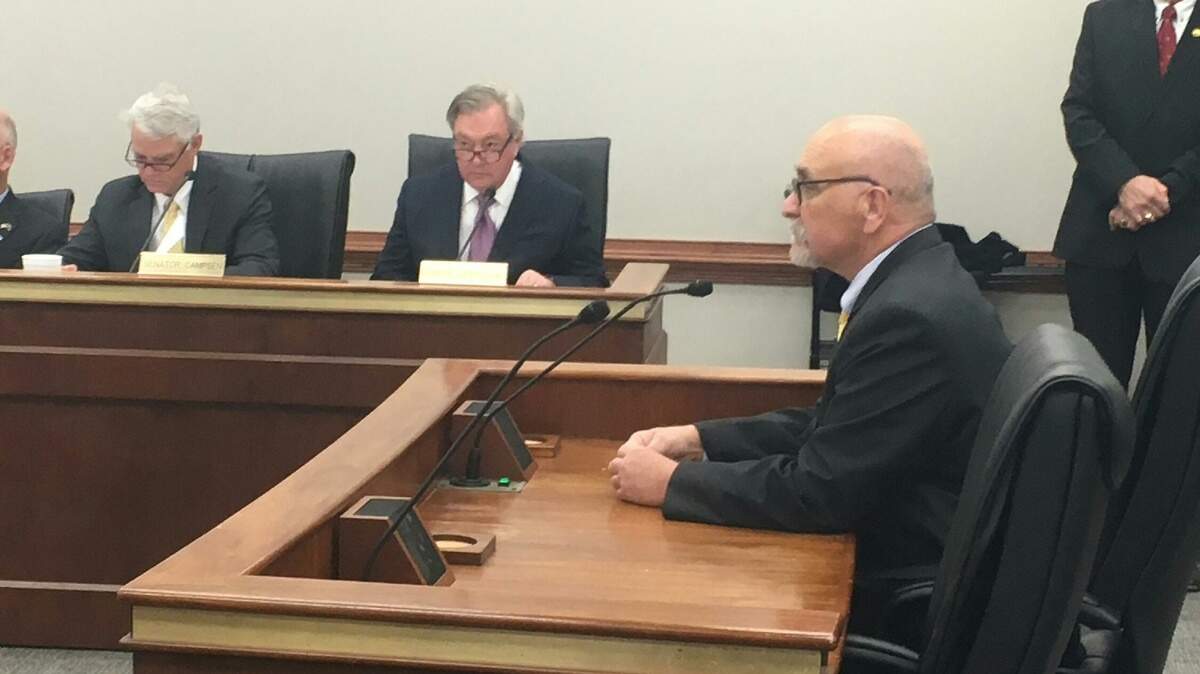
A sharp-elbowed fight over a state lawmaker nominated to lead a state agency while still serving in the S.C. State House is leading some state senators to call for a freeze on legislators taking public jobs.
State Sens. Dick Harpootlian, D-Richland, and Thomas McElveen, D-Sumter, are proposing a bill they say would stop the “revolving door” of lawmakers taking some state jobs as soon as they leave office. The bill would prevent lawmakers or their immediate family members from applying for any position that requires Senate confirmation, including the directors of state agencies. It would mandate a “cooling off” period of one-year before an ex-legislator can move back into a high-paying public job.
“If you want to head DHEC (the state’s health and environmental agency), don’t go into the Legislature,” Harpootlian said.
They introduced the bill Wednesday after the two senators spent many weeks opposing the nomination of former state Rep. Mike Pitts to head the S.C. Conservation Bank. Pitts ultimately withdrew his name from consideration on Monday after contentious nomination hearings that questioned Pitts’ qualifications and how he had sought the job while still a member of the S.C. House.
“During the confirmation process we just went through, it raised a lot of questions, and it just looks improper,” McElveen said.
Gov. Henry McMaster told reporters Wednesday at the State House he would sign the bill if it passes.
“If the people of this state lose confidence in those who make the laws, that confidence is hard to get back,” he said. “Where you have people who vote for state agencies, for their budgets, and who immediately take jobs with those agencies, it raises questions that need to be answered.”
McElveen compared the bill to the similar waiting period for lawmakers to become lobbyists, whose job is to influence legislators’ decisions, or state judges, who are elected by state legislators. That waiting period was put in place to prevent, for example, legislators casting votes for their legislative colleagues who also were judge candidates, which created an unfair advantage for them.
“That was more aggravating,” said longtime S.C. government watchdog John Crangle, citing a particularly galling case. “(Then-Democratic Spartanburg Rep.) Tee Ferguson was elected a circuit court judge in January 1990 and was indicted for bribery and cocaine charges in March of the next year.”
Ferguson ended up serving two years of a 33-month prison sentence.
The sponsors want to limit the legislation to high-level positions because they want other state employees to be able to contribute to the Legislature.
“We have some people who come from law enforcement, who come from the classroom,” McElveen said. “There’s a lot of talent there, and I don’t think those raise eyebrows.”
Pitts isn’t the only lawmaker to try to move from the State House to a state agency. In 2014, longtime S.C. Senate leader Glenn McConnell, R-Charleston, stepped down as lieutenant governor to take a job as president of his alma mater, the College of Charleston. McConnell stepped down from the post last year.
In 2012, retiring state Rep. Jim Harrison, R-Richland, was hired as state code commissioner by a four-person panel that included three of Harrison’s legislative colleagues.
“It’s not a job you post,” then-Sen. Larry Martin, R-Pickens, and a member of the panel, said after the hire.
Harrison was convicted in a public corruption trial last year and received an 18-month prison sentence.
Earlier this year, former Rep. James Smith, D-Richland, took a $140,000-a-year job working with veterans at the University of South Carolina after losing a bid to become governor.
Lawmakers also can add to their state retirement by taking another job from the state.
Until 2012, the General Assembly operated its own retirement fund. Legislators elected before 2012 are still covered by that system, while members elected since then are part of the same retirement fund as other state employees.
Legislators who were elected before the change who later take state jobs are eligible for retirement pay from the two systems. And, as an added bonus, they can use their years of service as a legislator to count toward their service as a state employee, increasing the amount of money they will receive once they retire from the state system, according to the S.C. Public Employee Benefit Authority.
Authority spokesperson Heather Young said any break in service wouldn’t affect eligibility for benefits. Any members who return to state-covered employment can continue to add to their prior service.
This story was originally published March 7, 2019 at 10:11 AM.
.jpg)