South Carolina’s public health laboratory, epicenter for the state’s scientific, medical and environmental testing operations, is one of the oldest in the nation. And it shows.
Off-white paint peels from the walls, speckled drop ceiling panels are stained or missing in places, and years of accumulated dirt and grime discolor the tile floors.
A makeshift “Caution” sign sticks to the wall near a heap of gray absorbent pads haphazardly arranged in the corner of one of the building’s stairwells where water sometimes leaks through the wall and slickens the steps.
The leak is not caused by a faulty roof — although that also has been an issue — but due to the wall slowly separating from the rest of the building, the lab’s logistics director explained. The Department of Administration comes out periodically to caulk the widening gap, he said.
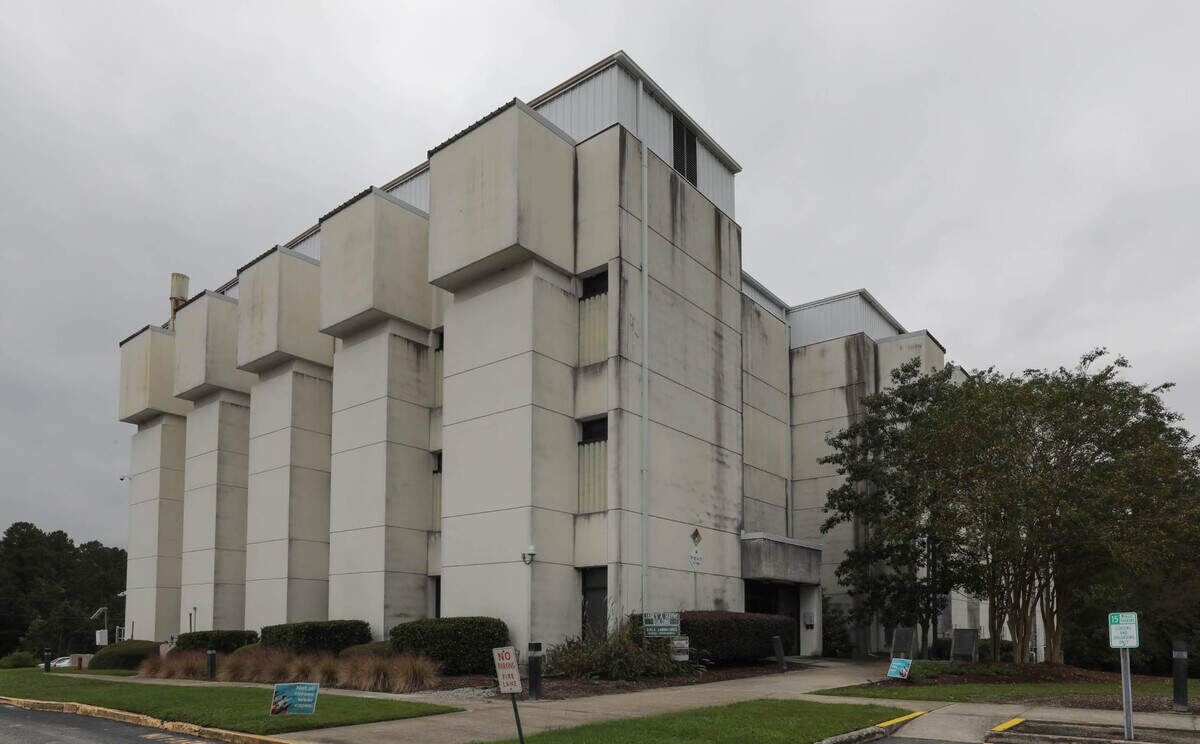
Built between 1976 and 1979, the public health laboratory, located in a state government office park off of Parklane Road in Columbia, stands in stark contrast to the modern, attractive Department of Archives and History building just down the road.
It houses South Carolina’s public health and environmental laboratories, which serve as the state’s backbone for disease prevention, control and surveillance, and environmental health and protection.
The public health laboratory provides specialized testing for diseases like HIV, tuberculosis and rabies, congenital disorders in newborns and foodborne illnesses. Its scientists also test for any potential agents of biological terrorism or chemical terrorism and are prepared to assist in any public health emergency, such as the COVID-19 pandemic.
The environmental laboratory, located on the building’s third floor, performs hundreds of thousands of tests each year on environmental contaminants found in drinking water, air and the state’s rivers, lakes and streams.
The boxy gray lab building, which one official likened to a large HVAC unit, is well beyond its useful life and in desperate need of replacement, state health officials said. It not only doesn’t look the part of the state’s most important disease control and prevention laboratory, it’s reaching a point where it can barely function as such.
The Department of Health and Environmental Control has been looking into replacing the building since 2016, but only prioritized the project recently after COVID-19 laid bare its shortcomings and exacerbated them.
The agency requested money for a new lab in its 2021 budget proposal and is seeking the release of roughly $105 million in federal COVID-19 relief dollars to supplement its construction.
“The pandemic has brought a kind of awareness that wasn’t there,” laboratory director Nicolas Epie said. “Because of this now, we see more and the public understands more the need and the role of a public health lab.”
South Carolina’s health department has received permission to use federal aid to develop a blueprint for the lab building, but is waiting on the approval of additional money for construction.
Once approved and designed, the construction process is expected to last about five years.
“The new building will allow us to perform the mission we already have more effectively, but will not require more staff nor increase operating costs,” he said. “It may in fact reduce operating costs by being more efficient and reducing the need to make costly repairs.”
The DHEC lab was built between 1976-79. The agency has since outgrown the building and the building is deteriorating as water seeps into the structure. Tracy Glantz tglantz@thestate.com
Aging systems, lack of space plague public health lab
The public health laboratory was cutting edge when it was built in the 1970s, but it’s unsuited to deal with the ever-growing demands of 21st century technologies and equipment.
The facility’s aging heating, cooling and electrical systems have undergone repeated repairs and modifications in recent years, and its outdated laboratories weren’t designed with modern scientific techniques and safety protocols in mind.
Space constraints also pose a major impediment.
The 90,500-square-foot building is only about 65% the size it needs to be to accommodate all necessary staff and equipment and its layout and design make additional renovation impractical, officials said.
A recent tour of the three-story facility offered a glaring illustration of the lab’s cramped quarters.
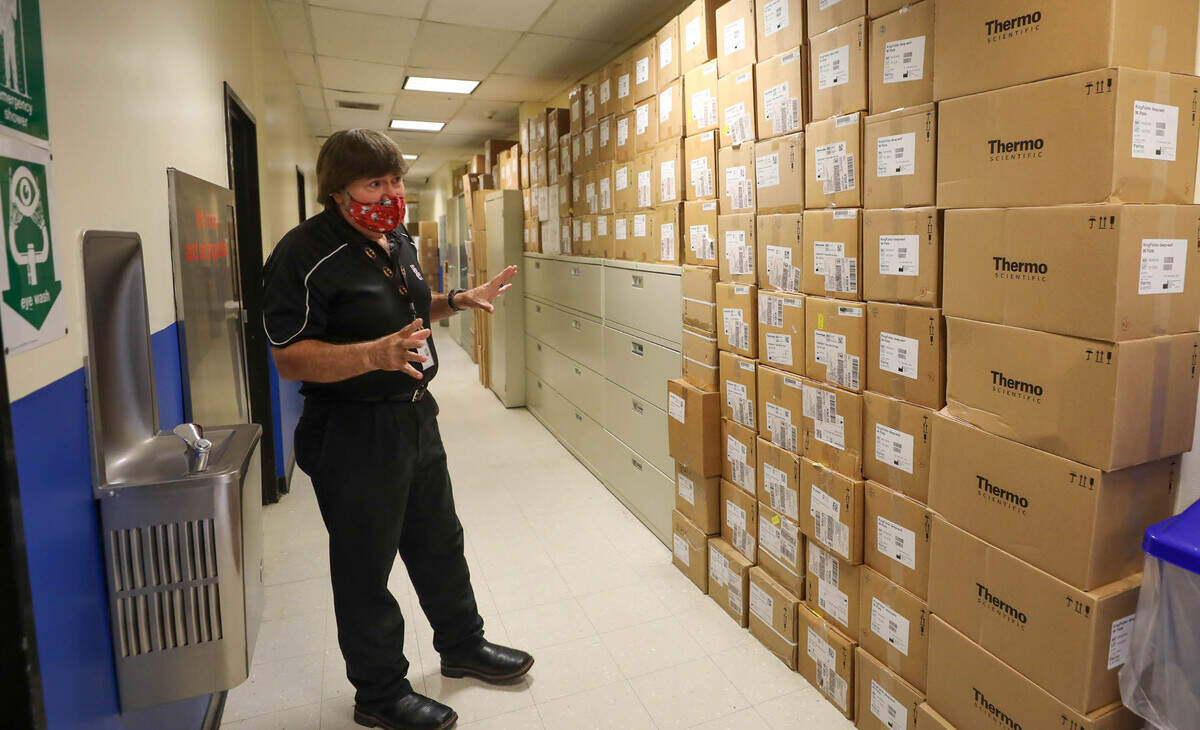
Filing cabinets, lab instruments and cardboard boxes full of paperwork and supplies stacked as many as six or seven high lined the narrow hallways. Even flasks of sterile water, which normally would be kept in the lab, were stored outside in the hall.
“Is that OK for the fire marshal?” said Epie, sidestepping a series of hallway obstacles to show visitors around. “We have no other choice.”
To conserve space, multiple workers share areas that were designed for a single person and custodial closets and bathrooms have been converted to tiny offices or storage space for scientific instruments. Workers must move sensitive lab devices in and out of testing areas as needed, wasting time and risking damage to the expensive items in the process.
“We are near maximum capacity,” Epie said. “It’s like you have a car driving toward a cliff. We are close. You gotta stop sometime.”
Stretched to its physical capacity by the pandemic, the lab’s lone training room has been converted into a coronavirus data entry area and the technicians and scientists hired to handle COVID-19 testing and sequencing are left with scant space to work.
When coronavirus cases surge, the lab has had to suspend virtually all of its routine testing or farm it out to the federal government, because it lacks the space, resources and personnel to handle the increased workload, officials said.
All of the hallways in the DHEC lab are crowded with storage of files and testing materials. Logistic division director David Rivers gives a tour of the aged building. The DHEC lab was built between 1976-79. Tracy Glantz tglantz@thestate.com
System failures cause testing delays, excess costs
Despite its physical and systems limitations, the public health laboratory remains “very functional,” and still meets all regulatory requirements, its director said.
It’s only a matter of time, however, before that could change. The building’s ventilation and water systems have failed on multiple occasions, forcing work stoppages to protect staff and the nearby community from potential exposures to dangerous chemicals and biologics, DHEC officials said.
The lab also has had a number of close calls on account of cooling issues, with more problems anticipated in the future as the systems continue to age.
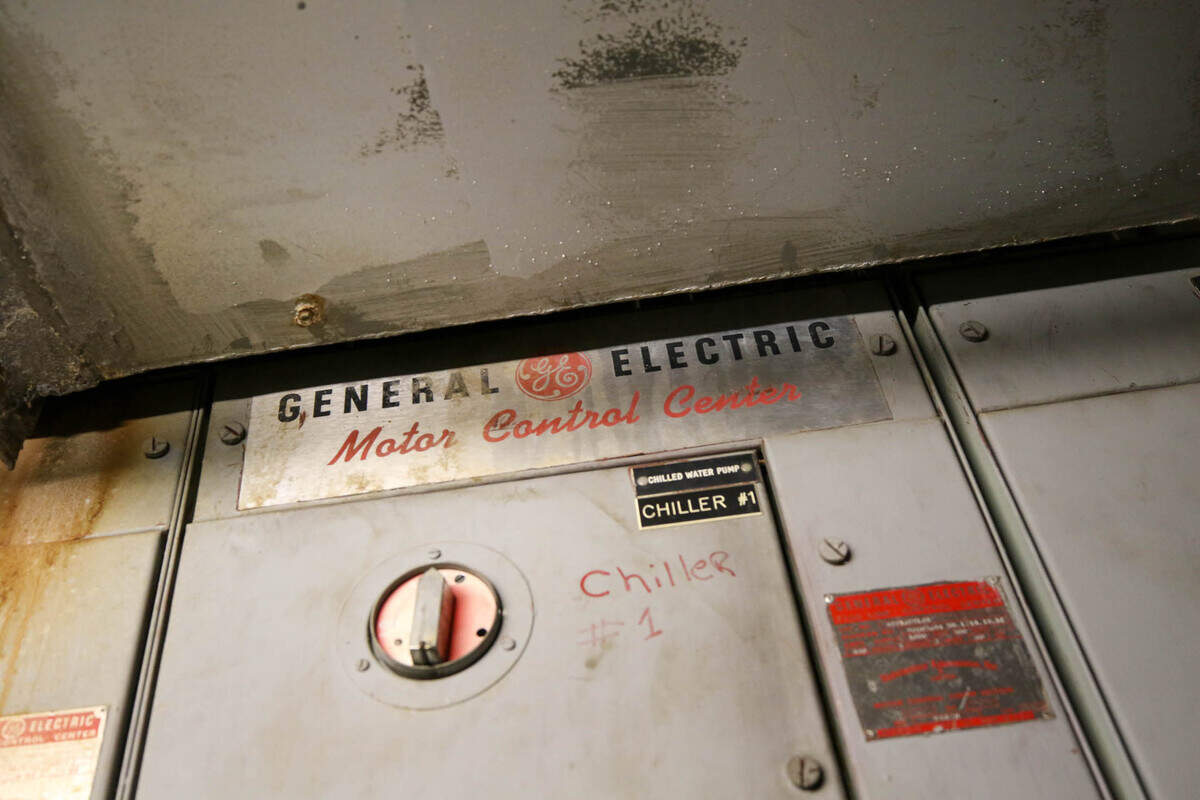
Two HVAC chillers were installed for redundancy when the facility was built more than 40 years ago, but today both are needed at 100% capacity just to cool the building, said David Rivers, the lab’s logistics director. Additional point-of-use coolers have been added to keep the lab’s aging boilers at the right threshold and officials said a third chiller will be needed unless the existing ones are replaced with much larger units.
Multiple times over the summer, all laboratory testing had to be halted and most administrative staff sent home after temperatures reached extreme levels due to chiller failures. The shutdowns resulted in testing delays for numerous samples and forced officials to drive or fly specimens to the Tennessee state lab for processing.
High temperatures in the building also caused the lab’s automated tuberculosis testing equipment to malfunction and return false positive results at one point. To resolve the issue, lab workers were forced to retest each sample manually to detect which ones were truly positive. The tedious, labor-intensive process wasted time, frustrated staff and delayed results, Epie said.
On another occasion, a walk-in freezer used to store newborn screening specimens failed. The problem was discovered in time to save the samples, the lab director said, but all of them had to be moved to another storage freezer.
Due to the repeated chiller failures, the state has had to rent portable chillers to help cool the building at a rate of roughly $40,000 per month, officials said.
It’s also spending $500,000 per year to subcontract analyses of federally-mandated drinking water tests to commercial laboratories because it lacks the capacity to do the work in house, according to a funding proposal DHEC submitted for a new lab.
The DHEC lab was built between 1976-79. The agency has since outgrown the building and the building is deteriorating as water seeps into the structure. The building was built to have one chilling unit and one for a back-up. It currently needs both chillers and supplemental units in each lab to offset the heat produced by testing equipment. Tracy Glantz tglantz@thestate.com
New lab will be larger, more secure
At nearly 140,000 square feet, the new public health laboratory DHEC is proposing would be more than 50% larger than the current lab and able to comfortably house its roughly 160 employees, officials said.
In addition to having modern heating and cooling systems, the building’s lab spaces would be outfitted to accommodate advanced molecular methods and instrumentation, and have the capacity for expanded testing.
The new lab’s security system also will be upgraded over the current facility, which was designed prior to the Sept. 11 terrorist attacks, and thus lacks some of the security mechanisms common in state labs that handle testing of potential agents of biological and chemical terrorism.
Building the new facility would vastly improve the state’s capacity to perform COVID-19 testing and genomic sequencing, and is critical to ensuring South Carolina can meet the challenge of managing the next pandemic, environmental crisis or public health emergency, health officials said.
Failure to fund the lab, they warn, will only lead to further system failures and data delays.
“The lab is our only safety mechanism for the state,” Epie said. “We don’t have to wait for a pandemic to be declared to think about what importance we tie to the public health lab.”
This story was originally published October 17, 2021 at 5:00 AM.
Zak Koeske is a projects reporter for The State. He previously covered state government and politics for the paper. Before joining The State, Zak covered education, government and policing issues in the Chicago area. He’s also written for publications in his native Pittsburgh and the New York/New Jersey area.
Get one year of unlimited digital access for $159.99