
McMaster OKs SC House, Senate maps; controversial congressional plan pushed to January

Gov. Henry McMaster on Friday signed off on South Carolina’s redrawn state voting maps, a day after House lawmakers adopted them in a 75-27 vote.
The state’s new House and Senate districts, which were adjusted to account for substantial population growth over the past decade, will have major implications for voters across the state for the next 10 years.
Both maps were released in early November, following months of public listening sessions held throughout the state.
“The General Assembly put a lot of work into these maps and the governor’s pleased with the final product,” McMaster’s spokesman Brian Symmes said Friday.
Lawmakers have caught flak over both maps, but the House map in particular has been criticized for reducing the number of competitive districts in the state, bending over backward to protect incumbents and shifting South Carolina’s political balance further in favor of Republicans.
The House map merges the Richland County districts represented by Democratic Reps. Wendy Brawley and Jermaine Johnson, resulting in the loss of a Richland representative in the State House, and the Senate map moves Columbia Sen. Dick Harpootlian’s district to Charleston.
The implementation of one or both maps could be delayed by a court challenge, which is anticipated in the coming days, but legislative leaders have expressed confidence the new lines will hold up under legal scrutiny and don’t anticipate having to delay the March candidate filing period.
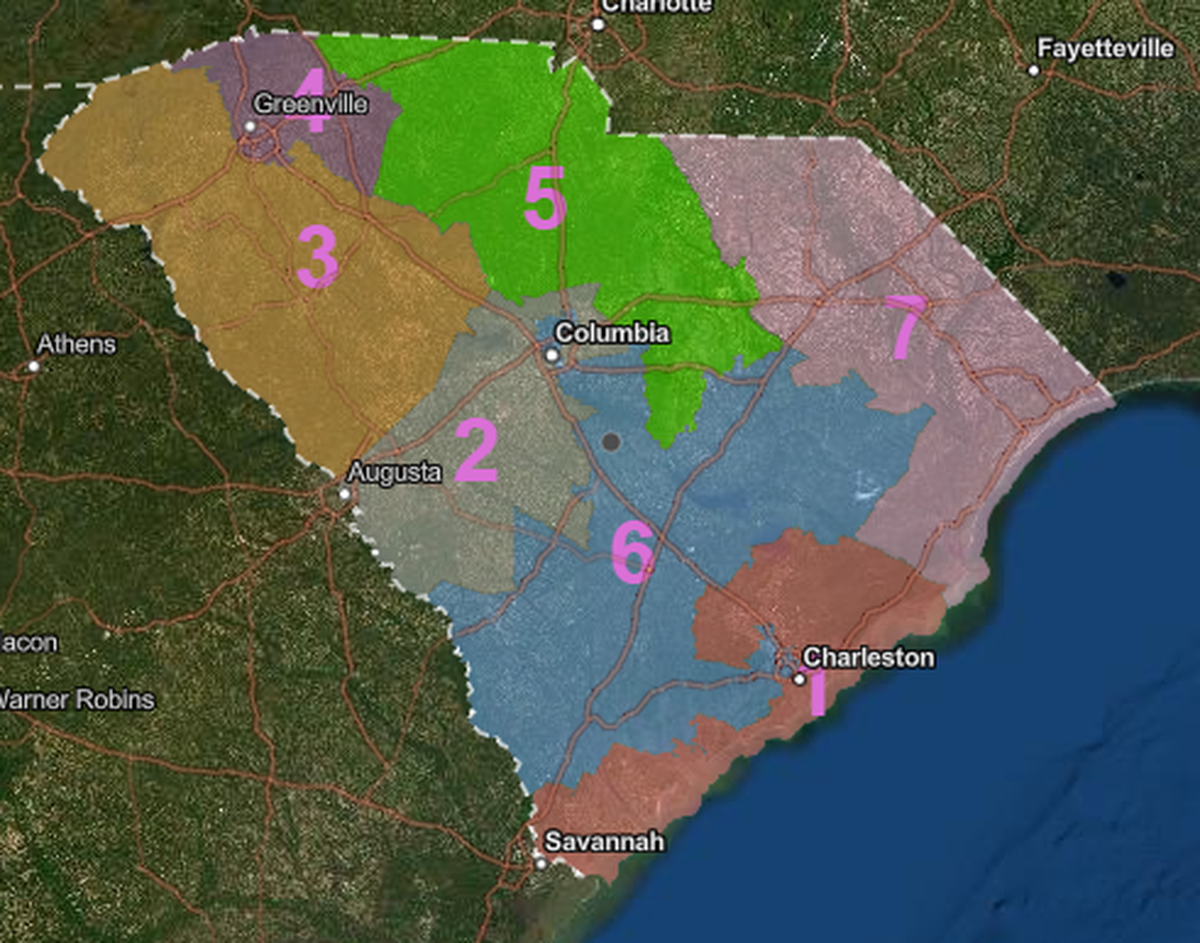
SC congressional map delayed
Lawmakers also had hoped to finalize congressional redistricting by year’s end, but postponed their plans to redraw the state’s seven U.S. House districts after the Senate staff’s plan was met with pushback upon its release last month.
The Senate redistricting committee staff plan, released Nov. 23, came under fire from Democrats and good government groups for transforming South Carolina’s lone competitive House district, represented by Nancy Mace, R-Daniel Island, into a reliably red seat.
If adopted, the congressional proposal will greatly reduce Democrats’ likelihood of holding more than a single U.S. House seat and make the outcome of every South Carolina congressional race all but decided before the general election.
Former U.S. Rep Joe Cunningham, who represented the 1st District prior to Mace and is now running for governor, panned the plan at a public hearing late last month and accused the committee of using a “partisan hack” in Washington to draw it.
“If gerrymandering was an art, this proposed plan would be a Picasso,” he told them. “Y’all have taken it to the nth degree.”
Democrats on the committee also criticized the map, which they said staff hadn’t consulted them about in advance of its creation.
Harpootlian slammed the map-drawing process after being informed mid-hearing that a national Republican group had contacted the committee with suggestions.
“They had more of a say of the design than I did,” he said. “And I’m on this committee.”
Harpootlian, the only senator drawn into an incumbent’s district in the recently approved state Senate plan, said his criticism of the congressional map was not rooted in his dissatisfaction with the committee’s relocation of his Senate district.
“This is not about me coming back,” he said. “It’s about the people of the state having representatives they pick. Not that the congressmen or senators pick. It’s not the other way around. We don’t pick our constituents — we shouldn’t — our constituents should pick us. And that’s what’s wrong with this plan.”
Senate Judiciary Chairman Luke Rankin, R-Horry, said Monday that staff would need time to rework the U.S. House map due to “great concern about the congressional plan among all parties.”
The public will have an opportunity to comment on the updated proposal once it’s released, he said.
“We’ve got miles to go before we get there on the congressional plan,” Rankin said.
This story was originally published December 11, 2021 at 5:00 AM.