
Statue of pioneering Black educator Mary McLeod Bethune stops in SC en route to DC
A striking marble statue of trailblazing educator and civil rights activist Mary McLeod Bethune stopped in her Sumter County hometown Friday on its way to Washington, D.C.
The 11-foot, 3-ton statute of Bethune, the daughter of two freed slaves who went on to become one of the most accomplished and influential women of her time, will be installed early next year in the U.S. Capitol’s National Statuary Hall collection, where she’ll become the first Black person so honored.
Bethune was born and raised in Mayesville, S.C., but spent much of her adult life in Florida, which in 2018 chose to commemorate her contributions to the state by commissioning a statue to be placed in the national hall, where each state is invited to contribute statues of two prominent citizens for permanent display.
The statue’s brief stopover in Mayesville, where it was displayed Friday at a learning center and art gallery that bears Bethune’s name, was coordinated by Florida Congresswoman Kathy Castor and U.S. House Majority Whip Jim Clyburn, D-Columbia.
“As she makes her way to her place of honor in the United States Capitol, it is fitting that Dr. Bethune be honored in her birthplace of Mayesville, South Carolina,” Castor said in a statement. “This homecoming will give South Carolinians an opportunity to admire the beauty of the historic sculpture and reflect upon the magnificence of her life.”
Clyburn, a Sumter native who as South Carolina’s human affairs commissioner in the 1970s spearheaded an effort to get Bethune’s portrait hung in the State House, said he looked forward to welcoming her statue to the halls of Congress.
“As a young child, my mother revered Dr. Bethune and had me learn all that I could about her,” he said. “It was her roots in South Carolina that fueled her passion for education and enabled her to serve as a counselor to U.S. presidents and a tremendous advocate for the Black community.”
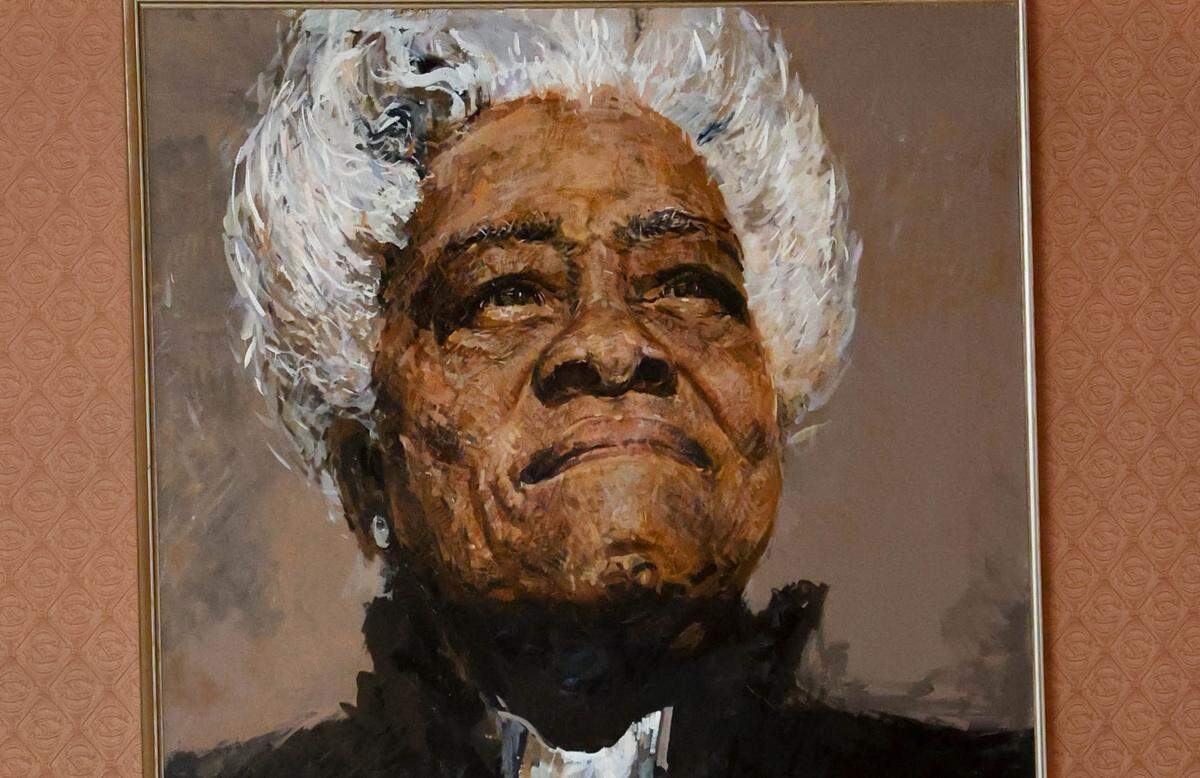
Bethune, born Mary Jane McLeod in 1875, developed a love of learning at a young age.
She attended Trinity Mission School, a one-room school for Black children in Mayesville, and later went on to Scotia Seminary and what is now the Moody Bible Institute in Chicago.
After college, she taught briefly in Sumter County and Augusta, Georgia, before moving to Savannah and later Florida with her husband, Albertus Bethune.
In Florida, she started a school for girls in Daytona Beach that went on to become Bethune-Cookman University and around the same time opened Daytona’s first Black hospital.
Bethune also became involved in advocacy work, leading Black suffrage efforts, working to improve opportunities for Black women and writing prolifically about issues affecting Black Americans.
She served as president of the Florida chapter of the National Association of Colored Women and the Southeastern Federation of Colored Women’s Clubs and in 1924 was elected national president of the National Association of Colored Women.
As her reputation grew, Bethune caught the attention of multiple U.S. presidents and earned invitations to national conferences and appointments to prestigious posts in Washington.
She served in Franklin D. Roosevelt’s administration as director of the National Youth Administration’s Division of Negro Affairs — the first Black woman tapped to lead a federal agency division — and formed a coalition of leaders from Black organizations that advised Roosevelt and came to be called the Black Cabinet.
Bethune also organized the first officer candidate training schools for Black women who wanted to join the military, co-founded the United Negro College Fund, which to this day funds college scholarships for Black students, and was the only Black female member of the U.S. delegation that created the United Nations in 1945.
Since her death in 1955, Bethune has been inducted into the National Women’s Hall of Fame, honored with a memorial statue in Washington and depicted on both a U.S. postage stamp and a commemorative license plate in South Carolina, among many other honors.
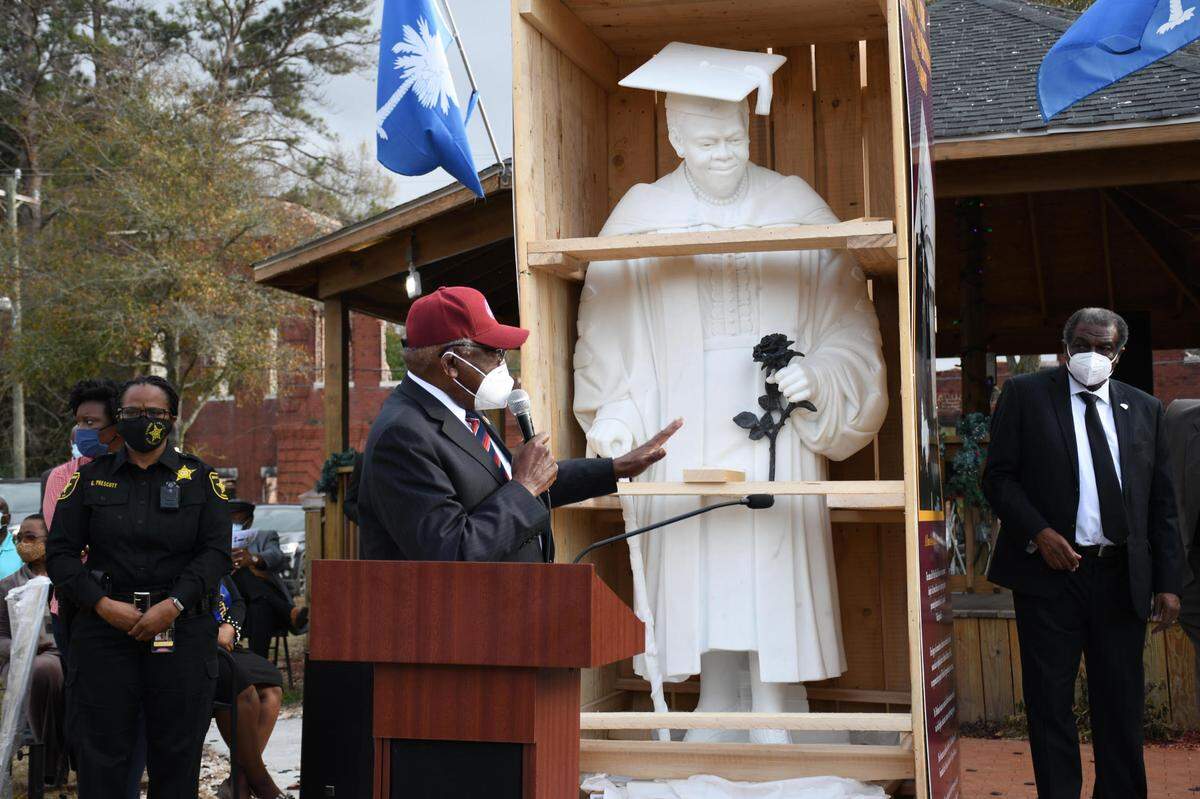
Florida honors Mary McLeod Bethune with statue
In 2016, the Florida Legislature initiated the process of removing the statue of Confederate General Edmund Kirby Smith that had represented the state in the National Statuary Hall since 1922.
Two years later, lawmakers opted to replace the Smith statue with one of Bethune, who beat out Florida journalist and author Marjory Stoneman Douglas and Publix founder George Washington Jenkins for the honor.
When Bethune’s statue is installed in February, it will mark the first time any state has honored a Black person in the National Statuary Hall.
But it won’t be the last.
Virginia is in the process of replacing Confederate General Robert E. Lee’s statue with one of civil rights leader Barbara Johns, and Arkansas plans to swap out its statue of a former governor who defended white supremacy with journalist and civil rights icon Daisy Bates.
“It started with Bethune,” Clyburn said. “Virginia and Arkansas are going to follow suit and put a Black person to represent them. It’s very important.”
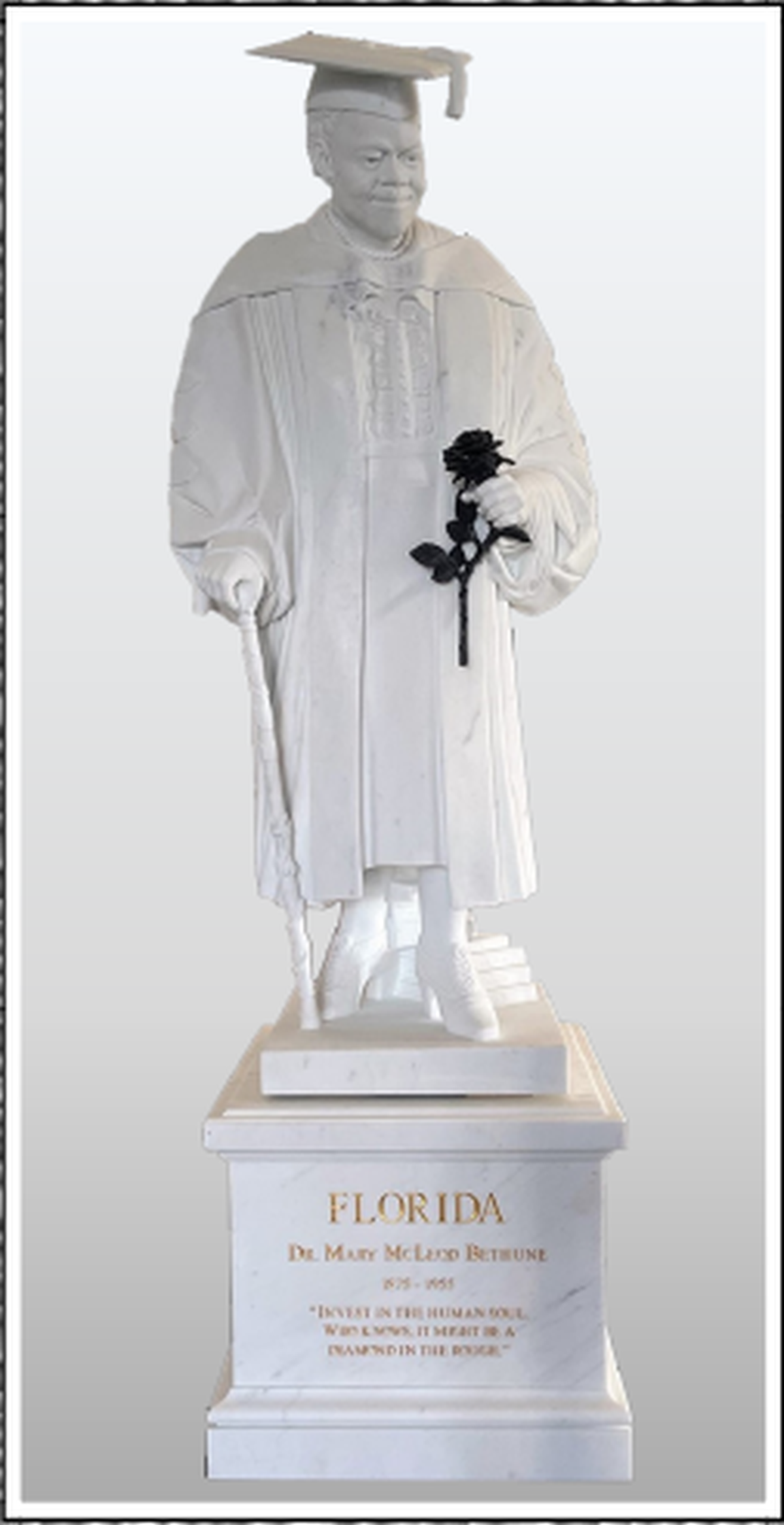
Bethune’s statue, carved by Fort Lauderdale-based sculptor Nilda Comas, is made of white marble excavated from the Italian quarry used by famed Renaissance-era artist Michelangelo.
It depicts Bethune with a cap and gown to signify her commitment to education, gripping her trademark cane — which she used not for support, but because she said it gave her “swank” — and holding a black rose because Bethune often referred to her students as her “black roses.”
Mayesville Mayor Jereleen Hollimon-Miller, Bethune’s great-grandniece, said she was overjoyed that the statue would stop in her town of about 700 people on its way to the U.S. Capitol.
“As one of Dr. Mary McLeod Bethune’s family descendants and mayor of her birthplace, seeing her statue move from her college, Bethune-Cookman University, with a stop at her birthplace, is truly an inspiration of God Himself,” she said in a statement. “This is so spiritual and befitting for God to honor her wishes to one day return home on her way to the nation’s capital where she will rest throughout eternity.”
Reporter Joseph Bustos contributed to this article.
This story was originally published December 17, 2021 at 1:33 PM.