
Most in SC would pay hundreds more initially under state income tax overhaul, report says
A proposed overhaul of South Carolina’s income tax structure to establish a flat tax would initially require nearly 60 percent of South Carolinians to pay more next year. Much of that in increase would fall on middle-income taxpayers, many of whom would pay nearly $600 more.
That’s according to an analysis by the state Revenue and Fiscal Affairs Office, an arm of the South Carolina state government that conducts financial and statistical analysis at the request of the governor, legislature and local governments.
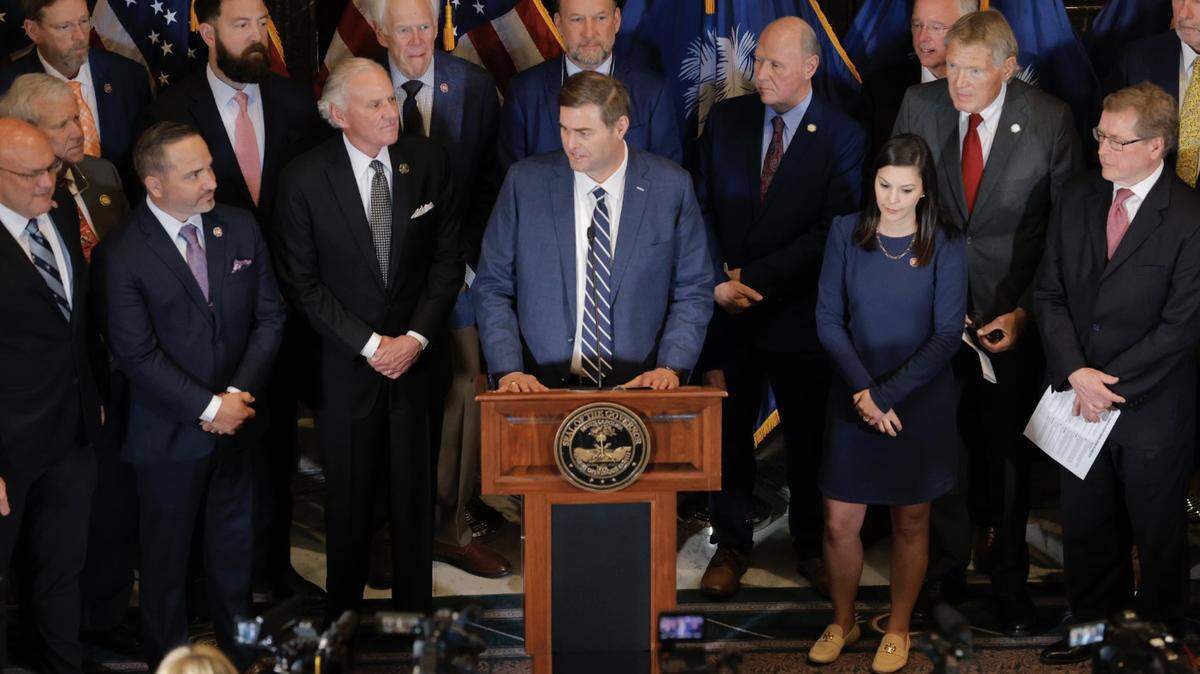
Backers of the plan, which was introduced with much fanfare and is working its way through the House of Representative’s Ways and Means Committee, have called it a more fair policy and a “conservative revolution.” They say it would eventually lower income taxes for almost all residents.
But state leaders can’t say when that would be.
“This bill represents a significant shift from our current tax structure,” according to the report from the Revenue and Fiscal Affairs Office. The analysis was based on 2022 tax returns, the most recent year for which data was available. But the report cautioned, “there may be unforeseen issues due to taxpayer decisions resulting from this new tax structure.”
Under the current system, a South Carolinian’s taxable income is determined by applying state deductions and adjustments to a resident’s federal adjusted gross income, which is income after all federal deductions and adjustments have been applied. Residents are then taxed at one of three levels, 0%, 3% or 6.2%, depending on their income level.
Under the new plan moving through the legislature, the state would no longer factor federal deductions and adjustments into taxable income.
Instead, in 2026 all residents would pay a flat tax rate of 3.99% on their adjusted gross income after state deductions had been applied. That flat tax rate is set to eventually drop to 2.49% over an undetermined period of several years. The rate would drop as long as certain goals for the state’s tax revenue are met.
“We’re going to see a significant tax increase until we meet those triggers,” said state Rep. Sarita Edgerton, R-Spartanburg. “I’m going see almost an $800 increase for my family.”
Supporters of the bill say that it closes loopholes that allow more than 40% of South Carolinians to avoid paying taxes while also ensuring that a minority of taxpayers don’t pay more than they should.
“The beauty of the flat tax is that those who earn less income will pay less taxes, those who earn more income will pay more taxes,” said House Speaker Murrell Smith, R-Sumter, during an interview with TV station WACH Fox over the weekend.
Who wins, who loses?
According to the Revenue and Fiscal Affairs Office, 59.4% of taxpayers will have a higher tax liability next year. About a fifth, or 19.4%, of filers will have lower tax liabilities on their returns while 21.2% will not see any change.
In 2026, middle income South Carolinians will bear the brunt of that increase. The the majority of residents who make between $20,001 and $150,000, representing nearly two thirds of total taxpayers, should expect an increase in their tax liability as the state shifts to a 3.99% flat tax next year.
However, determining the impact on any one tax filer is difficult, because even within income ranges the impact on an individual taxpayer “varies widely... depending on the specific tax situation of each tax filer,” the Revenue and Fiscal Affairs Office report said.
But overall, for the largest group of South Carolina filers, those making between $50,001 and $75,000, 89.4% will owe more on their 2026 tax bill. On average, they will owe an additional $596, according to the Revenue and Fiscal Affairs Office.
The average South Carolina household falls squarely in the middle of this bracket, with an income of $67,804, according to data from the 2020 U.S. Census.
“There are winners and losers in every tax system,” Smith said in the WACH Fox interview.
The winners for 2026 are South Carolinians making $20,000 and under and those with an income over $200,000.
Beginning in 2026, low income South Carolinians will benefit from a new program called South Carolina Income Adjusted Deduction. This new deduction will be available for those taxpayers to claim instead of federal deductions and adjustments, which will no longer be factored into income taxed by the state.
As a percentage, most taxpayers with incomes between $300,001 and $500,000 benefit from the new plan, with more than 90% enjoying a decrease in their 2026 tax liability. But in terms of dollars, the state’s highest earners, those with a federal adjusted gross income over $1 million, stand to gain the most, with 81.5% of those filers saving an estimated $30,763 in 2026.
Part of the goal with the new tax law, Smith told WACH Fox, was to attract more corporate headquarters and executives to the state.
Long term gains?
As the flat tax rate is reduced beginning in 2027, the Revenue and Fiscal Affairs Office expects that more taxpayers will see lower tax liability. The reductions will continue until the state reaches its target flat tax of 2.49%.
But there does not appear to be a fixed timetable for when the state will hit its 2.49% target. That’s partly because reducing the income tax rate will be pegged to the goal of growing the state’s income tax collection each year by 5%.
State Rep. Brandon Newton, R-Lancaster, who headed the panel that first debated the bill, said that it could take six years to get down to the flat rate of 2.49%.
It also means that if the state’s growth does not continue as expected, the flat tax rate will not fall.
When the state reaches the 2.49% rate, the Revenue and Fiscal Affairs Office expects that 77.2% of taxpayers will be paying less than they did under the 3.99% flat tax, with the rest seeing no change in tax liability from 2025.
But that doesn’t necessarily mean that those taxpayers will be paying less than they did in 2025, and that impact is felt most strongly among the lower income brackets.
Roughly 79% of earners making between $20,001 to $30,000 will see their bills increased by $450 in 2026 under a 3.99% flat tax. Bringing that rate down to 2.49% would only cut their taxes by $220. That means that by the time the flat tax is fully implemented, a majority of taxpayers in that bracket will be paying an average of $250 more than they were in 2025.
In order to reach that tax rate, each year on Feb. 15 the Revenue and Fiscal Affair Office will evaluate financial forecasts to determine whether the tax rate can be reduced.
This story was originally published April 1, 2025 at 1:45 PM.