SC Senate budget locks in teacher raises. What’s different from the House plan?
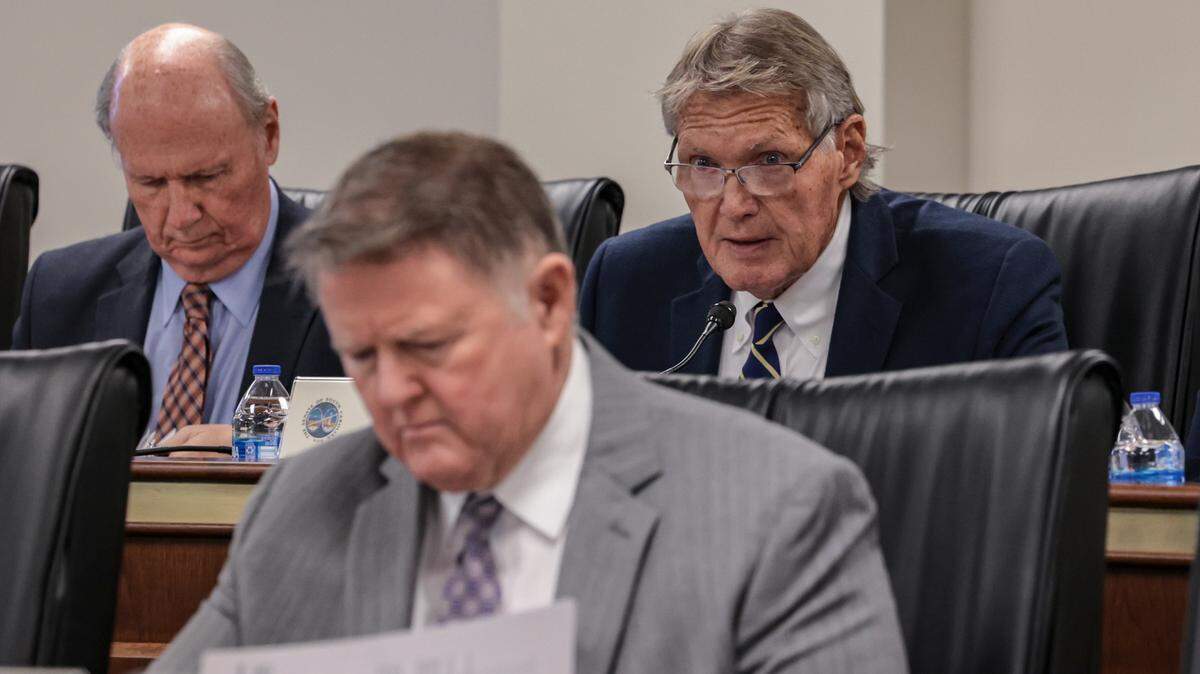
Minimum teacher salaries and how much to increase state employee salaries are now locked in, while a question remains on whether premiums will increase for those on the state health plan.
With the Senate on Wednesday adopting their spending plan for the upcoming fiscal year, potential sticking points already seemed to have been bridged between the two chambers before an expected conference committee, which may complete its work next month.
Both chambers want to bring the starting teacher salary in the state to $48,500 up from $47,000 and reducing the minimum salary schedule from five education levels to four.
State employees would either see a 2% raise or be brought to a new pay range minimum depending on their job classification. The $66.5 million for pay raises was proposed after a pay study by the Department of Administration.
Both budgets include $150 million toward a facility to address brain health, and $60.4 million in additional annual money for the state’s Medicaid program.
And while lawmakers seek to push for a broader income tax reform plan, both budget proposals also cut the state’s highest income tax rate to 6% from 6.2%.
Slight differences remain between the House’s $14.6 billion general fund spending plan and the Senate’s $14.4 billion plan.
How much to put into the state health plan and whether those on the plan will see an increase in their premiums will need to be resolved.
The House put in $89.3 million toward the state health plan, with those on the those on the health plan seeing their health insurance rates go up by $36.76 a month, or roughly $441 a year.
The Senate wants to fully pay for the increased premiums by putting $105.9 million more in annual money toward health insurance.
But the rising costs of health insurance and how to slow it down is a priority for policy makers.
Health insurance premiums for those in the state health plan have been frozen for 12 years.
“At the rate and pace we’re seeing health insurance costs go up is simply not sustainable for us to continue to do that,” Senate President Thomas Alexander said.
For higher education and freezing tuition rates, most schools in the Senate budget got less money than in the House budget, except for Clemson, University of South Carolina in Columbia and MUSC. Those schools received millions more to not raise tuition rates.
The House budget plan also would allow state universities to raise tuition on future students while freezing rates for current in-state students. The Senate plan requires a tuition-rate freeze stay in place.
Some key differences in the budgets
The House also funded $13.2 million for a battery center facility for USC. The Senate only put $1 on the line. The proposed facility would be to develop the workforce for the state’s growing electric vehicle battery industry.
The House put in $13.2 million for the NextGen computing complex and $4.3 million toward the construction of a new life sciences lab at Clemson University. The Senate also pushed for $40 million for a NextGen Computing complex and $1 for a life sciences lab.
For MUSC, the Senate wants to spend $25 million toward a new a college of medicine academic building. But the House wants to spend $6.6 million on a southeastern health consortium, $5.82 million on Lancaster medical center graduate medication program and $13.2 million on campus renewal projects.
A notable difference is how much money to spend on school resource officers.
The Senate put in $21 million in annual money and $8.3 million in one-time money or school safety program to help ensure every school has a police officer on campus. The House only put in $3.7 million to cover raises for current school resource officers.
Senators also put in money for the Department of Public Safety to add 10 more highway patrol officers.
The budget also differs in the Department of Transportation and how much money to spend on upgrades on the state’s aging bridges. The House proposed $200 million. The Senate put in $100 million.
The House also wants to give $50 million to SCDOT for Hurricane Helene costs. The Senate proposed $25 million.
The House also had $9 million for road safety enhancements.
Lawmakers also may be able to get a higher compensation.
The Senate during its budget discussion approved a proviso to increase each lawmakers monthly stipend for in-district expenses from $1,000 to $2,500. The stipend is in addition a lawmaker’s $10,400 salary. It’s a provision the House would need to agree with. State Sen. Shane Martin, R-Spartanburg, said the change is necessary to address the effects of inflation.
Senate Finance Committee Chairman Harvey, R-Cherokee, was against the move.
“I just didn’t personally feel like I needed to do that, but each senator voted their conscience,” Peeler said.” I’m glad they had a public vote on it, and everyone got to have their vote. Everyone had their say.”
The House budget also includes a provision to allow people to use debit cards to purchase lottery tickets. The Senate initially included the language but it was removed because of an objection by state Sen. Brian Adams, R-Berkeley.
Adams also is objecting to permanent legislation to allow debit cards to purchase lottery tickets. Allowing debit cards has been requested by the S.C. Education Lottery to stave off dropping revenues as fewer people carry cash, which is required to play the game. Lottery officials estimate allowing debit cards would bring in $52 million a year.
In 2000 South Carolina banned video poker machines, “because too many people were spending money. Now here we are wanting to open up to where now you can use your debit card to spend more money,” Adams said. “The hypocrisy is killing me.”
House Ways and Means Chairman Bruce Bannister was confident the differences would be worked out.
“I don’t see where we’re going to have the big disagreements,” Bannister said.
Peeler told reporters he doesn’t anticipate any big hiccups going into the expected conference committee next month.
“I’m sure they’ll find something in the House that they don’t agree with, but it’s a good budget, (it) funds core functions of government, has the 6% income tax level that we were working for,” Peeler said. “So overall, it’s a good budget.”
This story was originally published April 24, 2025 at 5:30 AM.