SC income tax cut, money for bridges, cash leftover. What’s in the 2025-26 budget
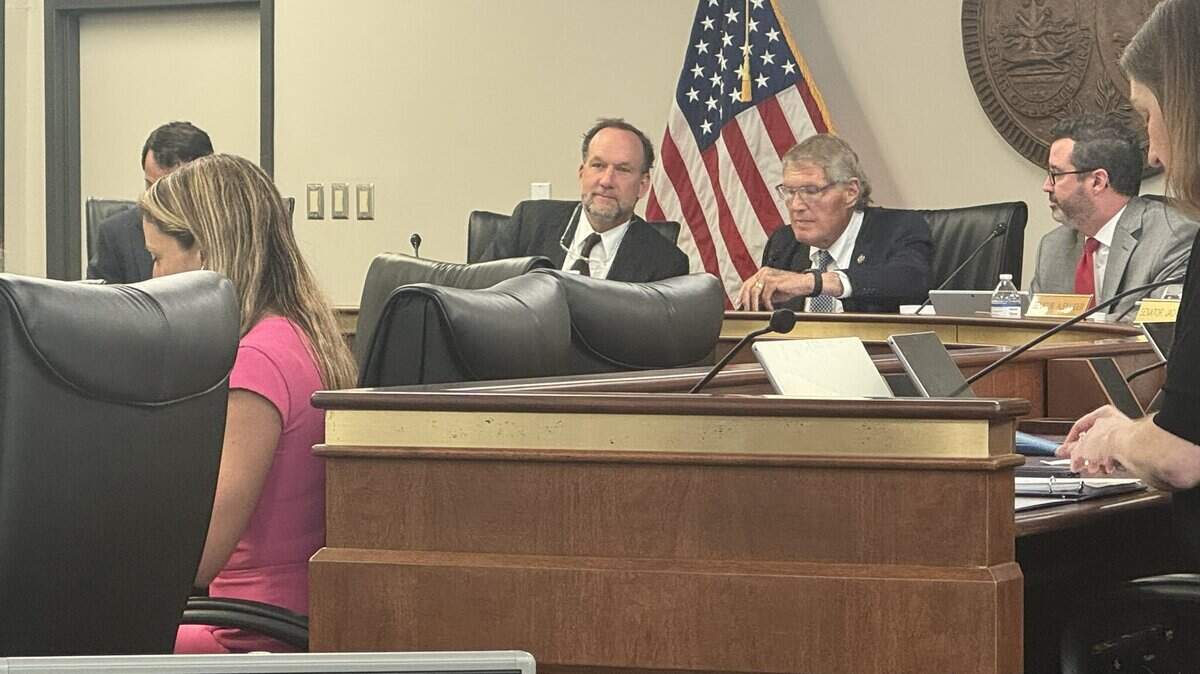
When lawmakers vote on a final spending plan Wednesday for the upcoming fiscal year, they will decide whether to keep $473 million on the table.
After the latest revenue figures were certified by the Board of Economic Advisors, budget writers had about $1 billion more to allocate to help them blend House and Senate plans that had about $150 million in annual spending and $600 million in one-time spending in differences.
Those differences were easily resolved by the budget conference committee and according to budget documents, budget writers left $248 million of annual money on the table and $225 million of one-time money on the table by not appropriating it despite approving a $14.7 billion general fund spending plan.
“South Carolina’s future is very bright, very positive,” said Senate Finance Committee Chairman Harvey Peeler said. “In South Carolina, we are rolling economically. We’re doing very well in South Carolina. You see, that’s an additional billion dollars added onto our budget. We didn’t spend it all.”
The money will now sit in state coffers as the state Senate next year is expected to work on a tax reform proposal already passed by the House and as states prepare for possible cutbacks from the federal government.
“We met the state’s priorities and we have money basically available to us next year already to deal with any issues that come up,” House Ways and Means Chairman Bruce Bannister said. “From a budget standpoint, it gives us a lot of flexibility as we look at tax cuts or the way we’re going to budget.”
Bannister said state agencies have been warned to prepare for federal money going away and the state General Assembly possibly not covering expenses paid for by federal dollars. The U.S. House last week passed a budget bill that includes cuts to federal food assistance program and more stringent work requirements for those on food stamps. That bill now goes to the U.S. Senate.
“They need to prepare for what’s going to happen if those funds go away,” Bannister said. “But there’s always going to be critical needs that we need to meet, especially when if those federal funds stop, there may be things that we want to address. So we have the flexibility and the dollars available to do that.”
The final proposed 2025-26 spending plan that takes effect July 1 reduces the state’s highest marginal income tax rate to 6% from 6.2%.
It also includes:
- $200 million for bridge modernization;
- $60 million more a year for the state’s Medicaid program;
- $35 million for the state Department of Transportation to cover Hurricane Helene expenses;
- $40 million to replenish the Office of Resilience’s disaster relief fund;
$80 million for the Department of Commerce’s Locate SC program, which prepares sites for development;
$80 million on airport enhancements;
$25 million toward a new College of Medicine Academic Building at the Medical University of South Carolina;
$13.2 million toward a battery center facility at the University of South Carolina;
$40 million for a NextGen Computing Complex at Clemson.
Budget writers also allocated $50 million for the state’s kindergarten through 12th grade scholarship program that allows families to use public money to send children to private schools. It’s a program that is expected to be challenged again in court on whether it’s constitutional.
It’s also a budget that includes an $18,000 a year pay increase for lawmakers to help cover the costs of in-district expenses.
Before the General Assembly’s regular session ended for the year, the two chambers agreed on bringing the starting salary teacher salary to $48,500, spending $66 million on state employees raises, freezing health insurance premiums for those on the state health plan, spending enough money to make sure every school has a school resource officer, and spending $150 million on a new brain health center at USC.
For college students, tuition rates for in-state students will stay the same the state’s public universities. The budget conference committee opted to strip out language that would have allowed schools to increase tuition on future in-state students and sent $65 million more a year to the state’s universities to freeze tuition rates.
An easier budget negotiation
This year’s budget conference committee appeared to run smoother than in recent years. During previous budget negotiations, budget watchers would sometimes have to wait into the evening hours to see if a deal could be struck.
But this time around agreements on spending on some large ticket items were agreed to before proposals were finalized by both chambers. A final deal was agreed on by Wednesday afternoon, while the sun was still up.
Budget deliberations were made easier because budget chairmen this year decided not to have legislator pet projects in the budget, commonly referred to as earmarks.
This is the third budget Bannister and Peeler negotiated together.
“We are both aligned in our vision for making South Carolina better, being conservative budgeters, and we are now comfortable working with each other, understanding what each of the House and the Senate and our respective leadership want to see the state do moving forward,” Bannister said.
Bannister said budget talks between House Ways and Means and Senate Finance leadership had been taking place long before the conference committee meetings began with discussions going back to last year. Staff from both committees were talking to each other while the House and Senate budget proposals were being drafted.
“This has been a refreshing exercise for the way we work together, how to reach our common goals for the good of South Carolina,” Peeler said.
This story was originally published May 27, 2025 at 5:00 AM.