
Will lure of federal dollars prompt changes to aid rural health care in SC?
Rules for some non-physicians in health care could change if a $50 billion federal funding program helps South Carolina lawmakers get that legislation over the finish line.
With upcoming Medicaid changes likely reducing revenue for already struggling rural hospitals, $50 billion is on the table for states to help make up the losses. States with policies backed by the Trump administration could receive more money.
Expanded roles for nurse practitioners and physician assistants is one policy federal authorities will consider to be a plus on applications for the funding, according to the grant application announcement.
While state Sen. Tom Davis, R-Beaufort, has long pushed for scope of practice reform, he says the rural health grant has made the changes more urgent. Scope of practice is the services a health care professional is allowed to perform under their license. In South Carolina, the services are determined by the state Board of Medical Examiners.
“It’s become even more important now that, with the Medicaid reforms and a lot of the tightening up of Medicaid that the federal government is imposing, that’s going to put a squeeze on these rural areas, that a lot of them rely upon Medicaid,” Davis said in an interview with The State.
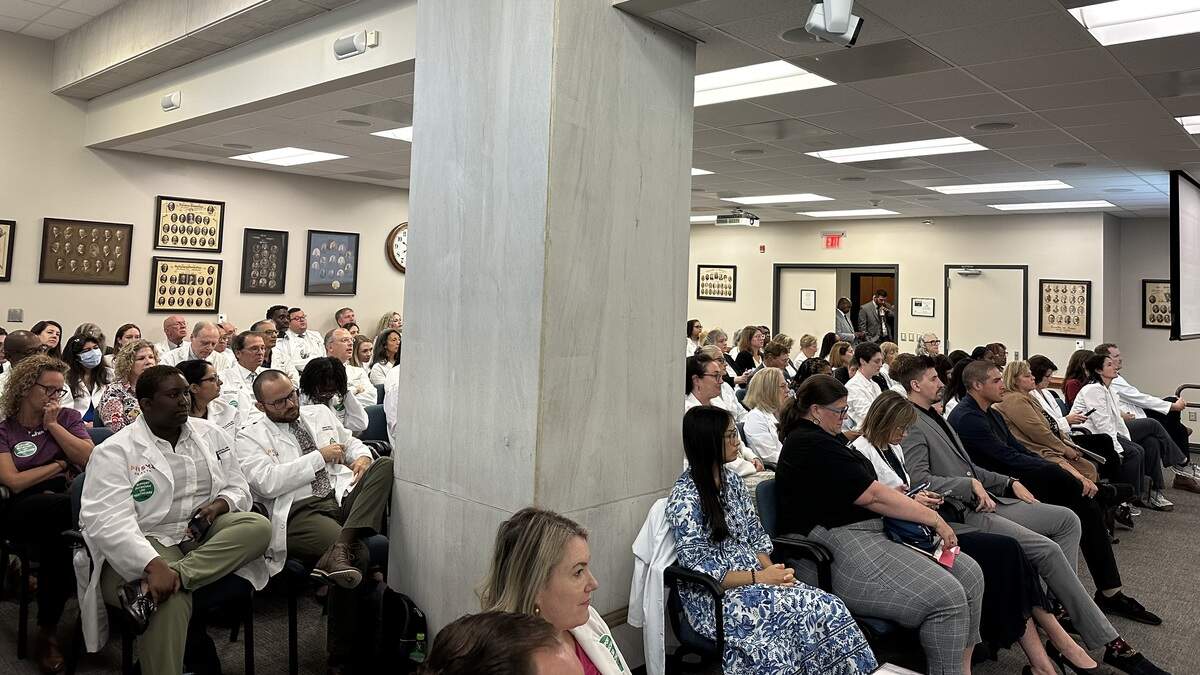
A South Carolina state Senate subcommittee heard arguments on a group of bills intended to expand access to health care, including by removing some supervision requirements for physician assistants and advanced practice registered nurses. Many South Carolina physicians spoke against the proposed legislation, arguing it would diminish the quality of care for residents.
“I’ve been working with these folks for 15 years and watching their training and where their thinking is and where their capabilities are,” said Dr. Marc Bingham, a family physician that worked in Spartanburg from 2001 until the beginning of this year. “And while I would agree that they are smart, intelligent, hard working folks, the training is significantly less for both nurse practitioners and physician assistants than it is for physicians.”
Bingham recently moved to Connecticut, but he traveled to South Carolina and testified during the September hearings on the proposed legislation.
Of the 11 bills discussed over two days, the South Carolina Medical Association, which advocates for physicians in the state, supported one requiring some health professions to work in teams. Many in the group testified against bills sponsored by Davis that would give physician assistants and advanced practice registered nurses the ability to practice independently in some cases. No vote was taken on any of the bills.
But Davis, the subcommittee’s chairman, said the legislation would help expand access to health care, even if it isn’t a perfect situation. It could also help rural providers avoid funding shortfalls after the Trump administration’s massive tax and spending bill from this summer made deep cuts Medicaid.
“That’s why I want to have these hearings before we go back to session in January,” Davis said. “Because I want us to be able to be successful when we make a state application for our share of this $50 billion that’s been set aside for rural health care.”
During the hearing, state Sen. Brad Hutto, D-Orangeburg, echoed the need for rural areas to have more access to quality health care.
“The rest of us up here probably remember growing up in the 1960s, and in South Carolina in the 1960s, every little town had a doctor,” Hutto said.
“The number of health care providers that we’ve been able to produce as the population has grown has not stepped up,” he added later.
Medicaid cuts may squeeze rural hospitals. A grant program aims to help.
There are fears that rural hospitals and healthcare providers will be the most impacted by cuts to Medicaid imposed by the “One Big Beautiful Bill” signed by President Donald Trump this summer.
South Carolina Hospital Association president Thorton Kirby told South Carolina Public Radio that the changes to Medicaid could put a roughly $2.4 billion hole in South Carolina hospitals’ budgets.
Four rural hospitals have closed in South Carolina since 2012, according to the University of North Carolina’s Cecil G. Sheps Center for Health Services Research. An additional five rural hospitals are at risk of closure with the summer Medicaid cuts, according to the center. Additionally, 42 of 46 South Carolina counties have a “partial” or “whole” primary care health professional shortage area designation, according to 2024 data from the South Carolina Area Health Education Consortium. Only the state’s more urban areas did not have a shortage designation.
“There was a maldistribution all along, where we were worrying about health professionals in rural communities,” said South Carolina AHEC executive director Ann Lefebvre. “So the fact that they’re losing health professionals is concerning.”
With the consequences of Medicaid cuts in mind, U.S. lawmakers passed a five-year $50 billion rural health care grant program. States agencies can apply for the program by explaining intended use for the funds, including workforce development, preventative care expansion or innovative technology investments, according to a presentation from the state Department of Health and Human Services. South Carolina intends to use the funding to improve access to care for sickle cell, diabetes, heart health, maternal health and strokes, according to the presentation.
The state Health and Human Services department will apply alongside the governor’s office, according to a spokesperson for the agency. The department is currently reviewing proposals for the application, which is due Nov. 5. Awards will be announced by the end of the year.
Centers for Medicare and Medicaid administrator Mehmet Oz said the funding is to address the “root causes” of rural health care concerns in a video announcing the funding. KFF, a health policy research nonprofit, estimated the grants would cover roughly a third of predicted Medicaid spending losses in rural areas, based on projections from the nonpartisan Congressional Budget Office.
Half of the funding, or $25 billion, will be split equally among all approved states. That means if every state is approved, South Carolina would get a minimum amount of $100 million annually for five years.
The other $25 billion will be awarded by the Centers for Medicare and Medicaid based on other factors, including a state’s rural population and whether it has, or plans to implement, Trump administration-backed health policies, according to the grant application announcement. There is only one application period, but the funding will be dispersed across five fiscal years.
Rural health care grant incentivizes Trump supported policies
States with policies aligned with U.S. Health and Human Services Secretary Robert F. Kennedy and the Trump administration’s goals will be scored more favorably in their applications for rural health care money, according to the grant application announcement.
One factor that will give states a leg up is the Supplemental Nutrition Assistance Program waiver South Carolina applied for in early September, according to the grant announcement. The waiver restricts some junk food purchases using food stamps and has been a priority for Kennedy.
Eliminating barriers for non-physicians to work “at the top of their license” is another policy recommendation for applicants. South Carolina currently scores as a “reduced” and “restricted” access state by the national groups representing physician assistants and advanced practice nurse practitioners. The grant scoring will be based on those groups, the American Association of Physician Assistants and the American Association of Nurse Practitioners, scoring of states, according to the grant announcement.
Davis said some of the bills eliminating requirements for non-physicians debated in subcommittee would help improve South Carolina’s chance at receiving funding.
While Davis has been pushing for the legislative changes for several years, he said the cuts to Medicaid and the rural health care grant make the policy changes more urgent. The Medicaid changes in the budget reconciliation bill prompted Davis to push for the hearing and get the bills “into the pipeline” ahead of the 2026 legislative session.
The scope of practice legislation cannot pass ahead of the grant’s deadline, but the application can explain the state’s commitment to pursuing the policy and its timeline.
Physician opposition to the bill
While the Trump administration and some South Carolina lawmakers wants to maximize non-physicians roles in health care, some health care workers believe two of the proposed bills could lead to worse quality of care for people in rural areas.
The two bills would allow some physician assistants and advanced practice registered nurses to work independently without supervision from a physician.
“Those two bills specifically are incredibly problematic, in my opinion, because they create a space where you eliminate the need to have any level of collaborative relationship,” Bingham said.
Davis said he believes the supervision requirement is overly bureaucratic since physicians are not required to operate in the same facility, or even town, as the physician assistant or advanced practice registered nurses. They are required to be available for questions.
“I want to increase access to health care, and that means allowing these non-physician, medical practitioners to practice with their full scope of competency,” Davis said. “I want to remove this completely unnecessary and bureaucratic, quote, cooperative agreement requirement with a physician.”
Now, physician assistants can perform a variety of medical services, such as local anesthesia, pap smears or start IVs, with physician supervision. The law would no longer require supervision for some non-physician services that fall within their scope of practice.
Bingham said he was concerned that non-physicians didn’t have the experience or expertise to diagnose or treat patients without supervision.
Dr. Mayes DuBose, a physician in Sumter that travels to rural areas, advocated for increasing the number of residencies in the state to expand the number of physicians, instead of removing the supervision requirements.
“I wouldn’t say it’s necessarily about playing the long game,” DuBose said. “It’s just a slower process. It’s not like we’re just starting. We have a lot more residency programs in our state that we did when I came through school.”
Changes to the residency program may not help expand care immediately, since it will take several years for aspiring physicians to make it through their residency. It also won’t satisfy the Trump administration’s criteria for the rural health funding application.